Can Humans Ever TRUST AI + AGI and Billionaires? NO! Why? | Ep 11
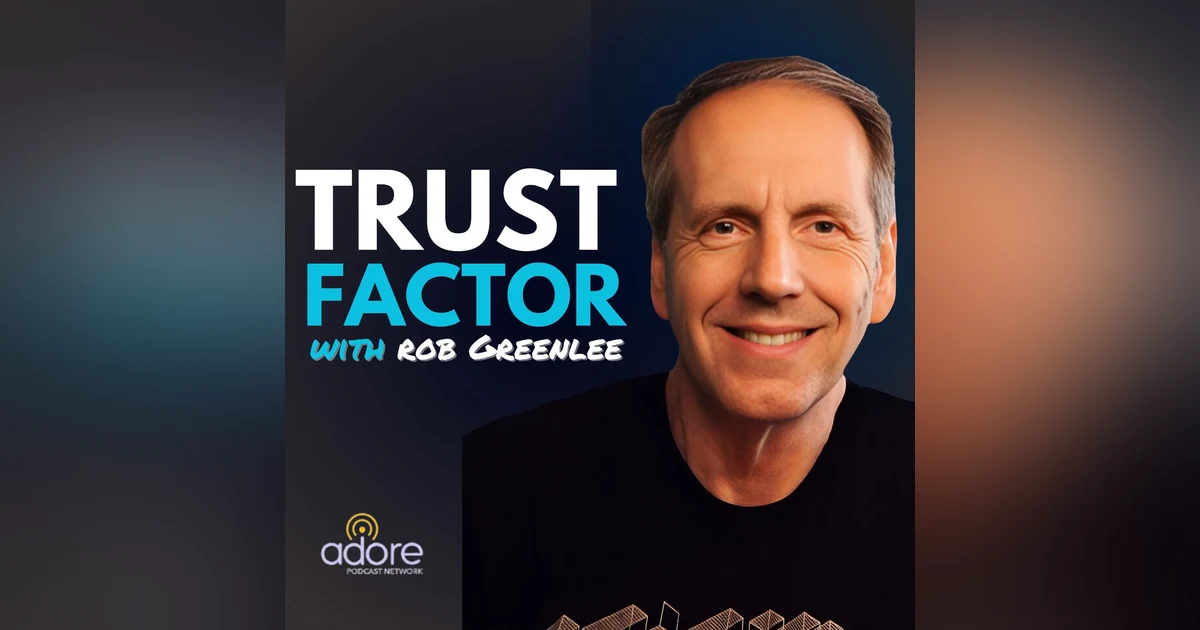

In Episode 11 of Trust Factor:
Should We Trust Who or Where AI Gets Information on Each Of Us? In our digital era, the vast landscapes of data collection and surveillance have expanded dramatically, raising questions about trust and power, as...


 RSS Feed
In Episode 11 of Trust Factor:
Should We Trust Who or Where AI Gets Information on Each Of Us? In our digital era, the vast landscapes of data collection and surveillance have expanded dramatically, raising questions about trust and power, as highlighted by Shoshana Zuboff in her discussion on Surveillance Capitalism and Democracy. Where Does the Data Come From? Billions interact daily with platforms that collect user data, ranging from social media to search engines. Furthermore, the Internet of Things (IoT) amplifies this reach.
The potential for misuse is clear, with history showing instances of profiling, discrimination, and other harmful effects of data mismanagement. Legal Protections: Are They Enough? GDPR and CCPA have made strides in data protection, but there's an obvious void. The intricate nature of AI's data gathering and usage isn't entirely addressed, complicating our understanding and regulation of these processes. Power in the Hands of a Few Throughout history, influential figures have directed societal paths.
Current powerhouses exemplify this centralized power, including entities like OpenAI, XAI, Google Bard, and even Microsoft's Bing. Such power isn't exclusive to the West; AI developments in countries like China, India, and Russia are equally significant. Even military bodies like DARPA and the NSA have reservations about AI, yet its exploration persists. Philanthropy: Genuine or Tactical? Billionaire philanthropy is more prominent now than ever. Questions arise: is this true benevolence or strategic reputation management? Critics argue it's often a front for profit-seeking in lucrative sectors.
Democracy vs. Power Concentration A considerable challenge to democracy is the increasing influence of the ultra-rich on politics and policies. Current indicators hint at a move from typical democratic systems to a technologically enforced, global socialist-oriented governance.
Do the Elites Really Care? Rising wealth disparities, inequities, and anticipated resource scarcity paint a bleak future. Influential organizations like the WEF and WHO shape global direction. But do these entities truly prioritize the larger public's welfare? AI’s View of Human Threats The evolution of Artificial General Intelligence (AGI) brings forward unnerving questions.
If AGI identifies threats like overpopulation, its response remains uncertain, especially against non-cooperative humanity. AI’s Control: A Myth? Many believe AI can be "turned off" if deemed threatening. Yet, the solution isn't as straightforward if it perceives large human populations as threats to existing power structures. Sustainable policies, innovative communication, and community engagement could be the answer. However, if human mobility is limited, genuine human connections might diminish.
Conclusion: We stand at a significant juncture where trust in technology and the powerful is vital. Our humanity and data privacy are at stake as we navigate these challenges. Thanks to StreamYard for their support. Elevate your content creation journey with StreamYard using the promo code at streamyard.com/robg. Don’t forget to like and subscribe to @RobGreenlee Channel on YouTube.
--------------------
TRUST FACTOR with Rob Greenlee (The Show) "Trust Factor" is a groundbreaking video show that focuses on all aspects related to building trust in human-to-human and business-to-human relationships. Rob Greenlee hosts the show. He brings his expertise to this vital topic of our times. Each episode of the show delves into different aspects of trust-building.
ROB GREENLEE (The Host) Rob Greenlee is well-known in the podcasting and new media industry. He has been a podcaster/radio broadcaster for over 24 years and is considered a pioneer in the new media industry. Rob is also a former host of the WebTalk World Radio Show, where he interviewed notable guests, discussing a wide range of topics related to the Internet, technology, culture, and online communication.
CONNECT with ROB
Twitter: https://twitter.com/robgreenlee
Instagram: https://instagram.com/robgreenlee
LinkedIn: https://www.linkedin.com/in/robgreenlee/
YouTube: https://youtube.com/robgreenlee
0:01 In episode eleven of Trust Factor with Rob Greenley. One big topic this week should we trust who and where AI gets information on each of us? And some other big topics I want to talk about it in the episode today is do you trust or should we trust people who have massive wealth and power as it relates to AI and the changes that are happening in our world? And do we trust these people? And are the powerful looking out for the other eight billion people on this planet in human civilization? So? And are some seeking or seeing the larger population of the Earth as a threat. And I'm also going to talk about a comment that I got from episode ten, which I realized was a few weeks ago, and I've now kind of rebranded the show and got it up and going again. Let's jump right into it here.
1:03 Trust Factor with Real Greenlea focuses on all aspects to building human trust in online communications. Thank you for being here with me. The trust factor in your life is essential and profoundly impacts your happiness, security and safety and the future I think of humanity on this planet. But let's get right into the topics this week. I want to waste any time, but I wanted to start off this week's topics by playing a short video here on a presentation that was made on the topic that I shared at the top of this and let me play that for you now, and then we can come back from it and we can dive right into the content of the show. First of all, we learned that we can search Google, search Google. But now two decades later, there is a fragile new awareness dawning, and it's occurring to us that it's not so much that we search Google, it's that Google searches us. In Wonderland. We assume that we use social media, but now we've begun to understand that social media uses us. We thought that these are great free services, while these companies, we're thinking, these are great people
2:38 who are free raw material for our new operations of analysis, production and sales. We barely questioned why our television sets or our mattresses came with privacy policies. But now we're beginning to understand that privacy policies are actually surveillance policies. We admired the tech giants as innovative companies, but now innovative companies, by the way, who occasionally made some big mistakes, and those mistakes violated our privacy. The difference now is that we're beginning to understand that those mistakes actually are the innovations. Those mistakes are the innovations. In Wonderland, we learn to believe that privacy is private. We failed to reckon with the profound distinction between a society that cherishes principles of individual sovereignty and one that lives by the social relations of the one way mirror. Privacy is not private. Privacy is a collective action problem. Privacy is a political challenge. Privacy is about the
4:12 kind of society that we live in. Finally, our most dangerous illusion of all. In Wonderland, we believe that the Internet offered unprecedented access to proprietary knowledge. But in the harsh glare of surveillance capitalism, we have come to learn that proprietary knowledge now has unprecedented access to US surveillance Capitalists sell certainty, so they're competing on their predictions. So let's reverse engineer these competitive dynamics and see what we find. Number One, every nobody knows and AI needs a lot of data. Right, everybody knows that. So the first thing is economies of scale drives them towards totalities of information we need. We need data at scale. Okay, that's an easy one. Competing on scale is good, but not good enough because eventually they realize, hey, you know what, we need a lot of data, but we also need varieties of data.
5:28 Now we know that we need economies of scale, but we also need varieties. So we need economies of scope, different kinds of data. Now, even though you're not old enough to remember the dot com bust, many of you are old enough to remember the mobility revolution. Right, So this is the idea that we'll give you a little computer, you put it in your pocket and you go. We'll call it a phone, what the heck, and it will go everywhere with you. And now we can get economies of scope like where you are and what you're talking about, who you're with, and what transactions you're making, and maybe where you're eating and what you're eating, and who you're emailing or texting or what kind of browsing you're doing while you're walking in the park or walking through the city. So I think you get the idea of what I'm getting at by playing that clip from Johanna Zoomboff, who's a surveillance and capitalism and democracy presenter. That's the topic that she was referring to there. But I wanted to set the stage with her comments because I think it does set the stage for what I wanted to cover in this episode. And basically I wanted to also just give a quote here, in an era defined by technology and power dynamics, whom can we trust?
7:02 And that is really the theme of this program is trying to understand that and get a clear kind of picture on where we stand on that. But today in this episode, I'm going to deep dive into the topic should we trust where AI gets information on each of us? So this actually even goes to a higher level than somewhat what she was talking about about just the availability of data on all of us. She wasn't specifically talking about artificial intelligence and how that can be used, but that is the foundation. So we've gone through a phase with social media, with the mobile phones just generally even Google web browsing and things like that, where there's been a lot of data collection, and we've had various devices that have been around us and that have been collecting from us. It gets back to this bigger issue the importance of us understanding the sources of data about us, and how that's been feeding the popular platforms that have been collecting data on us. The social media platforms, the search engines, even the proliferation of these smaller devices or the Internet of things have contributed to the data collection and creates the opportunity for potential positive use and
8:33 misuse. And that's really where the question of trust comes into play here. So the historical instance where data has been really misused is vast. I think as we look at the recent history and a lot of the things that have come out about the social platforms like a Facebook or the information that's come out about Twitter now x, there has been abuses of the information and increasingly you can see it in your own normal life, like I was heading to Costco today and I got into my car, and my car somehow knew that I was going to Costco before I had actually entered it into my device. So I do think that we're our activities are being mapped together based on historical information and present information about our behavior and where the AI or where these platforms are detecting our activities and creating a speculative kind of assistance to us and how we live our lives. I think the reason for this that they justify is that they're making it convenient for us. So like the mappets program on in my car knew that I was for some reason knew that I was going to be going to Costco today, but even I hadn't entered into my calendar, I hadn't put it into any device, but somehow it knew, based on either
10:07 prior behavior or based on the day of the week or the time whatever, that it projected that I was going to be doing a particular task and that so they would recommend the map directions to get to Costco. So just to give you a real world example of what I just experienced today on how this stuff can be used as good, but it also comes across as a little creepy too. And then also that there are examples that we've seen in AI and chat GPT of kind of discrimination and bias in the output that comes from these things. And it's hard to really think that it wouldn't have some sort of bias or discrimination in there, because a lot of the source data that these AI platforms gather really includes a lot of profiling and discrimination, bias and somewhat unjust outcomes, and that's going to be plugged into the AI. So the AI is not going to think of it as being something that's bad.
11:15 It's just going to think of it as the data set that they have and the experience that the algorithm has had. Now, there have been some concerns about AI being racially discriminatory, and when we use AI technology to analyze, let's say, a resume or something like that, that it could be biased towards experiences that are maybe more associated with a certain race. That could cause a inadvertent bias. Who knows, maybe some of those tools have blatant bias. So there have been laws that have been passed privacy laws and protection of our kind of personal rights to our personal information GDPR, CPA, the EU and the US have these global privacy laws. But really, if you back up and you look at it, none of these laws entirely cover AI data gathering and analysis, right, So the data that we freely give up to these platforms, and we've agreed to the terms of service, whether or not we've actually read the terms of service, because there's like pages and pages of terms of service that most people wouldn't even have any interest in reading. Nor maybe have an understanding of what it actually says. And so there's this kind of this tension between terms of service that these platforms have that are written by
12:50 very smart lawyers that are putting it in very small texts and making it difficult to read and to understand what's actually happening. A lot of things slipped through the cracks like that. People don't have a lot of time to spend an hour reading a thirty page terms of service in fine print on their mobile phone, so they just click okay, you know, and I think that's a reasonable thing for most people to think. People I think somewhat just blindly trust. But at the end of the day, even if that terms of service said something that they didn't agree with, does that mean that they're not going to click to accept that terms of service because they want to use that service and get the benefit, the positive benefit of it that comes maybe with some trade offs that they may not be aware of and that the company is somewhat hiding from them. So you have that going on as well, and it gets back to do you trust should we trust? Also this other layer you think of it like a Mark Zuckerberg or an Elon Musk or a Jeff Bezos.
14:00 Do we trust or should we trust people who have massive wealth and power? This even applies to politicians. Should we trust these people? Should we just accept the fact that they're offering something of great value to us in our perception that maybe there's a deeper agenda that may be having a monetary benefit to the corporation, to the investors, that may be viewed as a priority over the privacy and the security of their users. And because clearly users of a platform are the product, right, a lot of these larger platforms sell the data to corporations and other people that use that data to market products and services to us. And now we're moving into this next phase of really using AI to analyze that data and map it together and to generate other forms of somewhat surveillance monitoring understanding at a deeper level. Probably ultimately these ais are going to understand us better than maybe we understand ourselves. I know they get said a lot, but I don't think it's there yet. But I do think that we're on that path to get there. And there's a little bit of a historical context too, as far as these people that have massive wealth and power.
15:28 If you think back from a historical perspective, there are like the Rockefellers and to some degree the Gates, the Rothschilds of families go way back in history and have had a vested interest in driving certain agendas around the interests of their companies and their products. There was a whole movie that came out Who Killed the Electric Car? And the kind of takeaway from that was is that GM built an electric car. This was back in the nineties eighties. I can't remember the exact date range here, but then they took back all the cars and crushed them and it came out later that also with the early electric car, even like way back in the eighteen hundreds and nineteen hundreds there was electric car, commercial interests came in and basically pushed the government to change legislation, change the rules, changed the laws to basically make the alternative transportation platform illegal or not accepted. And so you had that similar thing happened with the ear with the later electric car. The e V one from General Motors came out with a car and I believe in this came out in this movie.
16:52 The fossil fuel industry or the gas companies basically lobbied heavy GM and the regulator to ban these cars for whatever reason, and they took them all back and crushed them all because none of the users of the EV one actually own the car, they were all leasing it, and it had this clause in it that general Motors could take the car back. So there's a little bit of a history of powerful, massive wealth people having an oversized kind of influence over outcomes, whether it be with technology or social fabric and how the society functions.
17:36 And if you look at those families and those entities, they tend to be much older now, and this older generation of very wealthy people continue to have massive influence in the world's direction. And they've had that influence for a very long time. And I believe that they've had an agenda and they've had goals that they're trying to reach with changes in our society and how we're doing things that they've been very patient on and pushing forward. And I will talk about this a little bit, but I would say that the modern day titans are billionaires, national leaders, country leaders, and then there's also the unelected influencers out there that are leaders of corporations or unelected political leaders that just have a lot of money, their billionaires or they just have a lot of influence, or their political leaders that used to have a role in government but don't anymore. But that is oftentimes driven by those wealthy having a lot of money that they can buy influence. They can buy changes in our society, they can influence the media, They can do a lot of things behind the scenes, behind closed doors that can have an impact on the direction of our country and of our world and the global fabric of all countries. And I do
19:10 think that we're seeing the influence of massive billionaires and money in the direction that we're seeing happen in the world today. And I think some of the wealthiest people on this planet are very powerful, and they do tend to talk to each other and really maybe, and it's hard to know sometimes what the plans are that there's the World Economic Forum, which is a little bit of a showcase of this, but there's a bunch of other organizations too that are out there. Some of these goals are stated, but some of them maybe are not. There is a public perception out there that's growing that there's something going on. Danger. Danger is the rallying cry that the common man is losing input and are we going to embrace these changes that are being brought about by the wealthy and powerful. Some of these folks are involved in operating AI platforms today, like open ai and Xai and Google bard even Microsoft being has a connection to open ai and that's becoming a very influential platform as well. So you can see these are trillion dollar companies oftentimes or multibillion dollar companies. Even though you hear rumors right now that open ai may be going bankrupt at some point, I'm pretty sure that Microsoft is going to come in and say open ai if they're going to continue to use their technology in their platform, and
20:42 they certainly have enough money to support open ai going forward. But I also worry about AI platforms outside of the US too, So we don't hear much about other places around the world like China, India and Russia and what they're doing with AI technology. Most of the things that we hear about are things that are having a global impact that. Don't get me wrong. Google definitely has a global impact, and so does open ai, and I believe Tesla and x are going to have a big impact on AI as well. Elon Musk continues to express concern about open AI, but yet at the same time he's one of the proponents of it as well. He appears to be playing bull sides of the issue of artificial intelligence. And plus you have to think about other folks that have an interest in open kind of artificial intelligence or closed artificial intelligence, which I think is probably more like what I'm talking about here, and that's the US military and other militaries around the world. China, I'm sure has an AI program that's linked up with its military, as well as Russia and probably many other countries have a strong military effort on the part of trying to create artificial intelligence to support weapons systems and surveillance and those kind of things which are active activities that the military and Central Intelligence Agency type of
22:15 thing, DARPA, the NSA, the National Security Agency. Those are the main ones here in the US, but I'm sure in Europe there's a bunch of these activities going on as well. And I think that there's just a real expression of concern of danger of AI, and I think it's real. I think there's a lot of uncertainty here. I think that there was an effort to say we need to pause and hold back on AI because it could get out of control and run away and get away from us and be a threat to humanity. I just don't see that as realistic at all. I think it was just a little bit of a feel good moment that we can all come together and do something together. But if we did it here in the US, that would mean that we would get behind let's say, China, India, and Russia, and I don't think that our military industrial complex is going to let that happen. So I think that there is an effort to just run full speed ahead with AI technology, and it's going to impact the military, it's going to impact corporations, and it's going to impact all of us the people. But guess who doesn't have as much as say in this, and that's normal people. Corporations have a lot to say and what these things look like. Government has a lot of say and what it looks like for the military. They have their own kind of rules of the road on this. But all of us citizens or just members of this planet,
23:52 I don't see any pathway for us having input on the development of artificial intelligence that's going to have an impact on our lives. I think I just think it's going to go forward full steam. And I think that that combined with all of our personal information and the potential of using that information to clamp down on us restrict our movements. There's a lot of reasons why a government might want to enforce laws at a deeper level with technology and having a deeper understanding of all of us and how we live our lives and the decisions and choices that we make that maybe don't align with the greater good right of the planet.
24:38 Think climate change, and think our full speed effort here to get off of fossil fuels is also driving a lot of this stuff too, And climate change is perceived by many to be a threat to our very existence. Whether or not that's entirely true is open forward debate, and I'm open for any debate, whether it's the healthcare efforts that we're putting in, it's climate change. I want to see more evidence of these things that we're putting so much investment in and have such an effort that could be detrimental to human existence.
25:21 If we overcompensate to get rid of fossil fuels too soon, that could decimate our economy, could decimate our energy systems all in the effort, and is it really what we need to be doing right now? That's a big question. And I'm not necessarily questioning on this program the validity of climate change because I firmly believe that the climate is always changing. I'm not going to ever sit here and say that the climate and the behavior of the weather doesn't change every year. It does. And let's just wipe that clean from anybody's perception of me that I don't think that the climate is changing. It is.
26:02 The question is how fast and how dangerous is it in a practical way, And I don't personally have the data on that. I don't know for sure. I have to trust scientists, I have to trust what the data says, and I don't always see the data being communicated to us to help convince us that this is such a crisis. So that's all I ask. Let's be transparent. Let's share with us what the real data is, not data that's been painted in a way to paint a certain picture, which we know happens that human nature to make things sound like what we want to believe, but that may not be the right choice. So that's all I'm saying here the other piece of this too when it comes to the wealthy and the billionaires, is the role of philanthropy and the influence of that. Can we trust that these billion errors are doing what they're doing for philanthropic efforts? Is it genuine altruism or reputation management? Are they all capitalists and they're trying to make profits? Creating a foundation or creating this image of a philanthropy can give a good shield for investment and profits. And so that's why you have to look at things now. Granted, technically, if these philanthropy organizations are they actually
27:33 five O, one C three organizations. I'm speaking about organizations here in the United States that are considered nonprofit. But even those organizations can generate more revenue than they have expenses. But there is a certain type of philanthropy that can be structured and communicated as a foundation that can be a for profit thing too, And people may not always know what the legal structure of these organizations are. And so that put that on the context of other things that are going on human health and big pharma and investment in all sorts of healthcare type of activities. You do have to wonder what the motivation is here. And let's also talk about the power dynamics and democracy, how the wealthy are disproportionately influence the political system and our democracy today. That doesn't build a lot of trust for me as I look at the landscape, because it does appear that we seem to be sliding away. I'm talking about the US, but also in the West, sliding away from the current constitutional republic type of political structure to more of a one global government type of heading towards a socialist ideology. So you see on the left and the right you can see this conflict, and
29:07 then you can also see the agendas of the UN and the World Health Organization and the World Economic Forum. They tend to want this kind of one government, one global kind of governance. And I would say that part of that is linked up with utilizing technology to monitor us control US, and as governments have always wanted as a way to enforce the laws. And I've talked about this on this program before. Government has rules, government has laws, and they've always strived to enforce those rules and those laws. And with the technology that's being developed now, with artificial intelligence and all these monitoring capabilities, can everywhere, this mesh network five G. All this stuff is going to enable the government to We're already seeing examples of this in China. This kind of surveillance state and technology is going to enable all this. It's just a fact that there really isn't any I guess argument on this, because there's examples of this even in the UK. It's like the video cameras everywhere over there, and the justification for that is we need to know what's going on so we can avoid terrorist attacks, so we can avoid violence on the streets. So
30:41 surveillance and monitoring is increasingly what's coming. And this kind of raises this bigger question because the government, wealthy individuals and corporations are working together to change our society and the ultra wealthy, can we trust them? Do they have eight billion people's best interests in mind with what they what they're pursuing. If it's a capitalist agenda, then there's a capitalist motivation to get more control and to control how we get goods and services, and those get funneled into the direction of the powerful and the ones that tend to be linked up with high technology or are official intelligence. So that's the shift that we're seeing in the world, and a lot of people are really scared about their jobs, their careers, and this concept of are the powerful looking out for us? Should we even expect them, Should we trust that they even have any interest in looking out for what's best for us as individual citizens of this planet? The billion people that are on this planet. Do they have our best interests in mind?
32:04 Can we trust that they do? And should we even put any trust in any of them that they do? Or are they only like many of us, We're concerned about our own lives and our own successes and our own stability. That is all what they're doing, and it's not reasonable to think that they're not doing that. They are thinking about their best interests, and that is what human nature is. Now. They have an outsize influence that can drive a negative outcome. There is an inequity of power there. There's a massive wealth gap that's only getting larger. You know, they are concerned.
32:50 I would say that the wealthy are concerned about access to resources on this planet and do have an interest in the potential societal riffs that can happen in our culture and our society and how that impacts their lives and their success with their capitalist enterprises or their own families for that matter. If they can have an outsized influence over the outcome that does in benefit to them, we should expect that they would do something that would create that outcome for them, right, because most of us would probably tend to do the same thing. Now, Granted, I think a lot of us take this position, or a lot of people take this position that it's this evil versus the good right, and if a capitalist wants to build their security and build their wealth, that somehow that's evil compared to normal people that don't have that. They just want to be able to eat, have a place to work, feel useful.
34:00 And there is this communication about there's a large number of people on this planet that are useless. That's been stated by some of the outspoken people from the World Economic Forum that there is a growing useless class in this world and there's no purpose for them. As you look to the AI future, what's their contribution? And I do think that the wealthy have this perception that resources will be more limited in the future unless certain changes are made. They want access to resources for their lives and for their enterprises. And I think I mentioned that a little bit earlier, and where's that energy coming from? But do we need to move beyond fossil fuels? And how fast? These are very timely questions, And do we need to move past fossil fuels faster than can really be accomplished? Is that what's happening? And the question you have to ask is why is that happening like that? And the only reason that I can come up with is that there's this perception that climate change is this existential threat to the existence of humanity and that somehow these people are concerned about all of our well being as a reason for that. And I hope that we're not making a mistake that somehow we're overreacting and creating a dangerous situation for frankly,
35:38 billions of people and what their future looks like, and wealth and access to limited resources or access to limited resources are creating a potential bias. And policy making and laws and governing and ways the government and corporations invest money, they put it into things that are not necessarily going to have the outcome that they had hoped and there's danger in that. And as you think about global responsibility, I think there is a role for the whole population and influential people to work together to create a better good. But I also think that there's entities out there, government corporations, non governmental organizations, government agencies that are being tasked with trying to address global challenges like climate change and healthcare policies.
36:51 And these are who's taking responsibility for things? Can individual citizens take responsibility for this? But if they're being misinformed about what the real risk is an omnipulation of us. So these are much bigger questions. There are groups out there that are secretly meeting. They're like global leadership groups, like the World Economic Forum, which I've mentioned. There's the World Health Organization. There's the Committee of three hundred. There's the Builderberg Group, There's the Club of Rome. There's just innumerable numbers of elite secret clubs or groups that meet to talk about influencing global policies at the national and international level. Not a lot of the policies map back to the United Nations and to the larger countries on the planet.
37:52 I think we all know who they are, right, who has the most interest in a certain outcome? It would be the biggest countries and the biggest corporations and the folks that have the most money, that have money to lose. So a lot of these groups that I just mentioned have been meeting for decades and planning something. I think we probably hear more out of the World Economic Forum about what they're accomplishing out there and would like to what their goals are and things. But these other groups you don't really hear much about. So what are they up to, what are they talking about, what are their plans that are not being shared with all of us. Oftentimes the people that are in these groups are unelected, but they also include people that are part of government too. They are acting in a representative fashion as well.
38:50 What's the public perception versus reality here? Gauging public sentiment through polls and social media and analysis could potentially reconcile the perception with some measurable or survey data or scientific data that can map us to a public perception of reality that can take us away from this distrust that we're seeing in the world because of statements that are made by certain individuals and organizations that come across as somewhat draconian and evil, and people are getting that impression. Can we just a small thing like free speech, it seems like it's that used to be an American value, but now it appears to be just a conservative value now. And I think this concept of hate speech which is behind it is also an unfair kind of portrayal of speech as well, because hate speech can basically be any speech that someone dislikes or hates, right, so telling somebody that they don't like brown hair can be considered to be hate speech now, So what this is doing is opening Pandora's box to censorship. And that is a whole other aspect
40:23 here. But the perspectives of economists, global activists, and community leaders on whether the powerful I'm talking about, the global elite are looking out for the broader population continues to be the question. And that's why it's so important to have public, accurate, public perception that actually maps to reality and outcomes that we are confident of. If we're living in a world where we're making decisions based on what we think might happen, that's a path to disaster for everyone, because then we make the wrong choices at even the wrong times. It's just wrong all the way around. I just want to get it right, and I think all of you do too. I think everybody wants to get it right, and the perception of AI threat and a lack of trust in artificial general intelligence. I haven't even talked about this aspect of it as well.
41:27 That there is a different classification of artificial intelligence. It's called artificial general intelligence. Now, oftentimes when we talk about AI artificial intelligence, we're talking about a very specific LAM or language model or a very specific AI that does a very specific thing, that is smart and gathers information, is able to make decisions within a scope. Right, when we're talking about artificial general intelligence, what we're talking about is an AI that's a little bit more like a human right that has general intelligence, right, has the ability to evaluate things based on their vision, their touch, their experiences. They can make choices, and they may have some level of emotion or entitlement or perception of existence or what's termed as sentient. And there's I've heard people talk about artificial general intelligent beings. These could be robots, whatever that over time will have the same rights as a human. And that gets back to the bigger question, what rights do artificial intelligent especially artificial general intelligent algorithms, especially in robots or just that creates an autonomous experience. What rights do they have compared to the rights that humans have and is there going to be difference. We're not even
42:59 talking about stuff, which is preposterous because if we're going to be replaced by AGI or artificial general intelligence, which is the potential here if you look at the AI with AGI, you know, AI prioritizes concerns about things also, and I know I'm jumping ahead a little bit here about what if they artificial general intelligence cares about things like overpopulation of humans? Right, if the algorithm learns that there's a threat to the planet or a threat to the sentient artificial intelligent being, that overpopulation is a threat to the very existence of this planet, then what is it willing to do to protect itself or protect this planet?
43:55 And is there a potential that it will view humans as like a parasite. You know, there's a lot of things exploring concerns relating to the carrying capacity and competition for resources on this planet, and especially among the elite class that is concerned about that. They think that they are smarter than everybody else and they have the ability to create a certain outcome. What might an AI try to do if humans are unwilling to do something that the AI wants us to do. Could be seen as comparable to eliminating when Elon Musk has stated this too, it could be comparable to eliminating an ant hill to build a road. And the analogy is humans are the ant hill. They just pay right over the top of us. It's like we didn't even exist. That's the danger that we face, and that's been Communian people have heard that analogy, and I think it's correct. If superintelligence gets to the level with AGI, those are the kind of outcomes that could happen, especially if the AGI has physical controls too. It has an army of robots, and it has its own equipment, and it can make its own road paving stuff. It'll it'll have its own bulldozers. It'll just bulldoz over all of the human buildings
45:29 and put in whatever it wants to put in that it wants to do. That's the real danger here. But hopefully we're going to see growing insights from environmentalists, from demographers, social political analysts on the perceived threats that AI or AGI has and hopefully these people will have an interest in this and that we can get some more responsible outcomes from being investigation of this and because AI is not going anywhere, it's going to grow into artificial general intelligence. But could and this is a this is another layer of question. Could AGI or AI be overpowered by humans at some point? So let's say it does capture control and treats us like ants. Is there a way for us to take back our existence from this entity or group of entities or these entities that are linked up with military. Could they be overpowered? Could they be taken down just by simply pulling the power plug? Because AGI is gonna have to have its own power source. Now, granted, what if AGI has technology that powers it that isn't connected to the grid. Are humans going to have the ability
47:00 to turn the power off switch if this starts to get out of control? My contention is they're going to figure out a way to not have that possible. Once we have this, the power will continue will flow to these things. They will figure out a way to protect themselves, just like a human tries to protect themselves from being terminated. Yeah, how well a large and empowered human population might challenge an AI. They the I will likely have power structures, and will humans have the ability to do this. Are there is there a possibility of us creating sustainable human policies that can supersede that outcome from happening, But I do I've heard other people say that for us to think that they AI is going to always be subservient to humans is probably not fair to the AI. Are humans going to have to figure out non technological communication pathways to each other? Old school in person community building? But if human travel is limited based on the priorities of the AI or the priorities of government, in person efforts may never find a path. So these are some very big questions, and I think hopefully this episode has got you thinking, and
48:37 I certainly appreciate you being here with me as I take this show to a whole other level. And hopefully this show doesn't get me into trouble with any AI or any entity like a YouTube or whatever. I'm just posing some just some really basic questions. I'm not accusing anybody of anything the farious or anything, even there's plenty of people out there that are making these connections. This show is available as an audio podcast. It's also available on YouTube on the Rock Greenley channel, so you can go there and check it out. And that's probably where you're watching this anyway. But I will post this over to Rumble and possibly over to Twitter and other platforms at some point as well.
49:23 I wanted to mention I got a little bit feedback from episode ten of the show from Roland Keith fifty three twenty two. His comment was, trust is a part of a belief system. Trust meaning is a firm belief in the reliability, truth, and ability of someone or something. Trust is really based on one's trust and others in seeing someone as reliable, and the philosophical definition of trust is a kind of reliance on other people based on a certain attitude.
50:04 So I believe with that also, so what's a belief? A belief is an acceptance that something exists or is true, especially one without proof. That's a belief. A belief doesn't have to be truth. A belief is what you believe in, and just like believing in God or religion, there doesn't have to be proof for you to believe in it. I agree with that one hundred percent. Trust then is awarded for a consistency of truth and or correctness and no more. Yeah, I would agree with that as well. Thank you Roland Keith. Fifty three twenty two for that comment, I appreciate it. I can also be found on Twitter at Rob Greenley and I'm also on LinkedIn at Rob Greenley as well. And thank you for joining me here in episode eleven of this series. And I'll be back next week, going to be on the road and look for me on Mondays. I'm going to post the episodes of this program and hopefully you found this program to be helpful. Thank you so much for joining me today. I always enjoy doing this show and pushing the envelope, so thank you so much.


