You Are Who You Are Looking For: A Guide to Owning Your Humanness

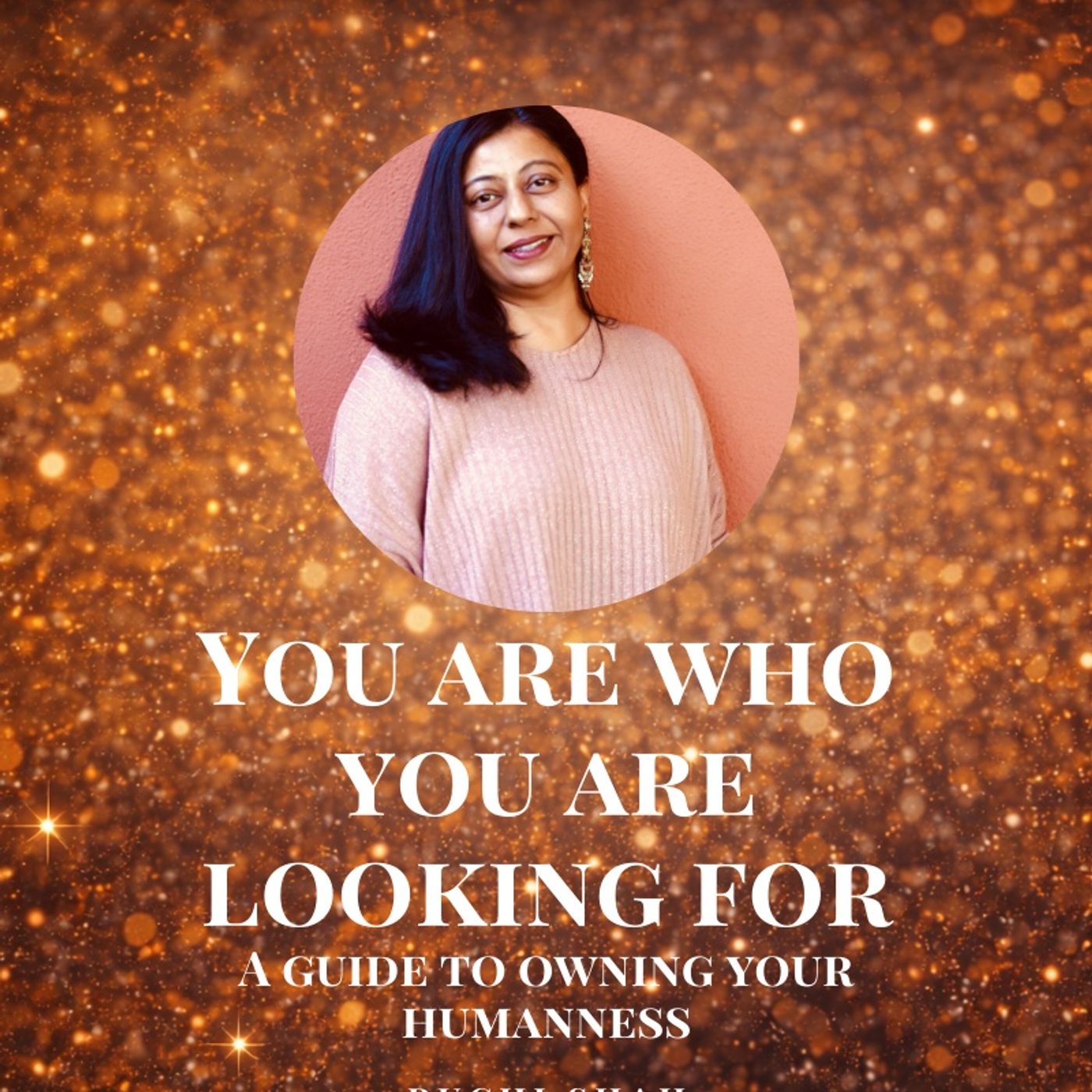
In this episode of Quick Before You Forget, host Ty Schmidt engages in a meaningful conversation with Ruchi Shah, industrial-organizational psychologist and author of We, Humans, for a deeply grounding conversation about what it means to come home to yourself when you feel burned out, lost, or disconnected.
Ruchi shares why so many of us learn to hide our humanness, how we “play peekaboo” with parts of ourselves (our emotions, our light, our shadow), and what it looks like, practically, to own your humanness and stop outsourcing your inner authority to the outside world.
You’ll also hear powerful reflections on grief, self-doubt, and why growth can feel intense (even “G-force” intense), plus a memorable story about fear turning into aliveness in real time. If you’re feeling overwhelmed, uncertain, or like you’ve forgotten who you are, this episode is a reminder: you’re still in there.
Topics include: burnout recovery, self-awareness, self-trust, big emotions, masking, grief, fear vs excitement, community/tribe, and coming home to yourself.
Please like, subscribe, and share if this helped you. Your support keeps this show going.
Meaningful Moments
00:00 – Welcome + intro to Ruchi Shah
02:45 – “I was perceived as oversensitive” + hiding humanness
05:06 – How We, Humans was born (legacy, son, experiential format)
07:28 – The “cards” concept + choosing a chapter
09:45 – “We humans play peekaboo with I” (light, shadow, emotional cues)
12:06 – What it means to “own your humanness” (only expert on you is you)
14:30 – What she’d tell her 22-year-old self (no regrets, unfolding)
16:48 – Megaphone message: “Wouldn’t it be lovely to be human?”
18:55 – Music as a way home (YAIMA “Gajumaru” + old stories)
21:16 – The 80th birthday question: legacy without needing to be present
23:42 – “What if you’re not a student—what if you’re a teacher?”
25:45 – Why growth feels intense (G-force metaphor) + becoming present in real time
27:38 – “We humans thrive when we tribe” (two-way streets + internal relationship)
32:16 – Grief + the “unique wiring” of emotions (crying = rage insight)
36:07 – Vocabulary for hard emotions + expressing the living human
38:34 – Quick Before You Forget rapid-fire answers
40:37 – Fear vs excitement + roller coaster story (“I’m alive!”)
42:53 – Closing gratitude + where and how to support the show
Ruchi Shah's Song of Survival: Gajumaru, YAIMA
We, Humans book: https://a.co/d/0aFSukIU
0:23 Rushie Shaw. Welcome to Quick before you forget. Thank you so much for having me. Thank you for being here. It means the world to meet that you're taking time out of your life to spend with us today. I just want to take a second to introduce my friend, doctor Rushie Shaw. She is the author of We Humans and an industrial and organizational psychologist who has spent more than two decades studying how people actually work, not just at work, but in life. She's partnered with organizations and individuals across the US and India, helping leaders and teams make sense of human behavior in ways that are practical, grounded, and deeply humane. What I love about Rushie's work is that she doesn't just study people from the neck up. She looks at humanness through the interconnected lens of mind, body, and soul, and then translates those insights into frameworks that help us navigate real life with more clarity, compassion, and intention. Through her work as a coach, author, and human and through the company she's building, which is called humans dot In, Rushie helps people remember who they are while they figure out who they want to show up as. Rushie, I'm so grateful you're here.
1:38 Thank you so much, DIY, and this was in the making and I'm so glad we're finally here today. Me too. It's been some time. We've been very blessed to have some time to get to know each other before this conversation. So I know, feel like we're diving in head first. But my friends, unfortunately are not so blessed because they don't know you yet. So please take a moment, take a few moments to walk us through who you are and what you're here for. Yeah, thank you, Hi, friends. I'm Ruchie Shaw and I am currently in Charlotte, North Carolina. As my journey to this point of bringing up conversations on how to human I think one of the most important things to know about me is that I was always understood and perceived as somebody who was oversensitive, and I carried it. I think shame is a very harsh word, but in reality, that is how it felt. It felt like my humanness was something I was supposed to hide and not be and be something else. And it's only when I think, in a stubborn moment, thanks to all maybe whatever it was hormones pandemic, I felt like, what would it feel like if I stepped into who I am. I just
3:09 I just owned my oversensitivity and my humanness. And in one of my performance reviews, I also got a note saying, I write thoughtful emails. And I'm like, what if I wrote thoughtful emails? What if I spoke thoughtful and allowed myself to be thoughtful? So what happened at that point in time is all the pieces that I was disowning about myself kind of fell into place, and I felt really empowered to be human. And what that turned inside of me, Like the lens that I was looking outwards just turned inwards. And it's like I quit cable TV and I subscribed for channels I never knew existed, and I learned so much about myself and the realization of we've humaning for millions of years and we still don't have a how to human manual. And so that kind of brought me to where I am today.
4:19 It brought you to hear this human manual, this book, which is beautiful and super unique. Talk to us about it. Talk to us about your process for what this book is and how it came to life. One of the things about this book is that I had not intended for it to be a book. I had not intended for me to be in front of cameras. I am very camera shy, and I really thought that I was just s penning down what I knew about human behavior from that place of stubbornness of Okay, this is what I know, and this is what I'm to put out in the world. And in my mind it seemed like I was probably writing blog posts maybe that I would post. I also was writing this for my son, who was eighteen then, and I just wanted to share.
5:17 I felt like I was stepping into the legacy chapter of my work, and I felt like I needed to leave behind something that I was there when I was not there, that spoke my words, that shared my perspective. And as I wrote along, the format remained the same, and the more I shared it with friends and family, the more feedback I got about how useful it was for them. And there came a point in time when I started rambling about I wanted to be an art display, I wanted to have an easel, I wanted to be conversation cards. I was just expecting so much of the book from the book, and I created a prototype and it looked like this and this is how it was born, and I believe it has become. I get a lot of feedback that I've created a new genre of experiential books, and I think that is what I as I understand, the book publishing industry is welcoming, and so that's how this came about. It does fit into the broader vision of how to human like really just like Rubber meets the Road kind of way.
6:41 So well, what she means by that, friends, is like, it's it's a it's a op the beautiful box actually, and then you open this beautiful box and inside it is a booklet. I want to I don't want to call it a book. It's like more of a booklet. And then there's these cards that are so freaking cool. It's you can use it as like a stand, but the cards all have something very special on it. Then speaks to what you were saying about it being experiential and having it almost feel like a prompt to study yourself. And you know, this is not a book that you read, really, it's a book that you absorb. And I want to talk through if it's okay with you, I want to talk through a couple of the cards and it's up to you which one we pick, because I had a hard time, Friends, I had a very very hard time picking which card to use and which card to focus on with our precious time today. So I'm going to read you a few friends so that you know what we're talking about. What these cards look like, and these cards each have a message, and then like kind of like homework. It's really cool. So we humans have big emotions.
7:55 We humans play peek a boo with I. We humans each have a dark side and a light. We humans thrive when we tribe. We humans have AI, and we humans match time rittie. Which of those do you want to talk about? Because there's just so many good ones. Yeah, I so really good becomes contextual, right, it's in the moment what we are experiencing. Let me just go back a little bit to talk about where how the book integrates. So there's a lot of research and applied research and stuff that's behind the book. But I did not think that everybody needs to know research, because what we feel is really important and that needs to be given priority our felt experience of it. So I ask each reader to let the book lead you to where you want to go. So each of the chapters is has a different context and a meaning and a lens and a draw and a magnetism for different people. So today, as I as I heard you say all the chapters,
9:28 really what appealed to me was we humans play peekaboo with I and it's, uh, it's fascinating to see how much we don't know our own selves. And you know, the the the open and the close of Peekaboo is what we do with ourselves. We see, we see our dark sometimes and forget to see our light. Sometimes we see our big emotions, but we sometimes see forget to see, like you know, the shutter closes on what cues are the big emotions bringing to us. So I just felt like the peacon Pikaboo was a really good way of understanding how we humans experience our humanness. And each chapter has a different format to it. So the tagline that you read is just something that makes you feel, yeah, I mean that's interesting. So it appeals to the head and then it goes down into the first chapter of each book is kind of the messiness that we feel around it, and then it goes into what is a
10:59 bottom that we ignore that can really the places where you've shut eye, where you've played peekaboo, like you know, and then there's a U turn that's possible. And then the homework as you refer to, like just just if we were to dip our toes or if we were to take a dive into the deep end, what would it feel like? And so each chapter is an invitation, but it also walks you through a process of where you can reach your humanness. Well, you said something earlier that I wanted to circle back to about owning and choosing to own your humanness, which is something that seems a little bit potentially out of reach for people like people I feel like there's a level of you know, masking that that gets talked about on this card, where you know, we we hide parts of ourselves or we don't show up fully as ourselves.
12:05 And that's not an excuse per se, but there's just a general lack of self awareness sometimes around this. And so can you walk us through what that means at a very basic practical level, What does it mean to own your humanness. At a very basic level. I think it is the acceptance of knowing that there is only one expert on you, and that is you, and to begin from that premise, we seek advice, we seek approval, we seek everything from the outside. We expect somebody to lead us, but the real person who can really lead you is you. And this book is like a play in a playful way and allow and an experiment because it's even though we know this cognitively, we don't do it. We we we you know, let me take your hand is not what we say to ourselves, right, and let me lead you through to where the rainbows are or where the pot of gold is. Right. And so the book is this I call it Jumanji. It's it's your own adventure. You just you just let yourself walk into the Jumanji game.
13:30 And then that's how you just don't know what adventure you're going to have. And it's it's so fun to let yourself lead yourself. It's it's an amazing experience and one that has to be experienced to be understood. I think, well, this is not a conclusion that you've come to quickly. This is something that's evolved over time. And it makes me wonder and it honestly makes me really curious about now that you've come as far as you have and you've done all this inner work and you understand things better. What do you.
14:10 Wish you would have been able to or what would you tell your twenty two year old self if you could. I do want to give my twenty two year old self a shortcut? What a shortcut? And shortcut? Okay? Yeah, you know, enjoy yourself and you're going to not regret anything in this work of understanding myself. Regrets to come up because you keep wishing. I wish I knew this earlier. I wish I hadn't done this, But it's all part of the unfolding, I think, And so I think my twenty two year old was right where she needed to be, and because she was where she was, I am today where I am. And it's and it's really weird. I sound like Yoda when I'm saying this, but it's that. It really is the felt experience of it, Like you don't want to go back and change a thing.
15:18 You just feel like, yeah, it's it's crooked because here, when it becomes straight, it'll be so much fun. That's beautiful. Thank you for that. It makes me wonder too, then, what your current message to the world would be if you had like a megaphone that you could shout in the present moment to the present world that is struggling on every level. What would you say? What would your encouragement be. Mine? I kind of have this written out because I say this very often and the dream I think we all hold and I'm just saying it out loud with a megaphone because I was offered one. But I think the megaphone that we all carry is wouldn't it be lovely to be human? Like just the permission, just the allowance the can can we just show up as humans?
16:22 And the wee Humans book is one tool that allows you to experience that heaven on Earth. And I'm boring from a friend who told me a long time ago that Rouccie, the dream and the reality don't seem on the same timeline. But when you experience through the book your humanness, the reality and the dream kind of start to feel on the same timeline. And so if I had a megaphone, what I want to tell everybody is just give this a shot. Let the book be a tool for you to experience your humanness, your dream and reality being on the same timeline. It's amazing that gift is amazing. So that's what my invitation to the world is experience your humanness and do it in a guided way.
17:29 Well, this book is definitely one way to do that, and I am so grateful for it. And it's been something that has come into my life at a time when I really needed to do some soul searching. It's good for that, it's good for times of disruption and times of change. It's good for bringing you home to yourself, and that is something I'm very grateful for. So I have other ways that I also use to come home to myself, which we've talked about a little bit privately, but one way that is through music and also through movement. And the music part of that is so important to me. So I'm wondering when you have a day that feels hard, who does who do you go to? Who is your musical guide and who what song or songs do you choose in moments of survival when you need that boost of energy.
18:21 Yeah, and it's interesting that you mentioned music because as I understood it, like it's something we know intuitively, but there is so much research out there that there a sound is what ourselves listen to, and so when we want to bypass everything else and really connect with ourselves. We listen to music, and that is what music does to us. It shifts us at a cellular level. Obviously, there have been many songs and many different situations that have been you know, the teenage girl with all the eighties love songs and the crooning and the crying. These days, my favorite song is it's called Gadjumru and it's by this group called Yema y A I M. And one of the line that really appeals to me is free from all old stories have been told. I walk through the valley of my own shadow, and I find that very very empowering in my low moments and in my high moments, my celebratory moments, because I think we are all ready to be free from old stories that we've been told. That's we know it, that's not who we are,
19:54 that's not what defines us. So I find that very very inspiring. In my dark and in my light. That's beautiful, and it's interesting to have a song that you turn to in both situations. I wonder about the mental the mental benefit to that, honestly, because the way that your mind works and the way that you're you know, you can you can kind of dig yourself out of a hole without even meaning to with that song because it grounds you in a happier place as well as gets you know, gets you through the darkness. It's beautiful. Thank you. So my thought on the excuse me, my goodness, my throat, I wanted to fast forward now because we've talked a little bit about the past and the old stories, right, and we've talked about the present. I want to fast forward to now this is don't hate me for this, but your eightieth birthday. I want to know who's there when, what you want them to say, because I think that in life, too often people pass away and then we have our talks about what they did and who they were, and what we respected and maybe what we didn't respect, but mostly the good things, right that you say after somebody passes that. I just wish there was a way that more of us could could hear and talk that way before we're gone. So what would you want people to say about you at your eightieth birthday?
21:21 I think if I were to imagine it, I'm definitely not on TV or somewhere, but I'm rocking in a chair and I'm so content because I think somewhere that in the air, there's conversations about the tools that I can leave behind for people to use in my absence, Like I don't need to be there. We are all human, We know how this thing works. You know, we're born, we are wired, we are totally equipped to be fully human.
22:03 But I think if there were tools that helped people across the world and in my absence, like without me being there, I would love if that was how I was celebrating my eightieth birthday, I would feel mission accomplished. Beautiful, thank you. So looking back on that time, I'm wondering, Obviously we've got some time between now and then, but what is an unreal moment that you experienced in life that changed the trajectory for you, whether it was good or bad. There have been multiple ones, but something that defined me in the early childhood was the loss of my parents, my dad passing away. It just introduced me to independence.
23:02 That's my early early memory, and my most recent memory is the shift into who I became today. I was reading a spiritual book and there was more to it and there's a context to it, but essentially the question I heard was, what if you're not a student, and what if you're a teacher, And that really kind of you know, spun things one hundred and eighty degrees. For me, I was like, Okay, no more reading, no more you know, no more being the learner. What if I'm a teacher? And that suddenly made me stop and do things very very, very very differently than who I ever was before. So that definitely shifted me, which was at the same time that I read the title of the book, you are who you are looking for and all of it like, you know, I keep describing it as my eyes turning from outward to inward and I just subscribe to new channels and I'm having so much fun. There's drama, there's romance, there's violence.
24:16 You know, violence. Tell me more about that. I mean, there is it. The it's for some reason, we have this un realistic expectation for growth to be quiet and small, and but we do go through, especially rapid growth, is it feels very powerful. So sometimes we don't like it, but we are we are taught to scripted or conditioned to think that rapid growth needs to not feel uncomfortable. But I mean, if you're going to the moon, you know you're going to face the g force.
25:15 Well, and growth is uncomfortable, right like growth growth happens on the other side of your comfort zone. We we know this, and it's a lot easier said than done for some people, but we understand that when you do those hard things that don't that are not always the most comfy thing, you know, that's when that's when the real life that opens life up. And it isn't that a gift? Yes, it's almost always in hindsight for most of us. And the fun is it is in watching it in real time. So how do we fix that? Like, how do we how do we get more present so that we know in real time that that it's that, that it's happening.
26:02 I think the best way, at least to my understanding and my experience and what I know about human behavior, I think it's all about really understanding ourselves, because understanding is the key understanding. Complete understanding is what resolves and dissolves, and so it allows you to just like complete the circle of what your experience was. And I think again, like I say, we are scripted, we are conditioned. I don't know what happened, but somewhere along the way we are on the wrong path. We think it's all about others.
26:47 It's not about others. Like eighty percent of everything that we need to become to be present, to feel present, to really go from hindsight to real time is us. And we are not comfortable with that anymore. And I think one of the ways we get more comfortable speaks to a different card we didn't talk about, which is we humans thrive when we tribe, which makes it reminds me while you gather your thinking around that card, because I want us to talk through that chapter, it reminds me of something that Rachel Hollis said on the stage at Rise Minneapolis in twenty nineteen which stuck with me, which is that she was talking about self love and the way she described it was so perfect for my brain that it finally made it. It finally made it through in a way that made self love become less of this concept and more of something that actually made sense to me. So she described it as a vase.
27:53 That is, you know, when your vase is full and you're pouring, and you're pouring, and you're pouring and you're pouring, you're more likely for that used to fall over, crack open and split everywhere and spill everywhere and all that jazz. But if you just stand tall and proud and in that self love and you let the world pour into you, that will overflow. Now that was like the coolest demonstration for me, and it brought it to life for me in a way that I finally got it, like the light bulb went on, and it was more fun in that moment to take it full circle because I was with a tribe. The Rise tribe has remained a huge part of my life for the last six years, and I'm very very grateful for them. But we humans thrive when we tribe.
28:41 Talk about that, So in one of the distinctions that I make in the chapter is about tribe not as numbers, but tribe as in where there is a two way street. The two way street is really important, and I think that if we were to take stock of places where we are actually two way, all of us have very very few relationships. In fact, we are not two way with our own selves, right. So to me, this idea of tribing is how many two way streets are you on?
29:23 And are you on a two way street with yourself? Like do you listen to your body? Do you listen to yourselves, do you or do you force your body to work out on a day that it's not ready to work out? Like, are you kind to your body that day? The two way street is really where it's an understanding that there is an incompleteness between the two and that we are we are creating a fit for each other. So there's humility and there is kind of respect for what the other brings, and so the first experience of it is really internal, like if we I the since turning the lens and subscribing to the channels inside, the kind of best friend that I am with myself, I am amazed. I just don't feel lonely because now I know I have myself, that there's already a friend that I have by my side, and that's that's all we need sometimes, right, So I think thriving with tribing refers to this two way street that we have needs
30:53 that we cannot accomplish on our own as humans. We are incomplete, and that's not what the rhythm of the songs that we hear. You know, we hear a lot about independence and power, and that's it's not the humility that we hear about. So well, speaking of humility that we hear about. I heard you talk through a very hard and very human experience of losing your dad at a very young age. And I also my dad passed away when I was twenty three, which I was very older than you, but definitely not ready for dealing with that kind of grief.
31:39 And also nobody's ready. We're never ready. Grief happens and it's hard. So what advice would you have, you know, for us humans trying to figure out how to navigate something like grief, because it's very common. Everybody loses people every single day. And I think, you know, i'd wonder, I wonder what not like a shortcut, per se, but what ye different tactics you would suggest for going into yourself in a way that's beneficial and helpful for people. And I really appreciate this question. Grief now we have a lot more understanding of it, and in fact, I have a group of friends who talk about grief in mergers and acquisitions, like the grief that employees feel right.
32:37 So we have so many applications or different understanding of the nuances of grief. One thing which I feel I have and I use a tool that I don't feel as common is the one that I'd like to share, and that is we experience and it could be for any emotion. We experience an emotion in a very weirdly unique, are kind of way. And I'll give you an example. I have am known and have and do cry a lot, right same and it was it was again I'll refer to when I subscribed to my inner channels, that I understood that every time I cry, I am raging. It's anger.
33:39 It's just a way that maybe as a child, or maybe as a as as whatever, the conditioning or like I said, the scripting around me was we find a way of expressing our emotion in a socially acceptable way. So I cannot say this is true for the entire world, or all women or all Indians. I cannot generalize this and say, oh, we cry because we are angry. That's not true for it. But I think what we need to do is to find that really weird way that we are grieving, and that's where we will understand. Every time that I cry, I understand I'm waging, like the more I saw, because my real crying is very short lived, which is matching to what we understand of a primary emotion.
34:43 It comes and it goes. That's a primary emotion. It comes and it goes. But if there's something that is staying and is defining you, then you need to understand that the wires are mismatched. Like, you know, my crying some how God connected to my rage. I don't know how that happened, but it is true of me. Well we rage when we cry. That's you don't seem like a rageful human though, Like I don't see you being rageful. If you if you were to see how much I cry and understand that, it's oooh, then I'm an angry young She's very angry.
35:27 Watch out, let's turn that anger into something good. Yeah. Yeah, you're just right here with this book. That's what that's what you're doing. You're bringing the emotion to light. Yeah, and you know, I'm so glad we had this question because that is really the essence of the book. Also is that when I say, you know, this is Jumanji, go on your own adventure, You're just going to have such interesting insights about who you are. And so now I know to say when I'm crying is that I'm really angry. It doesn't land with people easily, but I now articulate it and say that this is really making me very angry.
36:16 So well, it helps to have a vocabulary around, Yes, hard things to talk about, and that's exactly what you're doing. You're bringing understood vocabulary to things that can feel kind of out of reach or hard to understand. So that's helpful. And who will do it for me? That nobody has an insight into me the way I do? And I think, going back to your question on what do we need to own? What do we need to what accountability do we have? We have that accountability of this living human to be expressed into this world. There's nobody else who has that megaphone but you about who you are, and so I think, think, yeah, that's how I would grieve.
37:06 Thank you for walking through that with us. So my questions now tend to err on the side of more of like a quick hitting sentence or to kind of answer, because I want to help. I want to ask the same questions of every guest that comes on, and I've done that with varied levels of success so far. But let's see if we can't figure this one out. So, what is something about this season of your life that you don't want to forget. Walking the path so that I can then teach it to others. Beautiful. What part of yourself are you most grateful that you never let go of throughout your life?
37:47 My humanness part? Course, I know you want to say more. You can say more. Yeah, that's that's the gift that I was getting that I never knew I was. And now you get to share it with the world. If someone listening feels pressure to choose just one version of themselves, what would you want them to hear? Listen to the one that is right now. Quick, before you forget what matters to you most right now? We humans, the book, we Humans, the book we Humans, the idea we humans, the dream we humans, the movement that we are experiencing, we humans, the readiness that we have.
38:43 All of that will send like electric currents through my body. That's beautiful. So we do have a little more time, So I want to circle back to a couple more questions that I had. If that's okay with you, If you still have the time too, let's do. Let you slow down and look at your life through the lenses of these cards and chapters, or just in general. What helps you come back to center, what help? What grounds you? So I say this in my book, and I say this out loud many times. It's true I am plagued by self doubt and at the same time, a very parallel story of mine has been standing in the face of fear even when I was afraid. And so what really grounds me is the combination. It's the polar opposite, but they're equally true for me. So it's the yes and like we use an improv, right, it's the yes and yes I'm afraid. Yes, I'm plagued by self doubt. Yes, I have stepped into this and I can do it now.
40:01 So it helps me remember who I can be. Sometimes it takes longer to ground depending on the fear. Well, fear is hard, Honestly, you know I've worked through. I've done very very hard work with fear in the last year, and it's something that's helped me in case it might help be helpful to anybody listening. Is understanding a very scientific thing that doesn't still doesn't make sense to me, but most science doesn't, which is that fear and excitement are essentially the same chemical in your brain, and it's up to you to decide how to decipher it.
40:44 So what comes to mind for me is a goofy story that I'd love to tell about my twelve year old son and a roller coaster. And you know, this is something that we talk about in our house. We talk about big feelings, we talk about hard feelings, we talk about good feelings. And one of the feelings that we worked through very closely with my kids is fear. And so my twelve year old son is standing in a line for this roller coaster that has a three hundred foot drop and all kinds of crazy inversions, and he's very, very scared, and my younger son is kind of ras in him, like buddy, you got this, it's fine, whatever, and the older son just wasn't having it. And quite honestly, between between us, I was not okay either.
41:26 I was. I was freaking out. So we're standing there waiting in this line, and I'm actually getting nervous talking about it. But we're standing there waiting in this line and my twelve year old is panicking, and we get on the thing and we're in the in the front row, like it wasn't that we were in the front row, and we go all the way up. You know, it's crazy. Yes, the build up, the anxiety is there, excuse me. And we get to the top and the son that was scared starts to say, I'm dying, I'm dying, I'm dying. And then when the drop finally had happened, the three hundred foot drop at ninety three miles an hour, he said, no, I'm alive the whole way down. It was just I'm alive the whole way wow. And it was this beautiful moment for me as his parent, to see that switch happen in real time because he was loving it. He was, but he was so nervous. He was and I was too.
42:22 I honestly literally shaking nervous, like your whole body is nervous. So the whole fear concept and getting to know fear is such a huge and important thing for people. I think that that is, you know, it's up to us how we handle that relationship we have with fear. Yeah, And it kind of goes back to what we were talking about the chapter Thribe and Tribe, right, it's the two way street, because I feel like fear spoke back and there's a conversation, if we really, really really slow it down, we will understand that we have a conversation with fear and it's in that conversation that the switch happened. And so it's fascinating. I think that would have changed his relationship with fear, and to remember it stays inside of him forever to say, ooh, I'm alive.
43:30 We're grateful to be alive today and every day. Archie. I'm so grateful for you. I'm so grateful for your time today and for pouring into the listeners and viewers with all of this super important, very relevant and meaningful conversation today. I'm very very grateful. So, unless you have anything else that you want to say, I am ready to sign off. I just want to express my thanks to you. Thank you. Like I said when I was introduced to you, I was just so excited to meet you because there's your work preceded you and I was really looking forward to meeting you. I'm so glad that we are doing this today.
44:15 Thank you so much for sharing this platform. It means the world to me. Thank you, thank you, thank you for being with me today on Quick Before you forget, please take a second to like, share, subscribe, and rate the show as it's super helpful for me. If you do, thank you, thank you, thank you, and I'll see you next time on quick before you forget