Would You Follow You? What Great Leaders Do Differently to Inspire Teams Who Create Impact
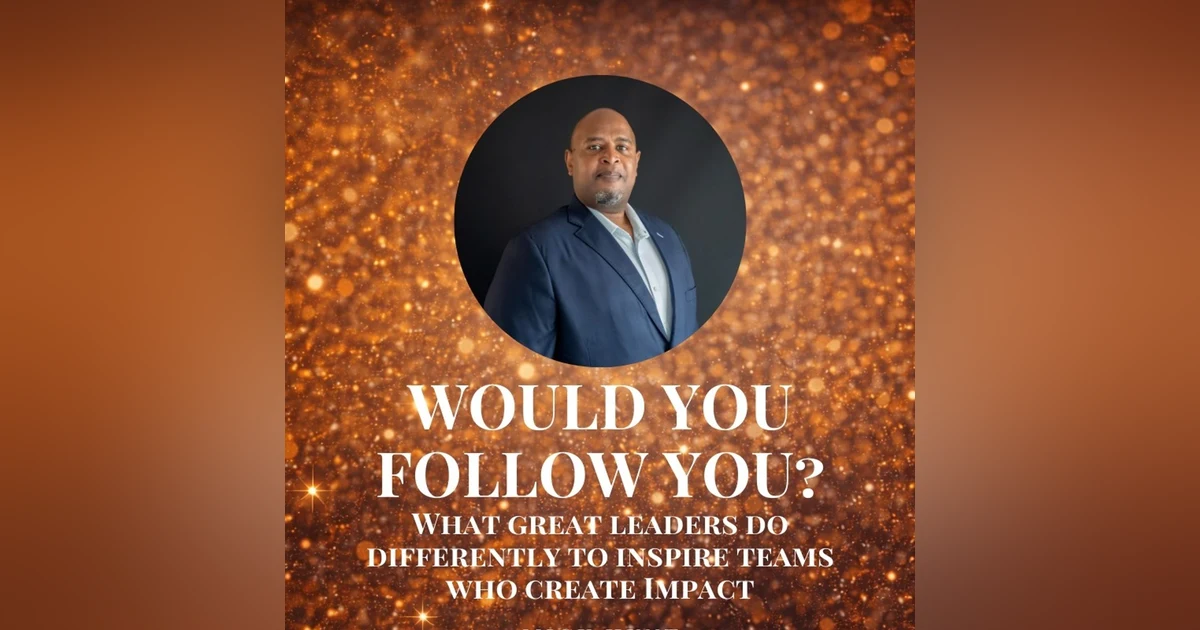
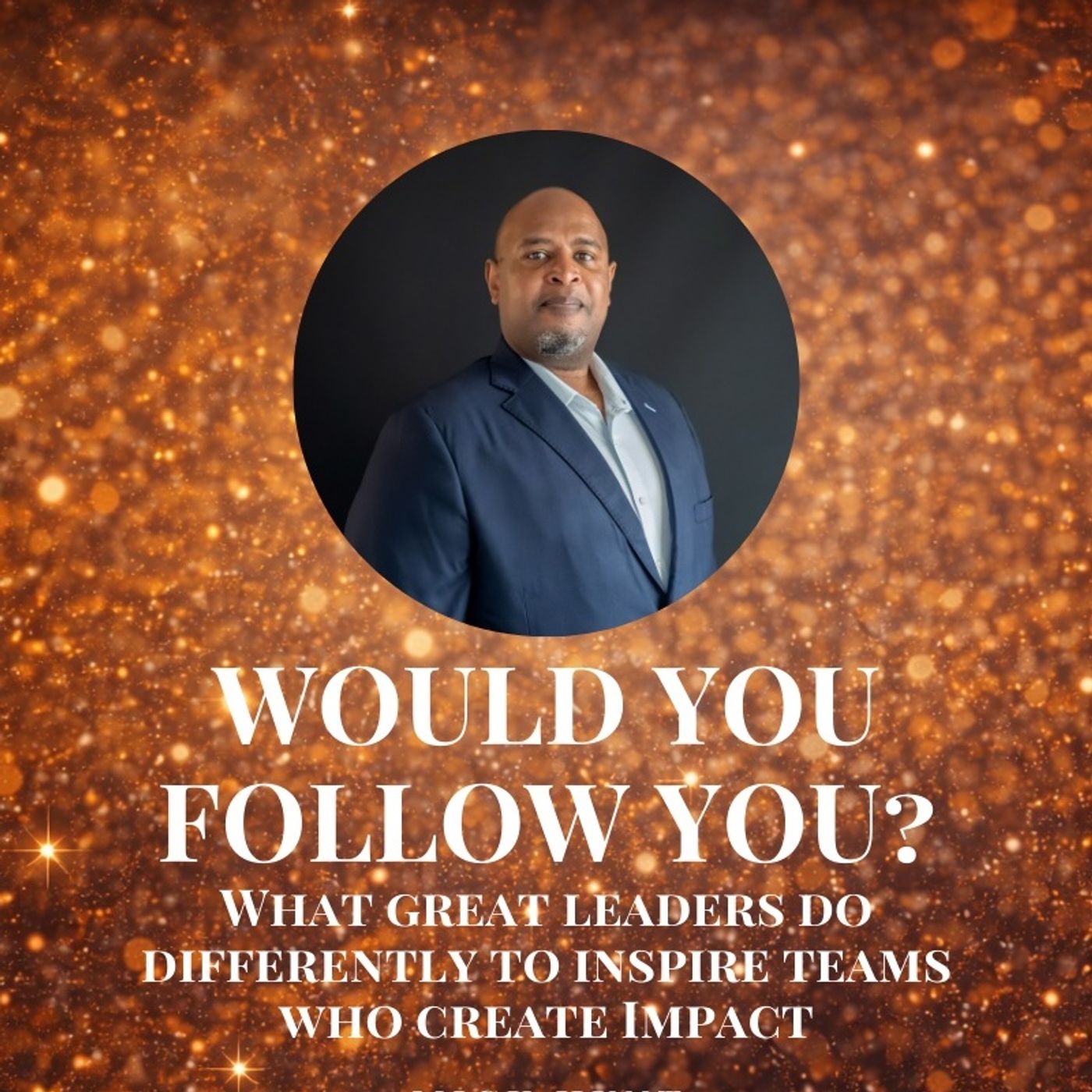
Most leaders think leadership is about being the strongest person in the room. Mick Hunt learned the hard way that it’s not. After watching his company drop from 400 employees to less than 200 in 90 days, Mick was forced to confront a brutal...
Most leaders think leadership is about being the strongest person in the room.
Mick Hunt learned the hard way that it’s not.
After watching his company drop from 400 employees to less than 200 in 90 days, Mick was forced to confront a brutal question:
Would I follow myself?
His honest answer changed everything.
In this powerful conversation, Mick shares the lessons that reshaped how he leads, serves, and builds teams, including the four leadership behaviors every great leader practices and the promise he made as a child that still guides him today. We talk about trust, empathy, fatherhood, preparation, and the quiet responsibility leaders carry when people choose to follow them.
This episode is about something bigger than leadership. It’s about becoming the person you were meant to be before it’s too late. If you've ever wondered whether you're truly leading, or just performing leadership, this conversation will stay with you.
In This Episode We Explore
• The leadership mistake that cost Mick half his team
• Why inspiration alone doesn’t activate people
• The 4 leadership behaviors every great leader practices
• Why empathy is often missing in high-performing leaders
• The difference between personal emotional intelligence and leadership emotional intelligence
• Why celebrating small wins transforms culture
• The hidden damage leaders cause when they “just do it themselves”
• How fatherhood reshaped Mick’s leadership philosophy
• Why preparation—not talent—creates opportunity
• The one question Mick asks himself that keeps him accountable
Quick Before You Forget: If you’re leading people today, ask yourself one question: would I follow me? Your answer might change everything.
0:00 It's like you've got something that you love more than anything in the world. Don't let that something down and don't give up on that. Something like that would be my message because at the end of the day, businesses, households like all of that right, Like, you all have something that you genuinely love, Always keep it at your heart and then what you're supposed to do will happen.
0:53 Hello, and welcome to quick Before you forget, my guest today is somebody I'm so excited to have on. His name is Mick Hunt, and he is a purpose driven leader, yous say Today, best selling author, keynote speaker, and podcast host who truly walks the walk. Mick is known for elevating voices, celebrating growth, and leading with clarity, conviction, and heart. If you've ever wondered what leadership looks like when it's rooted in service instead of ego, this conversation is for you today. We're here to learn from his story. Mick. What that looks like is walking a bit through the past, present and future together. Are you ready for that?
1:36 I'm excited to do that. I'm excited to thank you again for being here. This is so exciting for me. I'm very, very grateful for your time, and I'm wondering to start with, we're going to go back to the past, So talk to me a little bit about what your If you asked your fifteen year old self what leadership meant, what would that version of you say, and how is it different than what you would say now? Yeah, it's vastly different. That's a great question. I never had that question asked in that way, so I'm going to answer it like this. The fifteen year old me was the most competitive person you will have ever met in your life, and I'm still that way.
2:20 But the fifteen year old me had a different reason for being the most competitive person that you would have ever met. I needed to change my family dynamic and everything that I did said the only way I can change it is to be the best at everything that I do. That guarantee that I would be able to go to college, that guarantee that I'd be first up for positions or opportunities. Because when you're the best at something, nothing else really matters. You can't deny the person that's first placed at everything, the person that wins all the time, like you can't deny any of that, right right. That's who I was.
3:01 And so leadership for me at that time, and I still was the person that everyone looked up to and rallied behind. Leadership for me meant either making people the best or carrying them to a win, right, And so I was very structured. I was laser focused, and I didn't understand if you were not that way. But I also didn't care if you were not that way. And so when you ask me what's different, I'm still a ultra competitive, But now I know it is never about me, and I'm not saying that it was about me at fifteen. I had to do it at fifteen. Like I had to do it at fifteen, we can do it at forty seven, right, And so what I've learned is.
3:47 That leadership is not me. Leadership is definitely about the entirety of your team. It is about being clear with vision, It is about being trans parent and vulnerable as a leader. At fifteen, I never told anybody why I was wired that way. Right at forty seven, we'll talk about it. We'll talk about the transparency. I'll be vulnerable with you because I want you to trust me. Fifteen, I didn't care about trust. Now it's all about trust and. Transparency, which is inspiring and leaders are kind of meant to inspire. But how do you flip that switch from inspiration to activation as a leader.
4:31 So it's about being purposeful, it's about being intentional. And I'm glad that you said inspiration and not motivation because I actually don't believe in motivation. Like motivation is internal, So I can't motivate tie right. Tie can be self motivated, but I might can inspire, tie right. And in order to inspire and to go to the activation, we've got to be clear on what the intentionality looks like, what are the results that we're trying to get, and don't overcomplicate it. Where I see leaders and young and by young, I don't mean age, but by newer entrepreneurs, where I see them go wrong is they have squirrel syndrome, right, and it's like, oh, well, I can do this, or we can do that, or this can be done. Intentionality and activation is focusing on one or two things and getting completion on those one or two things. You want to be able to stack results, and you can't stack results unless you complete things.
5:31 So how do you get more intentional as a leader, Like how you know, break that down for us because I think that's a that's a really good point and it sounds good, but like, how do you do that? Yeah? So it's it's four things and Ty you know me, I've studied every leader that the world has seen, Like that's part of my DNA. I've got, you know, degrees in different types of leadership and different certifications. There's four things at every good lead has done, and this is how you do that piece, This is how you be intentional. One, you've got to know your team, meaning you've got to take the time to have conversations. And by this I don't mean performance reviews, annual reviews, sales meetings. You've got to be intentional about getting to know Tie, about getting to know Scottie, about getting to know Like you've got to know what inspires them, what are their internal motivations, what are the things that they hate? Because, believe it or not, a lot of times the reason your teams are low performing is because you have people that care, they're just doing more things that they're less passionate about and you've never got to know that about them, right, So knowing your team critically important. Number Two, what every good leader is or does is present. They are present.
6:54 I think for everybody that's listening or watching this. And you're a new leader, and again I don't mean age wise, being present is probably the most important thing you can do for your team, even in hybrid or virtual situations. Take the time to be present. If you've ever heard me speak, I always say this, like, raise your hand. If you have an open door policy. Right, that was very cliche in the nineties and early two thousands, open door policy, come see me anytime. Well, if you have an open door policy today, that open door is just gonna yield resignation letters. Like no one is walking into your door. You have to go meet your people. So in order to know your people, you have to be present.
7:35 Right number three, Every good leader, I know when we talk about intentionality and how do you do this? You speak less, but you say more. Make your words matter. We have a policy in most of the companies that I run, we try as a game when we have an email, if we're using our internal communication channel, can we say things and seven words or less, because usually it's seven words that really matter and everything you say, I promise you go read a email. Go read an email and look at it and say, oh, it could have just been summarized by saying abcd EFG.
8:15 Right. That's why it's very impactful to let your words matter more. Every good leader, I know they don't talk a lot, but their words matter. And then I think the fourth part, and this is my favorite part of being intentional, is knowing when to move the stool time. I'm a huge boxing fan. I miss the days of heavyweight championship bouts right well. I think everyone that's listening or watching can agree one, two, or three. Muhammad Ali is probably one of the greatest fighters that's ever lived, right, and I mean actual fighting. Yeah. His trainer, Angelo Dundee and Ali's biggest fights, would make him stand up in between rounds, so instead of sitting on the stool, he would make Ali stand up. And it served a few purposes. One, he knew Ali was tired, but if you can stand up, you can focus. So if you can move the stool, you're allowing people to focus.
9:14 Number Two, your opponent is also very tired, and when they see that you can stand up and you can fight this battle and you can dig deep, a lot of times are going to quit. Ali had two fights where his opponent quit in between rounds because he was standing and they were still sitting. And number three, what you're doing is you're showing your team confidence that. I believe in you. And that's the critical part of activation, right like, ty, I can talk to you all day, I can be intentional all day, but until I prove to you that I'm trusting you and I'm going to step away, I'm going to move the stool and let you do what you do. Like, that's the ultimate trust. And I think every good leader has done those four things, but I think to be intentional with it. The final part is you've got to let that team member do that thing.
10:00 Well. That speaks to your genius and abundance with how you put the spotlight on other people, like very intentionally, very thoughtfully. So I'm wondering, what do you see in others before they see it in themselves? Another great question, ty, Like, So there are a few things that'll look for in people, whether their teammates of mine, whether you know they're in my circle. I could be a speaking engagement and someone comes up to me and talk and we're getting to know each other. Is the first thing is character. I think your character speaks before you do. You can see character, right, you can see core values. The words that you choose tell me a lot about who you are, what you represent for yourself, or the legacy that you're trying to build. So I look at that, and then I look at who are the people that you influence? That also tells me a lot about who you are. Do you influence people that are like you or who you're trying to become? Do you influence people that are inspired by you? Do you influence people that are thriving to be a better version of themselves? Or do you influence people that are silly?
11:21 Do you influence people that don't care? Do you influence people that were a version of you that you've overcome, but you can't help them because you're going back to that version that you used to be. And then I look at who are you trying to be? Right? And by who are you trying to be? Not saying that you're changing, but are you evolving? Right? Is there something that you're evolving in your life? Because I mean, ty, you know this, right, Like my mentors, my leaders are a Robert Irvine, A Damon John, A Chris Voss, And I can promise you every day they're working on something to be better at something, and so are you trying to do that as well? Because if the people that you perceive as elite, and they are, if they're always bettering themselves, are you trying to better.
12:10 Yourself too. Quick? Before you forget? What's something you used to think that leadership required that you no longer believe. Oh. I used to think leadership required you, as a leader, to do the job. And I was that leader, Tie that I'd give you a chance, but if you're struggling, instead of helping you or finding the thing or the resources to better you, I would just do it myself. And I didn't realize how disheartening that was to other people because I was so laser focused. So I used to think that leadership was about you getting it done. And that was the biggest misconception I had. I mean, I'm you know, we talk about being vulnerable, Tie, like I've I've lost team members, meaning you know, one of my companies when I inherited, had over four hundred employees within ninety days. Some of it was some of it was intentional, but most of it wasn't. Within ninety days, I had less than two hundred employees.
13:13 That's half. Yeah, what happened. I was, let's get it done. We've got to go. I didn't celebrate small wins because at the time, small wins didn't matter to me. The big win mattered to me. And the big win then we celebrate for five minutes, and all right, we got another project that we got to go knock out. Everybody's not wired that way. I shouldn't have been wired completely that way. And so again, those are the things that I missed out on. And so the biggest misconception of leadership for me was I had to do it all, I had to be involved in it all. That has a lot to do with impact to me, because your impact can be so much greater and stronger and more wide space when you do work together with your team and with your people, and you can activate them and inspire them. And you and I have talked about this. It's not about titles. It's about impact. So what's the smallest, single, one thing that a leader could do today that can actually make them a better leader tomorrow?
14:22 Something I just said, celebrate small wins because a small win for you as a leader is a big milestone for someone else. And if you're not celebrating the small things that you do, then your team members, I don't care if you have one other teammate or five thousand teammates. If you're not celebrating the small things that you do, well, you're setting a standard that only the results on paper matter. And so learn how to celebrate small wins, learn how to how to create milestones. And I don't care what your business is. We all have milestones, we all have targets, we all have numbers, whatever that means for you. Figure out how you can celebrate the small ones. And watch how quickly you start getting more small wins, and watch how quickly that momentum starts to stack up, and watch how quickly your culture starts to change because you decided to celebrate small ones.
15:20 You mentioned that crazy story. Four hundred to two hundred is not a small amount, and I'm guessing you, but you said that that wasn't the only thing that went wrong. And obviously, on your journey to greatness, there's a lot of things that go wrong. So what is one failure other than that four hundred to two hundred situation that you see as one of your most important leadership investments, like something that happened for you as a leader instead of to you. Yeah, I decided to really go all in on emotional intelligence as a company. I'd like to feel that I Will was a very emotional intelligent human being, but that didn't mean I was an emotional intelligent leader. And in that I think that's vastly different. A lot of the things that we do or the skills that we have in our personal life doesn't mean that that translate into leadership or it's the same way in leadership, right, And so Ty, what I had to do was say, Okay, here's what emotional intelligence is.
16:25 Right. You've got self awareness, you've got self regulation, and those things I did really well at the personal level and business level, social skills, motivation, But Ty, here's where I struggled. Empathy. And you'd think as an emotionally intelligent person that empathy would matter, right, or that I would have conquered that because it did matter in my personal life. Highly empathetic, understood it. I think being a father made me empathetic in my home, but at work, Tie didn't understand it, and I didn't have empathy. I never used the word understood or understand I didn't make people feel seen, and so part of that going from four hundred to two hundred was people just not being seen. And it took me to do a deep reflection. And here's what I asked myself, TI and some I'm not going to say I get overly emotional about it, but it's something I had to do. I sat down and I asked myself, point blank, would I follow me if I removed me from this room and I was on the other side, what I follow me?
17:44 And that was a huge revelation because I wouldn't. Sixteen year old me wouldn't have followed me, the ambitious, twenty five year old me wouldn't have followed me. And if I were to fast forward to close to retirement, me would not have followed me. And I started to understand. Why at each of those phases I wouldn't follow the person that I was, And I said, in order to be the person that I would follow, I have to change now. And so that was the what did I do for me? I said, I've got to change who I am for everyone else, but more importantly for the sixteen year old me, the twenty five year old me, the fifty five sixty year old that I will become one day. I've got to be able to touch all those people, and I wasn't doing that.
18:38 You did it as a dad, though, and you love being a dad, So you said being a father helped you learn and develop more empathy as a leader, and I love being a mom. It has changed me as a human into such a different, better version of me. And it made me curious about it when you said that about the mpathy, because I'm wondering what else, what other leadership lessons that you've taken or learned from being a dad. Patience for sure, and understanding people's decision making skills, you know, the way that you get to a result, Tye, I, as an adult, I promise you we're not going to get to the result the same way. You and I and we know each other really well, right and in your way doesn't mean that it's wrong, and my way doesn't mean that it's the only way or the right way.
19:32 And so having kids help me understand how people make decisions to say, Okay, oh this is the lens that they're looking at this of Huh, that's not bad, right, Like that's actually pretty creative. And so I got to understand that about people, because when you care about the end result so much, you never really understand the thought process of how they got there, like you could assume, but until you ask, it's like okay, cool. And then also to that same breath, understanding that people learn different ways, which means that as a leader, you've got to communicate different ways. Meaning I can say the same story, but I have to say it this is true to this day, I have to say this story probably four or five different ways because of the different ways that my people understand.
20:25 And it doesn't mean that again one's right when's wrong, or that there's different levels of intelligence or anything. It's just people interpret vastly different Like I have I'm gonna get myself in trouble. I have a person on my team that is very literal, like extremely literal, and I'm not like I am I am again ty, I'm gonna say it in as few words as I can, right, And it's like, Okay, I have to remember though this person, I've got to connect every dot because they have to process A happens first, then B happens, and then C happens, and then D happens Like A can't happen, and then it's like, oh, I can just go straight to D.
21:11 I don't have to do B and C because it's not needed. Well, I can't do that with a certain person, like I've got to connect every day. Even if A automatically solves B, right, I still have to explain B because it won't make sense. And so understanding that with people that everyone learns different ways, everyone sees a different thing, so to communicate at different not different levels, but to communicate in different ways. I learned that with kids too. That's going to be kind of tough as a leader though, because you, as a competitive person, you have to slow down and almost like rethink and reshift things as you're going, which is difficult, I feel like.
21:56 But except when if you do my favorite four letter word, c are. It's important. And because as a leader I care, I can slow down because it's gonna help someone else speed up. Because again, I don't have to do everything. So if I can be clear with instruction, if I can be transparent about the process, the good and the bad, and if I can celebrate small wins and do it with care, it's worth me taking that time. It is worth me slowing down because the worst thing I could do is not explain A and B and C and D and E and F and just assume that they've got it, and then when they don't have it, I take it over.
22:43 Now I've injured a team member of mine, and I'll never do that again. We all need more mc hunt in our lives, Like I feel like, you know, if you don't know of mixed podcast, it's called Mic Unplugged and it's amazing. And your podcast highlights people's stories and they're because and it makes me wonder, what is the most meaningful or impactful story that you've heard on your show and what did it teach you? Wow, that's another great question, Tylight. Tyer, you're a great interviewer. I love this. Thank you the greatest story man. I've had so many, like, so many amazing stories, and all of my guests have truly impacted countless people. But I don't know if I could pick just one.
23:42 Is there a bread thread? I is there something that kind of comes through as a as a commonality. Yeah, the commonality is this, no matter who you are, you are going to have to overcome something. I don't care what it is, big, small, whatever, business, personal, you name it. You're gonna have to overcome something. Don't quit. That would be the common thread with everyone. No one gave up because success is just on the other side of whatever that pain that you're going through, your business is going through, whatever it. Is like, success is just right there. The reason most people don't find it, and I'm not gonna say the word quit, is they pivot. You pivot right before you were supposed to break through that wall, go through that door, whatever it is, right, and if you're hungry enough for something, you'll continue to push through.
24:41 Now there are times though that you need to quit pushing right, But if it's not, if it's not tied to success or end result, then you've got to just understand that you were just so close. And I would say that that's a commonality. Again, I've had some amazing folks on some great stories. I mean, you've got less Brown talking about being ten years old and his mom was a housekeeper in Miami and was working for a lady that every time his mom entered a room, his mom had to clap her hands. And Lesson understand why his mom always had to clap her hands, and so he asked he was with his mom one day and he asked the lady who's house she was cleaning, and she said, I make all of my servants clap their hands because then they can't steal from me. And that changed his life because he said, my mom is not a thief. My mom wants nothing in your home. So to hear a story like that, a less brown break down.
25:54 Why he became who he was was because of a handclap. From his mom. To hear Robert Irvine talk about humble beginnings, and you know, everybody sees Robert now and you think Chef TV Chef Robert is the greatest leader I know. Personally, Robert is the most financially literate person. I get financial tips from Robert monthly. But to know where that started and why he is the person he is today is because it's just like me, going back to those humble beginnings and making promises and commitments to yourself. So to hear those type stories is wild.
26:38 He said, don't quit, and I think that's a lot I wonder. I don't want to say easier, because easier is the wrong word, but not quitting is difficult and worth it and a little bit less challenging when you have a very strong because so quick before you forget what? Because do you think every leader needs to discover about themselves? So for me, and I think for most people it would be the same thing. So I hold myself accountable, but I hold myself accountable to the promises that I keep, and so like, if you're in my circle, you know if I make you a promise, like it's a done deal, and so much so that my circle will say, do you promise? And they know that if I say yes, it's a wrap because that's the ultimate accountability to me.
27:31 If I'm going to do something and keep a promise, I can't let that down. So I think for leaders, one of the things that you can do is make promises to yourself, right and write those promises down and then honor them, because the worst thing you can do is have a promise that goes uncupt right like, because you're letting someone or something down. And my heart won't ever let me let anyone down. So if I make a promise to see you, it's a done deal. So what promise have you made to yourself or to others that changed something for good in your life? There's several I promise so at ten, I promise my mom she'd smile again and she'd be happy. At sixteen, I promised my sister that I would show her the example of what manhood, fatherhood, and brotherhood.
28:26 Should look like. I made that same promise to my brother. I promise my teams that I lead every day that they come first, and I promise that I'm always going to put them first. So every decision that I make isn't company first, it's team first, because they're the ones that run the company, not me. Culture care and team members run your company. So the promises that I keep literally or tied to either making people better, holding myself account to results or inspiration, or to me personally, it's just not being we're family, so I can say it. So so not being who my father was. And that's probably the biggest promise that I.
29:16 Keep to myself. Tell me more about that. So, you know, my my dad lived in our household, married to my mom, but my mom was like a single parent. Like my dad was there physically most times, but that was it, right, Like there was never that emotional connection and like I didn't have father son moments and all of that, and there was just a lot of hurt that happened in my household growing up, and so I made a promise. My first promise to my mom was that that won't happen and that I won't.
29:57 Be that person. And so that's who I work hard. To not be. Not saying that my dad didn't have good qualities, but I can count those, right like I can count those. I can't count the bad qualities. That's how that's the difference, right, And so I make sure that as a father, I'm not gonna be what I had as a husband. I'm not gonna be what I saw. As a friend. I'm not gonna put through what I saw my dad's friends have to go through. And as a leader, someone that you can count on. And so that's that's it. Like I'm not going to be what representation was for me growing up.
30:43 Thank you for sharing that. What would you tell twenty two year old you? If you could? What would I tell twenty two year old me? Another great question, Ty, You've asked me questions that nobody's ever asked. This is this is my favorite show right now. Thank you? What would I tell twenty two year old me? You've got it figured out. This is a safe space. This is a safe space for more than seven words. I feel like I need to say that. Use all the words here. See you see how I do it though?
31:24 Tie right, like I do, I'm like, but I need more. Tell me more, so I would tell I would tell twenty two year old me this, you've got it figured out, but don't think you're going to do it by yourself, because at twenty two I did have it free. I had it figured out. Like one of my greatest strengths is this tie Like. You give me a situation, a challenge, problem, like, I'm going to figure out how to make that thing work, and usually the most efficient way to get it done to not just oh, you just have to do X, Y and Z, like I'm gonna be able to give you stef by step. This is kind of how it needs to go. And I've had that skill set as a kid, But at twenty two, most of me figuring it out was interjecting me into the equation. So I would tell twenty two year old me, you've got to figure it out, but plugging other people, other resources, and it'll actually happen much much faster if if out of knew that at twenty two Wow.
32:30 Wow, danger watch out. Yes, well, we talked about the past a lot, and I'm curious what you do now to stay grounded. I enjoy watching people win. I enjoy watching people in my circle, my siblings, my kids now that they're adults, Like I genuinely love watching people win. Like it's like I'm everyone's parent Friday night football, cheering for you to go do your thing. Like that's what I feel like with like my circle, the clients that I have, like just just watching people win and the smiles on their faces, Like that's that's like the legacy I'm trying to continue to build. I mean, you know, I'm very I'm very I don't want to say restrictive. I don't know what's the right word. Like when I choose clients to work with, whether it's corporations or individuals, like they have to fit like we have to fit right, And so for me, that's what it is. It's just Wow, it's just watching people when it's amazing.
33:44 Well, it comes across on your social media, which I just love as somebody that also loves to hype people up and loves to share something that I'm passionate about, Like I love Taylor Swift. I love her and I will share anything and everything about Taylor Swift until and anybody's sick of it. But it happens anyway because she's helped me heal and you know you do. That's actually one of the things that drew me to your content and your leadership expertise, honestly, was that you have this gift with shining the spotlight where it's hard earned and deserved, and like, sometimes these people are doing these hard things and celebrating these wins in a silo and you're like, nope, we're shining a spotlight right there. I just love that so much. Speaking of a spotlight, what is one message that you would share with the world right now? If I handed you like a big megaphone and you were and everybody had to listen, what would you say?
34:46 Another great question, Ty, like you're coming at me today. If I had a message to share with the world, and you know we talked about you asked me the twenty two year old me, and I said, you've got it figured out, go get it right, but let other help you go get it. The message I tell everyone is like. Don't don't forget what you're supposed to do, like don't forget, don't give up on your dreams, like you never know, you never know when that opportunity is going to actually come back and fulfill and be there. And a lot of times we give up, you know, we talked about giving up earlier and not giving up. My message would be this, like you've got something that you love more than anything in the world, don't let that something down and don't give up on that something like that would be my message because at the end of the day, businesses, households like all of that, right, Like, you all have something that you genuinely love, always keep it at your heart and then what you're supposed to do will happen.
35:59 It's how you build legacy that in real time, you know, you just keep that in keep that in your head, and fast forward to the future where it's your eightieth birthday. Tell me who's there? Tell me what you want them to say about you? Mick, my eightieth birthday. You're killing me with these amazing questions. So my eightieth birthdays, who's there? So ty, here's what you don't know about me, Like I've loved poetry all my life, so I'm going to have poetry represented right there on my eightieth birthday, my kids, obviously, all those that are near and dear to me, and we're just having a good time laughing, like I love. I love just having a good time, Tyler. I love laughing. I love everybody enjoying themselves on my eightieth birthday. It's poetry, right, It's it's just people having a good time.
36:59 Maybe a little papaya, and I love papiety. Papaia. What an interesting fruit. How did you get into papaya? Man? I so probably like sixteen seventeen. It's not it's not the forbidden fruit, right, but it's one of those things like everybody just doesn't have papaya, but like I don't know. It's like when you say, so you never had it before, and that's what it's like. Every time. It's like everytime you have it's like I've never had this before because you see all the other fruits all the time. Right. But's special, Yeah, special, it's literally living. You're celebrating the winds out loud because you're celebrating that special fruit. There you go.
37:39 Let's talk music. You talked about liking poetry, and to me, you know, music is poetry. Coming to life essentially. So I'm wondering, do you have a song that you turn to when you need to keep going but it feels hard, like a song of survival? So Ty, like I love music, do I have songs like I'm an R and B guy. I'm an early late nineties, early two thousands hip hop, good music kind of guy. So my music like, I'm probably gonna like bore people with my music. But you know, you give me some boys men, I'm there, you give me like some SWV. I'm there, you give me some monica angel of mine. I'm there right Like I'm weird when it comes to music. But here's what I'm gonna tell you, Ty, because my new hitter, my new song is TI let him know, and I that is gonna be my twenty twenty six walkout song. Like I've already told my team, like the first thirty eight seconds this every time I go on stage right like in our internal team meetings, this is what's gonna kick off our meetings. TI let them know. It just came out like if you want to know who I am, that is me right there.
39:01 That's great high energy of course, yes, yes, yes, yes, I was going to ask for your hype song. But that's probably the same. Then that is me like for the last two weeks every day like eight hours, not consecutively, but I'm playing that song. Let them know. Yes, I love that, And that's maybe the question I should be asking is what song do you have on a loop right now? Like that is That's great. So I let them know. Again, I go back to some old stuff that are just like personal to me, like some songs that people have never heard of, like this is Your Day by one and twelve. I like to relax to that song again. Anything voice men.
39:44 Anything t I, anything, T pain. Usher, Like I'm different. You're not boring anybody with us either. Like I think it's it's really important to me that I'm asking all of my guests these songs about me music because music has it reaches parts of your heart and parts of your brain that words can't, and it's deeply personal. So I think it's really cool to have a And I really want people to come on this show and listen and watch this show to feel seen in the stories. And I think what's so interesting to me is this music question. These music questions, you know they're going to be super different for everybody than I have on the show, and I think that that's actually really cool for people to see the different I guess the heart the heart touch moments that matter to people. It says a lot about you. You know, we talk about like judging a person by their bookshelf, Well, I think there's something to that, and I think there's also something to you get to know somebody through the music that they love and the songs that they have on a loop. So not boring to me, But you know what else isn't boring? Your entire life, Your whole story. I like you're your whole story is fascinating to me in the way that you've had this unique opportunity that you've created to learn from people that you admire, and that's like kind of a goal of mine. So I'm guessing you probably have a
41:15 lot of unreal moments in your life. But if you had an unreal moment that you could think of that changed the trajectory of your life for good and bad, for good or bad, can you talk me through it? Unreal moment? There's too many, No, So the crazy thing is, I don't know if I've had any unreal moments. Ty because like I prepare for everything I've ever done. I you know, I have this saying you don't rise to the occasion, right, There's no such thing as rising to the occasion. You rise to your level of preparation. And so I always feel like I'm prepared. So like if I were to look back at again, I wouldn't call them unreal moments.
42:05 But having the opportunity to learn one on one from a Damon John right at twenty two years old, I wouldn't have thought that would have ever been possible to be able to learn, not be a fanboy of, but to really learn from a Robert Irvine twenty two. I wouldn't have thought that was possible. To be able to learn from a Chris Voss, to be able to learn from a Less Brown, I wouldn't have thought that was possible. But what I was able to do was invest in myself, right, And so I invested in coaching opportunities and programs that then led to like real life mentorship, Like wait, you're not just a client or you're not just a part of this, Like there's something in you that like I'm learning from as well. And so each of those people that I just mentioned, like with the exception of Robert, Robert has always been like best friend day one, but I invest into developing myself and that those investments some have turned into relationships that are real life and go on forever. And so have I had some unreal moments, like Yeah, it's been kind of cool to wake up on Christmas Day and you're you're getting a FaceTime from Robert Irvine while he's out on some secluded beach, right, Or to get a FaceTime from Damon John just to see you, like, hey, Mary, Christmas love you like to have Chris Voss invite you to different places like those have been unreal moments, but I prepare for every single.
43:33 One of them though. I love that shift. Like I've been asking this question, I've been thinking about it a lot, and I love how you shifted it to something more active. And so it's something you have more control over because there's so much that happens in this world that feels so chaotic and out of control, So you know you can control your preparation. And isn't that a gift? Honestly? I mean, and that's not just something that Hunt has said. My greatest person of all time Michael Jordan never never took a shot in a game. He didn't practice that he wasn't prepared for. So like you didn't see Michael Jordan taking half court shots or three quarter shots because he didn't practice those shots right. Every move that you saw him make, he worked his ass off right, like, there was countless hours in practice or alone time where he was personally preparing himself for moments. And I think as leaders, that's a skill set. It's also missed, right, Like how many of us generate a three year plan in January or December, right, and two months later that plans out the window.
44:46 Because life happens. Well when you're prepared for those things though, right when you really take the time to say the what ifs and work on the what ifs. That separates what. We call great from what I call genius, And that genius level is all about preparation over preparation. Quick before you forget. What's one thing that you don't want to forget about your life in this moment right. Now, fulfillment. I have to make sure I don't forget the feeling of fulfillment, but more importantly, understanding what fulfillment looks like.
45:26 For other people. You know, we talk about happiness a lot. And to me and shout out to one of my accountability partners and mentors, car Lester Crumpler, for making me sit down and look in the mirror like it's about happiness. It's about celebrating wins, but what about joy and fulfillment? And so that's where I'm at today. It's when I look back, I want to make sure I've appreciated joy and fulfillment as well well. Gratitude is everything in my world. I try to stop every day and identify things to be grateful for. It's a practice. I've come to call it joy from the ground up. So it is stopping and just looking around and finding something to be grateful for. And today, Sir, I am very very grateful for you and for your time, your energy, your wisdom and everything. I can't thank you enough.
46:21 There is one last thing I want to ask you, because as the host that you are, you have this incredible show and you have these relationships with these very impactful and influential people, and I'm wondering if you've ever had a question that you wished somebody would ask you that you haven't had a chance to answer, what would it be. True? So I hear others ask this question, I've never I don't ask it. I know what my answer is, but I don't ask it. Like if there's anything I fear, right and I don't fear people, I don't fear situations.
47:03 I don't fear things. The only thing that I fear in life, tie is this when when we pass, When I pass away and ultimately you go to the other side, I don't care what you believe in, but you get to the other side. I don't want to meet the person I was supposed to become. That's the only thing I fear is meeting someone and I didn't become that person. And I work hard every day. Right, that's part of my self accountability. Things that I will no longer do, things that I don't tolerate, standards that I sell for myself. It's all because the only thing I fear is that I'm not becoming the person I was supposed to become.
47:49 Thank you for that, And that's that's I'm trying to formulate a good response and it's not coming because that's so that's so real. Well, until next time, guys, thank you next time. Until next time, Quick Before You Forget, and I am I just don't even know. I'm very grateful for you, Mick. Thank you and you have an amazing rest of your day. Thank you again, and we'll see you next time on Quick Before You Forget. Thanks for having me, Thank you for being here with me today on Quick Before You Forget. Please like, share and subscribe as that helps the show so much and I really appreciate it. And I'll see you next time on Quick Before You Forget.