The Science of Belonging: Why Human Connection Matters Now More Than Ever
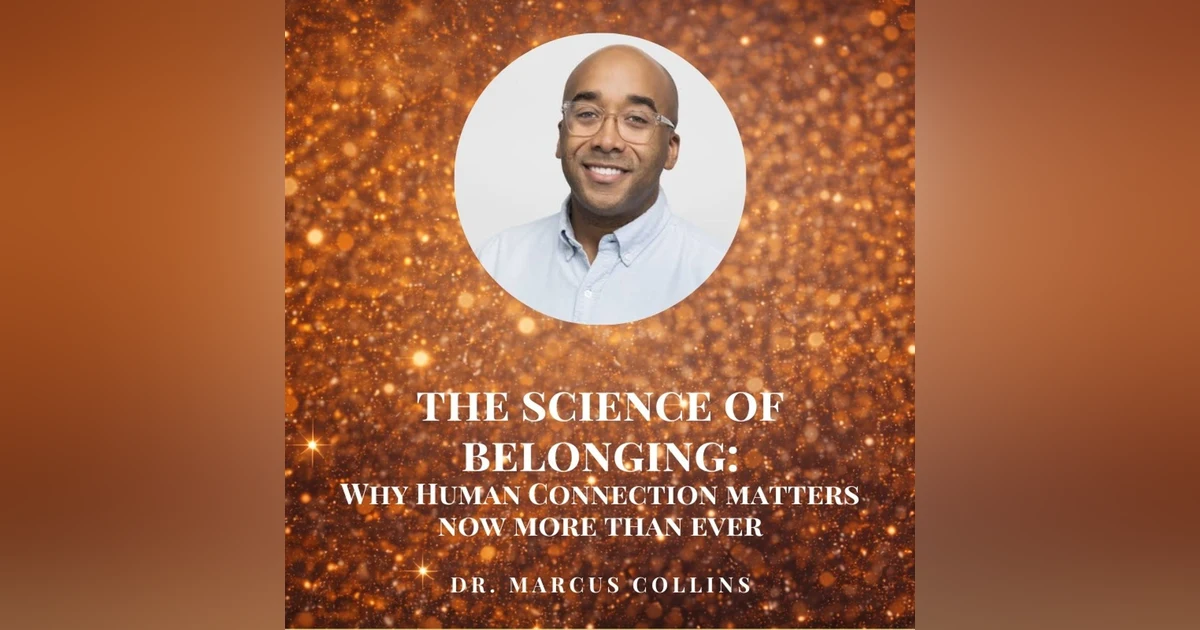
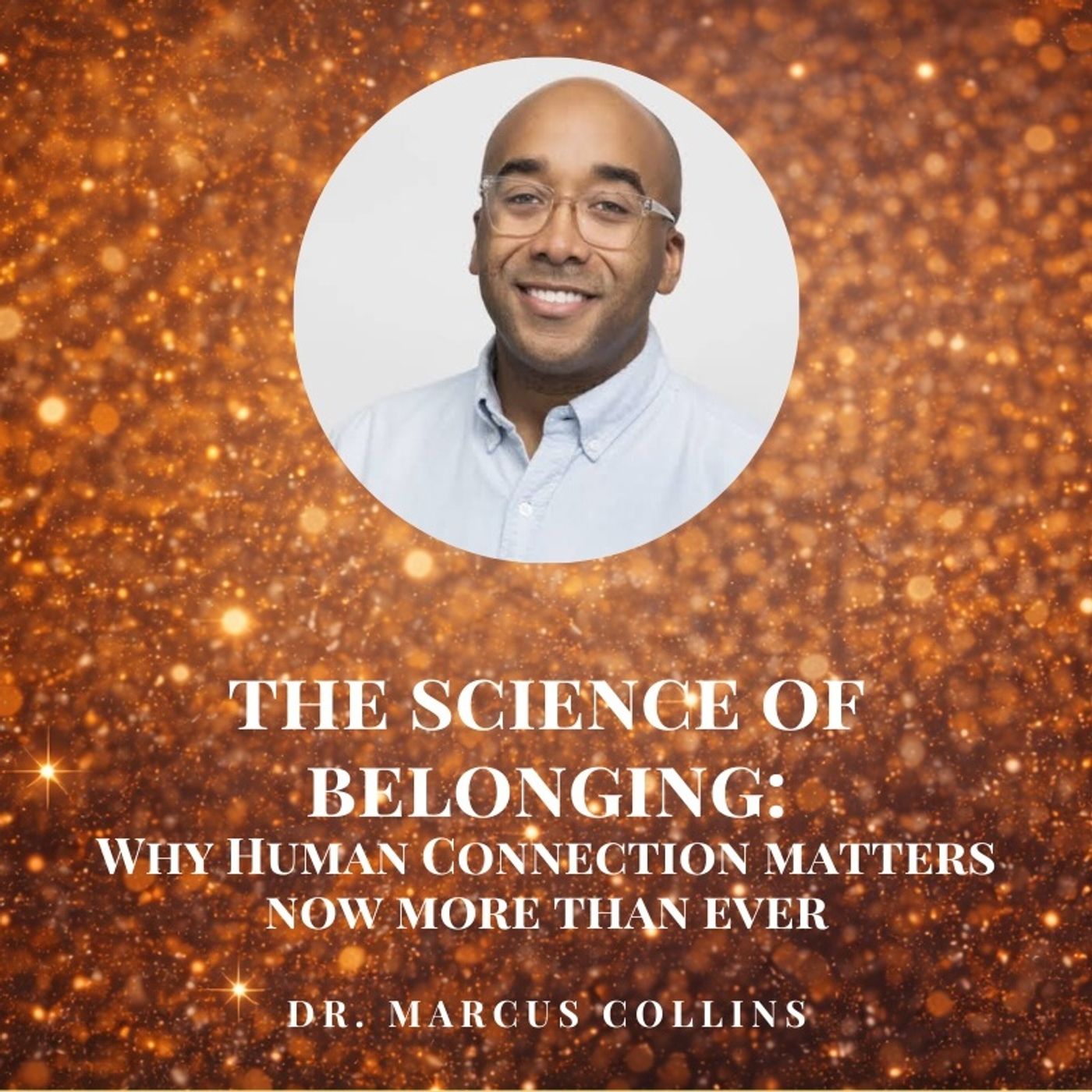
This one feels personal. Because when I look back at the moments that changed my life, they all have one thing in common: people. A conversation. A person. A connection. That's why I started Quick Before You Forget. And that's why this...
This one feels personal.
Because when I look back at the moments that changed my life, they all have one thing in common: people.
A conversation. A person. A connection.
That's why I started Quick Before You Forget.
And that's why this conversation with Dr. Marcus Collins means so much to me.
We talked about culture, belonging, empathy, curiosity, leadership, and what it means to find your people in a world that often feels more divided than connected. But the line that stayed with me was simple and haunting:
"The challenge isn't that you don't belong. You just haven't found your people yet."
If you've ever questioned where you fit, who you are, or whether your people exist, this episode is for you. Because sometimes the reminder we need most is that we're not nearly as alone as we think we are. And what hope and comfort there is in that simple truth.
Connect with Marcus:
Website: https://marctothec.com/home
LinkedIn: https://www.linkedin.com/in/drmarcuscollins/
Instagram: https://www.instagram.com/marctothec
0:00 The more I understood us, the better my work became. I mean, I'm talking like hockey stick difference. Like it went from like I'm kind of good to like really really good and like wow. And it's only because of my proximity to humanity, to people. And what I realized social being people is that we are social animals by nature. Everything we do is given to be connected, to be together. We crash into each other, right and our ability to evolve as a species is because of our ability to socialize and collaborate. And I just realized that this is the most important aspect of everything that I do.
1:14 Marcus Collins, welcome to quick before you forget. Thanks for having me. How fun is this? It's so fun. I'm so excited and I'm so grateful you're here. So friends, you are in for a fun ride with Marcus. He is a cultural strategist, best selling author, and professor at the University of Michigan Ross School of Business, whose work explores how culture shapes human behavior. Earlier in his career, he worked in the music and technology industries, writing and producing music, leading digital strategy for Beyonce, and helping drive partnership marketing at Apple's iTunes. These experiences gave him a front row seat to the way that stories, identity, and community move people, a theme he explores in his award winning book Book for the Culture Today. We're here to learn from his story, Marcus, what that looks like is walking a bit through your past, present, and future together.
2:10 Are you ready for that? I think, so, let's give it a shot. Let's go. So, Marcus, A lot of your work focuses around culture and belonging, and I'm curious, when you look back on your life, what were the early moments where communities and people shaped your understanding and development of how you feel about culture and belonging. My existence had always been very communal. When I think about the biggest parts of my life, it wasn't the act of what I was doing as much as it was a people with whom I was doing it. I think about being a Collins. You know, I'm Marcus Collins.
2:54 But my father and his twin brother, WELC. Hurley, married my mother and her sister, and we grew up next door to each other. So I always felt like I was a part of a tribe, you know, in sort of the anthropological framing of tribes and these collections of people that there were expectations of people like us as Collins is, and so I just kind of started there, like this primary identity as a Collins was not like you know, us want house. It was like houses, you know. And I was very active in my church still to this day, but that was very much a part of who we are. You know. My father, Mancol Hurley, my father's brother, Malcol Hurley, was our pastor. My father was a deacon in the church. My mother was a choir director.
3:50 Like it was like it was a thing. It's just what we did, you know. My grandfather was a bish for the church. So like we went to church, but it wasn't just go to church. It was the community of our church. That's very much a part of who I am. I swam on a swim team from six years old through through high school, and the majority of that time was on the same swim team, and those were my people, you know. So it's like these experiences like you know, playing in band at school. You know, these were my friends, but they were also my bandmates. They were my people. And I think that my entire existence have been framed through a communal lens. So I've always thought about community, even though I had the Lan language to call it community. I just always thought about my people and what were the expectations of people like me.
4:39 And these were the groups by which I self identified. Swim team is speaks to my soul. What was your stroke? I was a backstroker, that was my go to, but I swim back that was my like my bread and butter. But I swim that I am as well. I begrudgingly swam the hundred fly, and begrudgingly then I swam in the freestyle relay, fifty freestyle relay, and the individual the medley relay as well. I was a flyer and I was voluntold that I was going to do the two hundred fly and that was rough. Man. I'll tell you that one hundred fly was. I liked that one, but the two hundred was.
5:20 Was no fun. And I need to know what your instrument was and banned. So I started playing clarinet, okay, and I thought, you know, I was like this is it didn't feel masculine enough for me. Like I was like, I know, clarinet for me, Like I was the only guy in the clarinet section full of girls. And I was like, I think I'm in the wrong place. And I remember my mother loving the saxophone. She really liked saxophones. I was like, all I saw, I played xaxophone, but I feel like it was too many fingers, too many fingerings, like a lot so much. And my cousin Terrence took me to go see No Better Blues at an age I was much too young to go see it, but we're gonna see my bet a Blue. And I saw Blake Gilliam, who was Denzel Washington's character, play the trumpet. I was like that, that is what I must play. So I played the trumpet, and I wanted to be bleek Gilliam badly.
6:12 I love that. My older son is twelve and he played the trumpet and it plays the trumpet. He just played in the solo ensemble and got a superior rating. Oh fairly cool. I'm such a proud mama. And you know, it doesn't even sound as bad anymore as you used to. My eldest who's eleven, she's starting to play the trumpet. And when she first started, oh wolf, it was tough. But you know, I hear her playing now. I always tell her that, like your tone is so much warmer and like that's what you want, Like you can learn the fingering, you know, you can learn breath control like tone to have a really nice tone like that is to me, I think the early footings of playing an instrument like piano, it is what it is, like, you know, it's just what it is. But playing like a woodwind, a brad even voice, where you are responsible for the production of sound, not just the kinetic but the actual breath that goes into making the sound, just getting a nice tone as the start.
7:13 Well, and music is such a powerful connector as somebody that's studied music as well as culture and belonging. What what do you think music does for somebody's sense of community or sense of belonging. Well, music is a cultural product, So it's an expression of people like us. So we hear certain aesthetics in the music. It signals for whom it's for. You know that there's a there's a certain beat progression or rhythmatic sequence in like hip hop. Do you go like, all right, I know what the groove is going to be. I mean even in gospel music. So I played piano in church, there's a certain turnaround where you know it is about to happen, like you just know it right. And I think those kind of signalings make you feel at home.
8:06 And just like any other cultural production, music has this ability to make you feel at home even when you're hearing music produced by a different culture that's similar to your own. Did you ever watch did you watch the movie Centers? By chance? No? But tell me more. There is a scene in Centers that is like thus scene that everyone refers to as and without giving away too much of the movie there it's this musical number. The number is musical sequence where they show the progression of like blues music and how it connects to hip hop and how it connects to gospel and all these other things that you find that these rhythms are so interlaced even though they come from different cultural producers, and music as the universal language, just has a way to do this in ways that other universal languages don't. They talking about math as a means of universal language. It is, but it don't feel evocative, like you know, you don't solve an equation to go, oh that really touched my soul? No, no, no, like it's to hear a vocalist we listen to opera and if you don't speak the language, you don't know Italian, it still moves you. I think this is how this is how culture ripples through our social connections, that they make us feel things first, and as we feel things, we think things. And who we say that feeling is thinking.
9:38 Their cognition, ethics all existed in the brain. But as we start to feel things, we associate evaluations to them and then we decide it fits for people like us, and that process of matchmaking it is critical to how we think about who we are in this world and ultimately how we navigate through it. Amen, I need to know do you have music like that that comes to mind for you that really makes you feel grounded? Like do you have a song that you turn to in a moment like I call it like a song of survival, where you turn to it and it kind of brings you back to home, brought back to center.
10:20 I don't know if there's a song that does that in particular, but there is a song, you know they talk about the if you're standing on an island, what song would it be? There is a song it's called Getaway Jordan by Take six. I think the recording came out in nineteen eighty eight. I have listened to this song at least a million times, and that am I sing hyperbolic, But I'm not even kidding. It's on it's every year, It's on my Spotify rap like it. It is the thing, and what I love about it is it's the intersection of all the many things that I like and have found myself connected to. Like though I grew up on hip hop, like I'm a I'm a hip hop fan, like I'm an R and B guy at heart, Like I'm an R and B guy at heart.
11:05 So here's this gospel record, Uh Getaway Jordan that has been arranged with a do wop uh jazz sensibilities with an R and B texture on on on top of it, which really is kind of like I'm a I'm a church kid, you know, I'm a choir boy quite literally. But also I love R and B and I grew up playing jazz as a trumpet player. Like this is like the convergence of the world. And these guys just happen to be the epitome of vocal music, like they are the absolute best. They're your favorite singer's favorite singer take six. They're the best, but this it the song.
11:51 It's grounding in a sense that it reminds me of when I first discovered them, as you know, as one of I was eleven years old, ten years old at the time I discovered them, and I remember like the curiosity, just being like, oh my gosh, I have never heard anything like this before in my life, and I just listen to it over and over and over and over and over again. Now you fast forward thirty some odd years later, I still listen to it like that and hear new things like that. That's that kind of thing reminds me of who I was, but also signals who I could be. The more I lean into too things and find what to find. The novel in the Familiar, I.
12:39 Love that so much and it reminds me a little bit. I hear the passion in your voice talking about music, and it takes me to you know, your your LinkedIn profile has a lot of really cool things that could distract people from this one thing at that kind of like the bottom. It's a little buried, but it talks about your love of music, and I want to know how you went from you know, the choir boy and the trumpet player to working with Beyonce and what that. You know what that whole experience taught you? And take your time with the story, but you know what, what did that experience teach you about community and music that you that you haven't already said. That's a really good framing. I so if you asked me when I was a kid what I wanted to be, I wanted to be Michael Jackson. Like that, that's what I wanted to be. I want to be Michael. You know, I practiced in the mirror.
13:29 The whole nine practiced in the mirror. Oh yeah, oh yeah, I practiced. I'd practiced my my shuffle proper. You practiced like what what? What? Like what songs were? It was really the video Don't Stop Till You Get Enough. It's like I was just trying to get that, like get that whole thing. And that was the case, Like I wanted to be Michael. Loved Michael, still love Michael, loved Michael. But then the spring of nineteen ninety one, I saw a video of four guys from Philadelphia named Nate, Mike, Sean jan Yer boised him in and I was like them that my my obsession is what they really turned into.
14:12 Like these guys they were they were everything to me, I'll be honest, and and like they could sing, they saying in the way I liked to sing or wanted to sing. I should say again that that R and B sensibility. They were like nice guys, like they're you know, like they were a clean cut they wore pep peppy clothes, and you know they were there were nice guys. There were nice guys, you know, and I felt like that's that's how I was, you know, like grew up in Detroit and I was a guy. I was a church boy. I was a good kid. You know. I wasn't get into a lot of trouble. I was mischievous, but not not a troublemaker. And I was like, these are the like I was like, that's who I looked up to. In fact, I would wear like like a uniform every day when I was in the seventh grade, like or a bois Men uniform. It was like white shirt, tie jeans, just like these guys, Like I've really them and my my fixations, like I wanted to be the fifth member of Voice to Men. That was it. I was like that.
15:10 So if I got voice him and stuff in my office right now, Like that's how much since these guys. It's like I want to be the fifth member of Voice to Men. And that was sort of the ambition. I had a singing group and we fashioned ourselves off for Boys to Man. We listen to all their music all weigh in. But by the time I was about to graduate from high school, you know, my parents says, listen. You know that was fun, but now this is serious time. You know, what are you going to study? What are you going to do? And I had done well in math and science. So those days, the nineties, if you did well math and science, you're a black kid from Detroit, You're going to be an engineer. So I went to study engineering, but in my heart of hearts, I wanted to be in Voice to Men. My parents like, come on, don't be stupid, get you hit out your ass, like come on, you to do this thing, you know. So I go to Michigan to study engineering, and I realized that, like, I'm not that into it. I thought it was interesting, I just wasn't terribly interested. And I came home and said, Mom and dad, I don't think engineering is for me.
16:07 My mother's an entrepreneur. My father's an entrepreneur. My dad was an academic. Sorry flip that my dad was an entrepreneur. My mother was an academic. And my mother goes, just wait till you get into your major. You're going to love it. I go, all right, I trust you, you know, mom, I trust you, Mom, you know. I did not love it at all. I realized very very quickly this was not for me. My GPA was tangible proof that I wasn't doing so well in it. So I took some music theory courses and I fell in love with major sevenths. I was like, this sound sounds so familiar and warm and bright. It was like all the things. And I came home and said Mom and Dad, I think I want to be a songwriter. To go, oh, no, you don't.
16:50 That is not the case. So I finished my engineering degree, but I spent all my time where I should have been in the classroom, taking music theory course and recording music in the studio that was at the in School of Music when I was campus in Michigan. So I was just like learning how to write and produce and record. Graduated right to nine to eleven, so the job market was terrible, and I thought that was God's divine sign telling me to go into music. So that's so I did. I went into the music industry. I ran a recording studio for one of my professors in the School of music, and I was like recording music with my friends. I'd say, my friends come from Detraite to record, we make records, and then I go to New York and shop music with a business partner of mine and that was going okay, and we had like some minor successes, but it was like, it felt very promising until I realized the music industry was not going to sustain me as a creator. So I was like, man, I'm not gonna be the fifth member of Boys to Men. Apparently I'm not going to be a babyface either, who I wanted to be. I was like, well, maybe, I guess like I can go into the business side of music, and like, I helped those artists get their music heard, and I figured marketing was the most creative form of business, so I'll do that.
18:08 So I went Scoogy my MBA, studying strategic brand management, and I got a gig working at Apple, which was awesome to partner marketing at iTunes managing our relationship with Nike Sports Music, and it was it was phenomenal. You know. Apple was like a dream job for me. And around that time, I met a guy named Matthew Knowles who has a daughter named Beyonce Knowles. And he goes, wait a second, let me get this straight. You were an engineer who started a music company. You have an NBA, you work at Apple, and you're black. Dude, You're a unicorn. You don't exist, You're not real. Like no, no, no, I'm real. She says, well, you should come run digital strategy for Beyonce, and I said, I should totally do that.
18:52 And that's how I found myself running digital strategy for for Beyonce. It was, you know, it's it's you always say that, you know, we think about our trajectory as linear. It definitely was not linear, but it was. It was the fortunate alchemy of many failures. You know. I realized to say, what I realized about community in music is that I realized that, you know, I'm not as good as Nate Mike sean One. So even if I wanted to, I don't think it would have been made in the group, and even the group that I had started in high school. You know, we didn't. It didn't didn't happen for us, you know, and that forced me into force me shifted my trajectory directly into engineering, which my parents want me to do. But even there, music was calling. You know.
19:42 I found myself in music, and I was like, all right, if I can't, don't. I don't have the instrument to sing like these guys, but I could certainly write, like I just felt very excited about that. But even doing that, putting you know, music in the world, shopping music, you know, that didn't work for me either, And maybe I didn't do it long enough, who knows. But I found myself in music yet again, this time as a marketer. And what I realized that, you know, these are my people. I'm a musician, you know, this is this these are my people. This is where where I belong. The difference, however, is how you engage in it. You know, Like everyone was, the body is made of different parts. In every part plays a role, Like is the eye more important than the foot? Well, someone without a foot would be like, I don't know, fam you know, like, you know, every everything has has a role. It's it's it's fitting, and I realized that I had to find where I I best, I was best suited. And I've spent so much of my life working in music even to this day, like I work with clients who who who exist in the world with music. So I'm still in it, not in the way that I thought I was going to. And here I am still involved in music as a practitioner at church, which is what you know, at least my pastors say, is where I was supposed to be.
21:12 Anyway, I hear that, and you had your parents say the words no, you don't. How did you work through that? Like when you had this calling and you're still doing it now, Like you're. Still like you said, you walk through You. Had this opportunity with Beyonce, you worked at iTunes, like you the music has been a through line for you and you're you know, number one and number two. Fans said, nope, you're doing engineering. So like, how did you figure that out for yourself? I think the words no always demand oh yeah, hold my beer response, Like I feel like that's just kind of always in my things that I do know. I call it delusion. It probably is some delusion, but my my secret power if any other than being able to fall asleep anywhere. Like my secret power is that, like I have like tunnel vision. Once I get focused on a thing and I go, that's what I'm doing. Focused on it. And though you know, there may be indicators and say you should not do this, you should stop, it's not working, et cetera, et cetera, or you know someone says like you have no business doing this, like you're not going to do it, It's not going to happen for you. Like I just sort of I turned completely like silence all of those things and just go head first, commit it to it. And then there may be a point where I go, oh, it needs to shift.
22:43 I e. I'm not gonna be a singer, maybe a songwriter. Not gonna be a songwriter. I'm going to help songwriters get their music heard. Like though it may shift wherever I'm focused on, I am like ten toes down focused on it. So even when my parents say, nah, you're not doing it, I go, mmmm, yes I am. Actually it drives my wife crazy, It drives her absolutely insane. Like if I tell her things, I'm like, oh, I'm not asking for permission, I'm just letting you know that this is what's going to happen. And you know, my dad was the exact same way as I've come to learn. But honestly, it's it's I see it as a gift because if you rely on all the early indicators, then they'll all tell you to stop in most cases. And you know, I know my parents were just trying to protect me, and to some agree, I'm glad they did that, like you know, but for me, they're no, was just that I was got to try it a different way.
23:45 I'm hearing you say that you get laser focused and like, hold my beer, I got this. Don't you tell me what I can't do. I'll figure it out. For the person that doesn't get doesn't know how to get focused, what would your advice be to like get to work through something like that? And because that's actually a really that's really good advice to just you know, put that negativity aside and say, no, I'm just going to focus. But what's the first step, Like how does somebody take that first step toward doing that? I think you got to get curious first, a get identified a thing that's like I am fascinated by this, Like I just wonder how this works, or I wonder where the underlying mechanisms that make this thing go. Like that kind of thing becomes the hook, you know, they they You know, people say don't follow your passions, and I think that's because they don't know what passion is.
24:41 You know, we use the word passion as a shortcut for interests we love. Like you know, someone says, don't follow your passion in Marcus because you're interested in music. Don't follow that. I think that's that's actually the literature will say otherwise, that passion comes from the theological literature, and passion means to suffer, like the passion of the Christ to suffer. Right, So the question becomes what are you willing to suffer for? You know, you suffer for the things that you are very much invested in. So I think that's the first thing to start, is like what am I curious about? I'm willing to suffer for? My cousin Terrence once asked me when I was pursuing the songwriting part of my career, and he asked me, he said, are you willing to be a starving artist for the rest of your life? Not like you're going to be He wasn't sort of damning me, but he was asking me, essentially without saying it, for what are you willing to suffer? Are you willing to be a starving artist? And the truth of the matter, very truthfully said I wasn't. And by that I mean there was something I wanted more out of life that I knew that being a starving artist wouldn't afford me. Like I wanted a family, Like I really wanted a family. I wanted a wife, and I just didn't think that anybody wouldn't marry me in the condition I was. That was a mess. I was a mess, But I didn't think that that would have been possible in the or least
26:13 the manifestation that I wanted it to be was possible with the tructory I was on. So I was like, that's so, I was like, well, let me do the business side of music instead. What are you willing to suffer for? When I started, I started like teaching on the side while I was practicing on the marketing side of the world, Like I was willing to suffer for that, Like I wasn't getting paid anything hardly. In fact, I was actually losing money doing it, spending money doing it, but I was willing to suffer for because I was really curious about it. I think the same thing goes with your listeners. You get to ask yourself what am I curious about? Am I like what a thing that like really fascinates me? And you go, all right, so what don't I know? And am I willing to suffer to get to know it? To close the delta between what I know and what I don't know?
27:11 How long have you been married? We're on what is it twelve? We are on year fourteen. Beautiful, and you said you were a mess, and yet you felt you managed to hook a nice lady and fall in love and stay in love for fourteen years. That's winning, sir. Yeah, you know what, we met business school. That's but you're right, I mean, you're you're right. But that was a that was a really pivotal point of inflection for me. The guy was kind of cutting bait on a thing that my identity was tied to. Like if you asked someone twenty years ago about me who knew me, say, oh, Marcus is a music guy. He's a music guy. He's a music guy, does what he does music guy. But going to business school even though I was pursuing a career in music, I was redefining myself as a marketing guy who worked in music. If you will, that's a big thing to cut bait on.
28:13 Well, you mentioned yourself twenty years ago, and that takes me to a question that I like to ask my guests, which is what advice or what words would you have for twenty two year old you, if you could talk to you. Then I would say to that Marcus that they're more than one way to make it happen. I think, like I said, I was myopic in my view. Again, it's everything is a trade off, just positive consequences of native consequence. Its positive consequence that I was very, very focused the native consequence that I couldn't see beyond beyond the aperture of my own ambitions. But they're more than one way to do a thing. And what I realized years later is that when I was in school, I felt like I was being forced to do engineering. So I was like, I hate it. I absolutely hate it. As opposed looking at engineering saying or what am I gleaning from this?
29:13 Because when I look but fast forward to who I am now, I think the way I think because of engineering. I mean I approach every single problem almost the exact same ways. What are the underlying physics to this thing? What was actually happening? What's going on? What's lying beneath the surface that leads to the thing that we're observing? Like what are the antecedents that lead to a particular outcome? And honestly, like, that's how I approach music. Maybe it's why I wasn't such a good songwriter, but that's how I approached music too, that kind of I listened to thongs, I go, all right, what are the chre changes? We are the melody happening here? Because for me there's three major things chord changes, melody, rhythm. That's it for me, right, the harmonies and rhythm, and every mind listen to something, go so, what's going on here? Or are those changes? Okay? Okay, I got it. I think I got the progress. Okay, great.
30:07 The rhythm I sort of I feel like I have an inclination to sort of naturally lean into and the melody is the thing that kind of hooks you the most. By I look at those things in that one will say, where that's that's obvious, perhaps, but that dest thing that my mind immediately goes to because to me, those are the building blocks that become the song, just like an engineering at least percially on material side, those are the physical properties or the chemical properties that give things the physical aesthetic and physical properties that we use, and the same thing today as a as a scholar, I was looking at what's going on here, what's happening here underneath, and leverage the literature and the theory to help explain the phenomenon that's happening to the naked eye. So I am a better thinker because I was an engineer, and that probably would be an even better thinker if I were a better engineer, and that would have happened if I wasn't so myopic in my view, and that there was only one way to do this, that I'm basically just going to pass through school and you know, just graduate.
31:18 I don't even want the degree. In fact, I didn't have my own degree, my degree set and my parents in their office in their house for fifteen years. I was like it was like it wasn't for me, it was for y'all. But this degree is not for me. It's for y'all, you know, And like that a bit of stubbornness. I'll be honest, The stubborn side of me made me blind to the many permutations of possibilities I probably would have led to greater outcomes or at the very least less pain. You're definitely very self aware about all of it, which is more than some are, and that's a great thing.
32:01 But also you said something that spoke to my soul when you said that there's more than one way to make it happen, Because what I heard in that beyond what you said was people and how different people have different perspectives and different things to offer on your journey. And I'm wondering how you have integrated what you've learned about community and people into your work on culture. Oh wow, I didn't know anything about people for a very long time, other than when I knew anecdotally as an engineer. I think I took one sociology class that I slept through, honestly, which is ironic because today most of my academic literature sits in the world of sociology.
32:47 I was gonna say that's. I mean psychology and sociology and social work, and like all those things kind of are related, And I would say rctially to marketing. Yes, exactly. I didn't do myself any favors. I'm always going to my in my youth, I was always going to do it the hard way. Unfortunately, again back to this idea of there's more than one ways to do things. I didn't know very much about people, and I was well into my marketing career that that began to change. I had dinner with my then fiance now wife and her friend from New York post college, and we're at dinner and her friend, Sarah, who is a social worker here at Michigan at U of M. She was talking about, like in social we do this social did I talk about her job? You know it's social we do this?
33:38 You know, social we do that. And I kept asking myself, why does she keep saying that? Because I say the exact same things as the social media marketer an agency, and like she's saying exactly what I'm saying. I go, oh, because socialist people, that's why. And immediately I had this like sort of it's like a wave of you for it. I go, wow, social is people. I mean like it's like I felt like I feel like an epiphany of sorts. And immediately that epiphany turned to dread because I realized I knew nothing about people, and I'm like, oh, my goodness, I'm a fraud. I know. I knew the word Freudian slip, that's about it. And now and then I knew that Marx was like a controversial figure, but that's about it.
34:22 And I go, oh, man, this isn't good. I'm going to get fired. And I remember telling my fiance that I was like anxious about it, and I was really concerned, and she's like, well, why don't you read about, you know, the behoral sciences, And I legit was like, I don't read books. I read articles. That's how stupid I was. And she goes, well, you should read more than an article. You get more depth. So she gave me a book from one of her friends, mentors jumping by the name of Dan Ayellie, who wrote a book called Predictably Irrational. And I read the book and it completely blew me away, like it rang a bell that I couldn't unring. And I was so fascinated that I went back and read it again, and then I read it a third time, but this time I highlighted all the research I thought was really interesting, and I went to go read that research, and Kindomn led me to Lowenstein. Lowenstein led me to Condomen.
35:18 Kindomn led me to all these other scholars. And this was reading. I just kept reading and reading and reading and reading. And as I read, I started to learn more about us as a species, the underlying physics of humanity and you know, lo and behold. The more I understood us, the better my work became. I mean, I'm talking like hockey stick difference. Like it went from like I'm kind of good to like really really good and like wow. And it's only because of my proximity to humanity, to people. And what I realized social being people is that we are a social animals by nature. Everything we do is given to be connected, to be together. We crash into each other, and our ability to evolve as a species is because of our ability to socialize and collaborate.
36:16 And I just realized that this is the most important aspect of everything that I do, understanding humanity and what is the governing operating system of humanity? Culture? And here I find myself very much invested in cultural studies, understanding what makes us tick as a collective, not as individuals. Per se, but as a collective what makes us move and concert the way that we do. And what I find is while it's helped me be a better marketer, to help me be a better professor for sure, instructor, educator, but I think it also helps me be a better human in that I realize that there are many permutations of reality, many permutations of meaning with regards to how the world manifests, and therefore I don't typically hold objective truth in my mind. I know that my truth is just as valid as someone else's, and that helps me humanize them even if I don't agree with them. Even if I don't agree, I go, I see how you got there, And because I see how you can get there, I'm therefore more inclined to see the humanity in you and that helps. I think that helps make for more civil exchanges, and Lord knows me more of that these days.
37:39 Yeah, we do. We need more just human everything, human connection, human everything. So that makes me wonder what do people get wrong about culture? And if it's separate belonging, but if it's the same role. With that, no, The biggest challenge for us when it comes to culture is one we have a humoris about it. We think that we know it because we experience it. You know, the culture is abstract, it is esoteric, it's intangible. It's like explaining water to a fish. It's in everything because it is everything, and that the esoteric nature of culture makes it very difficult to describe. Raymond Williams one of the most profound scholars of culture, and once said the culture is probably one of the three most difficult words to define because of its omnipresence. So it's hard for us to define it. Then our hubris makes it even harder to even accept that the way we've been talking about it probably is superficial. In the world of marketing in particular, we use culture as a shortcut of popularity and we go, let's get our idea out in the culture. What for me is like, let's make our idea popular. What's going on in culture? Where people watching, what are they eating, where they wearing, what are they doing?
39:06 And while these things are cultural role they're byproducts of culture, they're not culture itself. And when we use these sort of superficial ways to describe culture, I think we rob our ability to fully engage in it. A mil Dirk Hine. When the founding fathers of sociology talks about culture as a system of conventions and expectations that de market who we are and government people like us do, and that system the system, it's everything. It is the way by which we see the world, translated and engaged with it accordingly. So when marketers talked about getting our ideas out into culture, what really mean is to get our ideas adopted into an operating system of a given group of people. And when we do that, well, things change drastically. But when we look at people as like just what's cool, what's happening, where they watching, what are they're doing, and we're going to mimic that, well, that's like the easiest recipe to be dismissed. And because we think about culture and this very superficial way, I think we miss how they miss the richness of culture and how our cultures can be simultaneously paradoxically very very different but also very very similar, and in doing so it helps us find greater connection. Right, So we talk about belonging, we ask ourselves, do people
40:36 like me do something like this? We find our people, you know, we were given to that A milderk him refer to this as a collective effortvescence, which is just the best phrase and it what it signifies is that people who subscribe to the same culture act and concert in an effort to promote social solidarity among themselves. So we are in cline to act accordingly to maintain good standing citizenship within our people to belong. Therefore, you know, belonging is a byproduct of culture, and as social animals, we are given to belong. What would you say to somebody who doesn't feel like they belong.
41:20 I'd say, uh, belong to whom. You know, there are people out there, you know, there's to every you know, to every every force is the equal and opposite force. So while there are people who are die hard I don't know, uh, die hard K pop fans, there are people who like I can't stand K pop. Those are your people, right like the you know, if you think about the diffusion curve or the bill curve or the normal curve, they are two sides of the spectrum, you know. The way everon Rogers talked about it that ideas disperse in the population through innovators, early adopters, or the majority of late majority and laggards. The laggarts are just the equal opposite of the innovators, right, and the same thing goes here the challenge that you just haven't found your people yet, but they're out there. The idea is to find your people, you got to first know who you are, and that's the hard part. Like the the belonging isn't as difficult as realizing who you are first to know for whom or with whom you belong because oftentimes you know, you meet people, you go, we just clicked, We just clicked.
42:32 It was like effortless. Like those kind of connections are typically because you all see the world very similarly, or you're fascinated by the way the other person sees the world and considering what we talked about earlier. When you're trying to find your thing, it starts with curiosity. You need to go, I want to know more about that because that's kind of cool, or I want to know I want to know more about this person because we seem so similar. They're you know, they're two different sides of the same coin. Quick before you forget, what small shift can people make that has an outsized impact on how they connect with others. Empathy, the smallest shift is realizing a truth of fact that things aren't the way they are, they are the way that we are, That the world is not objective, it is subjective, and your truth is just as real and just as valid as someone else's. So long as someone else's truth or your truth doesn't mean their eradication, their mitigation, their opration, their oppression, so long as it doesn't mean their erasure, then like these two things can coexist.
43:43 In fact, in fact, we're better off when they do. Like that's sort of the beauty of it all. This is why diversity, equity inclusion is always you know, associated, because the diverse perspectives well. First, when we realize that our perspective aren't the only ones, that it opens up to be more inclusive of people who have different perspectives. And we realize that our perspective doesn't doesn't have more weight or merit than someone else's that we feel like, we realize there's some equity with regards to how our perspectives coincide, and by its very nature, then we realize that hey, diverse perspectives can help us see the world more vividly, and it windens the aperture of how the world manifests, which then uncovers new opportunities, new solutions that we may have never even considered. And doing that, the world gets a lot more vivid, and I think the world becomes a lot more meaningful. And that's just a small mental shift.
44:50 It's a big one. It's a little big one, right, It's a little shift that has a vague impact, which is a powerful thing in today's world. So what is something about culture or human behavior that you hope people cling on to or remember in hard times? Because you know, I'm thinking about the pressure we're under, and I know that like pressure. There's quotes out there and I don't know who to attribute it to, but there's quotes about pressure revealing culture. So it makes me curious what leaders do right and wrong under pressure, which we're all in right now in the country and in the world. It just feels like a very high pressure moment.
45:30 I think it's easy in times of pressure, in times of fear, to create in groups and out groups because our brain is wired for that. It means safety. You know, I'm morbilling to trust people who are like me. And when you can't read people's minds or you don't have any stated preferences of how people see the world. You look at the veneer, how they dress, the colors, their artifacts, their behaviors, their language. These are all expressions or they're all shared ways of life for a given group of people.
46:11 But that sort of bifurcation of in and out only makes the world smaller for us. It's safer in our minds, but the world is much more smaller. We live in this massive assembly of human beings that we call states, countries, continents, even and therefore, if we are to be in community within a given group of people, then we need to redefine who's in and who's out. We have a natural inclination to have in and out, maybe right now, at least in this country, we need to redefine what's in and what's out. What's in should be the collective shared imaginations of the given group of people. And you know, quite frankly, I think that we all agree that that was going to be the Constitution, the spirit of the Constitution in today's context, that was the thing that was the imagination that kind of unified us all. But we have, like just like any religion, you know, we've created denominationisms, and these denominations have said this is us, that's them, and we are different. But you know it's the scripture would say we are one body of price. The idea there is that we need to be unified. There is
47:42 you look at bibically beginning at times, there are just two kinds of people Jews and gentiles, them and them. That's it, And that's kind of how we need to think about ourselves. That there are the people who subscribe to this broader imagination, right but realize that there are different expressions of that imagination that don't exclude us. And then realize that then there's people who are completely against that imagination. Those aren't our people. That was beautifully said in a very difficult conversation to have right now. So I appreciate how well spoken that was, and thank you. I want to know if you had a megaphone to say one thing that everybody had to listen to right now, what would it be, Oh.
48:41 Dennis, gracious, I would say, imagine if it were you, Imagine if it were your kid. Imagine if it were your wife. Imagine if it was your husband, Imagine if it were you. I think right now today the biggest challenge we have is an empathy deficiency that we refuse to see the world outside of our own lenses, and we refuse to see ourself in that scenario until it actually happens to us. When it happens to us, we go, oh, man, I didn't want this, this is what I wanted. It's like, but that's actually what you asked for. And the thing is, you never thought it would happen to you. And if I had a megaphone, I would go, imagine if it happened to you, Imagine if it were you. And oh, by the way, it can happen to you. So by all means, please please please practice a little empathy. That's that's the thing that's missing the most. If we just had a little bit more empathy, I think we go, hey, man, like I don't agree with you, but I see how you got there, and like I feel for you. I feel for you, or better I feel with you. I think that you know, we only see that happen in times of great, great tragedy. Unfortunately, you know, there are moments of the country where you know, we were facing some really really hard challenges and we found we found
50:15 solidarity because we started to see each other's humanity because we were we saw what these ramifications meant for us, and I think that we don't have to wait till that happens, that we should be able to see it in other people. I agree one hundred per I did see on your social media something very exciting about a new book that you finished. At the end of last year. Talk to me about that. Yes, So I spent my entire career, scholarly career, that is, studying culture and it's influence and impact of human behavior. As a practitioner, I worked in it, and the scholarship is sort of taking the things that did in practice with what we know literature, and that became sort of my platform for which my work was brought to the world.
51:09 But I realized, though, after writing for the culture and having the great, great, great, great pleasure and great fortune to work with a lot of companies to help them instill that thinking into the walls of your organization, I realized that their ability to apply the thinking had very little to do with skill, know how, talent, technology, fair little to do with that, but everything to do with their organizational culture. And he goes, oh, man, like, you're hiring these amazing people from great schools with great experiences, just really really super people and they're coming here and somehow or another, they just can't make it work. It's like watching a basketball team or a baseball team, or any sports team, like yet the best players together and somehow, a known they kind of suck. What's going on here?
52:00 What's happening here? And I see that happening in organizations over and over and over again, and that in helping companies or institutionalize the thinking of my work, I have to see it like firsthand, like right, you know, front and center. And I realized that the only way that we become better in the front stage what we put out into the world, be it marketing, whatever, you know, whatever presentation that is the company that that presentation is highly dependent on the backstage. If you want to have a better front stage production, you need a more optimized backstage.
52:44 You can have the best actors with the best costumery, the best script, the best props, the best everything, but it won't be its best production unless the backstage is optimized. So this work I've been doing over the last two and a half years now studying organizational culture and looking at the underlying physics that are at play when people come together to engage the collective production of work. Sounds very necessary right now, Amen, Marcus, I could talk to you for hours. Unfortunately we don't have hours, but I want to ask you two more questions, and those are, first of all, if there's something that I didn't ask that you would want to share after our conversation, that would be lovely. And people need more Marcus in their lives.
53:31 So can you talk us through where they can find you and your your work and your content. That's very kind. If there's something you didn't ask that I would want to say, is it that you know? I think no matter where I've been in my life, like I've always remained in student posture, it's always like there's so much more to learn. I think. I think that's why I did well as a doctoral student, because is I came in humble, like I was, like, I don't know anything. Teach me the ways. And as I learned more, I realized like a good doctoral student should is that you don't know anything, and so I kind of I didn't have to be knocked off a pedestal.
54:14 I came in with that humility and I still had that humility today and I think that like if I were to give anyone advice to be that, it's like, you know, stay humble, but also stay hungry. Good night, Like have an insatiable curiosity, insatiable hunger for the thing that you're that you're going after in an effort to be the best at it, but realizing that you're always just buffering. You never sort of arrive. And that's the beauty of it of it all. As far as where you can find me, I'm across the web and you search doctor Marcus Collins. Hopefully good stuff will pop up, but uh, you can find me online at mark to the c M A R C t O T H E C or on substack, substack dot com, mark to the Sea, install LinkedIn. And I also have a column that I write every week on a fast company and my own podcast, We're a few episodes behind you, my own podcast from the Culture, where we're exploring the inner workings of organizational culture and what it means for leaders at large.
55:22 Thank you for all of that. Thank you for pouring into us today with your genius and your just your heart and your soul. I really appreciate it, really appreciate you, and we will see you next time again on Quick Before You Forget. Thank you, thank you, thank you for being here with me today on Quick Before You Forget. Please like, share and subscribe as that helps the show so much and I really appreciate it. And I'll see you next time on Quick Before You Forget.