The Power of One: Why Impact Beats Attention (And How Relationships Change Everything)

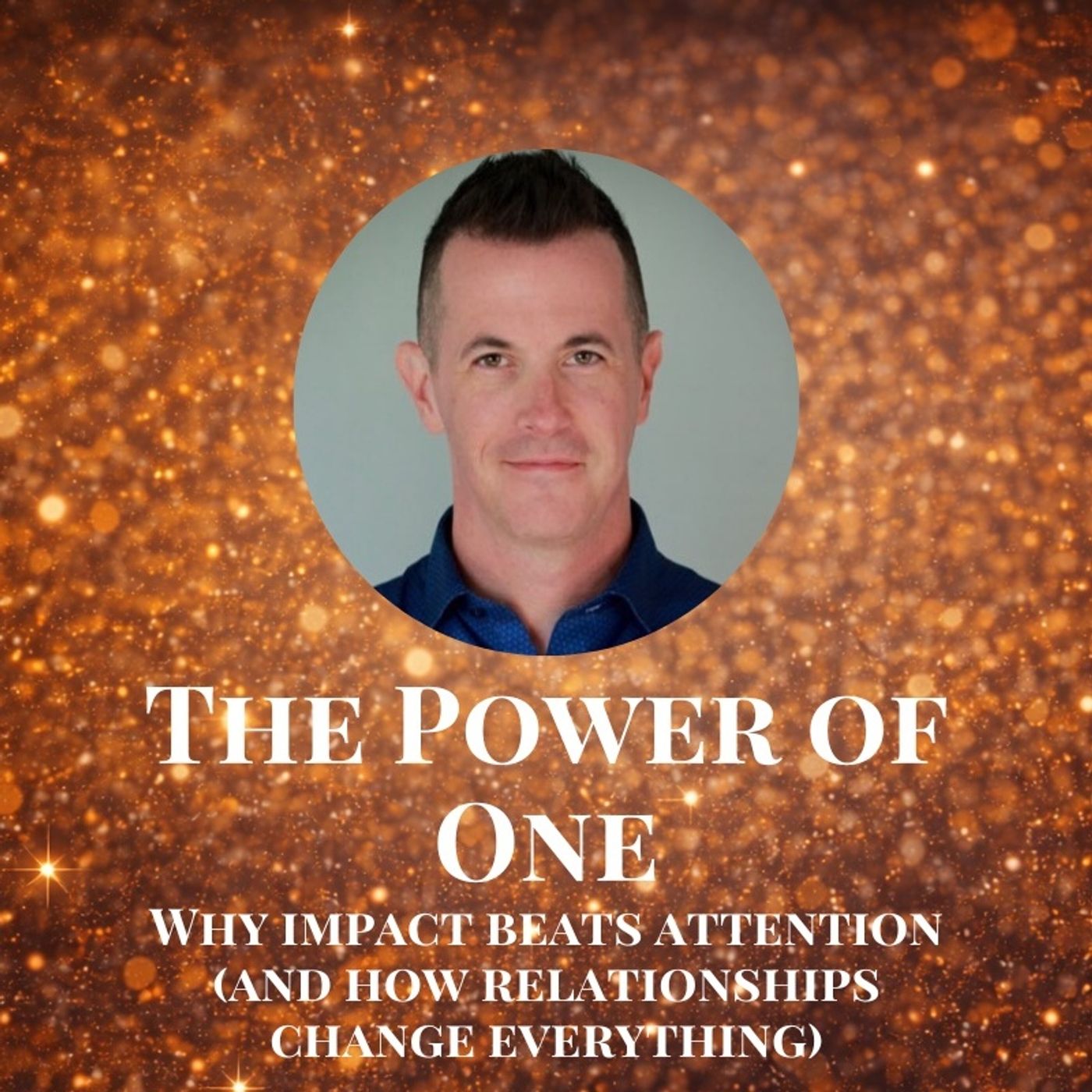
He walked away from the dream people spend their whole lives chasing. And it led him straight to the life he was actually meant to live.
In this deeply emotional and wildly honest episode of Quick Before You Forget, host Ty Schmidt learns from Jason Fitz, a Juilliard-trained violinist, former touring musician with platinum records, and now one of the most respected voices in sports media, to talk about what it really takes to build a life that feels like yours.
This is a conversation about betting on yourself before you have proof, following curiosity when the path makes no sense, choosing purpose over applause, and learning that the people who change your life are often the ones who simply make you feel seen.
Jason shares the nonlinear story of going from classical violin and country music stages to ESPN and Yahoo Sports, but this episode is about so much more than career reinvention. It’s about self-belief, identity, gratitude, grief, presence, emotional honesty, and the kind of impact that lasts longer than fame ever could.
If you’ve ever wondered whether it’s too late to pivot, whether your path makes sense, whether your struggle has shaped you for something greater, or whether relationships still matter in a world obsessed with overnight success, this one is for you.
In this episode, we talk about:
How Jason Fitz went from Juilliard to national sports media
Why the most powerful career moves rarely look logical at first
The truth about self-belief when nobody else understands your vision
Why your why has to be stronger than your fear
How real relationships create the “benefit of the doubt” that changes everything
What gratitude can do in your darkest moments
The power of being emotional, honest, and fully human
Why presence matters more than chasing the next thing
How to stop living for one version of yourself and embrace the fullness of who you are
This episode is for the dreamers, the feelers, the builders, the pivoters, the people with a complicated story, and the ones trying to remember who they are while becoming who they’re meant to be.
00:00 Why relationships still matter more than virality
01:21 Meet Jason Fitz
03:39 From child violin prodigy to Juilliard
08:19 How music became his first career
10:39 The moment success stopped feeling fulfilling
11:54 Starting a sports podcast before it was cool
13:01 “I don’t need 40,000 listeners. I need one.”
13:35 The DM that changed his life
15:34 How ESPN finally noticed him
17:54 Quitting the band and betting on himself
20:18 Belief, fear, and the courage to keep going
22:38 Why your why has to be your drug
29:48 The mentor who changed everything
34:32 Benefit of the doubt changes everything
36:58 The power of being seen
39:18 Don’t just look for help — become it
41:38 Getting cut by ESPN and responding with gratitude
45:57 Perspective can be power or prison
48:13 Gratitude in the middle of real life
50:32 Family pain, healing, and honesty
52:50 How to stay grounded in the present
55:12 Stop chasing the next thing
57:33 The songs that bring him back to himself
58:20 What Turn the Page really meant to him
01:00:25 The magic of building something new
01:00:58 Why he’ll never let go of his emotions
01:02:40 You are allowed to be more than one thing
01:03:35 What matters most right now
01:05:03 Jason’s final message to the world
01:06:14 Where to find Jason Fitz
01:06:54 Outro Quick before you forget: You do not need a straight line.
You need courage, clarity, and the willingness to trust what keeps calling you.
Follow Jason Fitz: @jasonfitz Watch and listen via Yahoo Sports, Fox Sports Radio, and Yahoo Sports TV.
0:00 If you spend a year getting coffee with somebody and really getting to know somebody, and every time you get coffee with them, you're like, yeah, I'm just in the studio working on some new songs. Eventually they'll say, hey, I. Want to hear what you work on, and then you show it to them what you've accomplished in that process, it may not even been your tent is benefit of the doubt, and benefit of the doubt is the most beautiful. Thing in the world. If someone consumes your work while giving you benefit of the doubt, they see every single second of it differently. I think we live in too much of a society that wants TikTok to make us famous overnight without actually establishing the foundations a benefit of the doubt to come with relationships. And that's why you know, certainly people have gotten richer and more famous in the amount of time than I have, and they have built things far bigger than I could ever imagine in the amount of time I've been working on this. But the thing that will feed me when I'm seventy is that I can still text John.
0:55 McLain and tell them I love him, and that matters to me. Hello, and welcome to Quick Before You Forget, a personal growth and development podcast aimed at empowering people to build their unreal life from the ground up, using tools like music, mindset, and movement to remember who they are while they build who they become. And today I am so excited to have Jason fits with me. He is someone who's built a life following curiosity instead of a straight line. Jason started as a classically trained violinist studying at Juilliard, went on to tour the world as a working musician with gold and platinum records, and somehow follow that thread all the way to national sports media, most recently with Yahoo Sports.
2:05 At his core, though, is a connector between music and sports, fans and stories and who we were with who we are meant to be. Jason, Welcome to Quick Before You Forget. Look that intro gave me goosebumps. I really appreciate that. It's kind and thanks. I'm glad we get to hang out and get to talk a little bit. And it's really cool that you're doing something like this because I think so many people, so many people get lost in the process and get lost in where they want to be, and it's just it's such a hard world to figure out how to find joy and. All of it. So I'm excited to hang out and talk to you. Thank you. That means the world to me. I really appreciate it. But also that really grounds me because it all comes from gratitude for me and the first group of guests that I'm fortunate and blessed enough to have, Like yourself, I think of his friends and people who have in some way influenced my life for the better.
3:01 So this, this, this conversation, this podcast is a thank you note to you and to anybody listening for being here and being part of my story. So I'm just I'm just so grateful. Honestly, it's incredible. It's kind of you to say. I mean every word, so I you know, I think about a lot. It's it's it's interesting to me your story, like your story is one of the most interesting and fascinating, not straight line careers that I've ever gotten the opportunity to hear. And I want you to walk us through as best you can and take take your time, take a couple of minutes and walk us through kind of like past, present and future, Jason, Like, how did you get to be now the you know, commentator for Yahoo Sports, but like, how did you get there?
3:48 So it's it's crazy because my life. If you'd asked me twenty years ago, I don't think I would know how to describe where I am today. I started playing the violin when I was four, and that was because my mom, my mom, wanted. To take piano lessons. We lived in Vegas as a kid, and we lived next door to a piano player that had played. For Elvis back in the day. So my mom got a piano and he came over to the house to teach her. And my parents have no They love music, but they have no musical inclination at all. They're essentially toe death. And so my mom would try and play the piano and was awful at it. And after he left for the lessons in the house, I would crawl up on the bench and just by ear I would play like I saw it, I heard it, I recognized it. So they took me, as a really little kid, four years old, to UNLV to.
4:35 See if they adny piano teachers, and they didn't. They only had violin teachers available, so they said, hey, let's start them on violin. Suzuki. Let's start him for six months and then when we have a teacher, we can move him over to a piano. That was the whole plan, right, But I was a stubborn kid, even as a four year old. Amazingly, so I got the Suzuki book. And this is I think. I tell this story because it's indicative of who I am. I got the book and you're supposed to go through it in six months. We were a year and a half in book one. Like I was the worst little violinist you've ever seen in your life. My teachers were begging me, please, God, let's god to piano. But I was like, no, I want to figure this out, Like this is a puzzle, and I'm going to figure this puzzle lot. So it took me a year and a half to get to book one, and then I got through books two, three, four, five, six, seven and eight in the next six months. Once it clicked, it clicked for me and it became life. So by the time I was eight years old, there was a retired teacher that had taught at the Royal Conservatory Music.
5:34 He taught in Las Vegas. He didn't really teach, he was just retired but through one of the Suzuki teachers, I got the connection. He started teaching me. I was practicing eight hours a day by the time I was eight. While I went to public school, I got up early enough that I practiced for hours beforehand. I went to school, I came home, I watched Transformers for thirty minutes. Then I did my homework, and then I practiced until I got my aid in And that was that was life for me in third, fourth, fifth grade. So you play. Cardio hall when I was ten, got into Juliar Prep when I was ten, Like that was all like there was this massive trajectory for me all of a sudden where I was. I mean, it's all I did. All I did was play the violin.
6:15 But the weird side story to this is that my dad, a big Raiders fan. On Sunday's dad loved to watch football, so on Sundays he didn't want to listen to a cat dies what he said when I was little, so he'd go get a dozen donuts and we would split a dozen donuts. We just sit on the couch, me and Dad watching football, and that connective sort of relaxation for me is something that was a common threat. For my whole life. Sports were my disconnect. I didn't have to worry about anything when I was accomplishing. And there's a very famous violinist It's our promo that I, you know, we all looked up to is arguably the. Greatest of his lifetime and promo. And I saw something or read something as a kid where he talked about how he loved to mute sports and practice because if he could watch something while he was practic sing fundamentals, it would make them better. So I started doing that.
7:03 So sports were always sort of ingrained in my life. I was just a violin nerd doing it the whole time. So you know, the funny thing is I didn't grow up around country music. Like my family didn't like country music. I didn't like country music. But you flashed forward to later in life. I, you know, in high school, I sang with some buddies. We got signed to a record deal. We're gonna be the White Boys to men like in DC. Like everybody thought we were gonna do this pop R and B project. We got dropped almost immediately, but at that point we were all listening to like Garth Brooks and Tim McGraw. It was the mid nineties. We were all right in that. So we moved to Nashville. Right. I was a year out of high school, so I was a year into college. We moved to Nashville. We all dropped out. We moved to Nashville. Didn't know a soul. The four of us just moved to Nashville, started singing on voice males for people. We just tried to sing in front of anyone. We sang a cappella. We kept getting record deals and kept losing record deals. I played in the symphony, I played in studio orchestras while I was trying to make a little bit of money. But like, I had no idea I was gonna end up a fiddle player. It wasn't until that band was going to hire a fiddle player that I was like, well, we can't afford to pay another musician on stage.
8:08 I'll just play fiddle. Fiddle and violin are the same instrument. It's just the approach. But I'd spent my whole life playing by ear. And so even though I obviously I could read music, I would get recordings of classical pieces as a kid, and I would go to sleep with them. I listened to like everything for me was oral, So I listened over and over and over again. And so for me, the. Concept of ripping things apart and approaching it from a fiddle standpoint was actually pretty easy. So you flash forward, that changed that most violinists, because this is you know link all the way up to the two thousands, musicians were very stuck on I'm not a fiddle player, I'm a violinist, like that was real for me as a kid, I didn't care. I just wanted to be able to support myself right, So I just started playing fiddle and playing fiddle with the band I was in. That led me to playing fiddle for other people. That led me to the Bean Perry, which is where I had my most notable success. I became the fiddle player and band leader musical director for the band Perry.
9:05 Ride as If I Die Young came out right as it became the number one song in the world. And you know, when I joined the band, there were we had twelve feet of stage in front of Luca Brian and Tim McGraw on tour, nobody knew the song. Within a year, we were playing Dick Clark's New Year's Eve and we were playing Hyde Park in London for one hundred thousand people, like we toured the world. And so I worked my whole life to finally make it in music. And then there was this moment for me where I made it. And I think what I thought was by making it, even if I wasn't getting rich, I was on TV, I was doing okay, I was keeping my lights on. I'm on massive records, I've got. I'm really blessed in my life to have ten or so of these plaques that hang up around my house that are all for different projects. I played on Tim mcgrawn, Matchbox twenty, Michael W. Smith, all sorts of you know, massive projects. I was making it and it just didn't feed my soul. And so the transformative moment in my life was when I sat down with you know, somebody that had helped me, have been an entertainment attorney for me for years, it helped me know me forever, and I said, man.
10:06 I don't love what I do. Like I'm thankful for what I do, and like I can't believe I get to play in front of twenty thousand people every night, but it doesn't move my soul. Like I text everybody, you know time to make the donuts before a show, like I just didn't have this rush from performing. And he said, if I asked a hundred of your friends which you really care about, what would the answer be? And I said sports. He's like, right, figure out how to talk about sports. And this is the thing that I think everybody should hear from somebody in their life. I'm lucky I heard it. I said, well, nobody's gonna take me seriously. I'm a fiddle player. Who he wants to listen to a fiddle player? It's five nine. They can't even Paul mcgirls basketball like, like I got tie the baby hands. I'm not an athlete. Nobody's gonna want to listen to my takes. And he said, I'll never forget this when you've been wildly successful. It's something in the perception. In perception, like when people look at it and think you've been wildly successful, you will get the benefit of the doubt on the next thing you do, no matter what it was. So pick pick wisely, give your all to it, and you'll be fine because everybody will look at it and say, well, God, if he's given up this music thing, he must be great at this and Hi, God, he was one hundred percent right.
11:10 Like I started a podcast before there were podcasts. It was late twenty twelve. I did my first ever podcast. These didn't exist. I sat in my car because I felt like an idiot with a microphone in front of me, and I did ten minutes that I put on Facebook at the time where I just ranted, and I got a handful of comments that were like, oh my god, this is like sitting next to you on the bus. It's all you ever talk about. It's really good for me. That was the rush that I can get from twenty thousand screaming fans. I think it was because it was later in my life. I was accomplishing this on my own. It was a new thing. It just fed my soul. So I ripped it apart. I listened to every sports talk programming thing I could listen to differently. I charted it. What do people do, how do they do it? What are their breaks? Like, how are performances done? I charted it like it was a piece of music. And I figured out that, you know, the first break is twelve minutes into every sports talk radio show you listened to.
12:00 I figured out, you know, the interview is always the third block. I figured all of these things out because I just listened to a bunch of it. And then I launched a real official podcast again. This is probably twenty thirteen. I launched a podcast, and I'm telling you the craziest thing is, like I remember, I got to one point where I have forty five I had forty thousand listens in one episode because I had Sting the pro wrestler on to an episode, and then I had like Chefty, Fallout Boy, and Charlie Daniels all in this. I was everywhere we were going on tour. I was carrying a little thing with me and I would make friends. And my whole thing wasn't I don't want you to come on my podcast because you want to come on my podcast. I just want to be friends with you. And then eventually what I found is like people to be friends and they'd say, hey, I see you tweet about your podcast, like you want me to come on.
12:46 I never asked anybody. They volunteered. That's how I always did it. So I had this episode forty thousand listens. We were in Europe somewhere on tour. I screamed into my mic The next week, I didn't do any interviews because I was like, I got forty thousand listens, They're all gonna to stick with me. That next week I had twelve listens, not twelve thy twelve. And the funniest thing to me is everybody I was on the road with made fun of me. Everybody I was on the road with told me I was an idiot. They're like, why I had emotional what's happen ah belief? Everybody kept saying why what h Why do you waste the time?
13:27 And to this day I remember so distinctly saying I don't need forty thousand listens, I need one. Sorry, sorry, Ty, this is not a moment to apologize. I've told this story a million times, never got an emotional anyway one. I need one listen. And that's crazy thing kept saying, I don't need forty thousand listens, I need one listen. I need one person. They can they can change my life to hear this. And that's honestly what happened. So the funny thing is as I pulled myself together and grabbed my composure, like I've never told this story. God, the funny thing is through Twitter at the time, you could talk to anybody, and I did that. I talked to everybody. I helped anybody I could. And there was a musician that had hit me up and said, hey, I want advice on how to make it. I gave him some advice because we're a village, we all help each other. And it turns out he had a cousin that introduced himself to me on Twitter and he said, Man, I work at ESPN.
14:26 I'd be happy to listen to your pod. So I was like, oh my god, yes, listen. Please sent me. Three pages, three type pages of notes of here are all the things they're not doing right. I was like, okay, hunger down in the lab with the work. So a week later I DM and I said, hey, man, can I email you this week's pod? And he said sure. He called me right after and he said, I've never had anybody take every note. I sat there, I pieced together the show with that. You know, I'm a musician. You tell me what to do, I do it like the Juilliard in me. He's like, you tell me how to do something, I do it right. So I think for me it was this charging moment. And he came back and he said, look, I think you're really good at this. I think you'd have a future at this.
15:09 So the number of people along the way once I started building something, the number of people that weren't in music, that were in sports or in broadcasting that kept saying, wait, you're really good at this. I think you could do this was empowering to me. So I just kept going and going, and my goal was never to get listens. My goal was to get better. Every single show you get, you get one percent better. Every day, you get one percent better. Eventually I look at it like and say, hey, I got the best friends in the world out of this. I met people in cool walks of life. I got better at this, and I'm proud of the work that I did as long as I can say that, I don't really give a damn. About the rest. And so what's crazy is that, you know, then all of a sudden, every time we would come up to the East Coast with the band, I'd fly out a couple days early on my dime, and I just happen to be around ESPN and I go meet with people, and so that you know, that's the way that people started to hear my voice And you know the funny part about that is one day I was walking through the cafeteria at ESPN before I ever worked there, and there's Adam Schefter, who'd been on my pot a couple of times and we became texting buddies. He's sitting with one of the bosses. He immediately knows me and says, oh my god, what are you doing here? So I tell them, Hey, you know, I'm just taking a couple of meetings trying to get people to care. You know, all of the bricks that you stack when you're building, if you build it the right way, if you build with relationships in mind instead of the end goal, if you build with the process in mind, then I think the house comes together. So for me, that all happened twenty sixteen. I got a random call and it was from a small division of ESPN ESPNU in Charlotte doesn't even really exist anymore, and they said, how are you
16:42 on college football? I said I'm great, you know, and they said, can you fly to Charlotte tomorrow? I had a day off of the band I did. I met with everybody. Before you know it, they offered me one day a week on what's called a usage deal in the entertainment business, which means you can get fired after one show if you suck. They offered me a usage deal for a thousand dollars a show, and I tell everybody the number on this because I think it's important. It was one thousand dollars to show. The max I was gonna make was ten thousand dollars. That was it. And so I went to the band and said, hey, I need Mondays off and they said yes, And two weeks before the first show, they changed their mind. They just weren't comfortable with me not being available in case there were shows or whatever else. They changed their mind. So I quit with no idea.
17:22 The max I was gonna make was twelve grand. But you're like, I mean, my whole thing is if ESPN offers you a show with no camera tests, like I didn't do any of the normal things. If I say no, they're never gonna call me again. They're just gonna say, Okay, you thought you wanted to make the jump. So I made the jump, and amazingly, a week after I made the jump, after I told people I was making the jump, a small station in ESPN Radio in Nashville, a small broadcast station. Their tiny station had a morning show that was gonna have a co host opening, and I knew the co host, so they asked if I could come in and do an hour of mock radio with them, and I did. They offered me the job for twenty four thousand dollars a year to do four hours of radio every single morning, and I had to go to every pred's game at night, and I had to do public appearances in the meantime.
18:07 So I started from that point on. I left the band late August of twenty sixteen. My last show was the Alaska State Fair and two days later I made my debut on ESPN. Had never been on TV before as a broadcaster, and that same week I made my radio debut. Had never done four hours of radio, and I just I looked at all of it and said. I'll figure out how to keep my lights on. I'll take a second job if I have to at Starbucks while nobody's looking, and I did. I made the leap with no idea if I was going to keep my lights on, and thank god ESPN loved me, and so before you know it, I was doing fill in radio for ESPN at night, sleeping on a couch in the studio because it was too far from my house, then doing the four hours of morning radio, then going home for the day to try and recalibrate before I had to go back for Pred's practice and prends.
18:54 It's the hardest I've. Ever worked in my life for no money, essentially, while I just hoped ESPN would give me me, you know, a shot for more. And by January twenty eighteen, ESPN moved me to Connecticut and gave me full time shows. I helped large sports center on Snapchat. I had a daily radio show on ESPN for several years. I hosted college. Football Live every day for the company. I got to do Game Day, I got to do Mike and Mike. I got to every major brand in sports at ESPN. I debated on first take, I did all of it, and they changed my life. ESPN took the risk, they took the chance on me. They changed my life, and you know that eventually, I was one of the cuts at ESPN a couple of years ago. But to that end, the worst day you could imagine wasn't for me to add.
19:35 And I looked at it and said, my god, I got to work at ESPN, and an hour after The New York Times put my name in the paper that I'd been cut, Yahoo Sports called and said, if you want to work, we want you to work for me. You know, so I've been at Yahoo. It's just been the most transcendent thing of my life. This is a very long story to tell everybody that a you got to bet on yourself, be recklessly bet on yourself. I believe that. And see they say in sports all the time any music, don't fall in love with the result, fall in love with the process. That is what has fed my entire journey. So it's been the wildest life ever. I've worked my ass off for pennies for most of it, but I wouldn't change any of that because I got what I wanted, which was the chance to make an impact. That's all I ever wanted. So I'm very blessed for and sorry I got so emotional.
20:18 I don't know why I hit me today. Never apologize for that. That is very welcome. This is a safe space, and I am actually very grateful that you let it out, because truly it's important for people to know the breaking point there was belief, and that is that is a scary thing for people. That is where people get where fear can take over. And you know, I know because of research that I've done that chemically, fear and excitement is the same chemical in your brain and it's how we process that that chemical that determines what happens next. So you know, the fact that you had that feeling and emotion around belief in yourself and knowing and trusting and having that curiosity kind of lead the way this whole time. And you said something else that that was really powerful about, you know, just having one listen, just having one person listen, and I was listening and I was leaning in, and you were you were preaching to my soul. So never ever apologize for having emotions, especially especially here, but especially in the world, because people need to know how how real and this was and how visceral that experience is, and choosing to believe in yourself is not an easy thing at all.
21:36 So you know, you you you had a lot a lot there too unpack, and I'm so grateful for the like the takeaways there at the end. But one of the things that came into my mind when I was thinking about, like what am I curious about in this story was. It sounds like you had to double down on believing in yourself and I want to know how you worked through that, like how you listened to that calling, because a lot of people have it, right, Like a lot of people have that feeling, but they don't know what to do that, like what do they do next? Or how do they follow it? And how do they work through that fear and that and that find that self belief. I think the funniest thing is that people forget their why.
22:16 And for me, you know, I get asked a lot about how to make it in the music business, you know. And I used to talk to when I when I toured with Game Day, for I say toured when I traveled with Game Day at ESPN, I talked to all the music schools along the way, and everybody had the same question, like how do I make it? How do I get a record deal? How do I get famous? I think the lie most people tell themselves is the why. And by that I mean like whatever your why is. When I talk to kids that want to make it music and tell them it's got to be your drug, the why is got to be your drug, because the difficulty in the path will knock you out every single way, like you will lose the discipline every single day. I had an. Agent that I really genuinely trusted as a person, and about six months before I made it at ESPN, that literally on the phone with me said why would anybody hire you to talk about sports when there are a thousand people out there that have been doing it their whole lives, grinding to get there. I understand that logic, and for me, I hung up the phone and I was like, you know, all I learned. I learned that that person was not my camp, and that's okay. Like there are people whose music I don't particularly enjoy, but they're wildly successful, and that doesn't mean that they're wrong or that I'm wrong. It just means that, like, you got to find your why and your camp and people that believe in your why. My why was always.
23:35 Consistent, no matter music or sports. My why was to be part of a moment. Like I remember the first time I was in the car and I heard Guns n' Roses November ring, very weird reference, but I remember looking at my mom saying, that's awesome. I want to do that. I want to play on a song like that. And my mom at the time, I was a juliar kid. My mom was like, that's so far beneath you. You're going to be a classical soloist. The tours, the world's are going to the next it talk about like my mom thought that was all beneath me. She want Like funny thing is I think in her mind she wanted fame for me, and I never cared about it, Like I don't care if anybody knows who I am. I wanted somebody to have a visceral feeling when they heard something.
24:16 And that's why, you know, weirdly, like you know, for everything that the Van Perry did, Like there's a Tim McGraw song called if you're reading this that I was the violinist on that was recorded live at the ACM Awards. It became a massive number one for Tim. That meant something to me because it meant something to Tim and to everybody that heard that, right, like Matchbox twenty, the Mad Season record I'm in the Orchestra on that It's somewhere in this room. Is the platinums for that? Like for me that I got the platinum record for that because that was my November rain moment. Like there's a bunch of people that don't even know that I'm on it. But when it comes on on the radio and I hear a song, I pried for it because I was part of a moment. And you know, playing If I Die Young every night was there were the number of I didn't want to go out on stage because you're tired.
25:02 Our busiest year, we were gone three hundred days to play two hundred and twenty five shows, like I was exhausted, And I always remembered my first concert, which was bon Jovi skid Ro and I remember Richie Samboro blowing up on stage and what I now know is called a toaster and he lands and there's smoke everywhere and he plays his ass off. And I was this little kid on my dad's shoulder. I thought my dad was smoking really funny, he's smelling cigarettes. I'm old enough to know now what it was, and I'm watching this concert. It was so cool. It made a moment in my life. And so for me when I didn't want to play a fight got young, which was more often than any touring musician wants to admit, I would think, man, there's some ten year old kid out here. That this is his first concert, her first concert, Like, that's what it's really about. Even going into sports. I remember sitting up late to try and watch the George Michael Sports Machine because I wanted to see Raiders highlights and they were hard to find when I was a kid. Or Chris Berman, you know, and listening to him talk about the way he says that radiar, Like there's this whole phenomenon for me where so much of my joy and fandom was celebrated with particular personalities. I didn't get into sports because I want to be famous. I got into sports because I wanted to share fandom with fans all over the world.
26:13 So my why has always been impact. And when you know your why without question, no matter what, when your mission statement in life, when your why is easily defined, it's so much easier to fight through the doubt because if it is not clearly defined, if it's not your drug, if your why doesn't define everything that you do, then the minute you hit a brick wall, you'll find an easier path. And I you know, sorry, I'm so long winded, but I will tell everybody when I was as broke as I've ever been so broken. Music that I couldn't literally needed help buying dog food right I had no money. I got offered a gig playing for Dirk S Bentley, who's a huge country music superstar. But Dirk's wanted a bluegrass fiddle player that could do bluegrass acoustic.
26:58 I cannot. I'm not a bluegrass player. It's not what I'm good at. And I turned it down. And I remember everybody looked at me at the time and said, why it's a salary gig and you can't eat right now. Why would you turn it down? And I said, because I know I won't be the best version of myself if I take it, so I'll make money, but will I be the best version of myself that helps the rest of my Why will it? Will it help me get where I want to be? Does it stick to my business plan? The answer to that is no. And ironically to me, the person that took that gig created an opening on another gig that introduced I took that the gig that he was coming from, which no one had any way of knowing, and that's where I reconnected with the drummer of the Vamp Perry, who I'd known for fifteen years. I never would have gotten to the VAMPERI if I hadn't turned down the very gig that I needed because I needed the money, but the money wasn't my why. And if the money it's okay to admit that, if the money is your why, didn't let it be your why and embrace it. Don't let anybody call you out for that.
27:56 But for me, it wasn't. So it's funny to me that's sticking to my why is the thing that led that got me to the main PAIRRI, which got me the platform to then have a podcast, which allowed me to meet the people. Like everything in my life changed because I didn't do the thing everybody else told me I should do. I listened to my whye you listen to your heart like it sounds, and honestly, that is powerful and it can be it's still scary for people because you know, when you can't keep the lights on and you can't feed your dog, those are those those are very real problems to have, but it means something to have listened to your to your heart. And I just have so much respect for that because it's hard out there to try to to forge your own way and to follow you know, you're a naturally curious human. So it's it's I feel like that could work very hardly against you if you're not careful. But you've been careful because you've been grounded in that why So that's so powerful and I just need to shelt that out because goodness gracious, we could allay use.
28:56 More of that. One of the things that you talked through in and a lot of the story that you've shared so far, it involves a lot of people and connection to people, and that that is something that's very strong in my heart because I feel like every single human I meet there's a reason. And I'm wondering, because you've had such unique journey with so many interesting people, what one relationship really transformed your life and made you better man? That's that's a brilliant question, because there's there's a bunch of them, and it's hard for me to credit anyone. I will say to your point, and I never cared about needing anything from anyone. I don't care about needing anything from anyone. I connect with people because I hope to connect people to other people. And that's always been even now, and the number of times that I'll have somebody hit me up for they want something in sports, but they're a music guy. Well you know, yes, I'm Dan Orlovsky loves going to concerts. The number of times Dan has hit me up and said, hey, do you know anybody in this camp?
30:00 Yes, I do, Dan. And the reason I'm going to introduce everybody is not because I want something. It's because I realized that by Dan getting what he wants out of this and this person who loves Dani Rolovski on ESPN getting what they want, they're all served. And that to me is like, that's that's more powerful. Than anything you can get. So, like I say, humbly, I think my biggest strength in my life is my phone book. And that's something that I treat with a ton of honor. And there's a there's so there's a couple of big answers, but I'll go to one person, particularly John McClain, who so many many people have never heard of, but he's a sports writer in Houston, a legendary sports writer, pro Football Hall of Fame voter.
30:40 He's just a great human being. And it was John that when we played the Houston Rodeo years ago, he was in Houston and I'd listened to him on the radio all the time in Nashville. He did a weekly hit in Nashville where he talked about all teams, not just you know Nashville sports. So I used to sit in my car, even if I was in the driveway, just to listen to John do his radio because it was so interesting and I was a massive fan. So when we played the Houston Rodeo, I found his email and I emailed him and said, look, I just want to say thank. You for being amazing for all these years. I'm leaving you two tickets to the Houston Rodeo. If you happen to like country music, I would love for you to come out to the show as my guest. John responded to my shock and said, I don't like country music at all, and I'm busy today, but this means a lot to me, so we should connect sometimes.
31:24 So I kept in touch with John and we exchanged information well over the course of a. Couple of years. It was John he goes out every year for the Final Four with his wife out to Vegas, And that's right around the time used to be around the time the ACM Awards were in Vegas. Academy Country Music Awards. So every year I found myself out there. Every year John and I would get lunch. We became incredible friends, and so we'd known each other for a minute and John was the first person that ever We were sitting at lunch and he said, hey, you hurt my feelings a little bit as a friend. And I was like, okay, I take that very seriously. So what did I do? And he said, you know, I. See you talk all the time on social about your podcast, but you've never asked me to be on. And I said, John, I didn't ask you because I don't want you to think that the reason that I reached out is because I want something. And he said, well, I'd love to come on on your podcast anytime, so you know, peek behind the curtain. What I always did was create my own playlist. So I would do interviews whenever I could during the week, and I would just pop them into a playlist, and when I needed to put I put shows up every week no matter where we were for several years, and so I would then just be able to do a quick monologue and you know, drag and drop.
32:26 So I was in some random arena and I had all the everything set up. I prepped for a day to talk to John mcclan because he's a legend in football. We did the interview, he hung up and he called me back five minutes later and he said, Hey, you're really talented, and so I want to help you. So my phone book is your phone book? So again, weird your mum. Soa money transcend the moment because John John has changed a lot of lives. I don't think he even realizes he changed mine. But what he did is he gave me four or five phone numbers and he did the introduction and we're talking Adam Schefter, Peter Kane, legends in sports and so like if I had called Adam Schefter out of the blue and said, Schefty, come on my show, not a chance in hell, Especially because back then people didn't even know what podcasts were. I had to explain, no, it's not a radio show, it's a podcast I could tape at any time.
33:20 They had no idea. So John doing that was the opening for me to change my life. And so to think that someone who gets hit up all the time to be a mentor and someone that truly does like he gave me so much advice when I got a radio a full time to think that somebody that has had that level of success and as that many people that just constantly want little bites of his apple. He took the time to make three or four introductions that quite literally just they changed my entire trajectory. People would never have taken me seriously in this jump back then if it wasn't for John McLean. So I think John's belief is incredible. John's friendship is even more incredible.
34:05 So you know, like, I just think to your point in how you build everything, if you build things the right way, the number of people that will want to help you, Like, that's the biggest thing that I think people forget. Always tell people like if you walk up to someone back when they had CDs, if you walked up to someone and said, here's my CD, I want you to listen to my music. Let me tell you as someone that has gotten that CD, the first thought is you suck. Like there's just no way that people think that you're going to be good at this. If you spend a year getting coffee with somebody and really getting to know somebody, and every time you get coffee with them, you're like, yeah, I'm just in the studio working on some new songs. Eventually they'll say, hey, I want to hear what you work on, and then you show it to them. What you've accomplished in that process, it may not even been your tent is benefit of the doubt, and benefit of the doubt is the most beautiful thing in the world. If someone consumes your work while get I think you benefit of the doubt. They see every single second of it. Differently, I think we live in too much of a society that wants TikTok to make us famous overnight without actually establishing the foundations.
35:11 A benefit of the doubt to come with relationships. And that's why, you know, certainly people have gotten richer and more famous in the amount of time than I have, and they have built things far bigger than I could ever imagine in the amount of time I've been working on this. But the thing that will feed me when I'm seventy is that I can still text John McLain and tell them I love him. And that matters to me, you know what. It reminds me of a story. Actually, I have this book and I don't know if I can grab it without wrecking my headphones all that. So I have this book by Bobby Herrera, and the very first story in this book is and I'm fortunate enough to have a signed copy, But the very first story in this book is a story about the Boss and when he and his brother Ed were seventeen years old, how they were on a team, a basketball team in high school, and their mom pack them a bake lunch because they didn't have the money to go to have like the celebratory basketball team dinner. So the team would get off the bus after the game and go have the dinner, and the these two boys would stay in and eat their burritos that they're not unpacked for them. Well, one time mister Tigue, his his coach, came back on the bus and he and I get this, this makes me emotional.
36:25 So we're just an emotional group here. So he gets back, I gets back on the bus and says, you know, it would make me so would make me so happy to get you guys dinner tonight. And the thing that really mattered to Bobby in that moment was that he felt seen. Somebody made him feel seen when he felt invisible, and that that right there is the power of story, and that right there is what happened with you and you know mister McLain, because it's it's he made you feel seen, and he gave you a chance when you didn't even really know that you were looking for it, and what a gift that is. And I you know, I would encourage anybody that's had I really hope that as you listen to Jason's story, as you hear Bobby's story, I hope that you maybe have somebody in mind that has been a transition figure in your own life at this level, give them a call, shoot them a thank you know, let them know the impact that they've had on you. Because I think that the most beautiful thing about what Jason shared was, you know, he's so grateful for mister McLain and and everything that the changes and everything that happened after that, that whole chance that he was given. And we all have people like that in our lives, and a lot of times we don't think to tell them. So it's it's it's cool when you I had to share that story because you said you can still call him and say that that you care about him and that you appreciate him, And what a gift that is because you know, I think he may.
37:57 He may appreciate it more than you know. So there's also an element of to your point, and it's beautifully made by you. But remembering that for every person that's out there that's helped you, you can also be that for somebody else. And I think we forget that, like rich is a relative term. And I remind people of this all the time because constantly it feels like as a society, we're looking for somebody with more to help us as the way we're wired. But as I've said to people all the time, you know, my busiest time at ESPN, I was averaging seventy to eighty hours a week on campus. I mean, I worked a grind. And the number of times people would say, oh my god, think how many out like you're you're here all the time, You're being overworked. And my answer to that was, there's somebody right now that's working an overnight janitorial job and then a morning bus service job, and then waiting tables in the afternoon and then going and doing a janitorial day.
38:51 They're working four hour, four different jobs a day just to make ends meet. I think to me, we all have to remember that wherever we are in life, there's somebody that's scratching and cloning to get to the spot that we're at. And so there is this moment of instead of always looking for help, which is I think the nature of the beast of society right now, also remember that you need to look to help, and that's just it only takes responding. You know. I can't tell you how many times I would send an email or a demo or a song or my real in sports to somebody and I would say, oh, man, I hope you give it a listen, And then you know, three months later, it's like, hey, just circling back. Just a reminder that there's somebody that's waiting for us to circle back and help them too.
39:36 I just I believe in the power of that spider web. I do too, and I think it's really it's really powerful when you see it that way. You know, one of my guests had a thing where he gave marbles to people, and it was like a little token of he wanted to give them something. And the way that that, you know, the kini weeny little thing could make somebody smile, it just goes to show how how hungry I think our whole society is for any level of that connection. And you know, the olive branch doesn't have to be huge, it doesn't have to be life changing. It can be a very small thing. So, as we've talked, Jason, I really think that something that seems very unrelatable for people is how unreal life maybe feels and has been for you.
40:22 And obviously we've just talked through like you worked hard, like this is not something that came easy, but for good or bad. I'm curious, what is an unreal moment that you've encountered that has shaped who you've become. And I think, God, that's a great question, and I will go to I think the most recent you know, hardship for me, I hadn't taken a vacation in years. I was six months removed from signing a brand new contract ed ESPN. Contraction in ed ESPN for anyone that follows and watches these things, they're fully guaranteed. So once you sign a contract, you're paid to the end of that contract, no matter what. And so the ESPN layoffs that happened a couple of years ago were less than six months after I'd signed a new two year contract.
41:10 I was on a flight headed to Denver to a comic con where I was gonna meet Chevy Chase, my first vacation i'd taken in at least four years, my first time getting away, and we were leaving. We were on the jet like the plane was departing when my boss called from radio and I sent her to voicemail and she sent me a text and said you have to call me right now. And so as the plane was leaving the runway, I called and she said, I'm sorry I and she was in tears. She said, I'm sorry I have to tell you this, but you've been cut. So you know, I know you're leaving town for the weekend, fourth of July weekend. I know you're leaving town, but as soon as you get back, you're gonna need to clear everything away from your desk area, and you know your services aren't gonna be needed now. ESPN did give me the option, so I went to work right away.
42:02 Like I said earlier, you know, you're never prepared for the New York Post putting your name in the paper saying hey he just got fired from ESPN. But you know, the beautiful thing is that the CEO of Yahoo Sports is somebody that had brought me on to ESPN when I first got there. He loved me and he sent me a text. It was less than an hour in and I knew I was going to get to keep working. I had to choose some legal ees to get out of the contract and be able to continue working. But the funny thing is, to me, everybody, everybody kept talking about how angry all of us should be, and I put up a social media post. I waited a couple of days. I put up a social media post a couple of days later, and I just like, honestly, I didn't even think that much about it, ty, I just put up a post and I was I was honest with the world, and I said, look, everybody keeps talking for me, and for everybody, I just want to say, you're wrong. Like I'm so thankful ESPN changed my life.
42:53 Like I never would have gotten to eat to Yahoo if I didn't have the ESPN name on my resume, Like I'm able to walk into rooms now in sports, I never would have been able to because ESPN gave me platform over and over and over again. I got to host Sports Center on Snapchat for three and a half million kids all the time like that. That's like I still can be out in the streets and people will say, hey, I missed you on Snapchat. Like it's crazy to me the amount of impact that ESPN allowed me to have. So I went in with a total servants heart and just wanted to be honest about Grace and thanks, because to me, no matter what happens, like nothing changes the chapter I just had. And the funny thing is that that tweet, I mean, it was probably the most viral thing I've ever posted, well over a million views.
43:40 All of the media outlets picked it up. And it's funny because I didn't yell and I didn't scream, and to this day, anyone that's consumed the work that I've done from then, like the number of times I do interviews and people want to bait me on saying something about terrible about ESPN, and it's just it's not my nature. They changed my life, Like people want to find terrible things for me to say about the band Perry because we you know, we parted ways. I never like they changed my life. So it's just funny to me that by being myself in my darkest moment, I think that's just the one thing. Like I just lean on gratitude somehow, some way, and like my life has been hard for a lot of it, and I've always looked at that and said, you know what, for as hard as my family life might have been growing up, as hard as my childhood was, for as hard as my family life is now, in many ways, it doesn't matter because I get this. I like I have the glory, Like I've been fans supported my entire adult life. Fans have chosen to consume my work. And if I can't find gratitude in that, man, what am I doing it for?
44:41 So I don't know. I think my parents always went to the darkest, the darkest path in any any sort of catastrophe. They always took the darkest side. I'm just natured to do the opposite. So to your point, in what should have been the darkest moment of my adult life, I think it turned into the most beautiful blessing. I've never been happier at Yahoo. I've never been treated better than I am at Yahoo. And it's just a reminder that, like you know, no, the platform is not as big, and I have to explain to people, yes, I work at Yahoo. You can find it out here. Like I get that it's different, but man, again, I didn't care about being famous. I care about getting to work and having people like my work and having people care about my work. And I have that better than ever now. So through darkness comes light.
45:26 It is so powerful and it's such a study in something that Trent Shelton says about perspective being your power or your prison. And you know when you talk through that story, I hear that you gratitude. The lens of gratitude changes your perspective and makes things be a power instead of a prison, and help you realize in real time how something terrible on the outside was actually happening for you, not to you. And that is a whole mindset shift that I think, Like I say, it's it's grounded in gratitude. So that is a that is a concept that's very near and dear to my heart. I believe in finding things to be grateful for in our darkest moments because that is it's very special to me.
46:14 And I'll share a story briefly as briefly as I can because I had a parenting moment the other day that's worth sharing. So I seek to find joy wherever I go, and I do a little series on TikTok where I do like joy from the ground up, I call it and I usually put my phone on the ground and pick it up and then I ask like, hello, you, what do you stop right now and tell me something you're grateful for because that changes, that shifts where you're at in your head. That day, well, my my family was having a very hard day. We've been working through a very hard season in my family right now, and my my husband was just dark and it was it was he had a challenging conversation with his parents on Tuesday, and you know, parents getting older is hard for everybody, and that was kind of what was going on. And I had my own kind of hard day and my my dear twelve year old son, Now I'm going to get emotional, but my dear twelve year old son stops the conversation. He's like, guys, guys, guys, what are we grateful for today?
47:15 Dad? What's something good that happened to you today? And my heart just like overflowed because it was the coolest moment where it can change and it can shift that energy from being so heavy. It just like lightens the load on and we all need that right now, like in what we you know, I think of this this image that I keep seeing. It's various, different creators keep sharing it of these people walking on a street and they all have like words above their head like lost their job, or their parent died or whatever. And it's just so powerful because we all have something going on, like everybody has something, and we benefit by sharing grace and feeling gratitude even when, especially when things are so hard, because that light then shares with others and brightens the world around us.
48:05 It's just so cool. So seeing how that's come to life for you is beautiful, and I'm grateful for you sharing honestly the importance and the very real way that gratitude can shape and transform your day but also your life well. And to stack on as you say that, it's one. Really I've always been really transparent on air because I think when you're on air, one of the powerful things that you get is the ability to connect with people in a very real way. I've never hitten the fact that I have no relationship with my family anymore, my brother or my parents. I just I don't have any family essentially, and that was a choice. That's something I went through a lot of therapy. I worked really hard to get to the point that I was able to separate from them. I'm really proud of that. But the funny thing is so many people would look at that as a darkness that they can't talk about. I've talked about it openly, and the number of times that I've talked about it openly on national radio shows and afterwards gotten dms and comments from people They're like, oh my god, how did you do it? This is incredible? Thank you for saying this. I've felt like such a pariah. I've felt like such an outlier. I've dealt with all of these things, and I can't find a way to separate all of these And it's funny how even embracing some of the things that just feel mucky and being honest about it and real about it has created real.
49:20 Benefit for people. So again, even I'm not saying that I have gratitude that I have no relationship with my parents, but I have gratitude that I worked really hard to do it the right way in a way that I'm comfortable talking about it because it has genuinely helped people that have taken the time to reach out to me, and so it's been crazy cool for many Like weirdly like the number of times I posted on Mother's Day or Father's Day things like that, Hey, just shout out to everybody that doesn't have a relationship with their mom or their dad today and it's really tough, and everybody's telling you you should reconcile. I just want you to know you're not alone. And being able to embrace sort of even my own darkness. It's not something I'd wish on anybody, but it's brought other people tremendous comfort. So I just I say that because y, there's so much just power in embracing all of who we are and doing it from the right I don't know, doing it from a perspective of love and growth just makes a difference.
50:15 What is something that you do to stay grounded and present in the moment? Because with how how not again nonlinear is the word that keeps coming into my head, But with how nonlinear your journey has been, you know there's you've paid attention and that has helped lead you and guide you. So that the first thing is what do you do to stay grounded, but then beyond that, Like if you had a megaphone to tell something to the world right now on how to be present and to be still, what would you say? I think for me, I can look back at my music career and say that the biggest fault and the reason that I fell out of love with the music I made is I was so worried about what was coming next that I stopped appreciating where we were. And you know, I remember getting off the plane and having to rush to Hyde Park in London. I remember that show specifically because it was one hundred and ten thousand people, and as I jumped off the stage at the end to get back in the van, I remember looking at somebody and saying, like, where are we going next? And it was just everything. The year that we won Vocal Group of the Year for the ACM Awards, at the dinner afterwards, I remember standing up and saying, all right, how we went in it next year? And everything became so much about how are we running this back? That I never appreciated it. So when I got into sports, my one rule was that I was not going to let the chase eliminate the joy, and for me, that means every time I'm somewhere and it doesn't matter. I've
51:45 been lucky enough to stand on the field for several national championship games. And every time I do that in college football, I stop and I grab a couple of blades of grass and I just press paws on everything and I soak it in and I take a picture because I hate taking pictures, so I take a picture so that I can force myself to look back on it. Right, Like, you know the number of times that I have found myself at sporting events in the last especially the last few years with Yahoo, where they've sent me to the Natty and to the final four into super Bowls, and like, we'll be at the super Bowl in San Francisco next week for a week, and so often my mindset has been, all right, let's dial in. We're here for work. And one thing I just forced myself to do when I'm in a position everybody else would absolutely give anything to be at, I take a minute. And I just force myself every day to take a minute and to pause and to soak it in. And it doesn't have to be anything deep. You just have to be thankful for where you are because if you get so consumed with the chase of where you're going, then none of it was worth it. And I think that's the big megaphone is every single person watching this can relate to the fact that in high school all you wanted to do was get out of high school.
52:52 And then you got to college and you were like, oh, man, I wish I was back in high school. I got missed that. And then you get out of college and like, oh, I wish I was back in college. And then you get your first job or you're not really making any money, but you're having a blast, and like it lasts for a few minutes, and then years later you're looking back saying, I wish I was back to that moment when life was simpler. We constantly look back at the chapters we were in, even the way we look at ourselves in the mirror physically, the number of times it's like, oh, I was in better shape two years ago, but two years ago, you thought you were in better shape. Two years ago. So like we're constantly looking the wrong way, And to me, like, if we're constantly looking back with envy, I feel like at some point you have to look back with grace. And gratitude, and then you have to stay where you are.
53:34 I genuinely no longer in my life worry about where I'm going. And I would yell to everybody like when the first time we got any sort of an inkling that I might get an ESPN contract, I remember somebody said, well, would you move to Connecticut? You've lived in Nashville for twenty years, would you move to Connecticut? And my answer was, I'm not thinking about that, Like I'm not gonna worry today about whether or not this contract has me in Nashville or Connecticut. And guess what that contract turned out and said, by the way, you have to move to Connecticut and you have thirty days to make it happen. That was a nightmare. But the thing of it is, you're gonna live through the nightmare scenario either way if that's what's coming. Worrying about it in advance ain't gonna help. So to me, what I've really focused on, what I tell everybody is like, look back with grace, learn your lessons from the past.
54:19 For sure, honor the past. I think it's important to do all of those things. But you can't get so consumed with where you've been or where you're going, that you forget where you are right now. And as simple as that sounds, it's the hardest thing in the world to do. It is the hardest thing in the world to shut off everything in your mind because our minds want to take us to well what's that mean for next year? And what you know? For you with kids, like how do you appreciate the moment now instead of worrying, well, what about college? Like how and then how we're gonna figure these things out? It's just then and then what happens? Like we've seen just so much darkness in the world in the last five ten years. If there's anything we should learn is that we don't know.
55:00 Where we're going. And I think covid that's where the COVID era really changed everything for me, because I realized that we don't control anything. So if you don't control anything, then worry about what you can control, which is the right now, how do you make it through today and make today the best day that you could possibly make it? You know? I just I think there's truth to that, And it's hard to do, and it takes discipline to do, but man, I work at it every day. I'm not always successful, but I really try every day something. That might help, and it may be something you do anyway. But when you talked about how to stay grounded and pause, it made me think about, like, do you have a song or an album that helps bring you back to the present moment.
55:44 So it's so interesting peak behind the curtain. I knew you were going to ask me this, and I am a musician and I want to peek behind the curtain because, like you'll think, this is the craziest thing you've ever heard in your life. I go to the gym every day right now. I'm on this fitness journey. It's something I'm really committed to making sure that when I'm seventy, I'm as mobile and as dynamic as I can be. So I'm committing today to the gym every day. Can I sign my name to it? It's a big deal for me. My trainer, yeah, I know it sounds terrible and to say he's on an app. Okay, so he's not with me every day. But my trainer said, you got to put together a playlist. Music distracts me from so much because I'm so invested in it that I when I work out every day I'm in the gym between cardio and lifting about an hour and a half two hours a day. Every day I listen to old episodes of Law and Order that I've seen a million times because I don't want to get too low or too high. When I was a kid, the songs that touched my soul even then were songs like Turn the Page and Homework Down, Simon and Garfunkle Like. I always loved angsty on the road songs, which is weird considering that later became my life. There are songs I connect to. There are songs that I think that sort of always make me feel. Dream On Aerosmith. Dream On always makes me feel and it always makes me It ties me back to the first time I ever heard that song.
57:02 It was on MTV. It was a live performance with an orchestra, and it was right in that same chapter where I was like, God, that's. The coolest thing I've ever ever seen. But to me, like the music I listened to the most is sad boy pop. It's a sad singer songwriter, angsty stuff. I want to make sure that music helps me emote things. And I think because when I was a kid playing the violin was an escape. From a very violent household. So for me, like I took my aggression and my anger. Like I was a great aggressive classical music violinist, I was a great aggressive fiddle player. I was not a great dainty anything with the violin. Like, I'm not working through joy with it. No, I'm out there hammering how much can I press into it?
57:44 So I think for me, the music that keeps me grounded, weirdly is the music that allows me the freedom to just be sad and get it out, and have a bad day and get. It out because I think sometimes just working through that me better the next day. So it's not that it pumps me up, or it's not that it brings me back to center. It's that sometimes I need to listen to a James Arthur British singer songwriter album full of sad songs and just get my feels for a night, and the next day I'm recharged and I'm back to the best version of myself. Wow, I don't know where to go with that, because the turn the page you're talking is that Bob Seeker, Bob Singer.
58:27 All about being alone on the road, and nobody understands you as a ten year old kid, I love to be another I think again, nobody in my family was musical, right. My parents and my brother were very like it was a very violent household. That's not who I am. So I think songs about being on the road were really about songs about feeling lost and disconnected to any connectivity of reality, and that was that was me, you know, like Simon and Garfunk call Homeward Bound, you know, is about longing for some place where you can call home and you can belong. And even as a as a kid it's ten eleven years old, that's the stuff I resonated with because I didn't really feel connected to anything, as weird as that sounds, so music was my connection.
59:11 So yeah, it's it's it's very ethereal, I guess, I don't know, it's very it's very heavy. Well, a lot of the things that you've said speak to my soul. And Turn the Page was my dad's favorite song, and my dad passed away when I was twenty three, and that song has the most special place in my heart. So the fact that you threw that out there right away was just like a moment where you know, I'm just feeling very grateful because I feel like, you know, Dad's here with us, and how cool is that? Like, I just feel very grateful for that, So thank you for that particular song and that moment. And I don't even care about all of the crying that's happening here today, because there's all there's so much good. There's so much good happening along with it. So I am so grateful.
59:59 I feel like I could talk to you for hours, like, for hours and hours and hours. I don't know if we can keep everybody with us for hours, but I'd love to talk to you for hours. But I have a few more questions that are more of like a quick hitting, you know, a sentence or two kind of questions. If you're ready for that, let's go. Indeed, So, what is something about this season of your life that you don't want to forget? I think that's a great question. I don't want to forget the magic of launching something new like y'ahoo Sports Daily is my daily show with y'ahoo nine to eleven AM. It was launched in August with me and my co host Caroline Fenton as a brand new undertaking nobody's ever done anything quite like what we're doing.
1:00:41 It's a TV show that's on the internet. It's all of these different things, and it's a whole cast of people that I'm so lucky to get to work with. It's rare in life that you can write brand new chapters. So for me, embracing what it means to just be writing a book from scratch is a beautiful, beautiful thing. Thank you for that. So what part of yourself are you grateful that you've never let go of my emotions? Right? I'm grateful for the fact that I'm a movie crier. I'm grateful for the fact that I'm a podcast crier, apparently never happened before. But I don't think. I don't think you can truly connect with anybody if you're not willing to connect with anybody. And I have been for my entire life.
1:01:23 So I think the music that I grew up around has created somebody that's willing to be emotional and vulnerable. And that doesn't mean you're soft, and it doesn't mean any of those other things. So I'm incredibly grateful, and weirdly, I don't quick answer, but weirdly, I'm incredibly grateful that my childhood was not easy, Like I think for me being a fat kid to play the violin, got bullied, a lot, violent, household, all of these things at once. What it taught me is how to find like strengthen myself. And it taught me, you know, how to find people that I can connect with them, find connecting points with people all over the place. So, you know, in a world where we're constantly trying to insulate people from hardship, I think the hardship of my childhood is one of the most beautiful things about my adulthood.
1:02:09 I know I said quick hitting too, and I'm breaking my own rule, but that goes back right back to that whole gift of struggle and how struggle shapes us into who we are truly. And some of the people that have had the most hardship in their lives and the most challenge are the most grateful humans. It's and we could learn so much from them. So I'm with you on that. If someone listening feels pressure to choose just one version of themselves and stick to it, what would you tell them? Wow, I that's nobody's decision to make for you, Like you can't live for anybody else. And I mean I think one of the most empowering things of the modern generation is we've figured out that that means anybody like, I'm not going to live my life for what anybody else tells me to live my life. Now, I think when you have love, and when you have family, and when you have certain people like that should wag into your decision, but it should wigh into your decision because at the end of the day, like if I end up, you know, an old broke dude that's just working at Walmart trying to make a living, I'm okay with that because I have great stories and I'm going to have lived the life that I really wanted to live. You have to have peace with yourself, and so much of even growing with a partner is like you grow and they grow, and how do you guys grow together? So often you lose yourself in that.
1:03:30 That's the one thing. It's nobody else's decision for how you're going to live. I think when you are a good person and when you have love in your heart, you factor in other people's feelings to the decisions you make, But your decisions are still yours to make, and it is nobody's world to tell you how to make them. Amen. Thank you for that quick before you forget what matters most to you. Right now. The two things that have always mattered most of me are impact. Always in respect, and when I say respect, I mean respect from people that I think should know. I don't care what somebody on Twitter has to say about a show I did. I don't care. I never cared what a reviewer that had never played a musical instrument I had to say about one of my concerts. I cared about when we walked off stage, you know, and we were opening for Keith Urban, and Keith Urban walked up to me afterwards and said.
1:04:20 You are a badass fiddle player. That to me, that that mattered because Keith knows right and you know. To me, that's the thing. Like when I was laid off from ESPN, the most powerful thing is I got to live my funeral while I was alive. The number of texts I got from some of the biggest names in sports media, people I didn't even realize I was that level of friend with that that wanted to make sure they that I knew how much I meant to them and how much they respect my work. That's that's what matters to me. I don't. I don't care about what you know the average Joschmo thinks. I care about making impact to the average Joshmo. I care about respect. From people that I think have the knowledge to know whether or not I'm good or bad at what I do or or who I am.
1:05:03 I am so grateful for you. I am so grateful for your stories and for your sharing your journey with us today. I have no words, honestly, and I don't get speechless often I am. I'm a talker. I've always been told I'm too wordy, but I don't really have words for how perfect this journey was. Thank you for taking us on it. And I want to ask before we wrap up, is there anything else that you want to share that I didn't ask? No, I don't, I don't. I don't think so. I'm trying you. You did such a beautiful interview. It was such a this was such a beautiful opportunity to talk to you. I would just one more time, in part to everybody that you can get so bogged down with the whys and the hows and.
1:05:49 The details and the minutia. Fine, whatever your whatever your piece is, whatever, whatever the thing is that allows you to escape for ten minutes. If it's meditation, if it's going to the gym, if it's if it's sitting there in a dark, silent room, I don't care. Find ten minutes and shut off the noise and you might find truth, because I think so often truth is clouded by everything we think we need to be and everybody we think we need to please, and everybody we think everything we think we should be doing. When sometimes the truest. Path is the clearest one, and you know it in your heart of hearts, you just find obstacles to not listen to it. So find a way to reduce the obstacles. I think you find more clarity on where your true piece comes from.
1:06:30 Where can people find you? Because they're gonna want more Jason Fitz in their life after this. Oh that's kind of you to say. Social media at Jason Fitz is on Instagram and on Twitter X and Yahoo Sports. We're there every single day, Monday through Friday. We're there. I'm all over Yahoo Sports. You can check that out on YouTube or wherever you get your free TV like Roku and two B and other thing. Yahoo Sports has a channel there or Yahoo Sports dot tv is the way you can watch the. Shows we do. But yeah, I'm all over Yahoo there and all over Fox Sports Radio beautiful. Well, thank you again for your time, for your energy, for your wisdom, and just for being you today. I'm very very grateful and we'll see you next time on Quick Before You Forget. Thank you for being with me today on Quick Before you Forget. Please take a second to like, share, subscribe, and rate the show as it's super.
1:07:16 Helpful for me. If you do, thank you, thank you, thank you, and I'll see you next time on Quick Before You Forget.