Make It Count: How to Turn Disruption into Purpose
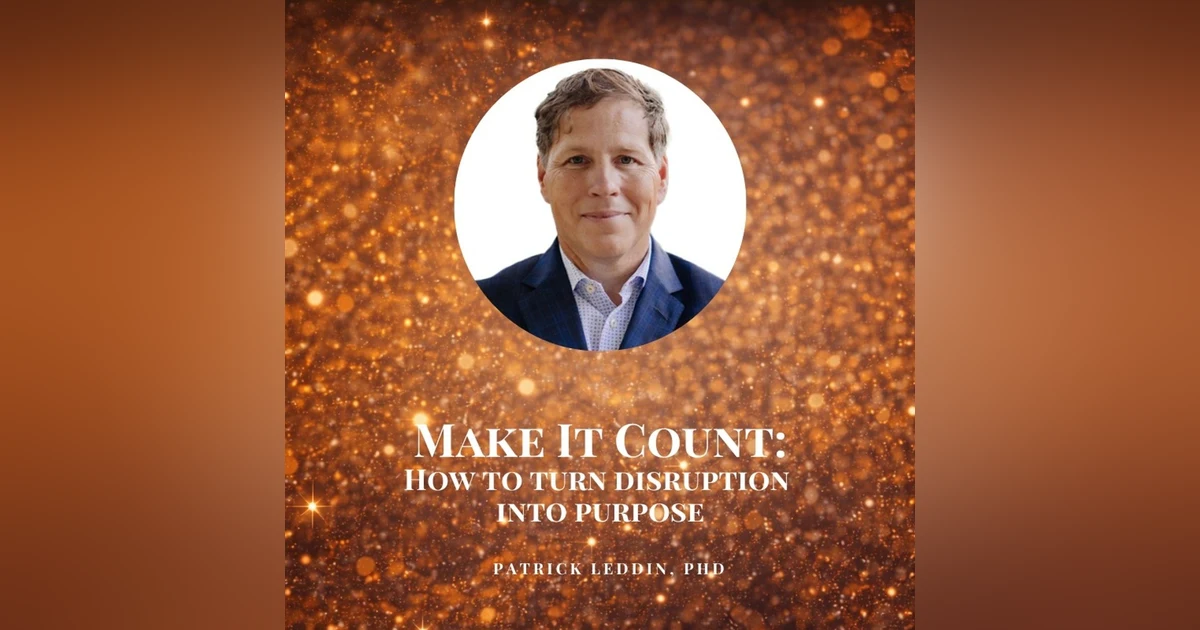

What happens when life disrupts everything you thought you wanted? In this powerful conversation, leadership expert, former Army officer, professor, and bestselling author Patrick Leddin, PhD, shares what it really means to turn disruption into...
What happens when life disrupts everything you thought you wanted?
In this powerful conversation, leadership expert, former Army officer, professor, and bestselling author Patrick Leddin, PhD, shares what it really means to turn disruption into growth, purpose, and positive change.
Together, we explore leadership, resilience, relationships, identity, and the moments that redefine us from the inside out. If you’ve ever felt lost, uncertain, overwhelmed, or like the life you planned no longer fits the person you’re becoming, this conversation is for you.
Because your time here is finite. Make it count. 💛
Meaningful Moments
00:00 — Why disruption can become your greatest opportunity
01:00 — Patrick’s childhood mentor and lessons on excellence
03:00 — The relationship disruption that changed his marriage and life
08:00 — Building a business from the ground up
10:00 — Fear vs. excitement when selling a company
11:00 — What separates people who stabilize from those who spiral
14:00 — The 16 strengths of positive disruptors
16:00 — Why disruption starts from the inside out
17:00 — Staying calm under pressure and leading through uncertainty
21:00 — How to practice resilience before disruption happens
23:00 — Patrick’s purpose: helping others live their great purpose
24:00 — From community college dropout to Vanderbilt professor
26:00 — Knowing when it’s time to change direction
29:00 — “Your time here is finite. Make it count.”
31:00 — Why people underestimate themselves
33:00 — Walking, nature, and staying grounded
36:00 — The legacy Patrick hopes to leave behind
39:00 — The people who “got back on the bus” for him
42:00 — Music, memory, and emotional connection
44:00 — The message Patrick would share with the world
46:00 — Disrupting his relationship with his parents for good
49:00 — Why people just want someone who will listen
51:00 — What James Patterson taught him about living a good life
54:00 — How resilience is actually built over time
Connect with Patrick
📘 Book: Disrupt Everything and Win
🌐 Website: https://patrickleddin.com/
📸 Instagram: https://www.instagram.com/patrickleddin
💼 LinkedIn: https://www.linkedin.com/in/patrickleddin/
0:00 Everyone is disrupted in life. We all are, but some of us choose to be positive disruptors who use that disruption for progress and innovation and growth. And I think I would tell people that you've got that person within you too. The world needs you, so go disrupt for good.
0:42 Hello, and welcome to Quick Before you forget today, I am so excited and so grateful to be here with Patrick Leton, leadership expert, former Army officer, professor, and Wall Street Journal and New York Times best selling author. Patrick studies what happened when the ground shifts beneath you and how leaders don't just survive disruption, but they use it to grow stronger and change the world for good. If you've ever felt like plans fell apart and you weren't sure what to do next, this conversation is going to meet you right there. Today. We're here to learn from Patrick's story. Patrick, what that looks like is walking a bit through your past, present and future together. Are you ready for that?
1:26 I'm ready. Let's do it, ty yay. So let's go back to the past. First of all, who is somebody that in your childhood left a lasting impact on who you are today? Well, actually, when I was growing up. I grew up in Chicago or a south side of Chicago, and there's a few people I could think over, of course a time who left an impact. I did this thing called marching Drum and Bugo corp as a kid, because I was a trumpet player, and we would spend our summers, you know, marching one town after another, like competitively type of thing. And there was an instructor named Don who left a lasting impact on me. Don away sadly last year, but I tried to stay in contact contact with him, and he was just a guy who would not accept anything but your best and I really appreciated that. There was a fair amount of yelling at us that happen over the years when we would march with him, and lots of long days and not enough water breaks. But definitely learned so much from Don. And you know, the guy who didn't really get paid anything to do that.
2:23 I think he just poured himself. Into It's what's one of the things that you learned from him that applies to something that you're that you do today, Like what's something that stands out. I think Don would just be the type of guy and who would say I can get up today and be mediocre, or get up today and to be great. And I'm gonna try to get up to day and be great, and I may end up in a mediocre spot, but it's not because of lack of trying. And I think that's something that really stuck with me. Awesome, then a good mantra to have too. What you know, you read a lot about disruption, and I'm wondering, what was the most personal disruption that you've experienced and one that just didn't just change you but changed your strategy.
3:04 Yeah, that was actually a I wrote about it in a book. Couple books ago. I wrote about this story, and I wasn't planning to write about it. It just kind of happened. It made sense for what I was working on, so years ago tied to put it in perspective. My wife and I owned a consulting practice. We started it back in two thousand and one and we sold it in twenty twelve. So we acquired in twenty twelve. But along that way we built it from a desk in our upper room at our house, kind of above the garage, to a place with four offices around the country and a really great group of employees, a really great group of clients, and I noticed along the way. I didn't notice until in retrospect, but quite frankly, I started to shift my wife from being my wife to being my business partner more and more and more. And we had kids, and we were just so busy doing that, and we were always just going one hundred miles an hour, like many people are. And one time I was coming back to we lived in Louisville at the time. I was traveling back to Louisville from Washington, d C. I'd been at one of our offices and I was flying back in and the whole plan was I was going to come back in the early afternoon, drive home, grab my wife. We were going to go to an event that evening, and I was going to come home round in the afternoon. Turned out I stayed a little bit later for meetings, caught a later flight. I thought, no big deal. I called my wife and said, hey, I'm running late. I'll just meet you at the event. Typical way I was doing things. And we got to the event and I could tell she wasn't too happy with me.
4:28 And that night we were driving home in separate cars, so she had to drive herself to the event, and I'd driven myself from the airport and as I was driving home, I looked down. I have like no gas in my tank. Literally lights on. So I get out to put gas in the tank, and it's this kind of rural gas station and there was no overhead cover. And as soon as I started to fill up the car with gas, the sky so open up in this downpour on me. So I'm literally literally driving the car running out of fuel and get caught in the rain storm with no umbrella. And I get in the car and I drive back home and as I pull into my driveway, the garage door goes up before I push the button, and my wife is standing there, and she said, we need to talk about our relationship. And it was one of those situations where, yeah, weeks turned two months, months turned to a couple of years. It just really tough times for us. But it was partly one of those situations where I just was way off kilter and what was really most important and and doing so just did not treat her and see it in myself the way I should have. So I think that that was something like, you know, as a life lesson, you have to learn your way through it. We're still married together.
5:30 We're still together. It's been thirty five years of marriage. So we figured our way through it. But it was it was tough, and I just think sometimes we take it, we take for granted the most important relationships in our life. So I had I didn't have a word for it, but now I would say I needed to disrupt that relationship. How did you do that? Like break that down for us, because that's thank you for sharing some things so personal, and I want to know how you work through it as as much as you're comfortable to share, obviously, but that's a hard that's a hard thing, and I think a lot of us fall into that trap. So how what's a practical way that you would coach somebody through a situation like that. Well, I'll say, first of all, I did probably dealt with it in all the wrong ways. I probably kne a very good job dealing with it, you know, denying that we were having problems, or probably even if I was saying outwardly that it was it was my fault, probably inwardly I was thinking it was her fault. You know, probably a bunch of things like that. But for me, it was a matter of really trying to reassess where am I go in life and who do I want with me and what really is most important and recognizing I had somebody tell me this years later. He said, you have to realize you have five fingers, and he referred to them as like relationships. So when you're growing up, it's all about you, and then maybe maybe at some point it's about you and your work, and you and your impact in the world, you and your team, things like that. Then if you're lucky enough to find a partner in life, it would be about you your work and your partner in life. And then if you have children or grow a family, that's you your partner, your
7:03 work in life, and your family, and then ultimately it might be your legacy. And what he was saying was the idea of like, don't confuse one partner with the other, and I confused my work with my wife, and so it just took a little while to kind of unravel that, and it was it was I say, it's a couple of years. It was a couple of tough years of you know, you don't Stephen Cove used to say, you don't behave you you don't talk yourself out of something you behave yourself into. So it was me going from denying that there was a problem, to be blaming that was a problem, to rerealizing, hey, I'm a big part of this problem, to me saying okay, well, in order for me to reset and fix that problem, I've got to say, notice some things that have kind of been part of my identity. So I kind of had to figure my way through that. But ultimately, you know, this is fifteen twenty years ago. Now, ultimately I look at that kind of it was the best decision I made, but it just required me to change.
7:51 And there's that word again, change slash disruption. So I heard you say you essentially built a business from the ground up, and obviously that too is met with a lot of change and disruption in addition to the relationship issues that you mentioned. I'm wondering, what is something that happened that changed the trajectory of the business for you and that you saw later as something that happened for you rather than to you. Oh yeah, there was a lot in the business we started, like I said above, the garage in our house. I spent first part of my career as you mentioned in the army. So I did the Army Ranger thing and then went to a firm called KPMG Consulting, and I did that for a couple of years. I left KPMG and then this business opportunity opened up, so we started doing consulting working it was myself and my wife, and then eventually myself and my wife and a couple of people, and then we had several employees and dozens of employees and a few offices and just kind of kept growing along the way. And it was one thing that was I wouldn't say that it was one thing that I had this big vision of, Okay, we're going to build this business and it's going to be acquired over time.
8:54 In some ways, it just you know, came along that way and worked out nicely for me. But there were several things along the way that we had had to disrupt and rethink. And I think probably one of the biggest ones is as you're building something like that, all of a sudden, it's like you have another child in your life. It's this business, and this business is you know, in the bed when you're going to bed to night and you're talking, you're talking about the business and when you eat breakfast in the morning together, if you've been fortunate enough to do that, you're talking about the business, and same thing at lunch and same thing at dinner. And said, it's like another child, and we were one thing that really disrupted me through the whole process of the businesses as we were growing it. Obviously there's things like trusting other employees with your baby and bringing in different clients that have different expectations of you and deciding how you're going to meet those But for us, I think the biggest thing was when we sold it. We didn't expect to sell the business. My wife and I were actually out of the country for a few months on a project and we came back from being overseas.
9:45 When I say out of the country, we started in Europe and then we went over to Asia. We were in Malaysia and Singapore and China, and we were gone for like three solid months. And we came back from that trip and a former boss of mine at KPMG and I were just chatting it up over the winter holidays and he said, wait a minute, you've been gone for three months. I'm like, yeah. He goes, and your employees haven't quit and I said no, and he said, your customers haven't quit and I said no, and he said, do you want to sell your company? Talked to my boss and his boss was looking to acquire a company, so they came along and bought us. So that was an interesting experience, just really disruptive. And I remember the day, the day we handed it over the keys to the new owners. It was a really interesting thing. We're in this meeting with our team, most of our people were there.
10:25 We were down in Florida from meeting, and then and walk the new owners and they kind of take the keys from us and thank us, and everybody clapsed and we walk out of the room. We're in the hallway going wow, this is a weird feeling, like it's exciting. It's also kind of scary in a way, but it was really it was really good for us to go through that process. But I would say in many ways, we kind of gave birth to that child and then watched that child go and leave the home and go do something better. That's awesome, isn't that the dream? Essentially? Yeah? And you said fear and excitement together in the same sentence, which makes me happy because That's kind of one of my comfort languages, with changing your fear into excitement, with your with what you do in your head. And I don't mean to lead the witness here, but I do have a question that kind of speaks to that, which is, when things fall apart, like things feel scary and disrupted, what separates those from those who stabilize from those who spiral.
11:23 I don't know if I'm the I mean, I studied a lot, so I don't want to say I know the answer, but I've seen some good answers. I would think that part of it happens long before the disruption comes along. So I taught at Vanderbilt for years. I taught leading business through times of crisis, and occasionally I had sections through very guest speaker driven And there was this guest speaker came in one time. He was the CEO of American Airlines. So you can imagine there's twenty five kids in the room, students in the room, and in walks Doug Parker, the CEO of American Airlines, and he comes in with Sarah Nelson, the president of the Flight Attendants Association. So you have labor and management coming in together to talk to the students. And there's a line that Doug said to me that to the room that really stuck with me. He said, a crisis is never the time to start making introductions. And what he meant by that is you better know the players. Know the other airline leaders, know the people in labor, know people in legislator, know the legislators before something goes awry.
12:12 And SAME's true. I think in all of our lives, you know, before the disruption hits, we need to know the other players, starting with player at number one, which is you? So, why are you here? Where are you trying to go? What do you value? What are the most important relationships in your life? All of these type of things. I think we need to be thinking about those things nearly daily, if not daily. I try to now, especially since I've gone through my ups and downs in life too, like all of us have, And so I think, like knowing knowing yourself is really really critical before the disruption hits. And if you don't know yourself before the disruption hits, try to get to know yourself real quick, really figure out what matters to you. Because the first step we found in our research around disruption is that they kind of. I'll say the smart people, the positive disruptors in the world, the one who say, okay, I could take this disruption and turn it into something good.
13:00 Those are the people who don't just react, but they discern, so they something happens and you know, tey, disruption can be anything that stops in your tracks. So it can be something small and unique to you, like the results of a medical test, and that medical test, by the way, could be good results, like hey, cancer is in remission. That's disruptive, or we found cancer that's disruptive. They can be ubiquitous like COVID and everybody has to deal with COVID. They can be a new project opportunity that you're excited about, or the loss of a job. It can be just a change in your family situation. Maybe you have a child and they go off to school or they do something. So we're dealt with these We deal with these disruptions all the time. But we found the most effective people don't just react. They step back and they say, Okay, I'm going to think this thing through and decide what what should I do in this moment. Should I like lean into the change, should I pull back and say that's interesting, but not right now? Should I move out on my own? Should I move out with other people?
13:55 And it isn't just they're not just shooting from the hip. They're really thinking through what roles should I take on and recognizing that even if they have a natural tendency to be the type of person who goes after the change or says no to the change or whatever it might be, that's only one factor in the entire equation my natural tendency. The next one is like, what's the situation calling for me to do? Which one's going to allow me to throw that fuel on the fire within myself and from there I choose which role to take on. That's a really critical thing. And then we also found that these positive disruptors we studied, they're really good at leaning into their strengths as opposed to kind of trying to deal with just a weaknesses or try to figure out, like how do I make this work when I don't have X y Z. They're thinking about I have ABC now that I don't have X y Z. So we spent I spent two and a half years studying this concept of disruption at Vanderbilt. That's what turned into a book with James Patterson on the topic of disrupt Everything and when, and the idea here was you have disruptive strengths.
14:55 Everybody listening to this podcast has disruptive strengths. We found sixteen of them in the research, so they're everything from some people are really good at looking deeply to uncover insights. Like they look at something, they go, what's going on here? I saw something similar to someplace else? What's the insight here? And an insight is something that few people know and it's valuable. You know, if everybody knows it, that's not really an insight. If only a few people know it, but it's not valuable. Like I know my favorite movie. That's not an insight. But if I know something that it is valuable and few people know it, that's an insight. So what's the insight here? Some people are really good at that. Other people have great instincts, Some people are really good at casting a vision. Some people can stand firmly in the face of doubters, and the list goes on and on. Now, when we were doing the research, I kept thinking, I hope there's just like one or two behaviors to be a really great disruptor in the world, like because then it would be like the book would be like this one thing, just do this one thing, and there isn't. There's sixteen of them, and guess what, nobody had them all really well and there's no perfect combination.
15:55 Which and I've never been in a room before where I haven't described the sixteen and asked people to raise their hands and they kind of self assess that I've got that one, or yes, I've got that one. I've never met somebody who didn't have at least water to of them. So some people really care about others. Other people are really good at listening to understand. Some people hear what isn't even said. Some people are really good at rolling their sleeves up and getting their hands dirty. These are all different examples of positive disruptive behaviors. And then ultimately as they moved along to the process, we found that not only did they lean into their strengths and bring other people along with them, but they always started by disrupting themselves first. You're not going to fix the world until you fix yourself. You're not gonna you know that type of thing, like it starts from the inside out and they would also really get good to saying Okay, what did I learn? How can I get better?
16:38 So they're kind of the four steps we found in this thing we call the disruptive loop. Is they discern, they behave, they achieve, and they refine. You've learned a lot about disruption and a lot about leadership over the course of time, and a lot of that happened not just in study but in practice. So I'm wondering what is a how do you stay calm under pressure like you've led in high stakes environments? What does it look like? And how how do you stay find that calm amidst the storm. A couple of things on that I'm My faith matters to me, so that keeps me grounded in many ways. So I try to put things in perspective like that.
17:18 You know, I don't have to change the whole world. I just need to worry about my little square inch of the world out here and try to impact other people in positive ways my purpose. But knowing why I believe I'm here is really important to me, and it helps ground me. When I messed up things like with my wife and our relationship was kit I lost focus on those two things it's a really critical my faith and my purpose. I also think it's for at least me TI. I found that there are things in life that somebody tells me is going to be so difficult, and then I start to do it and it's never quite as difficult as they say it's going to be. And there's also things that you're like, oh, it's going to be so easy, and I get into it, it's never as easy as they say it's going to be. So what I realized in life is that I'll take people's advice and listen to it, but then I want to get my head in there and see what's going on, and and and be willing. My dad told me years ago, He's like, hey, if your boss or somebody ever gives you an opportunity, just say yes to it and see what you find out. And I've kind of had that bias toward toward action, but you're right. I mean, I spent time in the military jumping out of planes, and I was a company commander in eighty second Airborne Division.
18:20 I put I threw people out of planes, not literally, but we would put them out of planes. I was a jump master. You know you're doing all that, and there's and there's there's risk, inherent risk in anything that people dore's risk driving to work every day. But I think that to me, if you get enough reps in life, you jump out of a plane enough, or you do whatever it might be going to the going to the meeting and step up to the presentation board enough, you start to realize like, I'm gonna be okay, I got this, I can figure my way through it. And by the way, there's people around me that want to see me succeed, and that's really helpful as well. So I just feel like one of the best ways to figure out something is to give it a try, and you'll be surprised how many people will root you on along the way, and that lifts me up.
19:04 I feel that way about this podcast. I am so grateful that I have these friends that are coming on, like yourself. I'm very grateful for you for you coming on and the people that have been watching and commenting and sharing. It's really cool because I'm literally building the rocket ship in the air, so having that support is everything. What is one leadership mistake that people make when things feel uncertain. I think it's a couple of things. I'll say too. You asked for one, but I'll say too. And they're interrelated. But I think one thing is that when things feel uncertain and kind of weighty, and time feels compressed and we feel like the pressure of delivering on something, we tend to take and put more and more on our own shoulders. And there's a reason we have a team.
19:54 A team is designed to make the weaknesses of one overcome the overcome the strength excuse me, strengths of one overcome the weaknesses of another. So let's lean into each other in those moments. And I also think one of the challenge that happens in those moments of uncertainty is not only do we leadership wise like take too much on our own shoulders, but we also we begin to question what's possible. And one thing that did Patterson and I try to help people understand is, yes, disruption can come along and blow things up. There's no doubt about it, good or bad. It blows things up. And that can be hard for us because we get things just the way we want them and then something happens. But what if we just pivot our mindset just a little bit and say, yeah, it might blow some things up, but what also if it's fertile ground for something new or something different, And helping people realize that sometimes when something gets disrupted, let's say, even at the face value, it's really negative, like, oh gosh, I didn't expect that to happen.
20:52 All of a sudden, a new path might come along, or a new door might open, and that may never have opened if we didn't go through that moment. So recognizing that even the tough times are valuable. I think it's a really critical thing for leaders to recognize because it helps them to help other people see it as well. How do you do that, though, Like how do you actually start? You said, we do better when we practice and you get the reps in. How do you get those reps in in a way that's constructive because obviously we don't know when the disruptions are coming. We don't know when the change is going to happen, and the best way to handle them is to be prepared. But how do you practice? How do you work that muscle? Yeah, that's a great question. So some of it is thinking like purpose and values and those things, kind of getting clear on who you are and where you're hearing, what you're trying to do. Another one is just getting in the gym and working the muscle. And actually, Mel Robbins has a podcast and my co writer James Patterson, went on Mel Robbins podcast and he came off it and he's like, you know, Patrick, we need to go back just when we were working on the book, we need to go back in and make it easier for people to make some of these moves. So we created what we call twenty seven. There's twenty seven kind of sprinkled throughout the book. They're just a little idea. We call them twenty seven positive destructor moves because oftentimes it's the hardest thing is just taking the first step or doing something right, or you feel like somebody else needs to do something, or whatever it might be. So we give these twenty seven ideas. The point isn't for everybody to go do all twenty seven of those things right away.
22:18 The point is for you to look at it and go, I could do that. Like one is put it on the table, And the idea is if you're in a meeting or a conversation or a virtual call and the air just feels heavy, something just feels wrong, just say it. Just say something feels like we're a little bit off. Normally we seem to be better. Think am I missing it? And usually what happened to somebody else goes, yeah, I kind of feel that too, or something's going on. So that's one. Just put it on the table. Another one's owned the day, Like when you get up in the morning, before your feet hit the ground, think about your purpose and where you're trying to go today. People who understand that can really differentiate signal from noise, and they recognize what the signal is as opposed to all the noise in the system, say the scary US. That's a little bolder, so saying yes to an opportunity, saying the hard no.
23:03 So these are all these little twenty seven things that you could do and say, you know what, as Jim says, the book isn't one size fits all in regard to read the entire book, read all the stories, and then you go and try to be those people doing all those things. Now the book is you. You read it and along the way you realize, oh, I'm kind of like that person, or I've kind of done something like this. You start to realize what you've already done and then you realize what might be the next good step for you. And that's what I really want people to do. A playbook. Yeah, yeah, a playbook in the world where the plays are being rewritten constantly. Which is important right now more than ever before. So well done, sir, quick before you forget what actually matters when everything else feels unstable.
23:46 I think you're why matters? So why? Yeah, my purpose is too, And I spent I spent quite a long time thinking about this, probably more than I needed to, but I wasn't sure. I don't know when you figure it out, But my why in life. I believe my purpose in life is to provide ideas and insights that will allow other people to live their great purpose. And that's why when this book project came along with Jance Patterson, I'm like, well, that just makes perfect sense. If I can help figure out how some people deal with disruption in positive ways and teach people about that, what's a better way than providing an idea and insight to help other people live their great purpose. So that's why when people at the university were like, you're writing a self help type of book, I'm like, you know what, I'm writing a book. I think I have the question burning into me that I need to ask an answer.
24:32 What would you tell your twenty two year old self if you could. Get your act together. No, I own a lot of craziness and stupid decisions I made in my life. I was Yeah, I spent twelve years teaching at Vanderbilt. Vanderbilt's top thirteen fourteen school in the United States, very much a global school, very well respected school. I taught there. I ran the program of undergraduate business for you, and I dropped out of community college myself. So talk about somebody who went from you know, rags to riches academically. I was not mature enough to make it through community college. So I joined the army. That kind of got my head on straight and I realized I could do some things good in life, and that happened to be a path that made sense for me. And then the more they would pay, the more they were willing to pay for my schooling, the more I just kept going. That's how I ended up with a doctorate, and then we sold the business. I'm like, well, what am I going to do now? And I just went into teaching. So that's one of the stories. Like you were like, I can't believe that what happens? I guess I would tell my twenty two year old self, or better yet, like my eighteen seventeen, eighteen year old self. You know, you need to get it together. But if you don't get it together today hanging there, you're going to get it together over time.
25:43 You just a rupted yourself to get it together. Yeah, I did before you even knew like what that meant. Yeah, I didn't have language for it, right. But it's funny because I kind of left the few jobs that I had over my career, I kind of left them earlier than I needed to, which was good for me. So I got out of the military after I finished the company command job in the eighty second. And the reason I did that was because everybody told me, oh, after being a captain in the army, everything's more like staff positions and stuff like that. In other words, these are your best times. So I was like, well, why am I going to stay around for the not so best times? So I got out after that, and then we sold the business. I wasn't planning to sell it, but it came along. The opportunity showed up, and then I wasn't going to necessarily leave the university because I figured if I leave, there's gonna be ten thousand people waiting for my job. But when the opportunity came and said, well, you spend your twenties jumping around, jumping down the planes, run around the army, you spend your thirties building a business, spend your forties teaching somebody, let's let's spend your fifties change in the world. So I'm like, all right, I'm gonna quit the university and focus on that. So, yeah, it's been a good ride.
26:43 Well you that's easier said than done for people, I think to leave before it's time. So I'm wondering what the first thing someone should do is when they realized that the life they planned isn't aligned with the one they're living. Well, that's the first thing, is when they realize it. And then the second thing I would be is to say, Okay, what are you going to do with it? And it doesn't mean you have to. My path is I quit jobs probably when I was on the top and in a good position, and that was just a choice I made. So each one was kind of like a ten year stint, so it wasn't like flip it, like you know, thirty days or something, there's ten years, but each one of them it made sense to kind of move on. I felt like I gave to the organization what I could give, and I'd gotten what I could have gotten, like that relationship that had gotten really strong, and it was time to move on to the next thing. And for me, the chapter changes were really clear when it was time to make those changes. So I would just say that everybody's journey is different. So some people are more comfortable, are more comfortable with ambiguity than others are. I'm pretty comfortable with ambiguity. I just liked the idea of like I'm going to put myself in the driver's seat and try to figure this thing out. Other people might not be the same way, or I've been fortunate over the years.
27:51 I didn't grow up with much means. I grew up on the South side of Chicago, and my parents probably sacrificed a lot just to let me go to community college and that didn't go out turn out too well. But nobody in my neighborhood had gone to college or things like that just wasn't the past. Everybody had taken there, so my point being is now, over the course of time, I had some means it would allow me to do certain things. So what I'm saying is like, as I say this, like I'm not telling everybody go quit your job or pivot if you're in the wrong direction, like you know, throw it to the wind and see what happens, because everybody's not in that spot to do that. But what I am saying is that even when you feel like you have a lot going on and there's no space to do anything else, sometimes if you're clear about why you're hearing what you're trying to do, suddenly a little bit more energy will come out to do that other thing. When I started the business above the garage with my wife, we were technically moonlighting like I had a job, and then i'd work on this project with her.
28:44 Now we call it these days, they would say a side hustle. When I went from after we sold our business, I started off by teaching part time at the university and then get a full time job. When I joined the military at seventeen, I joined the National Guard and then joined full time army. So every one of them, I kind of took a intermediate step to help me get there. And I think there's a little bit of saying like, Okay, you don't have to do it all, but you do need to move in a direction. It will make you feel more fulfilled and it actually will make a better contribution in life, and you owe it to yourself to do that. In our in our research on it, we write in the book about these four fundamental facts of disruption, and the fourth one is that your time here is finite. Make it count in ways that matter. And it's true, your time, your time on this listening to this conversation is finite. Now listen intently, pay attention. Maybe something good there for you. Your time with your family and it's current configuration. I know that you know you have a family tie and you're watching I'm watching your kids grow up and there's a lot going on. But that's going to change. I have two adult children now, but I have grandchildren right, so that changes.
29:45 So we need to make it count in every phase of life, your time and your organization or whatever you're building. You know, this current version of this podcast is what it is right now. It'll be something else in the future as it evolves and changes. So let's make it count and I just really feel we owe it to our selves and those around us on the journey with us to make it count in ways that matter. James Patterson said, you know, James Patterson had no reason to write this book with me. He is literally if you don't know him, folks, I don't know where you've been. But he's the world's best selling author. He sold four hundred and seventy five million book copies. I mean that's a massive number. Right, There's only two there's only two people on planet Earth who are billionaires from writing books, JK. Rowing and James Patterson, which is phenomenal. And why would he take the time to write this book that's in a genre he hasn't written it before. And he says it this way, he said, And he heard the expression one time that said, my time here is finite. What can I do most beautifully? And he felt like this particular book giving some people an understanding of the opportunity that lies out there and a chance for them to live their good lives is worth the effort.
30:48 I think people underestimate themselves. And I'm wondering, Yeah, what what do people underestimate most when times are uncertain? Well, I think it depends which emotions surfacing for them. And I'm not this isn't necessarily my area of expertise to think like what they've concerned most, But my thoughts might be some people are thinking fear and anxiety. Some people are fear, you know, don't want to let go of something. There's lots of things that process. So I would say that one thing we underestimate is the importance of those there's emotions and allowing ourselves enough time to process them doesn't mean we freeze and stay there forever. But if I tell you the first step that we found people do in the face of disruption is to discern what to do, that means that they spend a little bit of time processing through the emotions. So give yourself some space to think about it. If I told you about some new project opportunity, some of you might be excited, but a little fearful. Some of you might be scared but a little bit excited. Some of you might be anxious. I mean, there's right, all different ways we show up to this thing. So give yourself some space to do it and kind of think it through and give yourself a little bit of grace to work that out. And I think the other thing that we don't necessarily do very well for ourselves is being a leader and leading ourselves or leading anyone else. It all begins with self awareness and such a critical thing, and which means that we need to know ourselves. We need to see ourselves for who we really are, which for some of us don't. I probably don't. Either have to work on it too, have good clarity on that, Like
32:19 have people in our lives who speak the truth to us, people who challenge us, people who encourage us. We need all those voices in our lives. At the same time, we need to own what it is we're good at. And I'm the youngest of five kids from a Catholic house. I mean, I got more guilt than you can imagine sometimes, and I don't always own, you know, what my strengths are. Sometimes I've had to learn to grow into them a little bit. So I think that part of it is like let yourself process the emotion. It's okay to work your way through that, and also to own what you're good at, as opposed to kind of if somebody says you did something really really well and it makes you feeluncomfortable to say thank you and move on as a post and say, well, no, here's why I got so lucky. No, no, you didn't get lucky. I mean there may have been a little luck, but you also were ready when it showed up.
33:07 Got blessed is what you got. Yeah, talk to me about something you do to ground yourself. How do you stay you know, self awareness has a lot to do with self love and being conscious of what's going on in your own head and honestly in your own heart. What do you do to stay grounded in the present? You know? Since COVID, my wife and I started walking in the mornings and we walk a lot every morning, Like some morning we walked three miles or something. So if you're able to do that and you have somebody to do it with or even on your own. When I'm traveling, I'll do it myself, going out walking, getting outside, spending some time with her. It's not a competitive thing. It's just for hanging out. Walking with the dogs is great.
33:47 I am a big outdoorsy type of person. I like doing things outdoors. I've hiked Mount Kilimanjar with my son and walked on glaciers in places and just done lots of cool things. So for me, getting out being physically active is really important. That's not everybody's thing, which is fine, just find your thing. I also like to read, so I actually like the most. My two hobbies are like the most generic thing somebody would say resume or on LinkedIn. I like reading and hiking. I mean, that's what I do, like those two things. So for me, it's a couple of those type of things kind of keep you grounded. And it's so easy to spend a lot of time on social media and guess what, those aren't real worlds. That's just not real. What's going on out there and stuff you're comparing yourself to out there isn't really either.
34:29 I spend plenty of time on it, two more than I should. But but you know, doing stuff that's real is just very different. I remember I remember thinking about this when when I did jump out airplanes in the Army. We would jump out at eight hundred feet and eight hundred feet is not really that high. It might sound high like eight our feet, but so we jump static line high where you you're already attached to the airplane. So as you jump out, the the parachute gets extracted from the pack on your back. It's being pulled out by itself because there's a landyard back to the plane, and it called static line. And the thing is you jump at eight hundred feet and when you jump out of the plane, it should take four seconds for the parachute to open, and if it doesn't open in four seconds, you've got about three seconds to recover and get your spare pulled out before the parish before you hit the ground.
35:13 And I think there's a there's this thing that happens, like when you're up at the altitude of eight hundred feet and you're standing in the doorway and to go, everything looks so peaceful and serene. And then even if you have a nice full parachute, you're still coming down pretty quickly. But not like the sport ones. We can hit pretty hard, like you don't stand when you land. You crash into the ground pretty good. It's interesting how things look differently when the ground rushes up. So to me, going outside and getting my hands in the real world is different than social media. Sometimes is like looking at the world from eight hundred feet and going outside is a little bit like getting closer to the ground where stuff gets real. And I just like to kind of keep that in perspective. Well, it's it's unreal to some people to be jumping out of planes, but yeah.
35:54 That's that's that's there. You know, everybody's got their thing. Mine just happened to be that. It could have been something else. But maybe if i'd really well in community college, I never would have done that. Well, I've done roller coasters enough to know that eight hundred feet is actually not very high because you've got to go from that peaceful, serene moment before you jump out of the plane to being very aware of your surroundings very quickly if you survive the fall. So that's that's a really cool thing too. Picture your eightieth birthday for me? Would you Patrick like think about I often think about our friend and comrade Dave Hollis, who passed away a couple of years ago. He had this idea in his head about legacy and what he wanted his eightieth birthday to look like. So I have been thinking about this question, and it's the people that are there.
36:41 But what do you want them to say about you? Well, I hope that they would say that I'm a genuine guy who has all sorts of you know he's done some good stuff and mess some stuff up and learned a lot of lessons along the way. But my intent was good, and if I made it wrong, I try to turn it into it right. I was a good friend you could trust and would be there for you, a good partner in business. There was this guy when my mom passed away about fourteen years ago. Now this was before we sold our business, right right around the time we sold our business fourteen fifteen years ago, and it just so happened my my mom passed away. They lived in Chicago, and we went to the funeral and all those oddities. You know, this, that uncomfortable feeling when you lose somebody in your life and you go through the visitations and the funerals, whatever your religious beliefs or ceremonies might be. Ours was visitation and then the funeral.
37:33 I came out of the funeral of the yeah, at the funeral at the church, and I stepped outside. I was standing on a stoop, probably about five steps up from the ground, and out in front of me people had come out of the church and they were poured out and just kind of standing around, million around saying hi to each other and I looked out there and one of my employees from the company I had just sold had traveled out on his own dime from Washington, d C. To be at my mom's funeral. No big announcement that he was coming, none of that type ofsode. I just looked out and saw I'm standing there, and I just kind of like, go, I hope there's a lot more people that would do They would do that for me. Doesn't mean they have to travel to my eightieth birthday party. It just means like that they would value something about me enough that they'd be willing to make that journey, and hopefully they would do it because they felt like I would do the same for them.
38:15 So I just want to be that kind of guy that's like real and tries to do good things and has occasionally some smart stuff to say that helps people in their journey. Now, that reminds me of a story from the Struggle, The Struggle Let's see, hold on, let's find the book The Gift of Struggle with Bobby Herrera. I'm fortunate and blessed to have a signed copy. And in his first chapter is a story about mister Tigue and he's the fellow that got back on the bus for Bobby. Bobby and his brother grew up in a household. They had limited resources, and their mom had packed them a bag lunch after their game, and the whole team got off the bus to go get their celebratory dinner, and mister Tigue came back and said, you know, guys, it would make me so happy to to give you dinner tonight.
39:02 Come come join us. And that story, that moment honestly changed everything about Bobby's life. I'm wondering if there's anybody like that that got back on the bus for you. Yeah, there's lots of people that have done that. I kind of occasionally, you know, spend some time reflecting at him. One's kind of interesting to me is when I was in the military, they have this thing tie that happens like when you're so. I was initially enlisted in the military, then I became an officer, and as an officer, as a second lieutenant, you tend to be a platoon leader in the infantry, and then as a first lieutenant you become a company executive officer, and then as a captain you become a company commander. That's just kind of the natural progression, and usually between the first lieutenant and the captain time frame, you go to another school, so you go to another training and then they send you a different unit. In my case, that's not what happened. I finished being a company executive officer as a first lieutenant.
39:53 I was getting promoted to captain. And my battalion commander at the time, who had been a lieutenant colonel. You don't need to know the rank structure, just a couple more ranks above me, went out of his way to walk across the street to another unit and tell them, this guy doesn't need to go to advanced training right now, make them one of your company commanders, which is like a huge you know, a big deal. It was Lloyd Austin who became the Secretary of Defense. Is who that person was at the time, was Lieutenant Colonel Lloyd Austin. So I've had a few people like that that have been so kind to like, go, you know what, this guy's ready for this or that. Even if I didn't feel like I was ready to do it. I didn't solicit it, I didn't look for it. I probably didn't feel like I was ready, but he, you know, as you said, got back on the bus, walked across the street from me and did that. And and I'm pretty involved in a I mentioned that that drum and bughort thing at the beginning and that instructor don I have some friends who they do a fundraiser every year and I'm on the board of their group. But every year we go to the Big Drum Corps competition in Annapolis.
40:49 It's everything you can imagine it would be folks, and we go to this thing and we do a big fundraiser and we sponsor kids to March the next year. And I just think that's like, to me, that's my getting back on the bus moment for other people, and I think it's important for us to do that type of thing, to kind of carry it forward a little bit. But as far as my eightieth birthday party, and I hope people come like they did to my mom's funeral and they just they just celebrate, celebrate my life and also just love on each other while they're there. That's beautiful. Will you I want to know more about this drumming the drum and bugle. I was a bugling side, so I played I played the trumpet. Yeah, that's awesome. Mike. My son Carter plays the trumpet, my my son Connor plays the trombone, And I'll tell you it takes it.
41:31 Did other kids in your host in your household play instruments too? Nope, So it's you making all the noises. Me. I'm only the military too. I'm I carved my own path. Yeah. So imagine like marching band and the you know in the United States marching band like football games and stuff like that. Imagine that, but it's only marching band. You do one performance, you perfect it all year long and travel in the summer months to compete, and it's like very very I mean high level of proficiency. But these kids put into it, it's crazy. I mean they pay to be there, they don't get paid. And it's in there between thirteen and twenty one years old, age out at twenty one. So it's a really kind of a it's the thing, you know, anything else you get into it. It's an entire world on into itself and it's just one of those type of things.
42:13 Well, music is one of my love languages, So I want to talk more about music if you don't mind, Do you have a song that you put on when things are hard and you need to remind yourself who you are. Well, I don't know if i'd have a song. I do have songs for kind of genres, for different moods and stuff. I mean there's some things that you know. Pop is kind of fun and it kind of keeps you gives yep bet For me, when I listen like a pop song, I tend to listen to either songs. So I would have listened to when I was a kid, which I was not not this old. I wasn't like a Beatles kid growing up. In fact, I was the kid who was like mad that I wasn't born earlier, so I would have been around and the Beatles were there, so I wasn't there, but I like the Beatles there, so you know, like in the seventies and eighties, I would listen to them. And then my kids obviously some of the pop songs that they listen to kind of still stick in my head because it takes me back to those moments doing silly stuff in the car or whatever it might be. But I like I like classic classical music a lot. My wife's on the opera board here in Nashville, Tennessee, so we tend to go to a lot of opera together. I have some friends who who are do some really great Christian music. I'm good friends with some folks. You know. I live in Nashville.
43:22 Some music kind of all around me. I want to get charged up. I'll like listen like Holds the Planets or something that is really like driving and exciting. So yeah, I've just different music for different times and a lot. What I like about music is just the nostalgia of it that it brings me back to a different time, or it can forge new memories going forward to Like, you have two grandkids, so now I'm learning new kids songs that I didn't even know existed the last twenty years. How old are your grandkids? There'll be three in one next month. Are they so fun? Do you love that? Oh? Yeah, yeah yeah, two little girls and they live like two miles from me, So that's pretty cool. I love that you get to be very isn't with them? Then? Yeah? The older one, the three year old, says that I'm her best friend. And she's been saying that for about nine months. And my daughter was like, how did you teach her that? I'm like, I didn't teach you that. She just says Papa best friend Patrick.
44:12 That's adorable in that sweet yeah. Yeah, my gosh, ask me what I want for my eightieth birthday party. I already got it. I'm only fifty seven. I know her best friend. That's amazing. Oh my gosh. So speaking of the eightieth birthday party, this is kind of applicable there too. But if you had a microphone then now in the past doesn't matter, pick your time. But if you had a microphone for the world to hear one thing, one message from Patrick, what would it be. I think I'd probably lean into the stuff I've been doing recently around Everyone is disrupted in life, we all are, but some of us choose to be positive disruptors who used that disruption for progress and innovation and growth. And I think I would tell people that you've got that person within you too. The world needs you, so go disrupt for good.
45:06 Now. I have a couple of quick hitting kind of questions. If that's okay, sure, what is something about this season of your life that you don't want to forget? Well? I would probably go back to my grandchildren and things like that. On the personal perspective, personal basis, a three year old, Yeah, yeah, I mean, I don't want to forget that. From a work perspective, I think that. So when we were going through the process of writing the book, one thing we decided to do. We had a research team at Vanderbilt for two and a half years studying this. We're interviewing people and Jim challenged me. Patterson challenged me to go out and just speak about the book even when we're just trying to put it together. Early on, like, really it took us. It was a nine to ten month long just outline process, right, Just get the outline right, and then a couple of years of research beyond that. And the whole time we were doing that, Jim would say, just go out and talk to people about it and see what resonates, what language stands out. And I was doing I was doing some presentations.
46:01 In fact, the first group I spoke to was eight hundred people talking about this project that was just getting started, which is kind of like, what were you thinking? But I happened to tell that day about a disruption in my life where I said, I'll make it really quickly. But I was I was looking at my different roles in life. Somebody asked me to think about my roles in life and pick a few of them and kind of assess what you're doing. So I thought about, you know, father and project manager or team leader at work, you know, owner of the business, all that type of stuff. And I also thought about son, son, and I thought, you know, I'm not doing a terrible job at the SUN, but I'm not doing a great job as a SUN. I'm kind of in the middle. I'd like to do that, do a better job. So I at the time, I was living in Louisville, Kentucky, and my parents lived in Chicago still, and our ritual was really a ritual. I would call them once a week, kind of obligation, you know, call them once a week just to check in. And every conversation was basically the same, what's the weather, what's the traffic, what do you doing this week? And they do the same thing on their end. Then we'd hang up.
46:54 And as I was looking at my role of son, I thought I could do a better job than that, So I start writing down questions to ask them before the call. Or I'd travel for work and i'd send them a postcard as I was traveling. Just little things like that, no big things, just little things like that, and so I'm telling this story to the audience and I said, well, right around that same time when my mom passed away. I remember sitting at my dad's house later that day and I said to my wife, I said, I'm glad I did that. I'm glad I disrupted the relationship. I didn't even say the word disrupted, but I kind of changed the relationship. And my wife said to me, well, you're still a son. You know. There's your dad, and people listen to us might get it. But my mom and dad were very different than that. My mom was the yes person and my dad was a no person, like Mom, can we go there, yes, can we get this? Yes?
47:37 My dad no, no, no, just that kind of personality. So I was thinking, there's no way this guy's going to say he wants to do anything with me right now. So I walk over there and I said my dad. I said, hey, Dad, I travel a lot for work. You want to come with me sometime? And he said where are you going? And I said, next week, I'm going to Tapeka, Kansas. And my dad goes to Topeka, Kansas with me, and then he goes to Florida with me and he goes on these trips with me, and I started to like see him differently. Right, He's not the no guy necessarily. He's a guy who at the time had five children, like three jobs, trying to make the housework and h and we just started seeing each other differently. So I think that's I tell that story to people and when I know, I told it one time to somebody and it just kind of kept resonating. I kept telling you and sharing that story, and then we ended up putting that one for together your story in the book. And I think that it's really important, like to realize like that you might disrupt yourself first, but then you're going to disrupt some important relationships in life.
48:28 And that was really one thing that stood out as we were writing the book and working on it. Wow, I am touched by that story. I think that that's really neat that you got to travel then with your dad and learn about him. I mean, yeah, that's like a like a dream. Honestly, Yeah, it is. It is wild. What's the most interesting thing you learned from him when when you got to know him better? I was it was interesting to learn and still is today. He's ninety four now he likes to talk about his work, like what he did is and then we never really heard him talk about heard him talk about work. When I was growing up. He worked for the phone company in Illinois. He installed phones like underground and in people's homes and that for thirty six years, thirty eight years.
49:12 I never really talked that much about it. But then when he started hearing me talk about work and leadership, he would tell me about his time and what he had learned along the way, and that was really endear. I really find it endearing. I love when he tells me some of those stories because I never heard them before. And the reality is was he had a yearning to tell the story. I just had n't put myself in the position to be the ears for it. So when I was all of a sudden in a different spot, he would just talk about it. It was kind of fun to hear him talk about things like that. And so, yeah, that would be one thing. That's something we can all learn from, Patrick, because everybody has a story to share and can't I mean scientifically speaking, probably they really want to share it, they might just not have the right vocabulary or the right circumstances, or even they just need somebody to They just need to know that somebody cares enough to listen.
50:02 It's okay too, and it's okay to the story. Right, please tell the story. I mean, like take away moment right there is just ask the question, disrupt the situation enough to ask the question, and then just listen. Yeah, like you just it's amazing to me. How how valuable that I mean, honestly, that was a great story, but how valuable that is because your dad had you disrupted the relationship for good and you took the things from it, but you also disrupted your dad for Like I'm certain that you changed your dad's perspective a little bit. And that's that's a really cool full circle moment as just as a human. Yeah, I agree that the book itself disrupt everything. And when is it. There were three hundred and fifty people we interviewed in the research. About thirty two of the stories made it into the book. So every chapter starts with the story. You know, it's a James Patterson book.
50:55 He's known for writing thrillers and fast page turning things, so every story along pretty quickly. Hopefully we leave you wanting to know more about that person. Go find out yourself some more about that person. Some people are household names, like actors or professional athletes. A lot of them are unsung heroes. You've never heard of these people, but you should. And what we're trying to do is use their story ultimately to help you write your story. When Patterson talked to my students, he would start off with the question every time, are you living a good life? And he'd say, I know that sounds like a simple question, but the answer is not simplistic. Everybody defines that for themselves. And then he said, or do you feel like you're on one treadmill only to get on another treadmill, only to get on another treadmill? And then he shared, He goes, I'm living a good life, and let me tell you how I did it, and it's his life is a good life. It's got its ups and its downs. He was engaged with someone in his thirties who ended up having brain cancer and she passed away. You wouldn't wish to that on anyone, but he figured out how do continue on. We're really good at human beings. Right now in Nashville, where I live, we had a bad eye storm and there's trees knocked out everywhere. It's just kind of funny. But like ants, we just dragged the trees out to the curb, somebody comes along to pick them up.
52:06 We start rebuilding and we keep going along. Just like if you step on an ant hill, they immediately start rebuilding. And we have this amazing capacity to work through tough things. And that's what he wanted to learn. This we want people learn and they read it. You know, the book is not called change Everything. Isn't called change everything, because sometimes the most disruptive thing you can do is say no to change. And that's what we want people to realize is just just own that choice. Amidst all the disruptions that you've repurposed into something good. What part of yourself are you most grateful that you never let go of. My humor? I don't know if it's shown up on this call today, but I think I have a pretty good sense of humor. As the youngest of five kids.
52:47 It was it was a everybody's really witty and fast with the jokes at the dinner table, and that it was almost like a survival skill to be good at it and like form alliances and moments like whatever it might be all pretty lighthearted, and I just feel like I keep my humor with me and when I'm out talking to audiences, because I get to do that a lot these days. I think we do a lot of laughing and that's important. It is, it's very good for you. So I don't want to lose that. That's awesome. I don't think you will. And I can vouch Patrick is funny. If anybody doesn't think he's funny, he's funny. I'm funny, I'm hilarious.
53:27 He's a riot. Quick before you forget Patrick, what matters to you most right now? Well, my faith probably matters most to me. I should Yeah, definitely matters most to me. My relationship with my wife is in such a good place these days that we're you know, we're we've been based each other's best friends like teenage yeers. But yeah, it's we're in such a grounded place, and I just that she matters more to me than anybody else on planet Earth. For sure. There's been so many good takeaways that I can't even kind of summarize them. But I'm hearing a lot of things about knowing to just keep moving, keep showing up, keep going when things feel hard and there's something good that will come from it. You don't. You don't have to overhaul everything. You can just overhaul one thing. So before before I wrap, Patrick, I want to ask you, what what is one thing that you wish I had asked that I didn't.
54:25 You did a really good job. So I don't know if there's any one thing I'm thinking about that that I wish you'd asked. I think that I don't know if you would have asked this necessarily. But one thing that comes out sometimes is we hear so much about resilience and being resilient and building resilience, and I'm here to share that resilience doesn't happen in a one hour workshop. You don't put people in a room and say come out being more resilient. You got it. Resilience happens when people do what we talk about from those we studied. When you hit a moment of disruption and you discern what to do, and you make a choice, and you into your strengths and start to make them take some action, and you deliver results good or bad, and then you learn from those results and you go through that three year, four or five times with different disruptions in your life, and all of a sudden, something that two years ago or a year ago had knocked you down, now you're like, I get step right over that. And that's how resilience is built. And what I saw with the people we studied.
55:20 There's a lady, for example, who she's from Copenhagen, Denmark. She's a server at a cafe, travels to India with some friends and see some street children, children living on the street, and it really touches her. Today there's sixteen hundred kids who live in the orphanages that she runs. She didn't go from meeting two kids on the street to sixteen hundred children. She went from meeting two kids on the street to going back to Denmark saying what am I going to do with this and telling everybody about it, some people of which said, okay, that'll go away. Stop, you know, worry about what's going on here, not about what's going around thousands of miles away. And then she decided, well, I'm going to make another trip, and then another trip and another trip, and what the seeing them on the street, which was massively disruptive twelve years earlier, is now just she's used to that that's common, she can move beyond that and kept getting better and bringing other people into the conversation with her. That's how we build resilience as we just keep keep on keeping on, and we also realize sometimes when this path is not the right path, we get off the path and it's really hard. There's a one of things that we found as a disruptive behavior that people have is some people are really good at letting go of good in order to get something great, and some of us just aren't. I guarantee you there's somebody listening to this podcast who's in a relationship that's not even good and you're still hanging on to it.
56:39 So sometimes you have to say, you know what, I'm gonna let go of that and get something better, or at least be willing to risk it a little bit by putting some boundaries in place, or by re examining that relationship and saying, you know what, we should disrupt this a little bit for good, as opposed to as why would we hold onto something that's not great if we can get something better for ourselves than others. To me, because you mentioned building resilience over time and through practice, I was going to ask this, and I'd take it for take it wherever you'd like. But yeah, do you think resilience is built through crisis or revealed through crisis? Yeah, that's a good question. It might be. I don't know necessarily the answer. I guess you said, but I think you're probably right with the word revealed. It's probably revealed and reinforced so that it feels like it's building on itself in a way, like we just become more capable, not more capable, We reveal more of our capability to do X y Z. When you look at some people throughout human history have had to deal with, or even people listening to this conversation, some of you what you have to deal with. If I had to face what you faced, it would just might bury me. But you figured out how to deal with it. And we talk about in the book the idea that we're wired to disrupt, which is an interesting idea I think because the neuroscientists would tell you that we like things consistently. Our brain likes to conserve energy, and it does. But at the same time, our brains can be really creative and we could do things that no other animal and animal kingdom can do. So we say you're wired to disrupt because
58:11 you've got a big brain that can come up with really ingenious ways of dealing with things. You're also wired to disrupt because you have experiences where you've gotten knocked down and gotten back up and you've learned from those experiences. And if you were to chart out your life, make a line for your life with the ups and downs of life over the course of time, we've all had downtimes and we've all had uptimes, and they're be very relative. Like what I consider downtime. Somebody else might be like, that's no big deal. Somebody else might be like that's horrific. Whatever it might be, it doesn't matter. It's my story. But I've got my ups and my downs in life. And when you really think about your ups and downs in the life, sometimes with low points of the down, you don't realize that there's a high point coming not that far away, and the ability to survive the low points, learn from them, and move forward to the next high point.
58:54 That's that idea of just revealing using your words, our ability to accomplis things over time and be more resilient. You don't need the staircase. You just need the next step. Yeah, yeah, so yeah. As people read the book, Pat and petish is funny. He says. If they read the book and they don't like this story about this person, skip it. Who cares it didn't speak to them, keep moving. If you got this chapter and you're like, I got this pretty good, then skip it. You don't read every word, just read the ones that work for you. We want our book to help you. Well. I think the question that I'd be curious to ask anybody listening to think about after this conversation, it's where in my life am I resisting disruption? And when when might it actually be redirection toward that next step? Like what?
59:41 And then what is that that simple next step? So I am. I am so grateful for our conversation today, Patrick, Thank you for taking the time, Thank you for being with us, Thank you for being with me, and we'll see you guys next time on Quick Before You Forget. Thank you for being here with me today on Quick Before you Forget, please like share and subscribe as that helps the show so much and I really appreciate it, and I'll see you next time on Quick Before You Forget.