Lead Bigger: The Power of Human Connection with Anne Chow

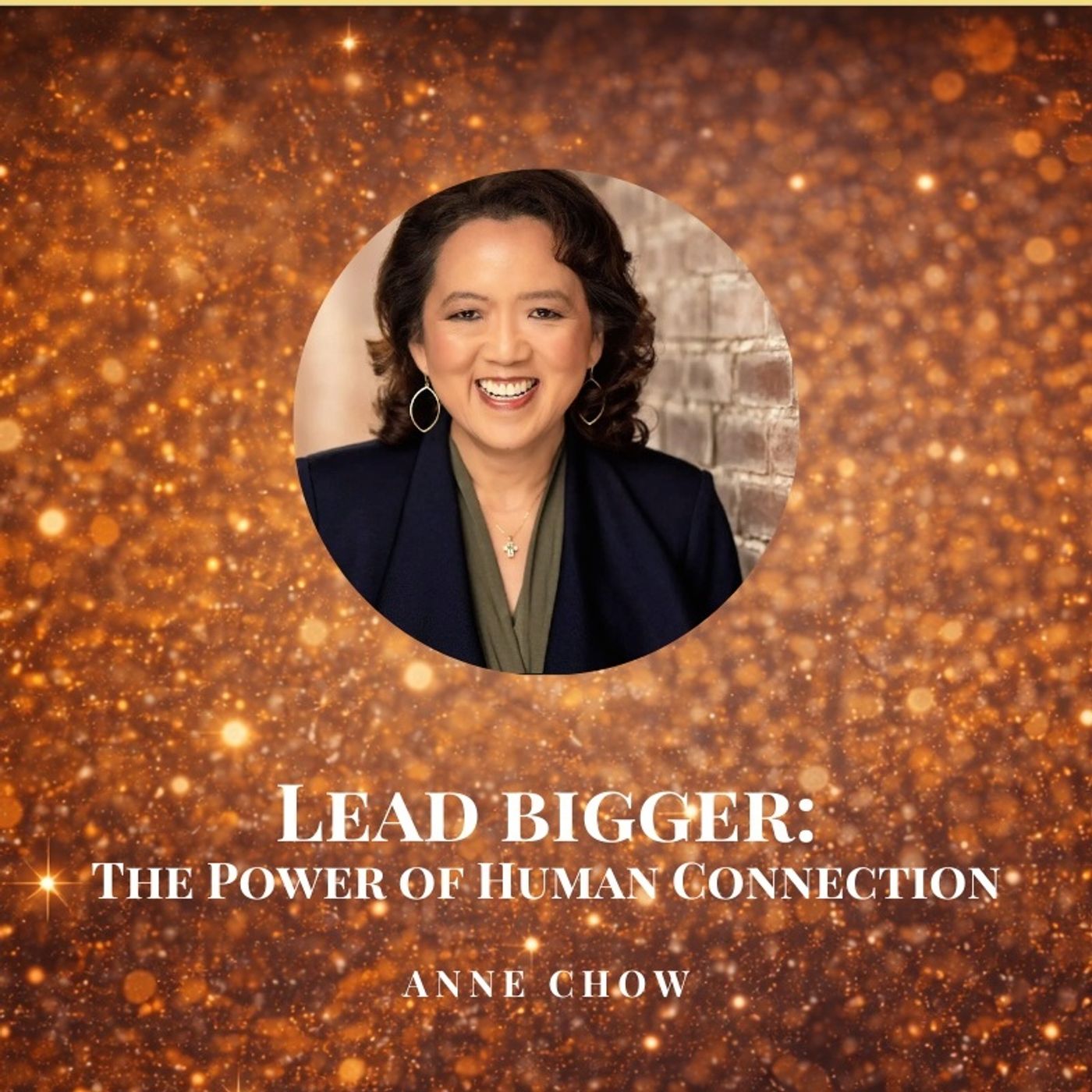
The most powerful force in leadership, and in life, isn't strategy, intelligence, authority, or reps. It's human connection. In this episode of Quick Before You Forget, I sit down with my friend Anne Chow, transformational leader, former CEO of...
The most powerful force in leadership, and in life, isn't strategy, intelligence, authority, or reps.
It's human connection.
In this episode of Quick Before You Forget, I sit down with my friend Anne Chow, transformational leader, former CEO of AT&T Business, bestselling author of Lead Bigger, and founder of The Rewired CEO.
Anne was the first woman of color CEO in AT&T's 140+ year history, but what makes her extraordinary isn't her title. It's her belief that leadership is a choice available to every single one of us.
Together, we explore what it means to lead bigger, why relationships are the foundation of meaningful impact, the (not-so) surprising lessons leaders can learn from orchestra conductors, and how curiosity, kindness, and courage can transform both our careers and our lives.
We also talk about music, mixtapes, friendship, purpose, and the conversations that change us forever. Because sometimes the biggest leadership lesson is remembering that people matter.
And that includes you.
Memorable Moments
00:00 — Cold Open: What does it mean to "Lead Bigger"? Anne's powerful definition of inclusive leadership.
01:00 — Meet Anne Chow: Former CEO of AT&T Business and author of Lead Bigger
02:00 — The leadership lessons Anne learned from her father and immigrant upbringing
04:00 — How Anne's definition of leadership evolved from age 15 to today
05:00 — "Leadership is a choice": Anne's philosophy on influence, impact, and purpose
08:00 — Why leadership is both an art and a science
09:00 — The hidden power of communication: the what, why, how, and when
12:00 — What orchestra conductors can teach us about great leadership
14:00 — The conductor analogy that completely changed Anne's view of leadership
19:00 — Mixtapes, Spotify Wrapped, and the soundtrack of Anne Chow's life
22:00 — Anne's "songs of survival" and the music that lifts her up
24:00 — The Most Powerful Force in the World (Hint: It's Not Technology)
25:00 — Building trust, relationships, and meaningful connection at work
27:00 — Helping people see their potential before they see it themselves
29:00 — Motivation vs. Inspiration: Why One Creates Lasting Change
32:00 — Curiosity, humility, and why leaders must learn how to ask better questions
36:00 — The biggest leadership myth holding people back today
37:00 — Why Kindness and High Performance Are Not Opposites
38:00 — Widening your perspective for greater performance and impact
40:00 — The one question every leader should ask themselves every day
41:00 — What Anne had to unlearn to become a bigger leader
43:00 — From retirement to "rewirement": designing a life with intention
45:00 — Friendship February, slowing down, and making time for what matters most
47:00 — What Anne would tell her 22-year-old self
48:00 — "There's no such thing as failure, only success and learning."
49:00 — Chow-isms: Anne's favorite life and leadership mantra
50:00 — Helping people discover their gifts and calling
51:00 — One Conversation Can Change a Life
53:00 — The Story Anne Didn't Know She Was Part Of
55:00 — Anne's response, the power of technology, and words that endure for generations
55:45 — Where to find Anne Chow and connect with her work
Connect with Anne
Website: https://www.theannechow.com/
LinkedIn: linkedin.com/in/annehchow/?skipRedirect=true
Instagram: https://www.instagram.com/theannechow/
0:00 My definition of leading bigger, which is synonymous with leading inclusively, is widening your perspective for greater performance and impact. So I'll say that one more time, widening your perspective for greater performance and impact. Now in a world that is more interconnected now than it has ever been, it yet feels more polarized than divided. I wholeheartedly believe that the successful leaders of today and the leaders of tomorrow must learn to and master leading inclusively.
1:04 Ann Chow, Welcome to quick before you forget. Thank you so much time. It's great to be here with you. I am so excited you're here. And Anne and I have known each other for years, but I can't wait for you to meet everybody, for all of you to meet Anne and get to know her story a little bit better. So. Anne is a transformational leader, business leader, board director, and the former CEO of AT and T Business, where she was the first woman of color CEO in the company's one hundred and forty year history. She's the author of Lead Bigger, a powerful call for leaders to expand their capacity for impact, inclusion, and courage. And Anne is known for blending sharp business acumen with deeply human leadership challenging all of us to rethink what it really means to lead today. We're here to learn together from her story and what that looks like is walking a bit through your past, present and future. Are you ready for that?
2:01 Yeah? Absolutely, take me where you want to take me. Thank you. Well, let's start in the rear view mirror with a focus forward. Who is someone who had a profound impact on the trajectory of your life as a leader, and what lesson or concept do you want to pay forward from that? Yeah, so this one's easy, you know, perhaps a little bit cliche, but very much true. In my case. Is the most inspirational person in my life has been my father. My parents were immigrants. They came to the United States in the nineteen sixties to pursue the American dream. They came from their native country of Taiwan, and I was born here, my brother was born here, and they poured everything into us. And so my dad has always been my hero. He said, we passed away just it was at the end of twenty twenty four, so still fairly recent. But for me, my dad embodied integrity character.
2:53 My brother and I often called him a saint. He was driven just by goodness and by his deep caring for always doing the right thing. In addition to that, he was just funny, brilliant, and just an all around amazing person. And I learned from him that leadership isn't about a position or a title, that it is really about how you interact and work with and build relationships with people. And that was just such a fundamental lesson that I didn't even know I was learning from when I was very very young. I love that. And I remember when your dad passed.
3:35 It was it was very hard to see the emotions of everything because I lost my father at twenty three, and I know how much your dad meant to you. So it's beautiful that he can live on through your words and your legacy and your leadership. And you know, I'm guessing that he taught you some things when you were younger that maybe have evolved kind of over time. So if I asked your fifteen year old self, like if you went back and asked your fifteen year old self what leadership meant, what would that look like and how does it compare to what it looks like for you now? Yeah, I think you're when you're a teenager at least when I was a teenager, which is really really really long time ago, what I thought about leadership was really much more traditional. Right. It was, Hey, you're the leader of the student council if you have a tie, like if you're the president of the student council or vice president of the student council. You're the leader of the team, if you were the captain of the team. Right. You were the leader of the classroom, if you were the teacher, or if you were the teacher's pet who happened to have a particular role in the classroom. And so back then, for me, leadership was much more traditional. It was a stated or implicit role that you had, and it it almost de facto gave you power and authority an influence over others. Right. So it's pretty I think it's a pretty typical teenage view of leadership, right, and we see
5:09 it all around us in all different industries and different forms of media. Fast forward many, many, many many decades to today, I have very very strong conviction about leadership. In fact, leadership is one of the reasons why I think I'm on this earth. I fancy myself a lifelong student and practitioner of leadership. I believe leadership is a choice. In fact, this is one of my foundational leadership beliefs that led to me writingly bigger that leadership belief that leadership is a choice, That it is not a position. It is not a title. Yes, it can be made easier with a title or a position, but it is not synonymous with having a title or position. Leadership also has no gender, no race, no height, no weight, no culture, no skin color, no religion, no politics. And leadership, when you think about it, it is the one thing that transcends everything and it is one thing that's required to advance progress of all kinds. Now, tie, you and your audience may be wondering and well, what is your definition of leadership? Because there are infinite definitions of leadership. This is what it means for me. So, leadership is this ability to align a group of people, to motivate them, to inspire them to get something done, to execute towards a common goal, something that's greater than themselves.
6:33 Right. So leadership is the ability to do that, and leadership is also the set of actions that are required to get that done. So it's not just the ability, it is the set of execute actions that actually execute against that definition, which is really all about the people and all about outcomes. And as you pause for a moment and consider my thoughts about leadership transcending, it is leadership that has advanced progress, whether it's technological progress, a sidle progress, environmental progress, economic progress, political progress, whatever the case may be, you always need leadership, right and so so that's what leadership is for me today, and it is both art and science, and it is a continuous practice. I don't believe that anybody is ever done being a leader.
7:27 I don't believe that anybody. Is ever sort of finished mastering becoming, you know, becoming a leader. I think we're constantly becoming even greater than who we were yesterday. And I view the same thing about leadership. Thank you for that. You said something powerful about how is it art and a science? Yes? And I want to, I guess double click on that, because what does that look like practically? I feel I feel like that's a that's a very that's just something that we all kind of like understand it like this level, but at like a practical, everyday in real life level, like how do how do you translate that? Yeah? Yeah, yeah, So one of the questions I asked OFTENTI is what are the you know, what what are key characteristics that I look for in great leaders? Right? And I've gotten this question from some of my people before, my mentees others, or my students others. So you know, there are a couple of characteristics that I would point out, one being character another one being competence, another one being collaboration, the ability to collaborate. Let's let's take one of my most important characteristics about being a great leader, which is communication. Right, So we would all we would all acknowledge, right, that being able to communicate well right, is a skill that is.
8:43 Required for great leadership. Right. There is a science about communicating right, both in oral form in real time like we're doing today, right, or perhaps asynchronously right if I record a webinar or have some other video sort of recording that is not real time. But then there's also the written word, right, and then the graphic and creative word in the world of media. Right. There are many different ways and modalities to communicate. So it makes sense that the more modalities you learn and use, the more people you will have the opportunity to communicate with.
9:23 Right. There are some people who never read their emails. Right. There are some people who are who have the bulk of their professional conversations on LinkedIn, Right, So it all varies. Now, the art of communication lies not simply in the science of communication, meaning the what, It is in the how, which is where so much the art comes in. In fact, one of the things that I cover in some of my keynotes and also with some of my clients is that oftentimes, and in times of great let's say, crisis and pressure, which is frequently in the world of business today, is not. So focused on the what we for we communicate, right. We absolutely have to get through this crisis. Now, this is what we have to do. This is you know what our purpose is we what suffers is the how, the why, and the when, which.
10:15 Is part of the art of communication. Right. If I have something really important to tell you, but you have a set of other priorities, personal and professional that are taking your mind share, you may be physically present here with me, but you are not mentally or emotionally present here with me. Right, And the art. Of communication has me realizing and learning that and deciding, you know what, this is not the right time for me to engage with ty on the on the what because she's not going to engage me with me, she won't hear me in the way that I need her to hear me, right, And so communication also involves the how, the why, and the when you know, and that is part of the art of it. And there is no one right formula because every communication, every interaction, whether planned or serendipitous, is going to require all those things. Right, It's going to require the what, why, how, and when and sometimes we can't plan for that. But communication is just something. It's one of those skills that you will always have an opportunity to refine, like leadership. So that is an example of the science of communication, right when we talk about the different modalities and the what we want to communicate, But then the art comes in in the context, in the tone, in the delivery, in the timing, right in the rationale and the strategic context of the what does that make sense?
11:47 Yeah? And it actually reminds me of one of the coolest Instagram posts that I've seen you do. You do a lot of fun, very personal but also value add posts on Instagram that I love to follow your content and back on I think early January you posted something about you were at a symphony, I believe, and there was a conductor that was inspiring to you as a leader. Can you walk me through a little bit of your thinking around, you know, being a conductor, of your life, of your team, of how you view that. Yeah, absolutely so, Ty, I'll have to go. I have to rewind the rewind a mixtape, if you will, just to show that I am an old gen xer. I still have some of those mixtapes, even though I have nothing to play them on. They're just too emotionally bonded to me. But let me rewind the mixtape a little bit.
12:36 And I thought when I was younger that I was going to be a professional musician. So I actually went to music school. I went to the Juilliard Pre College Division in New York City for about I guess it was seven years, from the ages ten through seventeen, and I studied classical piano. And during that time. I would you know, I had many opportunities to perform in different places, you know, along with some orchestras, you know, doing the various conchurdios and. Things like that. And I was always fascinated by the conductors, and it was just this both both when I would see them perform or practice or rehearse with their orchestras, as well as those who were studying you know, conducting as their major, if you will. So fast forward to adult me, and I've decided to abandon my dreams of being a musician, of being a professional musician, which were very wise. By the way, I was okay, but I was not great, And I learned that conducting is an incredible parallel to leadership.
13:41 Let me explain. When you think about a conductor, they are intensely focused on their orchestra, right, They are intensely focused on the orchestra as a whole, but every section in the orchestra, the woodwinds, the brass, the percussion, right, the string. In addition to that, they also work with individuals right, so they have a first chair or second chair, first seat, second seat, and when they're performing, their objective is to both bring out the best in each individual musician in the orchestra, but most importantly, bring out the best of the whole orchestra as one integrated unit or team. What I think is one of the most compelling analogies is the conductor the entire time has his or her their back to the audience. They know that they're deliverable. Their output to the audience is the music which is being delivered through their people. It is not about them at all.
14:53 It is about their people and literally the music that they are making together. Now, in leadership, the parallels are you know, I'm hoping that you and your audience t see the direct parallels with this. In leaderships, it's the same thing, right. A leader seeks to get the best out of every individual on their team, but also has to optimize the overall performance of their team. And as your leadership roles grow, you're dealing with more and more teams who have to work in concert together very much pun intended, right, and the objective is to deliver an outcome and impact that is so profound that everyone absolutely acknowledges that this was an incredible team of people who delivered incredible results and performance that served customers, that serve shareholders, that serve this moment in time in terms of creation of value in a way that has never.
15:48 Been done before. Right, And I'll give you I'll give you another example of what right, the what here the science and the art. So in music, the what is the musical score. Right, it's the musical piece, now, ty, you and I could look at the same exact musical piece by Mozart, Beethoven, whoever, and in your case, Taylor Swift, because I know you're a big swift ye, and we would see it. We would be looking at the same exact musical score. However you would interpret it and play it one way. I would interpret it and play it another way. Right, And that is the beauty of the conductor's role, right, is how do I work with you tie to get the most beautiful music out of you on this same score that Anne has. But then Anne's interpretation of that score is going to be different. But yet, how do I get the most out of her to deliver the most beautiful piece of music that's possible? In business, it's the strategy and it's the plan. Right, You and I and another team could be looking at the same big strategy and the same egg plan. But how we execute against it will be directly a function of how good we are as individuals, how good we are as a trusted team, how strong our relationships are both one to one and one to many. Right, And even though the strategy on paper, the plan on paper. The performance objectives on paper will
17:19 be the same. How we get there and whether we get there will be a lot of the art. So it is both science and art together. And so for me, i've i've I've always been fascinated by by conductors. And then the Instagram post just for your audience to anchor on the post itself. A couple of years ago, I had this opportunity to participate in a fundraiser for the Dalla Symphony Orchestra, and this was a fundraiser that they did at holod time, the holiday time. A couple of times they did it, and so they would seek business leaders in the community of business leaders.
18:00 I think maybe it's four or. Six maybe business leaders, no musical background required, and they bring us in to conduct a piece of music in their year end Christmas program. And so one of the years I did it and it was and by the way, again, you didn't you didn't need to learn music, you just learned the movements. Right now, fortunately I can read music, although I wasn't necessarily really conducting because the orchestra could have gone on auto plia. But the experience for me was oh and the video and the video I post was actually an excerpt from my rehearsal. Was just it was like a full circle moment for me that I will I will never forget. And I just think it's so funny because afterwards after the concert, you know, during the reception, people would say, wow, you were really getting into it or you know, it really looked like what you were doing right, And I was telling them that Orchestra could have, you know, basically bozled the clown in front of them or Mickey or anyone, and they could have done what they did. They they made us look good, but it was still it was still just a sort of bucket list moment for me to be able to even do it and be in the concert hall and just it was. It was just incredible. So I'm grateful for that opportunity.
19:17 Thank you for sharing that story. I think that's so much fun and such a cool glimpse into Like you said, it was a full circle moment, and I I love that story. And I can't help but get curious about what is on and Child's mixtape, Like I need to know like what I like, you said mixtape and I'm you're you're talking my language, but what is what is on? There, and I don't care if it's a cassette tape because you know, we can we can burn CDs. Still maybe I don't even know if you can anymore. But what is on and Chiles mixtape? Okay? Well today today? And well back then it would be like a bunch of stuff from the you know, from the eighties and the seventies. But now now, now I would say, now, I would say, what is on my Spotify playlist?
19:58 Yes, let's go, what's I and just my playlist? Well, I don't know if you use Spotify, but one of the things that I love this was actually another post that I did or Spotify. Does this year end rap. So yeah, they put a playlist together of all of your most listened songs and they. Give you your listening age. Okay, it's old. Were you? Oh, it's it's unbelievable. This it's so I loved what they did because it's so personal and so customized. I mean, I give them a huge shout out for just engaging their customer base in this way because they were for probably two whole weekends. That's all we were talking about, both in business and personal settings. Right, what's your Spotify age?
20:41 What's the most listened song? You know? What was your most listened to song? Right, you know, and just getting a huge chuckle out of it. So my Spotify age I think was thirty one. And I think the most listened song that I that I played this past year in twenty twenty five was I want to say this probably cold Play. It was a song from Coldplay. So but that, but that has that has largely varied. So what's on my playlist all the time? I think a good rendition of my playlists are the greatest hits right wherever? I have downloaded the greatest hits of Blank So I have the greatest hits of the Food Fighters. I have the greatest hits of Red Hot Chili Peppers. I have the greatest hits of cold Play.
21:23 I have the greatest hits of One Republic. I have the greatest hits of Queen. I have the greatest hits of Journey. So I have a I have the greatest hits of New Order of the Cure of this is you know, this is like really really dating meat depeche Mode and echoing the Bunny Mine. This is like all my eighties clubbing stuff. So so my playlist is quite diverse, like I like to think how I've led my life to this point. I love it. I feel like I would love to hear your play, like honestly, there's a lot of there's a lot of good stuff in there, and like you said, a lot of diversity, which is really fun. Do you do you have one song in particular And I know obviously this this may change with time, but do you have one song in particular that you turn to in like a hard time to like ground yourself. I call it my song of survival? Do you have a song like that?
22:13 I don't have one song I have. I would say I have certain songs that will lift me up or that I just I just super enjoy So food Fighters happens to be in my favorite band, and so I you know, I will listen to times like these, uh every one song and that there was actually this celebrity mashup they did during COVID that was so moving. Have you seen it? Yes? Yes, so good. It's so it's so good right it head do a leap by there. I mean there's just so you know, and you know the the late Tiller Hawkins of course, but so that's a favorite one. Another food Fighter was. One that's a favorite is Learned to Fly. That one's always just such a you know, uplifting song. Let me think you know, could play Viva la vida, right, I mean just there's so many So there are certain songs, certain.
23:01 Artists that will always lift me up. Well. I love shining the spotlight on people whose hard work has an impact in our life, and those musicians are like part of part of our world, you know. I music, as you know, is a pretty fundamental thing in my world. It just it touches parts of your brain and your heart that words can't. And I just I just love that, like you said, like it can reach you in different ways, and it touches different people. And you know, the same piece of music might say one thing to one person and another thing to another person. And I think that's there's so much beauty in that. So thank you for sharing some of your music taste with me. I'm so I'm so excited about that. So I'm gonna check out your play You got to share your Spotify playlist. So one of the things that you to take things back a little bit toward leadership. You know, we talked about we were just shining the spotlight on some of the people that we are you know, we fan over a little bit, but I feel like one of the things that I read a lot with about your topic of your conversations around leadership is shining the spotlight on people who deserve it. What do you see in others before they see it in themselves?
24:13 Yeah, yeah, yeah. So for me, I have a deep rooted belief that the most powerful thing in the world is the power of human connection. And when I started, you know, as a professional in the workforce, I had an intellectual understanding about what relationships were, right. I had friends, had family, you. Know, had professional relationships in the sense of teachers and tas. And things like that. But I really didn't know how to port that into the workforce over time. And really this is actually the opening story in my book Read Bigger. When I became responsible for a multi hundred person team, like my first large team job, I it was you know, smack dab in the face, Like you have to get these people to trust you. You have to build a relationship with them.
25:10 You need to learn how to care about them, not just the work that they're cranking out, but you need to learn what it takes to care about them in a way that they know that you're going to be there for them. Okay, So for for. Me, every relationship starts with that opportunity, right, that opportunity to build connection beyond hey, how are you and. What you do this weekend? Okay, Now, I'm no fool. The bulk of business relationships are transactional, not they're not deeply meaningful, right, they are for purpose, and there's nothing wrong with that. But in the in the in the work environment, for me, I tried to connect with people in ways that others, other leaders perhaps didn't.
25:53 You know. You know, I started a blog at work when blogging first became a thing, and I I started it originally because I wanted to connect with my people on a large scale, and I wanted them to hear my voice, not a voice that was filtered through a corporate presentation and earnings report, you know, a town hall script or something like that. I wanted them to hear my voice on a regular basis and get a sense. Of who I was. And then by doing that then they would get more comfortable giving me a sense. Of who they were. And that quite fectly, that's that seemed to work quite well with many people. So what I see in people as a leader, I always look for to and try to understand.
26:41 What is their motivation at work? Right? So what is work to them? Is it the means to Is it the means to an end? Right? Is it about you know? Is it about putting food on the table? Is it about healthcare? Is it about you know, becoming financially independent, financially saw it and stable so that they can go pursue their passion which is this right? Is that about enabling them to support their family, support their on a broader scale, not just perhaps their children, but their parents and maybe brothers, sister, whatever the case may be. And I being somebody who most of my operational career, which was over thirty two years, loved my job.
27:26 Most of the time I loved working, I always had to remind myself that not everybody loves their job like the way I loved my job. But that doesn't mean that they did not deserve to be invested in, to be heard, to be treated, to be cared for in the same way that somebody else who did love their job was. And my job was to identify help them see the potential in them help them see what great performance could look like if they weren't already there, help them see how their impact could be even greater, right, and importantly convince them that I was there to support them, right, and demonstrate that not just in my words but also my actions. And so I think that's the job of every great leader, every bigger leader, quite frankly, is to bring out the best in every single individual, to bring out the best in a collective team. Right. It is this you'll you're hearing this theme from me over and over, right, which is you must focus on the individual, the human, the person. But you're a leader, you also have to focus on the broader team, the organization, the sections, the whole orchestra, right, and then the whole set of clients, right, the whole set of shareholders, right, your audience, whatever the case may be. You've got all these different cohorts of people who are important to you as a leader, and you've got to mandal manage and handle all of those relationships simultaneously, and sometimes the priorities conflict. You know, this is really what leading bigger is all about, is leading
28:57 always with humans at the core, people at the core of everything that you do. But do it in a way that isn't soft, that isn't about squishy things. It's about delivering you know, hardened results, but in the right way, right, in a lasting, trusted, agile, meaningful kind of way. Quick, before you forget, what is the difference between activation and inspiration? Oh, motivate? You mean activation or motive motivation? That you mean? I mean inspiration? And because I feel like leaders can inspire but also they help people act for themselves, if that makes sense. Yeah, okay, yeah, So I would wort it this way in terms of how I think about it, I would word it motivation versus inspiration. Right, So for me, motivation is so let's say that that we're coworkers. Okay, so a way that I might motivate you might be tie.
29:53 You know what, if we don't get this deliverable done by Friday and it's not perfect, we might lose our jobs. Right, Okay, this is really you're highly motivated. I'm highly motivated because neither of us want to lose our job, right, Okay, Okay, if I were to inspire you, this might be what I would say, Ty, can you believe that we have this opportunity to support the Olympics. But my gosh, this pressure with this deadline just came up. It's Friday. But if we don't, if we don't get this done, then can you imagine we're going to miss this huge opportunity to impact how viewers are experiencing the Olympics. And man, what an amazing thumb print we could have on how the world experiences the Olympics if we can get.
30:40 This done together. You see the difference. Motivation is kind of like an external factor that motivates, that triggers something in you that that yeah, I got to get. They both have equal sense of urgency inspiration. And maybe this is what you're saying with activation using your words, comes from within, right, the drug, the desire to do it isn't because there's a stick, right, It's because man, I got I got a chance to be something part of something really big, and yeah, I'm gonna have to work day and night from now till Friday, but wow, it's going to be it's going to be amazing, right, and we can do it. Right, So it's this and if leaders can tap into that inspiration, that activation from the inside of somebody, there there are no limits. There are no limits I mean, that's always the key. But again, let me state the reality of it. Not everybody can be inspired by everything that needs to get done, right, Yeah, sometimes you need to just use motivation because that's what there is and that's what it calls for.
31:48 Right. And you know, this is something that I learned, especially in the early parts of my career, because I was so I was like so insatiably curious that I could almost be inspired just simple by the learning itself, right, even if the work was boring, if there was something to be learned, something different to be experienced, I still found it cool. Right. So, but but I'm not wired. Like everybody else, right, So you know, you got to learn how to respect how people are wired and what makes them take and what makes them work, and what's ideally what's most important to them, you know, so that you can find that a little bit cliche, but that win when outcome, that win when dynamic in your relationship.
32:33 Well, I feel seen in your curiosity, and it makes me wonder how you harness that for good instead of you know, you said it like it was a bad thing, and I don't. I don't think it is. But how do you work with it and how do you how do you work with your curiosity so that it doesn't get in the way. Yeah, yeah, yeah, yeah. So it's it's interesting that you asked this time because I was just I was just having a mentoring posession with somebody who just became a C level is one of the top jobs in their company. And she was actually. Asking me what I advice I would give, right, And this was exactly the point that I made with her, because there are other areas of the business that she's very, very comfortable with because she came from those parts of the business. She knows them, right, She knows what to do to lead the whole thing. But there are some parts of the business that she's picked up that she doesn't know. And so her innate, her innate desire is the board to the center of the earth on those areas of the business, because she knows what she knows about the other piece of the business, but this new piece of the business, she knows not even close to what she did know, right, So what I said to her was like, look, you will never replicate ten years of experience that you had on this other side of the business, right, So don't have that as the bar right.
33:50 Of course, you absolutely have to go and understand the business. You have to inspect what you expect. You have to get the right governance, and got to make sure that you've got the right people and those parts of the business. But be careful because because you're the big. Boss now, any question you ask is going to start the gears churning in your organization. So you may view it as an innocent, educational question, but you know, six layers deep into the organization, they're going to say, oh, did you know she was asking about this and this and this? I wonder if she means this, this and this right. So you've got to keep that curiosity and check and make sure that it's managed and not inadvertently being interpreted incorrectly. Right, Like, you have six hundred questions here because you don't have faith in that part of the business. These people don't know you because you're not from that part of the business, So how might they interpret you asking six hundred questions versus six?
34:49 Right? You know, and there is some there is some in between. Obviously I'm being a little bit noultraumatic. So I do think that your curiosity. I'm a big believer of feeding your curiosity. In fact, curiosity is one of those characteristics that I attribute to great leaders. I have always found that people who are more innately curious tend to have a streak of humility in them because they're not They're not afraid of saying, you know what, I absolutely have no idea what that is, and I'm gonna go learn about it. Right. So, but there is such a time as such a thing as the right place and time and being much more mindful about your audience and the company that you're in to decide how much of you know, how many degrees of your curiosity do you want to unleash in that moment so as to avoid unnecessary work for others and perhaps being missing your questions and your interests being misinterpreted.
35:48 So well, it makes me wonder what other things are like, what other beliefs about leadership people perceive to be true that are actually holding them back. Like obviously curiosity, we have to be careful, like you just said, But what other areas do you see that people kind of misunderstand that it end up holding them back, and how can we do better? Yeah? Yeah, So this is very much part of the impetus and part of the inspiration as to why I wrote about a book about leadership and about inclusive leadership very specifically, and that is that there is a misperception that in order to have high performance and develop a high performance culture, that you have to be like you have to be hardened, you have to be you know, strictly disciplined, you have to be this, this, this right, And some believe that that is having a high performance organization is counter to having a high people organization. For me, what I learned is they're one and the same thing. This stems from my belief in my decades of experience that every business is a people business, right, that leadership is a choice, and that culture is your ultimate and only sustainable competitive advantage, no matter what kind of business you have.
37:08 Right. So, knowing that human connection is the most powerful thing in the world, in order to have a high performance culture, you have to have a high people culture. It is possible to hold people accountable and be kind, right. You know, you can execute a layoff and be respectful. As you're doing it. Right, you know, you can have a. Heavy execution focused culture but also a high learning culture. Right. So, I think this is one of the biggest misperceptions is that somehow kindness and respect and intensity don't mix. Right, you either have to be high performance or high high people, And in my view, bigger leaders understand that they're both, they're the same thing, and therefore manage it that way.
38:01 You know, some might think that a book on inclusion would be some touchy feely thing about the workforce and workforce representation. That's not it at all. My definition of leading bigger, which is synonymous with leading inclusively, is widening your perspective for greater performance and impact. So I'll say that one more time, widening your perspective for greater performance and impact. Now in a world that is more interconnected now than it has ever been, it yet feels more polarized than divided. I wholeheartedly believe that the successful leaders of today and the leaders of tomorrow must learn to and master leading inclusively, leading with the skill of being able to widen your perspective for greater performance and impact the way that you widen your perspective. Right, A couple of ideas. One surround yourself with people who are.
39:00 Different than you. Pretty obvious, right, they bring different perspectives. That is not solely a gender or race thing, that's background, experience, geography, culture, language, function, experience, education, infinite dimensions of difference widening your perspectives. Another way is to seek different data and information sources than that which you usually go to. You know, we are in this echo chamber right now of media. So if you listen to one particular channel, that's all you listen to, and you are in this echo chamber of people who are just like you, who are listening to the same thing, who are hearing the exact same thing. One of the things that I do to myself during political election season is I will purposely bounce around, you know, after a major event, major announcement, because I am forcing myself to widen my perspective, to hear different perspectives and that than the ones that I have, because I believe it will help make me better and also better understanding of other people who may have different views than me. And then the third way to widen your perspective is to seek different experiences. You know, you know, I mentor people. Hey, if you've got a desk job today, do you ever think about going into the field right If you're in a customer facing job today, have you ever thought about going into strategy or something like that. Right, widen your experiences to develop those different perspectives is also another is also another way. And so those are just some of some of my thoughts around that.
40:29 Quick before you forget, what question should every leader be asking themselves daily? Every leader should be asking themselves did I make a difference in somebody's life today? And did I move the ball forward? Did I make progress for my business? Right? That's beautiful and perfect because we all you know, it can feel like a mountain sometimes, right, Like it can feel like overwhelming and and you know everything you just said, it's it's I think we might have actually even been a Franklin Covey line. But like says e Z does hard right and and and it's one of those things that you need to like take step by step in little by little. What is something that you had to unlearn about yourself to step into what you feel is a bigger leader?
41:21 Yeah? For for me, I I was raised in a household, right, an immigrant household that was always pushing. You know, my parents were very very stereotypical immigrant parents. Right, if you brought him. An a why not be a plus? You know, like if you got an eighty, you know, that would. Be really in trouble, okay, But there was this constant like, there was this constant feeling of never being satisfied. Right, And as a. Child, I suppose that was okay because most children, given choice would not be pushing themselves to grow and learn and be uncomfortable and all that. So I'm not at all begrudging my parents' chosen style and approach of how they raised us. I'm grateful for it, right, because it was constantly uncomfortable. It was constantly focus on growth, constantly focus on learning, and at the end of it, they were just simply committed to me realizing my potential. They were pushing me hard to see what I could become, right for myself, not for them, for myself. But the thing that I've had to unlearn from myself is because I have always had been so driven, right, it is hard for me to say, Okay, that's good enough, or man,
42:57 that's actually great and it's great enough, and like just stop, like what are you doing? You know, I'll tie I'll give you a perfect example of this. I left corporate. So I retired from AT and T after thirty two plus years just so we're three and a half years ago. Three and a half Yeah, so three and a half years ago in the late part of twenty twenty two, and I had a vision for what I wanted to do in this chapter of my career, in my life. In fact, I don't call it retirement. I call it rewirement very specifically because I am still working, but in a very very different way. Well, as you know me, ty, your audience has come to know me a little bit here in our time together. I went all in in rewirement. And I was so active in so many different things as I was trying to figure this all out, you know, during which time I also wrote my first solo published you know, first solo authored book.
43:46 And last year, which. Was my third year of rewirement, I was flat out, like I was so busy. My calendar was so insane. That my kid, my adult kids, my young adult kids actually say to me, momm you know, we think you actually work more this year than you ever have in your decades, you know, at at and C. And that was like I was feeling it and intellectually knowing it, but I wasn't really embracing the reality of it. And so for me, pivoting into this year twenty twenty six, and as an asside, many of my friends don't.
44:26 Think I'm going to be able to do it. I have actually an intentional objective to scale back a little bit, a little bit. What does that look like for you? Like, tell me what that looks like, because I know, I know you and you do a lot for a. Lot and a lot. I think what's cool for me is it's a lot of service and a lot of impact and its it's good work. So how do you what does that look like? Yeah, so it's still it's still doing everything by choice, right. Which is the most beautiful thing about rewirement is there's not a single thing I'm involved in that I did not con say yes too. Okay, what scaling back for me looks a little bit more like here is less travel, more time focused on health. You know, I've got a big milestone birthday this year, the year of the fire Horse and the Chinese zodiac, so it is my year, and so I need to I need to recommit to my health and wellness so that I can be there now and in the future for those whom I care most deeply about, right, both the people and the causes that I care most deeply about, and so you know, there's no time at like the present and it's never too late to start, so that that's what it looks like more and I would say even more intentional time with those people I care about. So February for me was as an example of a reasonably lighter travel month than certainly the last eighteen months.
45:57 I've been so I coined it, you know, side friendship February. My favorite week in February was a week where I went out to launch four out of five days of the week with friends with no time clock. You know, wonderful food, wonderful community and just you know, the love of each other and just spending time with each other. It's just such a beautiful thing. And that is the power of human connection. That's what's the most important thing in the world. It's my that is my everything. Human connection really truly is the tie that brings all of all of my life together, truly, and how I even know you is such a special thing that that you know, evolved over time and we've you know, mostly had a relationship on the Internet, which is a cool, cool thing about technology that can be sometimes you know, there's all kinds of negatives about technology, but that's one that's one positive thing.
46:54 So absolutely, as you are, you know, reflecting in this this big energy year that you're having, what would you tell twenty two year old Anne if you had the chance. Yeah, I would tell twenty two year old and to one, care less about what. People think, it's a good one. Two. I mean, I think. Many young versions of us would have really benefited from it. I mean, I look back on my career in life. I spent a lot of emotional you know, kill a calories and energy on that. Yeah. I would also tell my twenty two year old self to enjoy the ride as much as you're envisioning enjoying the destination, you know, I would also tell this is actually a chowisom. I would also tell my twenty two year old self that there really truly is no such thing as failure. There's only success in learning, So don't even worry about it. So if you mess up and you think you really messed up bad or you feel like you really stumbled, you're not a failure unless you just don't ever get up. And we always get up and we keep moving. And so I would tell my twenty year old self that and then lastly it would be it's about the people. But my twenty two year old self was on a reasonable trajectory to have this realization pretty early about the importance of people, the importance of relationships in your life, and also with a very human centered, people centered approach to leadership that that is
48:25 truly well, it's not well, it's not rocket science. It is in fact magic. And if you can lead that way, you will help change the lives of so many people. You will help make advances in business in ways that you could not have ever ever predicted. And so those are a couple of things that I would tell my twenty two year old self. You said this word that I am holding on to called chooisms. Yeah, I want more of them. Give me more chooisms. Well, there's a bunch of them on my website. Okay beanshow dot com? All right? Kind of like what some of my team members coined, like my quotes, kind of some of my mantras, and we all share one of the one of the probably most anchoring ones for those who know me, this is kind of the way that I strive to lead and live my life, and that is that life and leadership are all about relationships. Be sure to seek and foster remainingful ones.
49:23 It that's a good one and something that you know, I think honestly a lot of people there's just so much going on obviously, the world is a weird place right now, and that is something that we can ground ourselves in and find, you know, find home in our people that we choose to surround ourselves with. And that's that's another thing you said. It's it's an intentional decision. You know that the friend week that you had, for example, like you, you chose those friends to spend that time with and and that's such a gift when you when you have those times come. It was it was, It wasn't it is? That's for sure, right, and it is we all we all have choice of some kind, right, we all have agency, and that's really what we all crave. Right. We want to be in control of our own destiny. And we can't control everything, right, but if we stay focused on that which we do control, you know, like the people we choose to be our true friends, the people you know are chosen family, if you will, it's I mean.
50:19 It's really it's it's really a gift. I do believe that every single person was put on this earth for a unique reason. And you know, my job as a leader, both in business and in life is to help people figure out what that you know, what what that gift is and you know what they're calling is, and be supportive of them so that they can you know, unleash it and give it, give it to the world. So is there a story about that that you have that kind of comes to mind easily of an example where you've done that for somebody and with somebody that you know sticks with you and really had had an impact on you in addition to them. Yeah, they're they're.
51:00 There are I mean, I don't want to be specific here, but there are. I mean, there are quite. A few people who I have helped and supported throughout their careers, and their careers have taken off in ways that have yielded unbelievable traditionally developed like traditionally measured success if you will have unleashed unbelievable amounts of wealth, right and generational wealth such that. I mean, it's just it's an incredible feeling to know that you were just you played just such a small part, you know, in someone's journey, you know, and to the point of how a conversation can make a difference. I have seen this happen not just in those relationships that I might have an enduring you know, mentorship or sponsorship role, or having worked with somebody over a long period of time. I've seen this from a lunch I had with somebody or just getting together for you know, dinner casually after a class. Right.
51:56 I've seen this with a couple of my students as well, where just that one deep conversation, you know, unfettered, unfiltered and true yielded something triggered, something catalyzed something, or helped to do so in that persons that helps set them on a different trajectory than where they were headed, right, And that is just it's I mean, it's incredible, it's priceless. It's a feeling like no other, you know, and I think it's one of those it's one of the greatest things about being a bigger leader is moments like that, people like that that you know that you played some small part in, right, And it.
52:38 Doesn't have to be it doesn't have to be over years or over months. I mean, you know, you can make a profound difference in somebody's life just through one conversation. I mean, that's how change happens, one person at a time, one conversation at a time. I'm feeling a little emotional because I need to have a secret. I need to tell you you did that for me. Oh so this is a full circle moment for me because I have you know, I've been through some things and I've had some hard times, and I didn't believe in myself. I didn't think I was enough.
53:19 I didn't think I could do something like launch a podcast like who do you think you are? Tai? You know, like I didn't think that stuff was possible. But because of people like you, and because specifically of a message that you wrote in this book right here about changing the world together. Like I don't want to cry because I'm trying to keep it together, but you did that for me in a way that I'm so grateful for, which is why having you on the show today is so special for me. And I just wanted to say, I know you didn't want to call anybody out or use anybody specific, but you can use my story anytime if you want, because I am very, very grateful for your belief in me when I didn't see it, when I you know, I was showing up and I was doing my heart the hardest, the hardest I could do to to do the right thing, and it never felt right until this, this here right now. So it's because of people taking you know, the smallest thing like signing a book with a message about changing the world really can have a lasting impact far far longer and have a bigger impact because you think about the you know, the people that are listening and watching this this show and hopefully feeling seen and having there be a level of learning and impact that happens then in their lives, like they then go on and share and act differently because of what we are talking about is like the dream.
54:44 So thank you and for being here. Thank you for sharing and pouring into me and also pouring into everybody that that's listening here today. Well, thank you, Tian, thank you so much for sharing that story with me. It is it is priceless, It is so meaningful on it it's it's really been my pleasure to spend time with you here. Congratulations on the podcast. These conversations will endure and will help people not only in our generation, but generations to come. I mean, that's the beautiful thing about technology, you know and be written and spoken word these days, is that they will live into perpetuity and help so many people that we don't even know of, we may never even hear of. So thank you for putting your voice out there again, giving me this chance, and for opening the conversation in such a beautiful way.
55:31 Thank you. Is there anything else that you would like to share about your reqirement? Where can people find you? Anything like that? I don't want to wrap up on that was a beautiful wrapping point, but I do want to give you a chance to talk through where people can find you and get more an in their life. Sure. Sure, So you can find me at my website, which is theanchow dot com. You can also find more chowisms there. You can also find me on very social media. I would say LinkedIn certainly is my primary professional platform. I am also on Instagram, but very very casually, so I would love to connect with all. Of you there. Beautiful. Thank you so much, Ann, and thank you everybody for watching and listening today. Next time I'll see you again on quick before you forget. Thank you for being here with me today on Quick Before you forget, Please like, share, and subscribe as that helps the show so much and I really appreciate it and I'll see you next time on Quick Before you Forget,