How to Stop Losing Yourself (And Start Becoming Who You Were Meant to Be)

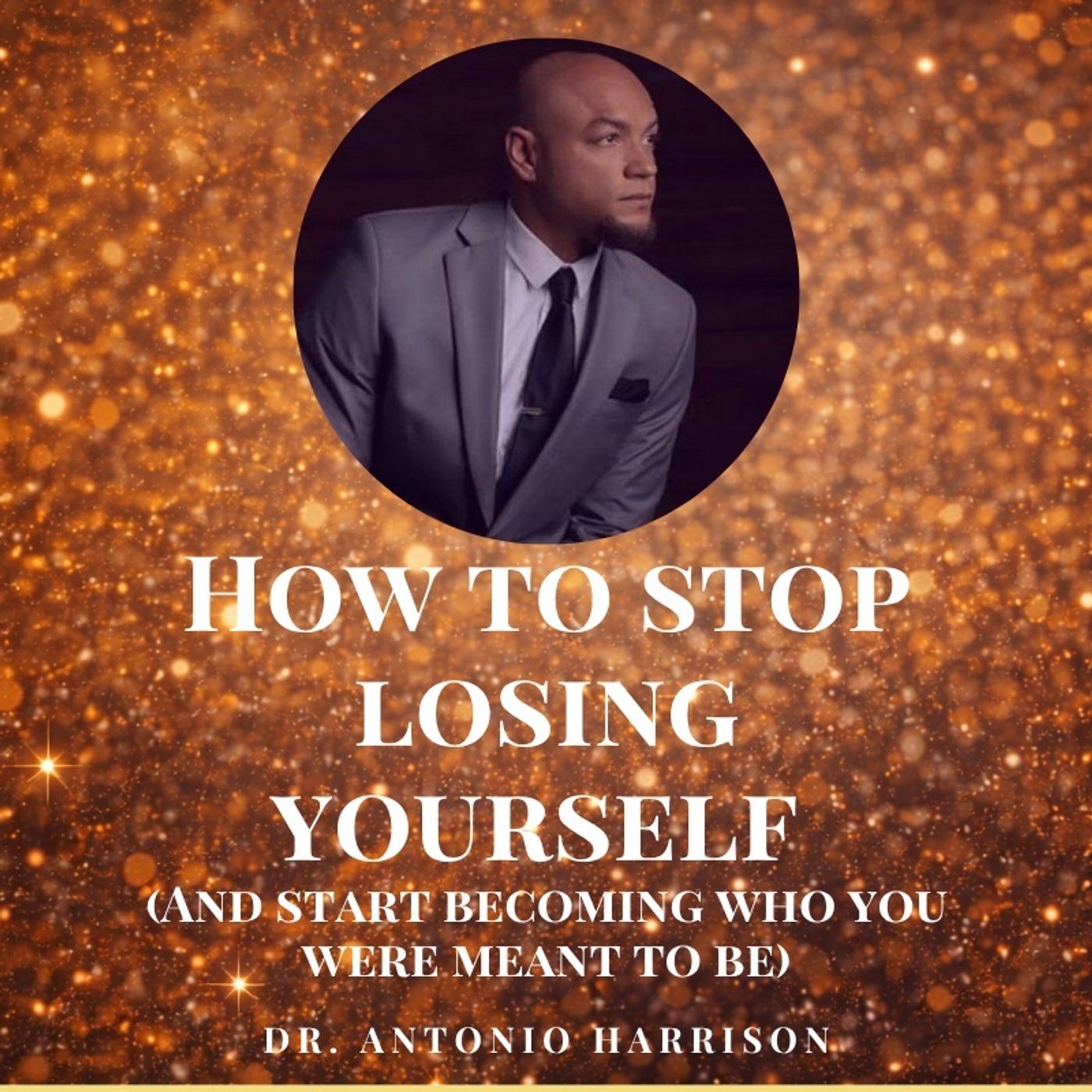
Welcome to Coach Doc and Ty's circle of trust. Things get real in this second conversation with Dr. Antonio Harrison on Quick Before You Forget and it's meant to meet you exactly where you are.
In this deeply honest episode of Quick Before You Forget, I sit down with behavior scientist and coach, Dr. Antonio Harrison (Coach Doc), to talk about identity, addiction, self-awareness, and what it really takes to rebuild your life from the inside out.
We explore:
The moment he realized he was becoming his father, and intentionally chose differently
Why self-awareness isn’t something you build, but rather something you stop avoiding
The truth about addiction (and why it’s often a relationship with yourself)
How to break generational patterns and choose a new path What masculinity really means and why you get to define it
How to stop numbing and start actually living
This episode is a powerful reminder that no matter how far you’ve drifted, you’re always one decision away from coming back to yourself.
Meaningful Moments:
[00:00] The moment that changes everything: seeing yourself clearly
[01:00] Meet Coach Doc: behavior scientist, father, and truth-teller
[03:00] What matters most: unconditional love and fatherhood
[05:00] A defining moment: his father’s response to crisis
[07:00] Redefining masculinity on your own terms
[09:00] Lessons from sports: discipline, identity, and endings
[11:00] Finding your tribe (and recognizing who’s really there for you)
[13:00] Authenticity attracts the right people
[15:00] Becoming comfortable in your own skin
[17:00] Trauma, survival, and developing awareness as a superpower
[18:00] Resilience through pain and adversity
[21:00] Parenting, perspective, and generational understanding
[24:00] Learning honesty and forgiveness from family
[25:00] How to become more observant (practical tools)
[30:00] Childhood trauma and growing up too fast
[33:00] Separating the person from the addiction
[38:00] Addiction, identity, and toxic self-relationships
[43:00] Turning point: choosing faith and self-work
[46:00] The moment that forced change
[48:00] Growth isn’t linear, it’s a corkscrew
[49:00] Choosing growth instead of regret
[50:00] What self-love actually looks like in practice
[52:00] You’re already self-aware, you’re just avoiding the truth
[55:00] What matters most right now
[56:00] “Much love always”: choosing love in every moment
[59:00] His upcoming books and journey of transformation
Bonus playlist song: Alex Warren, First Time on Earth https://www.youtube.com/watch?v=Aammt9Mvbwk
0:01 There's always a moment, and even if you missed that moment, another one will come or you get to make a decision. And for me, the moment was I had been like sitting out back and I looked into the house and there's a big window that's I kind of floored a ceiling, but from the light outside and the light inside, plus a TV in the sun, the way the reflection was looking. When I looked in, I saw my reflection and I looked like my dad.
0:58 Hello and welcome to Quick Before You Forget, a personal growth and development podcast dedicated to helping you build your unreal life from the ground up, using tools like music, mindset, and movement to remember who you are while you build who you were meant to be. Today's guest is doctor Antonio Harrison, known by many and loved by many as Coach Doc. Coach. Doc is a behavior scientist, an educator, a former athlete and coach, and a lifelong student of what actually helps people change. His work lives at the intersection of discipline, compassion, and lived experience, and today we're focusing on his story. Doc. Welcome back to Quick Before You Forget.
1:42 I'm excited to be back this is also I had a great time the first time to Lawsie why I said, yes, the part two. Round two. Let's go. So, how have things been for you since we first talked. Oh, they've been relatively well. You know, there's been some changes in my life on but all changes, I mean that they're bad. When one door closes, another opens, and I am actually at peace with a lot of it. You know. It's it's funny. The only job I've ever held for longer than five years, it's football. Coaching, and you love football coaching. I love it, so that's the only thing else. After around five year mark, I'm kind of like, I think it's time for something new. So to have been the last position I was whereas a VR fitness coach for seven years, you know, like it was it was like, okay, I'm familiar with this, so what's the next door opening?
2:34 Change happens and growth happens on the other side of it. So it's good. There's a good mindset that you have there. And you know, one of the things that this time I think might be offering you is a little more time with your kids. So when I was researching for our second conversation and kind of re listening to our first conversation. One of the things that struck me was you love being a dad. I love it. You love being a dad, So talk to me about how. So you know, if you, I guess, had to choose something that you want to make sure your kids don't forget, what would that be. So I'll give you two stories. You know I love my stories.
3:15 I'm ready. Well, So first, I can't remember, forgive me if I repeat anything from part one. But in second grade, Missus Russell only remember two things about her class. One was building a t rex out of cardboard boxes, and the other was, as so many teachers do, they go around the room and ask every kid what they want to be when they grow up. And my answer was I want to be an NBA player and a great dad verbatim. And so knowing that at second grade, you know, it was really important to me. And I remember if you watched the first episode, I talked about ms Atkinson and put the notes somewhere. They're on paper bag. Here she is again. See, we were once having a conversation and I was telling her about how I'm really hoping I'm providing well for my kids, and you know, I'm trying to do my best. And this was earlier in my twenty five twenty six and she said, you could be living in a cardboard box. As long as your kids know that they are loved, you're doing your job. So to answer your question, I just want them to feel loved at all times, no matter what, no matter what they do. Dad loves you unconditional love. I may not agree with what you may have done or how you behaved, but it doesn't mean I love you any less.
4:36 How does that reflect what you learned or how you were loved by your dad? Uh? Both my mom and dad. My mom taught me unconditional love. My dad showed me what that looked like, especially for a boy. So sixteen years old, pulled over for a d you got a DUI in possession, was taken in all and they were like eleven pm. Around three am they call home. You know I'm gonna get released to my parents and they pull me out of the seal of a hair andcuff me to a chair behind the lobby desk. Carr comes screeching into the parking lot. I know that's my mom, like I know it, I know it right. My sister opens the door with this shit eating grin on her face, just like looking at me.
5:21 My mom comes in and she's going off rightfully so and then my dad walks in. And if you've never seen my dad, he's about six foot two, two hundred and twenty five, two hundred and thirty pounds of salad muscle, this very dominating, hulking presence, and he doesn't say a word, looking very stoke, and he walks straight to the swinging door of the lobby desk and opens it, and all the officers are like, sir, sir, and they put their hands on their guns. And he walks right over to me, lips me up as much as he could, just because I'm still handcuffs with a chair, looks at me and goes, are you okay? I'm like yeah, and he gives me a hug. And we had a conversation about it later and he said, you know, he's been through a lot, and he goes In that moment, I knew I lost my license, I potentially lost my scholarship, I potentially lost my college opportunities. There was so much more. I was going to maybe a criminal case. There's so much more I was gonna have to deal with to yell at me in that moment wasn't going to do anything. What I needed to know and be reaffirmed of was I still love you. I want to make sure you're okay, You're my sin. We're going to get through this. And so that was a huge moment for me of this is what it looks like to show love as a father.
6:37 Well, that speaks to your work with fathers leaders everyday. People, what is one myth about masculinity that you want to bust for your audience, For our audience. I love this. I actually did a whole workshop for a high school on masculinity and the number one drive home point was you get to define it. No outside source can define that. So this idea of toxic masculinity, this idea of feminine masculinity, alphamel, dominant, mal, whatever you want to call, all these outside voices do not define that. You get to define for yourself what masculinity looks like. Now, that does have a lot to do with your upbringing and the way you see the world. However, I raise my son to open doors for both women, men and children.
7:28 That's what we do. I raise my sons to say yes ma'am, No, ma'am, Yes, sir, no, sayer. I raise my sons to be independent, I raise them to take on responsibility, but I also raise them to be kind, where if you see someone who's in need of help, you go help. If we whenever we're driving and I see someone stalled in the street, I pull my car over, we get out, and we push that car to safety. Mike middle Son just did with me a couple weeks ago. And so the driving. The key point I always tell folks is you get to define that. Stop listening to the out side sources tell you what masculinity is. Points and as long as your definition is it harming anyone or impedle their right to freedom, your definition is on point.
8:15 Well, you've played sports, You've put a lot of different kinds of sports, including NCAA football, and then coached you know, high school football for years. I think, do you still coach high school football? No? I. Once my sons really got into it and it became serious, I was like, I'm going to take a step back so I can be at their practice, is their games. I don't want to lose out time with my kids raising someone else's that's fair. So tell me though, based on your experience with you know, speaking of the masculinity tying that together, but based on your experience with sports at that level, how did that change how you approach life off the field?
8:56 Discipline a commitment to put in the work even though you may never get an opportunity to deploy it at all. I've seen so many people put in so much work and never get the shine. Or you could be the person who puts in all the work and shows up and does great things. But because you're not the one in the bright lights scoring the touchdowns, your name's not in the newspaper. Right. But football is such a unique sport in two ways, and that one, it's the ultimate team sport. Every position has a job, and the whole system breaks down if one person doesn't do their job. This isn't basketball, though I love it, where Michael Jordan and Scottie Pippeny can just take over and dominate, right all so and that and the other thing about it is it shows you that there is an end to all things. My dad took me to play pick up basketball well into his late fifties early sixties. Growing up football onlys you hang up the cleats and pads and helmet.
10:03 You don't ever get to put those on again. There's no grown men at the park in pads trying to play pickup. Like, when it's done, it's done, right, So you have to get squeeze all you can out of it and learn as much as you can from it because when it's over, it's over. And for those kids out there are parents who think their kids are going to be professionals. Even if they make it and they have the greatest career ever, they'll be done at latest by mid thirties. Right then, what so what did you cultivate within yourself outside of them? And sports in general, but especially football has really helped me understand that and understand what it means to have a true brotherhood or sisterhood or just bond with people for something greater outside of yourself.
10:53 Well, tribe matters an awful lot. And yeah, there's a lot of I mean talk to that to say, to talk to me about how tribe has showed up in your life after that time, because obviously you said, like, you know, football comes to an end, but you build tribe after that, So how does that what does that look like? You know, one of the lessons I learned is your tribe will find you when you are genuine and authentic trying to go and find your tribe. It's possible, but it's a lot harder. So doing the things you love to do and putting it out there, people will come. They will show up, and you will genuinely find that. It may take a little bit longer as you try to figure those things out, but it's also interesting and recognizing who within the tribe and the actual dynamics of the tribe that is loving and the ones that are not.
11:45 When I got now, mind you, four year starter, freshman college athlete of the Year, two time All Conference, when I hurt my knee, one person out of a fifty plus man roster and twelve coaches came to visit me at the high school. What I was used up? My purpose as a resource was done. They had to continue their season. I get it right, So, but that I. Don't get it as a human being, I don't understand why were they not there for you? Well, you know, it's tough to think, like, how are college students who don't have a car going to drive forty five minutes to come see the coaches still have to play a game the next week, and they've got their own family. So yes, what I have loved the entire team to be by my bedside. Of course, did it hurt, definitely so, but I knew who was my real tribe, who was just the tribe for the moment, for what I could do for him. That was it.
12:45 And after football, you know, I found my tribe in different ways, but definitely through Supernatural and VR fitness, that tribe has shown up, especially in current situation. They have been there to support and to show love and to reach out and offer opportunities and help in any way they can. And it's just it's overwhelming and humbling because you don't realize the impact you actually make, even when people tell you on a daily basis, until you find yourself in a situation where you do need help. We are both you and I in seasons of change and transition. And you know, they talk about the whole reason season lifetime if people are in your life for a season or a lifetime. But what you're speaking to in the group of Supernatural VR specifically is so powerful because it is a living, breathing example of what you said about being your authentic real self and attracting your tribe, and you've done that through this app. But the coolest part about the supernatural world that is different now than it used to be is we're all doing that, like authentically, we're all showing up. You and the other coaches have laid this foundation that makes us all feel safe and seene to show up as ourselves. And it's just really cool to see.
14:17 And it's it's funny because the evolution happened for us coaches as well. If you go back to the very first workouts released in twenty twenty, all of us are unrecognizable when you go to the latest newest workouts all and I had mentioned this all with some of the private messages I had sent to the coaches, But watching their evolution really helped me evolve and become more mile authentic self, right understanding that I don't have to be them and seeing them be themselves and allowing me to be myself and them embracing that was as well with the me. It was a it's interesting to think that you finally figure out who you are and are comfortable with yourself when you're forty two, right, Like it's it's a you go, wow, I spent this much time on the earth, but now is when I'm finally comfortable in my skin wholeheartedly. So it's it's been a nice journey.
15:24 Speaking of that, that journey and the tribe specifically. If you had to choose one person to tell you who you are, if you forget, who would you choose. All like person in the physical flesh or anyone, I'd be God reminded, tell me who I am. All when I am in silence, all be still, and I an I'm got mi going. So that's why I'd want to remind me. But if we're talking about in flesh, all it be my family. I want my family to always remind me of who I am, not just in the loving way, but also in the loving way in which we will poke at each other, we will make fun of each other, we will all test each other, and it's always a great thing when I'm with them. There's immediately on transport it too. This is what it's all about.
16:27 Tell me about an the earliest moment that you realized that you weren't interested in performance but in why humans behave the way they do? Like, what changed for you? You know? It was it really had to do When I went to college and I was trying to figure out who my major was, I just I landed on psychology. At first, I wanted to be a philosophy major, but I went in the philosophy one oh one and my professor forgive me, but was a pompous asshole and it did not lie him, and he made the whole experience horrible. And I was like, if this is what it's going to be, I don't want any parts of it. So I landed on psychology because I was like, I want to know why my family does the thing they do. I want to understand who they are. And it wasn't until I ended up going into grad school that I realized all of the situations and life experiences I had been in created a I utilized a survival skill that ended up becoming a super power, and that was the skill of observation. I could walk into a room and diagnose and break down and analyze everything that was happening. Because when I was younger, I had to go into rooms or places and go, there's the exit. That person's safe. I can run to that person for help. I have to stay away from that person. And this person's doing something over here that no one else sees, but I've seen you. And so
17:58 when I went into behavior and so, it just made sense. I had already had a skill that I'd been utilizing all my life, and now I get to put some formal knowledge to it on take sharpen that steel even more. And so that's really where it came from, was a survival skill that ended up being a secret power for me. Do you have more of those? I'd love to hear about another story of survival or struggle becoming a strength, something that you turned into a good that was maybe not so good on the surface. I go back to one being resilience, or when I did hurt my knee, people don't understand I was. You know, my first surgery was twelve and a half hours on the cutting table, and ten hours into it, I started to come too and they flooded me with anesthesia because they were scared of anaphylectic shocks. So I was put into a medically induced coma for three days. Three days, Yeah, I lost forty five pounds. They as three days. I woke up a shell of myself and it took me eight and a half to nine months to walk again.
19:01 I was cast at hip to toe and this is in Iowa from September to June. Like it was brutal all and so clutching through snow, right, But that was just another level of resilience because growing up we had to survive. I had to make sure I'm going to find where I get my next meal. I got to make sure that my sister's okay. I got to make sure that I get all the grades and do all the things, and play all the sports and give myself the best opportunities and go to the better schools when given that chance. So resilience was another common thing. And as weird as this is going to sound, my dad's embrasive and aversive coaching style gave me the ability to have enhanced confidence as well as sometimes it's good, sometimes it's bad, but compartmentalize emotions. My dad was old school.
20:09 He didn't care if you were the best of the worst. He was going to be right in your face telling you what he did wrong. And when I was younger, as he would be yelling while I was on the court, I would well up with tears and like just it just crushed me. And I remember being around twelve years old, at New Revelation Baptist Church playing in the gym, and we were destroying this team and he's still yelling, and it just at that point and I was like, I don't understand, Like that's just that's how he understands how to coach. He doesn't know any different. And it went in one ear and out the other, and I listened to the message instead of how it was delivered, which gave me an ability to separate emotion and contents and emotion from the message, from what I really needed to hear versus what this person's actually feeling.
21:02 Everything in my life reminds me of a song. So that story made me think of the song by Alex Warren called First Time on Earth where he talks a it's a song you wrote for his mom who they didn't have a good relationship, and it's a long story that we don't need to go into, but that is a good song for anybody that needs some perspective and some grace and some love for a parent that maybe doesn't always deliver the message the way that we think we need it, but we always somehow get what we need from it. And we know that our parents love us. And you know, sometimes it's just their first time on earth too. They're just figuring it all out too. And as I'm getting like as I'm getting older, and you know, my kids are ten and twelve, now, I feel it every day. I look at my parents when they were at my age, and I thought they were so old and disconnected and didn't understand anything, and they were just doing their dang best, you know.
22:02 Yeah, and they're doing their best in a world that is new to them. Like I look at my kids and what they have to navigate. I couldn't imagine having a cell phone in middle school or split alone social media like they're college, high school. No way I would have been in so much trouble. But there's absolutely no way so understanding like what they deal with. Even the my two older ones are now, you know, my oldest one has been dating for a while. He's in a relationship with his girlfriend, and my middle one just kind of he's going with someone now. Even the I remember we would stay up on the phone with the long cord and you would be on the phone all night, But that would happen maybe once in the week or something like that. They now FaceTime each other, so there's constant face to face interaction, even through a advice to where it's like, oh, let's watch a movie. We can put FaceTime on and watch it together and press play on Netflix. Of this, like that blows my mind and what that does to a dynamic of the relationships we are going to find out in a few decades. But like, it's a hard thing to navigate like that. That just creates a world that unforanted, but I'm learning about.
23:27 It's scary. Sometimes it's scary, but we were trying to trying our best right, like just like our parents did. And you know what I need to I feel like I need to be clear that like I am very, very grateful for the parenting that I got, And you know, it's it's just interesting when you start to process it as a as a passion, you know, quote grown up your own self. That gives you a different level of perspective. Well, and one of the things that I always praised my parents for, even though we went through so much and most people like, how the world are you still best friends with your dad? He never lied to me, He owned his shit. He was honest, which gave me the opportunity to go all right, do I want to accept that and move forward, or do I want to be mad at him as opposed to lying to me and then finding out later that he lied and now I am mad and holding a grudge. It was my choice of how I wanted to respond based off the truth and not a lie.
24:28 That's powerful. And similarly, you know, I was thinking more about what you said about the ability to observe things like that and the ability to kind of translate it in your head. That is something that you've honed in on, You've practiced, you know how to handle it, you know what you're doing with it. But it's very intimidating for some people to walk into a room and not know what they're observing. So I'm curious, honestly, what you would suggest to somebody that's new and trying to be more observant and try to be more aware of the surroundings that they're in emotionally, not just with the words or the physical environment, but the emotional environment. And that's something that we could all use more of. So I'm curious what your advice would be to people that want to be more observant and adjust their behavior appropriately.
25:23 First off, don't stare at everybody right, like, just you know, as you scan, don't be obvious in Well, I'll give one very practical tip anybody can use to enhance their ability to observe behavior, emotions, awareness of the room. And it's one of the things that made me quickly become second in command as a bouncer at a club within a couple months. And I was given the most out of control area of a nightclub to control, which is the dance floor. That's where everything happens. And you know, after every night, after we would work, as you know, the baristas and the bartenders and the waitresses, as they would cash out, we would hang out and have a beer and then we'd all be assigned to somebody to walk back to their car and then we can go home.
26:20 And I remember one night we were sitting there and the main guy in command was off duty sheriff, and everybody was kind of joking about how I had only been there like a month and a half, and all of a sudden, I've got the best spot and then and you know all this, you're giving him all this trust, and he just kind of looked at me and he goes tell him why. He's like, we've never talked about it, but I know. And he's like, tell him why you're able to spont things happening before everyone else, And I said, I look for the opposites. If you're in a nightclub, it's supposed to be loud, boisterous. Laughter just made him kind of on the dance floor. The moment it gets quite something's wrong, something's long. That means everyone stopped what they're doing and they're they're watching something that's happening that's about to unfold. So if you walk into somewhere, you know, let's say the grocery store, and you hear someone being from all the way on the other end being very very loud, that's not supposed to happen in the grocery store. Right.
27:23 If you walk into an amusement park where it's supposed to be very loud and boycious and a lot of roller course, but all of a sudden, it's dead silent. What's going on? So looking for the opposite, or at least being aware when it happens, to be able to observe that, you can immediately go oh okay. Part of that too is the other part. So that's the practical tip. The other part is something that I think you just have to have had and that life experience all and being around certain things. So for example, I remember being at a conference and we were staying at the same hotel that you have. Sea fighters were staying out because they were fighting in the arena across the street. So you've got UFC fighters who were celebrities, right. So when we went down to the bar, I remember one of my colleagues going, look at this guy he's got He's talking about this gentleman at the table. He's like, he's got, you know, these three beautiful women on his arm. Like wow, Like that's you know, polyamory at its finest. So I was like, that's a pemned Well, that's they're not in a relationship. Look how he's dressed. Look at how he's scanning the room. Look at what these these women were doing in terms of waiting for the professional fighter to walk up. And then he would tap one to go talk like, don't make the assumption, hold that assumption for a second, and then just why you'll see what happens. Right.
28:51 So it's just some but I wouldn't have known that, and I'm not seen something like that growing up. I was going to ask you for your best story from the from the nightclub, and I think we just got it. What what happened then? Like what happened next? Oh? Nothing? You know people, one woman would be with somebody, another one would get rejected and come back to him, and I paid no mind to it. The colleague I was with who was fascinated that I diagnosed that so quickly, they kind of just watched all night long, and I was like, I'm not concerned that, Like I'm when I continue having my I'm not buying you know anything. So you know, whatever view of a day.
29:36 Well, I love your stories. So tell me an unreal moment that's happened that made a significant impact on your trajectory of your life, good for good or bad. You know, I told the knee injury story, so I'll leave that there. I think that was a big one. I think another one for me was my mom would have this thing where, when she really wanted to share something, she would ask if I wanted to go run errands with her? What kid wants to run errands with their mom?
30:17 No kid, right, unless they're gonna get something. But I found I observed the pattern that every time she did that. We really didn't run any errands. We like went to the post office box and then kind of drove around. But she needed the distraction of the road so that she didn't look at me, so that she could share whatever she needed to share. You know, maybe that's not you know, you don't want to put some of the burdens on your child. But again, the truth was import in our home. So at ten years old, my mom couldn't come up with any more excuses of why like Christmas present ter missing, or why dad would be gone for multiple days or would be you know, on vacation or visiting his family for a couple of weeks or whatever all and so she just came out and was just like, your dad's going in and out of jail because he has an addiction to crack cocaine. And I can't keep lying and making up excuses. I feel really bad and I'm out of lies, and I just need you to know that and understand, like, this is why I'm working so many jobs. This is why, like I need so much help with you and your sister, you know, your little sister. And so yes, part of my innocence was stripped there as a ten year old, But I immediately understood, like it's time to put child is stays away, Like my mom needs me, my family needs me, and
31:48 I'm going to make sure that I'm there and doing everything. So my mom loves to tell the story how she never had to help me with homework or even see me do it, because she'd be like, do you have homework? I'm like yeah, She's like, well, when did you do it on the bus ride home? Well, don't you have a spelling test? Far? I studied on the bus riders, right, Like, I just took care of the things I was supposed to take care of, my chores, my grades, my athletics, you know, being respectful. I just made sure that that wasn't a burden she would need to carry. Was my misbehavior when she already had to carry so many And then once the cat was out of the bag, my dad just thought it, you know, it's safer instead of being in the streets to just use that home. So that changes everything because now you see it first hand what it physically and psychologically does to a person in the moment that they're high, and it's a scary thing, and you know, so you want to talk about being observant.
32:52 You got to pay attention. You better pay attention because you don't know what you could be walking into at any given moment. And so you have to recognize the patterns, recognize the sounds, who recognize the movements, recognize the tone of voice in a way in which someone is talking to go, oh, this is not a moment to come and bother or ask for anything to make me hyper aware. Which is amazing, Such a gift and a blessing to come out of it. And you speak highly of your dad, like you respect him, you love him, and you've had to forgive him for a lot of things. So how have you worked through forgiveness?
33:39 You know all besides the honesty piece of him always being honest, I was able to look and go when he's using that that's not my day. Like that drug has such a grip on him, everything about his look, his actions, his words, Like that's not the person I know. When he's not using, he loves me and he has me on his hip and takes me everywhere and just praises me and introduces me to everybody right and like puts me in all these beautiful situations. So I was able to go, that's not him over there. This is who I choose to see as my dad. And there was only one time where it was really really difficult for me. He had spent my entire senior year in jail, and it was my best high school year of athletics, and I was just I was all in the newspaper all year, like all of it. And at the end of the year they give high school awards, you know, Applete of the Year, val Victorian, all that type of stuff, And so they called my mom and go, you know, we're not supposed to reveal to the students, but because your son's gonna win Athlete of the Year, we want to let you know so that you can come to the assembly. And so it just happened to be that my dad was relief the day before. So we pick him up, and you know, we have a pack of new Ports, a Snickers bar, and an orange set of those are like the three things he always wanted coming
35:10 out of jail. We go home and I'm telling him like, yeah, this is the thing, We're gonna get it, and he like comes home, we all have dinner or whatever, and goes to his favorite spot to eat and he gets all his clothes, he irons them, he sets him out by the side of his bed. He's gonna have this problem with his son. And I go to school the next morning and I get up on stage and I look out and I see them, my mom and my sister in the back row, but my dad's not there. And I knew immediately what happened. I knew immediately, Oh, they got him. He got excited about some thing, got all dressed, and he probably did it really really early in the day. And that gap from like nine am till that two point thirty assembly, he's just sitting in the house while my sister was at school and my mom was a work by himself, and he just couldn't, you know, avoid the pull, and he win did what he did. And so that was like the roughest And I got the award, walked off stage, walked off the rows, handed it to my mom, and walked out and walked home.
36:20 And I always felt bad about doing that because my mom and sister were there to support me, and I should have recognized that in giving them their law the prompting that moment, but I was so hurt all and so we've talked about it my dad and I and that was one moment. But again I also understood like the pull of that level of addiction didn't matter that I was his son, like he couldn't control it. Addiction is so hard. Yeah, and I speak from experience. Oh excuse me. Your story made me a little emotional, So I speak from experience, and I want to say, I'm really sorry that that happened to you. I just feel that that you know, was not it was heavy, and it's it's still with you, and it's it's so inspiring how you've been able to still have that relationship with your dad and talk through and work through and even kind of feel bad for your mom and your sister and what was a really hard situation for you.
37:21 You handled it as best you could. And I wish I could go back and give Coach Duck then a hug, you know, just to be like, you know that you did the best you could with what you had in that situation, and it sucks like that, just that whole thing just sucks. And you know, we've talked a little bit, and I've shared a little bit about my own struggles with addiction, not super publicly, like I've shared a little bit on my TikTok, but not so much like in this kind of conversation. So I know that. You know, my husband used to say exactly that that I was not me when I was drinking, and you know, me is actually pretty special. I've grown to love myself and I don't need to drink in order to love myself.
38:05 I used to feel like I had to drink to numb and to mask and to have that energy like I have this energy regardless of the alcohol. In fact, it's way more real and authentic with without it than it was with it. So you know, I know that. And you can share as much as little about this as you want. But I know that you've had some struggles too, and you know, knowing that and talking with you about that, there's such power in sharing these things that are kind of hard to talk about. So can you talk us through your twenty twenty four a little bit in terms of how you walk through that valley and more importantly, how you worked your way through it and out of it.
38:49 Well, I'll go back even further on It's it's interesting because that moment I walked out and handed my mom and trophy and walked home, I walked home to go smoke weed like that. That's what I did, right, So I was all sports and then when I was twelve years old, I got invited to come hang out with some of the I was part of the cool athlete click, but then there was like a cool party click that invited me to hang out. So the first time ever ingested anything you know, foreign in my body, wine coolers, beer, tequila shots and bong rips like at twelve. So you know that the weed kept going. The alcohol wasn't a big thing until high school came, and then it was high school parties and now you cambine the two mom.
39:40 I also, you know, started smoking cigarettes at twelve in stealing them from my dad. And then when I got to college, I mean we were in a four stop like town with these brilliant minds. And if you've ever been in an institution where there are it's one of the top top appid academic organizations are places to be. What you will recognize really fast is they work really really hard and play just as hard. Every place I've ever been with that type of level of intelligence, That's what I've seen. And so it just carried on and like we really learned how to take them back. But then you leave and that you know, power our Century club walking around with the shirt and people marking on you know how many shots you've taken on like that stuff is. That's that's college. That's like a world that doesn't exist in society, and now you're supposed to manage all of that. And hey, I'm always careful in calling myself a former addict or in talking in therapy. What I've come to note is that I wasn't an addict as much as I had a toxic relationship with things.
40:55 Because stopping or taking you know, seventy five days to do seventy five hard or choosing not to indulge was not an issue for me. The issue was when I chose to indulge. We got down, like, I'm you want to party, like you better be ready, right, But if you don't want to party, I just didn't have to. But then you get older and now that I'm not going out to nightclubs when I got three kids and a wife, I'm not. I've got a few friends who may come over, but like I'm not the house, and then you're by yourself, and then it's now I'm indulging in weed and alcohol and cigarettes to just slow my mind down because my mind's racing because I haven't dealt with anything that's you know, been building up over the last couple of years or that day, and you start to rationalize, well, I'm just like I was as a kid.
41:58 I'm taking care of all my response abilities, so you know, the kind of do what I want, and my parents will let me go and do things. Because it was like, what can I say to him? He's getting straight a's, he's in the newspaper for sports, his room's clean, he's taking care of his little sister when we need him. Like when you say, like you know, and then you start to rationalize that as an adult, well, I'm providing for my entire family as a soul breadwinner. I'm at all of my kids events. I'm doing everything I can to be a loving father and a better husband. But when it's bedtime and everyone goes to sleep, oh that's my time. And I found my time happening too often, and the level of intake that my body could take rising and rising and rising all and so you know it, it came to a head, not actually in twenty twenty four, but in twenty twenty five, all when my middle son had asked if he could get a Bible, and I was like, okay, why because you know his mom was raised Catholic and she doesn't go to a master or anything like that, but she stops at church whenever she needs to prayer. All I always talked about spirituality in the universe, and so they had these conversations at the dinner table and he chose that route, and I was proud of him for making a decision, and he was
43:29 just like, I don't know, I really enjoy reading psalms and like seeing those on videos and stuff like that, I want to read it for myself. And I had always spent time in my life at different points searching out a relationship with God, not in a religious way, but in a personal connection way. And I was like, you know what, I think it's flying for me to return to that and give it a real try. And that's what I did, and it just turned out wonderful. I mean, I felt that piece. I didn't feel the need to slow my mind down. I didn't feel like I was carrying these burdens that I couldn't share with anybody.
44:12 And what I came to find really quickly was the toxic relationship I had with alcohol and weed was actually a toxic relationship I had with myself. I want to ask you to say more about. That, Yeah, because how do you fix that? Like, how do you how do you start working on fixing that relationship? Because that obviously first you have to see it, right, like you have to see it. You have to understand that this is Okay, I am I am the problem, but also I, with the help of God in this conversation, in the solution. So but how but getting there is hard. I mean, like, as somebody that's been in that and had to make that decision, it's not easy, and it's like a it's a daily decision to choose yourself and to love yourself enough to not go back down that road. So I mean, how when you when you talk about the Bible and reading the Bible and how that helped you, can you get practical with us and say, like how that like what it was or was there a moment that things kind of started to shift or how do you you know, how do you work through that uncomfortable part of understanding that, oops, I'm I am the problem.
45:35 Yeah, one like you said, is recognition on two you have to pour into yourself, right, And so I started to create disciplinary habits. I was going to read two pages a day of the Bible and I never read it when I've read all the other religious texts except that one. I was going to read thro the whole thing. I was going to engage in prayer, I was going to exercise. I was, you know, gonna pick back up my meditation and be very committed. And I was gonna do these things. And so I I utilize those daily habits to allow me to continue to grow that momentum. But the other thing is there's always a moment, and even if you missed that moment, another one will come or you get to make a decision. And for me, the moment was I had been like sitting out back and I looked into the house and there's a big window that's I kind of florid a ceiling, but from the light outside and the light inside plus a TV and the sun, the way the reflection was looking. When I looked in, I saw my reflection and I looked like my dad like saying posture, saying look on his face, saying the way we would rub our hands and I was like, oh shit, yeah, I'm not doing the things my dad was doing in terms of the level of
47:07 narcotic and so I thought it was okay, but like, oh no, my sons are experiencing the same thing, just with something different, same shit, a different day. And that moment for me was like Nope, can't. Can't. I love my dad to death, but I know I don't want that relationship to have that dack story. So there's gonna be moments like that that will come where you have to make a decision and if it's if it's something that is aversive enough, you'll make the right decision right. And the other thing is people have a tendency to go on this hamster will look growth. I start here, Rise, Rise, Rise, and I'm right back and doing this. And one of the things that helped me understand what growth really is is visualizing it in different way. Instead of making this mistake and beating myself up and not giving myself grace, was instead of a hamster will, there's gonna be a clok screw, So I'd go round. That'd make some mistakes, but I'm going to keep moving forward, make some mistakes and to keep moving forward, but it's gonna continuously go up. Right, Sometimes that little funnel wi get shorter and it'll go up Baxter. Sometimes it'll get longer because I've gone around the bed right, and so thinking about it in that way instead of all right, it's okay, I made that mistake.
48:33 I'm not gonna be myself up about it. But what am I gonna do next step? Where am I gonna go? Right? And it's just what's the next thing? And here's the other part. When you start to pour into yourself, you have to be willing to accept the good that comes with it. And what I mean is you'll start to recognize things that you didn't see before, and you can either beat you self up about it or you can go Man. I feel blessed my eldest son, who used to be attached to my hip. Once he kind of got into the fourth fifth grade, like our relationship was just different all and I was just like, he doesn't I don't know if he even likes me like I know he loves me head does he even like his dad?
49:22 And when I started to get four into myself, guess what, he started talking to me more on his own Now I could have gone, Man, I messed that up so much. Look at what I could have had. I feel bad about myself. I'm gonna go do something else to make me feel better where I could have gone. Oh, this is one of the benefits. I love that benefit. I'm gonna keep doing this so I get more of that thing. You're a Self love has been a journey for me personally, and I talk about it in my book Try and slp of Transformation quite a bit. It's the US in storm. So in my chapter I just discuss becoming the storm and storm is a acronym for self love, tenacity, optimism, relationship and mindset, and the self love part I think feels very hard, hard for people to break down, Like if you don't understand how to love yourself, I don't know how you can how you can start loving yourself.
50:24 So you know, one of the analogies that comes to mind for me is it's a It's an analogy. I can't take credit where. I heard it at Rachel Hollis's Rise Minneapolis event back in twenty nineteen, but she was describing a vase and how the vase, you know, you can be full of water and you can keep pouring and pouring and pouring, but eventually that vase will be empty and or crash and fall and break and chatter into a thousand many pieces. Versus if you stand tall and let the world and the blessings, like you said, like you just see so much more. I think for me it's just been like life changing. How when you're not numb, you do experience so much more bad and you actually get to experience all of the good. So when you stand tall and you let those good things, those that good energy pour into you, it overflows, as opposed to always constantly pouring out and breaking you overflow because you're letting the world, letting God, letting your friend's family, everything pour into you, and allowing that is actually a choice of self love. Yes, it's just it's it's a hard thing for people to take that first step. So I you know, when you and I are speaking the same language and we're both very i'd say self aware, And one of the things that you talk about in your courses and in your work is self awareness. So I think it's a superpower. But how do people do it? Like,
51:57 how do you be more self aware so that you can then start loving on yourself harder. I think. I think one of the common misconceptions is that it's something you have to try to do or be. You're already self aware. You're just lying to yourself about certain things. Stop lying like it's as simple as that. You know the truth. You know the truth when you look in the mirror what you are and are not doing like stunt do you know when you're lying to yourself and when you're lying to others, But you know right you're already self aware what you do with that. That's where it comes into play. If you know that you're lying yourself about timpthing, let's do something different. I you know, I have a client I worked with and all you know, it wasn't anything that had to do with addiction or anything. So it wasn't it in the terms of detrimental in her life in that way. But one of the things I told her was stop comparing yourself to the outside world of what is supposed to be.
53:02 If this is how you want to be, accept it or stop complaining about it. If you're complaining about it, it means you don't like it and you want to be something else, Well, then let's be something else if not, be fine with who you are, Like it's if that's what you want to do. No, I'm not judging you for it. You're judging yourself, right, So it's not about the societal expectations and the pressure from the outside. What are you actually feeling? Because if you are feeling judging and judged about what's going on, really, are you the one who's judging yourself? Are you lying to yourself about how you actually feel about this thing? And if you are and you want to change it, well, then let's let's stick to a solution. But if not, then you're okay with it. Stop complaining, Stop complaining and it Just accept it for what it is. Right, Yeah, you are already self aware. You've just chosen to lie to yourself.
54:01 Our friend, coach Mark says something about that where you know, he says, if you're not willing to fight for what you don't have, then you can't you can't complain about it, and it's just it's a powerful thing. Excuse me. So, I have a couple questions that I want to wrap with that are a little bit more quick hitting, and one of them is one is one thing about your season of life that you're in right now that you don't want to forget. I think the biggest thing is that God is always with me and always hide the spin. And it's just now that I started to feel, recognize, appreciate, and respect that, and that it's okay to feel that. Just like we talked about, I'm going to accept that as my truth.
54:54 I don't care how polarizing it feels for other people. I'm not going to beat you over the head with it, but allow me to have my truth. You want yours, I'll give you yours. This is mine, and by living it, you embody it. Yes quick before you forget. What matters to you most right now? Our family all that we've you know, it's always been that long. And that family is the ones who live in my house, pulse extended, ones who show me love and support. Like I put all my stock in relationships, I'm very aware that without others, I don't exist. And so we are social creatures. And as much as we love to give love and we cramed it at receiving it often like don't rob others all that gift, right, you feel that love when you share, let those do that for you. Cool and so I'm accepting that love in a way that I've never accepted it before.
56:01 One of your catchphrases, and I believe you might have a course built around it, is much love. Always talk to us a little bit about what that means to you and why you feel passionate about sharing that message. Much love always embodies unconditional love, and it has nothing to do with whether or not I know you, whether or not you're fring or foe. It is a constant reminder that in my response to anything, I can choose love. I can choose love. I was just sharing with you before this I got into it wasn't even a fender bender.
56:43 Some guy kind of sideswipe me, and when we got out, it was it was his fault, but he just like he was older, gentleman, and he was basically not basically he was telling me it was my fault and he called me guy, which, like, I don't know why that triggered me, but and so I made it very clear, not by getting in his face or a physical conversation, but by having a deeper voice, a louder tone, and overpoweling his words with mine that I wasn't to be messed with and the moment the interaction was over. Before I got to the end of the block, I was apologizing, just being like I shouldn't have done that, Like that's not the love I could have shown him, no matter how he came out outside of that car. I could have been more gentle, I could have been more understanding.
57:31 I didn't have to react that way. So what is it going on inside me where I need to love a little bit more of myself to make sure that doesn't happen so much? Love always is always thinking about love in every situation. Whether it's good, bad, ugly, pretty, hard, easy, doesn't matter. You can choose love. Much love always to you, coach, Doc, I really appreciate you and your time today, and I don't want to cut us off without asking if there's something else that you want to share or talk more about, and then I will wrap. No, I'll do one of the shame with self plugs. I will be picking back up my podcast, Doc Salley Dos at some point. I am finishing up on a four book series that it will be released that also has embedded with it. The podcast I did with my dad called Like Son, Like Father, where you get to hear his entire life story and mine a conversation, an honest conversation between a father and son. I bring my mom, my sister, my brother's in all and yeah, I'm going to continue to you know, if you want to check out anything I'm doing, Doc Harrison dot com is where you can find it. And one coach doc oh ay, coach doc on any of this social stuff is where you can find your doctor Harrison Antonio Harrison on LinkedIn It.
58:54 I got some work to do and I'm putting out some things, and so come check it out. Well, I'm excited and I think that I was going to wrap, but I need to talk to you more about your book a little bit, because we did. We did kind of tease that conversation in our first chat, and I we got two sentences deep, and I want to go a little deeper. So you talked about the structure, but revisit it for folks that maybe didn't get that episode, and then talk through what your goals are and what your hopes are for that book. Well, working title right now is Finding God. I mean four books are pregame in first quarter, second quarter and halftime, third quarter, maybe third and fourth quarter, and then fourth quarter in overtime. Yeah, I'm a coach. I broke it up in coach language soon the quarters of the year.
59:40 But it's my journey through twenty twenty five and making a deliberate, conscious effort to seek out a relationship with God. And it's not it's not filled with Bible verses, it's not filled with religion. It is filled with real honest reflections about things that I went through in that year, my ups and downs, the moments where I was writing really high and then I crashed really really hard, and just kind of how that all unfolded to bring me to twenty twenty six, just a new chapter in my journey. So that is the working title My middle Centers. The artist is working on the cover of the books, and yeah, and really hoping that these books will connect with someone who's seeking a relationship with God in whatever form that is for you, and who's struggling with things and needs to find a way out, knowing that they don't have to do about themself. They don't.
1:00:45 I hope, I hope and pray that you will come back on to share more about the book when it comes to launch time. More about the books, I should say there's multiple. I would be honored as I have been honored to host you twice in a very short period of time, and I don't take that likely. That is a joy, that is a privilege, and I am so grateful for you, sir. And that is all for us today. So please, when when when things get hard, when things when you're feeling like you're spiraling, when you're feeling that that that loss that Doc was talking about, come back so quick before you forget. Thank you for being here with me today on Quick. Before you forget, please like, share and subscribe as that helps the show so much and I really appreciate it and I'll see you next time on Quick before you forget.