Figuring It Out Together: The Entrepreneurial Mindset That Changes Everything for Anyone

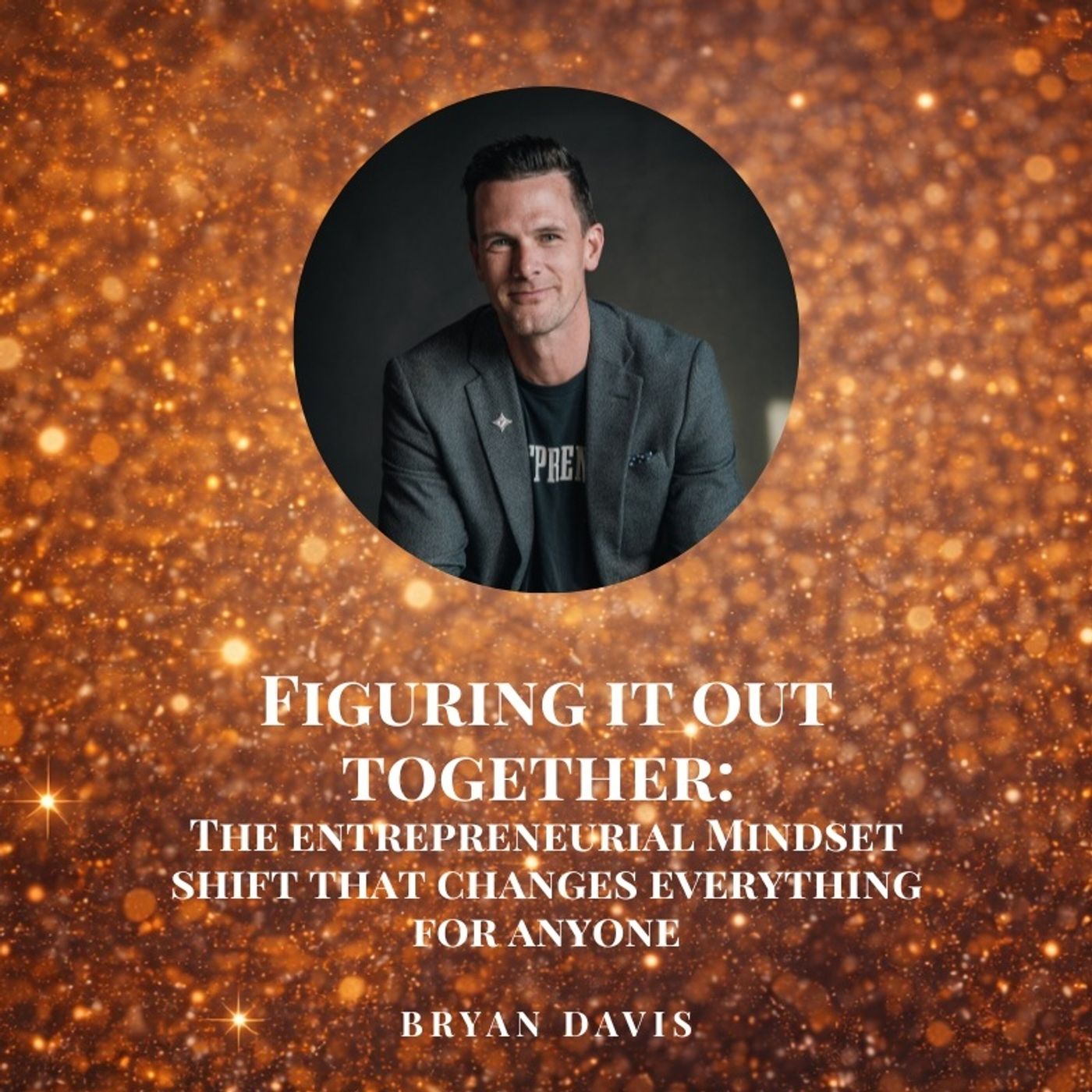
Quick before you forget: the life you've been waiting for doesn't begin when you feel ready, but rather when you decide to take one small step anyway.
In this episode of Quick Before You Forget, I sit down with leadership strategist, innovation expert, and entrepreneur Bryan Davis to explore what it really means to build a life with intention. Bryan has helped launch more than 700 ventures, and this conversation is about the courage and curiosity it takes to succeed. It's about choosing action over perfection and discovering that the biggest thing you're building might actually be yourself.
Together we discuss:
• Why we're all "figuring it out as we go"
• The difference between inspiration and action
• How curiosity creates confidence
• The Five C's of Catalytic Leadership
• Why entrepreneurship is really a mindset
• Building momentum before you feel ready
• How relationships shape the size of your life
• Raising courageous kids
• What it means to stop playing small
Meaningful Moments
00:00 Why Bryan believes entrepreneurship starts long before business
03:00 The backyard putt-putt course that sparked everything
06:00 Why entrepreneurship helps you become an 11-out-of-10 version of yourself
10:00 Inspiration isn't enough: how momentum actually starts
15:00 Why relationships are the greatest form of capital
17:30 Raising six kids to create value instead of waiting for opportunity
22:00 When everything fell apart before the biggest pitch of Bryan's career
33:00 The Five C's of Catalytic Leadership Charge Cultivate Connect Curious Courage
48:00 The surprising connection between Bryan's framework and my MAGIC values
51:00 Why the people around you determine the size of your dreams
55:00 What Bryan would tell his 22-year-old self
59:00 The message he'd share if the whole world had to listen
Bryan's Song of Survival: Thunderstruck by AC/DC
The famous first roller coaster photo: https://www.facebook.com/photo?fbid=873410577297&set=a.508702310587
0:00 I was sitting around the table. It was a clothing of all things, a clothing company I was starting up. So I'm sitting around the. Table downtown at a restaurant with one of my mentors advisors, who's serial entrepreneur, awesome guy, you know, done a ton of startup stuff. And I remember in the moment, we had a I don't evenmember exactly what it was, but there was a series of things coming up. I had no idea, like, no idea what to do, what decision to make. And I thought, and I think I said out loud, thank goodness you're here, Steve, because you'll know what to do. And he like got quiet for a second and he. Looked at that, and then he just laughed and he was like, Brian, dude, that's the whole point. He's like, I have no idea, Like, we're all figuring it out.
0:47 As we go. That's what this is about. That's what that's what the whole journey here is about. Man, Brian Davis, welcome to quick before you forget. It is awesome to be here, which of course you know i'd probably use that word, but thanks for having me here. Ty, I'm so pumped and I'm so excited for my friends to meet you.
1:29 You guys. Brian is a high energy in case you couldn't tell, leadership strategist, innovation expert, and executive director of the Hill Institute for Innovation and Entrepreneurship at Furman University, where he's helped launch more than seven hundred ventures and built one of the southeast leading entrepreneurship ecosystems. A Forbes contributor and Tedex speaker, Brian is known for helping people unlock the entrepreneur's mindset, not just to build business, but to build bold, courageous leaders. And what sets him apart is he's not here to inspire you to dream bigger or think bigger. He's here to activate something inside you that already exists so that you can actually do something with it. And I believe that that starts Brian with storytelling. So today we're going to walk through your story, past, president and future.
2:19 And I'm just so excited. Yeah, well, man, I mean you to introduce me more often. First of all, tie, because that sounded that sounds like I better deliver something really cool today, so I know you will. Hopefully I know you will. And yeah, I've got that I've gotten that feedback on my intros, and it's just, you know, it's funny you should say that because I come from a little bit of a fangirl place with with the people in my life that inspare me and you know, make me feel motivated to go after those big, crazy things that don't make sense out loud. You're one of those people. So it's all true. Everything I said is true. All right, let's go indeed, So let's go back first, though, Like, let's go back to childhood, Brian.
3:02 I know, I know, So childhood, Brian, tell me what a relationship or a person from your childhood, something about your childhood that shaped who you are today with it in person form. I don't know why I'm asking this question so backwards. It's normal for me. Now's this question, but with you a person or a relationship that has shaped who you are today. Yeah, well here's where my head goes to first. Maybe we'll edit this later, but I think it makes sense for like the kind of scheme and trajectory of my life a little bit. So I actually started my first venture, though I didn't call it that, when I was about six years old and my brother and sister would be the relationship there. So me and my brother and sister did like we were really close family and did a ton of stuff together.
3:51 I'm the baby. And one summer we're like, you. Know what what if we built a putt putt course in our backyard? And so, I mean I literally there was a newspaper article about this time, not kidding, like it was like a thing that I found recently from like many many years ago, back in the like lil eighties or early nineties maybe. So we found some bricks, got some like super janky old like green carpet stuff, and like cut some holes in the ground and we made a twelve hole. So that's all the room we had for putt putt course in our backyard. And then here's here, like I'm one hundred percent sure we violated HOA rules and stuff in the neighborhood, but we would go hustle kids around the neighborhood like on Saturdays and be like, hey, who wants to play putt butt? They'll be like fifty cents, come play. But here's here's what we did.
4:41 That was like. I don't even know if I want to say entrepreneurial, maybe sleazy, salesy. I don't know, but once we got people there were like, now we'll set up a lemonade stand in brownie stand because we've got a captive audience, and so they'd come and play and then we have lemonade and brownies. We'd upsell they're there. So I was like my first. Memory of like I wouldn't have described it in those kind of terms then, but that was definitely my first like, Okay, this is cool. I like building, creating. I don't know what this is, but that was really fun. And I think I made like seventy five bucks that summer, which was like basically millionaire status and kid terms.
5:23 Yeah, ladies six years old, seventy five dollars was a gold mine. I was rolling. Did you reinvest the seventy five What did you spend the seventy five dollars on? No? I was a complete more on other trend of my life. I was a complete moron. I think I had spent it on like I think, I actually think I spent it. I remember exactly, Man, I haven't had this conversation like ever. I spent it A good amount of it on model cars and like a remote controlled Dodge Viper. I still remember everything that blew with white stripes, and I was so proud of that thing. Yeah, oh my gosh, that no to self kids, No, but you remember it.
6:05 I mean it was fun. You must have liked it and played with it a lot. I did. I thought it was worth it, right like, because you honestly, it's not. I don't I think that that there's something you're being too hard on yourself, Brian, because like you had fun and that that you you work hard, you play hard, you work hard, and you you played hard with the car, So it makes sense to me. Literally, I haven't had that story forever. So yeah, great question, thank you. Well, that's you know, that's what I'm here for. I actually really love. Being able to ask people questions that make them, you know, reflect and think and tell and share these stories like dig dig we dig deep without even really meaning to, which is great. And I noticed that, of course there's an entrepreneurial like tone to that story because and that makes all the sense to me. But can you can you bridge that gap between then and now in terms of like how you got to be to where you are at with your entrepreneurial go get our status?
7:02 Yeah? Yeah, thanks for generously giving me credit again. I will Also here's what I'd say, ty is, I think this says what I think about entrepreneurship too. I think entrepreneurship unlocks the eleven out of ten version of who you can be, like whether whether you actually do something great with it or not, you know, in the world terms, right quote unquote great with it. I think you find out what you're made of when you try something for yourself. You're doing it with your book, with your podcast, with all the stuff you're doing. Like, I think that's what I discovered. And I think back on my life journey. And so as I grew up by bridging that gap from a six year old but but of course Brownie's selling salesman guy to where you know, frankly, where I am now.
7:53 One of the biggest things. And I spent some time thinking about this recently. Actually that was important is as I grew up, you know, I kind of started to believe every what everyone around me that was interested in innovation and entrepreneurship believe, which is that like, if you want the real version of this, you have to go west, you know, Silicon Valley or something like that, and not knocking on it. They do amazing stuff out there, but I. Think I failed to realize, like the beauty of entrepreneurship is you can create wherever you are. The only what you realize, or what I realized, is. I ended up long story short, through all that kind of journey of staying here and realize there's so much potential here because like this is going to sound I mean, I don't know if you have like a top five cheesiest quotes reel, but this might make the top five.
8:40 But like it's it's kind of what you make of what's in front of you and what you're given. And I think entrepreneurship goes from being a problem solver to being an opportunity creator a value. Creator, right yeah. And I think if you look at life through that lens, which I feel like I developed from six year old Brian to kind of where I am now through a life of different versions of Hey, I don't have to be at X City or spot or whatever, what does it look like to do that where I am right now? And so that's kind of what probably the version of kind of bridged me to to where I am now and what I'm getting to do with founders and startups in all. That space, which I want to talk more about. So don't let me forget that. But you said it allows you to be an eleven out of ten version of yourself.
9:23 Entrepreneurship allows you to be an eleven out of ten version of yourself, which. Who doesn't want that? Right? So when you think about the average person that maybe doesn't have an entrepreneurial spirit per se, do you think it's like born? Do you think people are born as an entrepreneur or do they build it? I will share my personal belief and I'm curious what you think about this. So on the spiritual side, for me, like I believe that we're creating in God's image and if that's true, then it shouldn't surprise you that when you build and create and design and do all that stuff, which is I mean, if you believe that, which is kind of then in our DNA, like, that's why it's really fun and that's why you come alive or you see I see that we're working with hundreds of founders.
10:18 I see people come alive in a different way when they actually grow and try something yourself, because I think I think we're designed from the ground up to do that. I agree from the ground up is one of my little phrases. That's not that's definitely intentional, right, because yeah, he knows and I do believe. Also, I believe in God and his yellow brick road for me is what I call it because for years I have showed up and I never I didn't see why, Like I didn't understand what was coming. I didn't know what was coming. And most of the time it's been great. And some of the time those bricks fall out from under me and I'm like, what is happening? I don't understand what this?
10:59 How is How is this happening for me instead of to me? And that question has changed my life. But the I agree with you one hundred percent that it's something that we can We have this unique opportunity to play with and build in real time, uniquely for us, and that's I think the coolest part about entrepreneurship is that it's so personal and it's so unique to every single human that decides to show up on their version of the yellow brick Road. So you talk a lot about like activating people, like activating ideas, activating entrepreneurs, not just like inspiring them so what do you see when you're working with these people, Like, what is the missing step between inspiration and being inspired and actually taking action?
11:43 Wow? So if if we figured this out in a way that works for everybody right now, tie, let's just agree to split the winnings. Totally one hundred percent. We've got to do something really fun like go to Red Rocks too with the winnings. Yeah, exactly, I'll be there. I'll join you'll, man, So. Short answer would be action, a bias for action, like you, I was just chatting with the founder literally right before having on this call, somebody that's that's getting started in our area and one of the biggest, one of the biggest differentiators I see from from kind of bridging that inspiration gap, if you will, is just doing one step forward and recognizing which most founders, most first time founders, I should say, have a hard time with this, recognizing the data.
12:40 Is one on this. Whatever idea you have that you start with, it is not going to be the idea that you, you know, get to market with. It's just not like there's I mean, you don't have to take them out. You could look the data on that like there's there's there are twists and turns and everything in between from the exact idea you had to where you go, but you only discover that by taking a step. And so I always tell people, you know, not do a really simple map. I'm a simple guy. So if I don't know if people are gonna be able to see this or not, but if you if you can't see it and you're just listening, if you picture a simple axis, you've got your X and my axis right, So let's go vertical axis. You've got impact, you know, one to twenty at whatever rati it doesn't matter impact on one axis. The other axis you have feasibility, and obviously the plot point you want to plot is the peak of impact and feasibility. But if you honestly like go through with whatever idea you have and start plotting out, hey, huge impact. Okay, wait, that actually may not be realistic to do right now.
13:48 Cool cool goo cool, Like keep that plot point there. But maybe you find a plot that's feasible, maybe the impacts a little lower initially, but you're working your way towards the point you want to work towards. And so I think that's been a helpful excers to get people to do something, map out the big picture that you want to do, and then take a step anything in that direction, and momentum breeds momentum. It can be hard for people to do though, Like that's one of those like says easy does hard things. So I'm wondering if you have an example from your life where you bet on yourself or an idea before you felt ready. Every time every single.
14:29 Day, I'd say, I never feel right. I probably overthink it more. Now I'll try to give you more specific answer. But I actually, yeah, I'm I think I've seen enough where I know when I'm starting something you are with somebody who is we're not ready, Yeah, like the in the technical planned out since we're not, but you you discover by. Doing, you know, you build through doing. I want to make sure I answer your question right, though, so maybe ask that again, and I want to make sure I give you like a specific story or way I think about. That, you know what. I think your answer is actually pretty good because well I'll do it anyway if you ask you to, because sure, but I forget even what I said.
15:12 What we're trying to activate people and go like from how do you how do you actually. Yeah, I mean that's legit though, like cause I think I think we get easier as we practice, right, Like, it's it's definitely something that I think is a skill that you can can practice and get better at. But how do you show up and take that first step when it's scary for people that haven't practiced, for people that are starting at square one and maybe didn't start eliminated in Brownie stand when they were six years old? Like, how do you talk to those people about what to do to work? Because I see it as so I personally have thoughts on like fear and excitement and how I mean it's not even personal with science, right, So fear and excitement are chemically the same in your brain, so you get to decide what to do with that information, right, So I didn't know that, like until like a few years ago, I had no idea. I studied psychology. I have a master's degree in psychology, and I didn't know that fear and excitement are essentially the same in your brain.
16:11 So I've spent so much of my life so darn scared and I wish that that that would be my answer essentially to people, is that that you know to know that fear and excitement are the same and that you're in the driver's seat. So you know, if that helps you. I would love to know a story that you you did something that was scary anyway. Yeah, a lot. I mean, yeah, I'll try to think your a story. So let me try to come back to a story. But like a framing of how I might think about what you're alluding to, there would be There's three different types of capital in life, generally speaking in the startup world and probably just general world, which is you know, social capital, intellectual capital, financial capital.
16:56 You know the capital capital. And if you pick one, you pick social capital, right, because that like when we work with first time founders, when I work, when our team does a lot, you know you're talking about, well, how do you make that first step? Well, you gotta like you gotta plug into something like and so if you can plug into social capital, that fills all the gaps you need generally speaking, over the course of any startup of scene, that fills all the gaps you need for intellectual capital and capital capital. So like, if you can get plugged. In on the social capital, like that breeds momentum and it breeds probably the biggest thing, which is accountability. People that are going to cheer you on. People are going to say, hey, Ty, like I remember you sharing, You're going to do that. How's that going? You know?
17:43 Can I help with that? Or you calling me and be like, hey, I'm stuck here, Brian. What would you do? I don't know, but you know what, Let's let's meet for coffee. Let's see if we can figure out a next step together. Maybe somebody we know it. Like, so, I think putting yourself, if you're not willing to put yourself in the game at all in terms of social capital, then like that's a hard journey. But if you do that breeds accountability, momentum, all the things. I think they're just huge. People connection, That's the thing. And honestly, I think people underestimate how impactful that can be as a as a starting point, quite frankly, because you know, I look at my own journey and so much has happened because of my recognizing and appreciating and being so dang grateful for this gift of connection that I have to so many people, and you know, just leaning fully into that has changed everything for me because I know that, you know, every single human I meet. I meet for a very important reason.
18:39 I don't always know it at the time, it tend. It tends to come out like when we met and we talked about your family, by the way, which you are a dad and you have an amazing, huge family. Talk to us about how being this creatively minded, very energized, very entrepreneurial minded person impacts how you parent. Yeah, so what I'm I'm going to bring my kids in here and they're going to answer this and for you, so you know, here, it's a good question. And I do think about it a lot and not not. I don't just you won't just see my kids run around with an entrepreneur shirt like I'm wearing right now. But try stuff together, like we'll we'll. Try eliminade stand things. I'll push them to be like, hey, what's a business you would do? My wife will laugh because we'll be.
19:25 Like, hey, dad, give me a chore to do. I'm like, nope, like to to earn money. And they're like why not? I was like, because I expect you to. First of all, I'm dat of six, right, so I expect you to earn you keep around the house, I'll provide room and board. But what I say is like, that's not net new value to our family. Like you're like, I'm just laundering money inside our house. Like that's not helping out. So I'm like I want you to go, like, let's think through but like, let's find something that can provide netview value to our family that you can earn and that exists, it's there, you know. So that that's my kids are probably one day super annoyed or very grateful, I don't. Know, probably both, and that's okay, two things can be true.
20:05 Yeah, yeah. So the other way I think about ties, like, you know, as a as a parent, how do I and I do not get this right all the time, But I try my best to think through the balance of pushing them to do stuff that they're not quite comfortable with me, even like physical activities and hikes and things like that, down to intellectual stuff as well. How do I push them to try stuff and then try to have some reflection, even though it usually is very short with an eight year old, you know, but some. Reflections like hey, what did you learn? Man? Like what was fun about that? What did you what did you not like about that?
20:45 And just getting them to me as much as I can try to learn about themselves and who they are in the world so that they can have some fun and hopefully leave an impact and be leaders who create opportunity and value. Well, I heard curiosity there, because like things change when you get curious about things, and there's so much to learn from getting curious about things, so I think. But I also know that there's a difference between like thinking, like having these ideas and actually like making them happen, because and there's the concern about, you know, being fearless versus being reckless, Like, so how do you how do you kind of rite it? Is a like I feel so crazy. It's funny you said, like you know, the accountability stuff. I've been talking on the internet for I think eight months about how I'm going to see Alex Warren at Red Rocks on June second of twenty twenty six, and I am going to interview him on Quick Before You Forget, And I've just been making it happen that way.
21:45 And if it doesn't happen, people, I mean, people are now part of the journey, right, Like they're sharing this this journey with me. Wherever it's leading, we don't know, but I'm going to take everybody with me to Red Rocks and just see what happens. But there's there's a lot, there's just so much good that you shared there. And I'm not even sure where I'm going with my question other than you know, the momentum being a huge part of it, but also the curiosity. So I think that that's that's it right there. So what is something that's happened for you instead of to you in your life? Because you got curious, Like you got curious and asked that question, In. What way do you mean like something's happened to me? I want to make sure. No, I'm thinking, like you know a lot because for people that a lot of bad things can happen, that can derail you as a human and an entrepreneur, but you stay you. You help people coach people through how to stay positive and stay on track and keep working toward it. So one of the ways that I do that on my crazy yellow Brick road is you know, recognizing in challenge, you can also still have joy in challenge.
22:48 You can also choose to learn and get curious about how that experience. While it seems brutal and awful at the time, is actually, you know, all part of what's meant for you. Yeah. Yeah, I mean there's there's there's a lot of good stuff there ty that you just said. I I mean in terms of stuff you know to me for me, If that's if that's kind of the way I'm framing this. You know so much this is mindset. I know, that's a big thing that you focus on and talk a lot about. So much of it is I could go through. So let me give you example.
23:31 All right, I'm gonna go back to a startup as part of in the health tech space. On our way to Charleston, I get to to by the Way to pitch to pitch to. One of them. I won't go into all the details. I don't think it's super proprietary, but just in case, I don't want to throw anybody. Under the bus. To pitch to one of the largest Dallasis providers in the world and some of their zech team around the product that we were creating and working on. And get a call from our engineering partner and we're like halfway to Charleston to the meeting which we're going to and he's like, hey man, like the kind of hey man like, nothing good is gonna come. After this statement brace yourself.
24:14 Yeah. I was like, hey, man, we need to talk. And I was like, ah, yeah, what's uh, what's going on? Guy's name, I will say his Tom. He's like, hey, so we're out, Like and this was our engineering partner around everything that we were doing that was like critical to the pitch we were just about to do. That was set up to tell them how we had re engineered a couple of things we'd noticed to try to make our beta version better and blah blah blah. All this kind of stuff. And I was like, man, that's funny. It sounded like you said you're out, and I just want to unpack that a little more. What is this negotiable? I was like, what's what's going on? Tom? It sounds like there's more of the story and talk about for you to you whatever version of you want to say this so long story short of that is our one of our engineer. You know, we're not a big company at this point, so we had had ten ninety nine folks that we had all kinds of nbas and everything around that were helping us with some engineering.
25:09 One of those guys that we had hired to help was literally caught at this our big engineering partner's place, caught just essentially doing what I would term corporate Esperana Corp. Corporate espionage. Was like in their engineering's office taking phones, I mean taking pictures of his phone, like clearly being sneaky about everything, trying to like capture new stuff that this other company was working on, to essentially. Just steal for his own purposes. And so yeah, we had to let that guy go. But then I have to go to the meeting. Oh no, that's now an hour and a half away with a. Completely different, wildly different pitch and story and update than I wanted to have five minutes ago.
25:55 Then they were expecting. And so that was a moment when you say the for you and things that are happened to you and be like, man, that one sticks out this really and and I think in that moment, you know, it'd be easy. There's a lot of things I could blame or a lot of things that I probably would have felt justified what i'll call early Christian version of Brian say kind of thing, you know, but then you realize, like, and this goes back to another lesson we may get into later, just the not in an apathetic way, but it is. What it is. And what are you gonna do with what just happened? Are you going to because it's a fairly like binary set of decisions you can go through, like you're either going to choose to have that ruin every single everything, or you're going to choose to say, I'm going to embrace some good old fashioned optimism, some resilience, a little bit of creativity, a little bit of agility, and we're gonna own what happened. And we're also just gonna be honest about it with the group we're with and and say leave with optimisms like don't don't like, don't like, try to act like what just happened didn't happen. But you can still tell the story with an optimistic notive And here's what we're going to do because of that, here's what we're going to try. And this is unfortunate.
27:16 And guess what. The people receiving the information are usually humans, at least for the most part. Right now, we won't go down that train yet, but yeah, and then you can have it actually gives you a chance to build a really authentic interaction with people when you have terrible things that can happen to you around you, for you whatever. It gives you the opportunity to build a more authentic relationship with people that end up being your partners. Don't know, that's maybe a long version of a story that just like you said as like, whooh man, I remember that one. Yeah, I was like. Twenty eight years old maybe at the time. So yeah, that was a fun one. Well, we you know, speaking of relationships and such. We had the opportunity to authentic, you know, being your authentic self and connecting with people as humans, not as AI.
28:05 We had the opportunity to meet at Mick Hunt's lead Loud event in Greenville, South Carolina, And when I was talking with you, I was so energized because you have like this super contagious energy that I'm super grateful for because I also. Have that energy. And it's I love when I find people that are you know, just just Some people call us too much, but then we say go find less, right, so you know we are we operate here. But this this thing. Happened when I was talking with you in South Carolina, and it was you just let up when you started talking about being a dad, like you just your your kids make you you know there there, your there, your whole world. Of course, they have to earn their keep right, But you, I'm wondering what you've learned that from your kids?
28:50 Like what have you learned from being a dad and from fatherhood that you haven't learned there couldn't have learned from like a boardroom situation. MM. Number one thing for me. Is how often So here's an example, and you you you'll appreciate this. Also, you will find yourself in moments giving your son your daughter a very specific piece of advice about how they should have handled this thing better. And in that very moment, you stop and you go, wait a second, who am I. Talking to right now?
29:31 Because I could just be talking in the mirror and I need that same advice over here for this other whatever way I handled this situation with somebody at work or with my wife or whatever. And I think that's been the. Most interesting aspect of being a dad and a parent is like when you're digging into like how do I you know? They always say, people always say the old adage of like you know, you never really know something until you teach it. So they when you're having to teach a new human in the world, for lack of a less crass way of saying it, a new human to this world. How to be a good human in this world? You learn a lot about yourself and I don't know that's just been that that has been great and hard and super valuable.
30:24 So say, because friends, our friend here is wearing the same shirt that he was wearing when I met him, which is entrepreneur on it and say, you're not an entrepreneur and you don't want to be for whatever silly reason you you know, you choose stability over chaos, and that that's a valid reason. But you know, say you're not an entrepreneur, how can you apply some of the mindset things that you've that you've put to work for you as an entrepreneur to every day, everyday life. Yeah, so I talk a lot about I actually do spend a lot of time talking about this with with you know, whether it's when I'm doing speaking or engage in sometimes of corporate clients. Even is that entrepreneurship isn't just for startups. Every every corporate, every organization started somewhere and so like every everywhere in the data would saw there's a Deloitte study on this that about twenty percent or so of every organization has about twenty percent of employees that are quote unquote very entrepreneurial. So what outlets and avenues do you have for them to do something with that? But the other thing is, like you to survive, and not just survive, but thrive as a company, you've got to think entrepreneurial. So here's what our mission is at our institute. We do not say our mission is to launch ventures and do startup things. Our mission is to create entrepreneurial minded leaders who are equipped to transform companies, communities, and ultimately the world. When you hear that, it's about creating leaders and we use entrepreneurship is what I think
31:56 of as like a life curriculum by what you can learn, skill, habits, all those kind of things that are going to add tons of value, whether it's your own startup or which is most of the world. And somebody's listening to this right like, and you're like, hey, I'm not an entrepreneur, I'm just working in an organization. Good news, that's most of us. So how do you apply principles of entrepreneurship and mindsets of entrepreneurship inside your organization. That's some of the most effective ways. You know, some people will call that entrepreneurship, but that's that's some of the most effective ways. I see this being something that helps anybody, and it's not just for the person that's you know. In Silicon Valley starting the hard coret startup. You know.
32:39 Yeah, So to build on that, like, what's one belief that people need to unlearn to start thinking more like an entrepreneur, whether they're in for startup or they're you know, an entrepreneur. Like you said, here's here's one. I'll share it with the story. Yeah, I'm twenty four years old. Maybe I think at this time it was probably I think this is my first you know, really quote unquote startup, and it completely failed, by the way, it's a total dumpster fire. But I'll share it with the story. I was sitting around the table. It was a clothing of all things, a clothing company I was starting up. So I'm sitting around. The table downtown at a restaurant with one of my mentors advisors, who's serial entrepreneur, awesome guy, you know, done a ton of startup stuff, and I remember in the moment we had a I don't evenmember exactly what it was, but there was a series of things coming up.
33:28 I had no idea, like, no idea what to do, what decision to make? And I thought, and I think I said out loud, thank goodness you're here, Steve, because you'll know what to do. And he like got quiet for a second and he. Looked at that, and then he just laughed and he was like, Brian, dude, that's the whole point. He's like, I have no idea, Like, we're all figuring it out as we go. That's what this is about. That's what that's what the whole journey here is about. Man, And I remember that just stuck with me like glue. I mean, to this day of that just the best piece of advice is like we're everyone no matter what they say, like they're full of it if they don't, like, we're all figuring it out as we go.
34:16 How to do a podcast, how to write a book? How how do I manage this tough situation on my team? How do I handle this thing over there? Like we're all having to figure out where we go? And if that's the case, which it is, and you really, I think you realize that more as you get older. By the way, oh yes, wait, yeah, so. Like we all that is true, Like we all still figuring this out. But if you acknowledge that that is a pretty foundational truth, then you're like, Okay, then what are the mindsets, the habits, the traits that I need to embrace to help make the most of the reality that we're all figuring it out? And that's why I go back to entrepreneurship. I have this thing i'll call just catalytic leadership, and I kind of go through this whole thing called the five SE's and kind of I'm giving you a super long answer, but.
35:03 I'm here for it. I want to know what this catalytic thing is. Please tell me, Well, it's it's part of what I part of what I realized after working. I'll give you the t up for it. But before I do that, let me stop because I'm like giving you a super long, run on sentence answer to the question you asked. Is that cool if I jump in totally? Please? I mean, I love a conversation, but also I'm leaning in. When I started this whole bookmark, don't lose what you're good to say. Okay, I was starting off this podcast. I was like, I really want to listen. I don't want to interrupt anybody ever, and I still don't, and I've gotten this feedback from people that they're like, no, we like this conversational stuff better, so keep keep doing that.
35:47 So long. Answers are great, conversation is great. But I want to know the story, and I also I hope to learn more about this clothing company. Well, you all it doesn't exist, but. What was it? Like, I want to know what it was. It was It was an outshort outdoor brands Big and Outdoors, Mountain Bike Ray seeing all this stuff when I was younger, and so it was an outdoor clothing company called Verdigear, which is a terrible name. It sounds like vertigo. But it was about yeah, just like how do you go higher faster? But you know all the stuff, So we're creating just a better version what probably would have been similar to like a brand ethos of like a shoot uh forgetting the name of it now, But like some of some of the big, like popular ones that you now see, our version was like, we want to create a better and more durable, more kind of like casual and stylish kind of stuff that could could kind of be worn anytime, all the time.
36:43 It be like a Cabela's or in the Inner Mountain kind. Of totally yeah, yeah, that kind of thing. I'm with you, and it's not terrible. It was it was a good I mean, you are full of good ideas. I'm sure you probably have like a whole like you know, which other thing makes me think of this pile of like paper that's all crumpled up with all these great ideas I. Got, I got an I've got so many notebooks. I know. So take now that we've done that, now take me through the catalyst stuff. Yes, all right, So coming back, and here's where I came up with this. I mean, this is probably a cheesy term, it's my term, but what I realized. So I'm you know, working with you know, I've been in some startups myself. I've failed at plenty. I've done okay and if you like. But as of the biggest thing I've learned, I work around, like you know, hundreds of these founders like anytime, and you've probably done this in some of your studies and getting your master's and PhD and all this stuff. Is like you start to notice trend lines when you study stuff enough and especially when you experience it a lot. And so experiencing and working side by side with tons and tons of founders and startups in that whole world for years, I was like, Okay.
37:47 What makes a good leader? Like like you? And I could spout stuff off, but like, is there anything that's like our patterns I've noticed in one of the ones is there's a lot of things, but forever reason why I honed in on is how the most successful ones, how they like, how they lead, how they build momentum, and and I was like, okay, so so how does that break down? And I started I started narrowing in on what I call the five c's, and the first won't surprise you. But what I'll go through is charge, Cultivate, connect, curious, and and uh courageous. So charge let me go through this really quick.
38:29 So charge me. When I say that, is like, choose the energy you bring. Like the best, the best leaders have seen in the startup world, the ones that are when you think of them, like we've seen Netflix series on some of these folks that are just like wow, like they just it's just their ability to be magnetic and their energy and momentum they create like it's it's special. And you see that. So like a huge part of that is like what energy you choose to bring. So what if you and I tie like right now today, or or if you got on with me and I just was like acted disinterested and I was like. Hey, that's great to be here, and yeah it's cool. I'm gonna tell about a couple of things and you know, learned and I'm gonna go from there walking back like hey, this is amazing, Like here's something I've learned around this, like totally different receptivity in your brain of how you receive that information.
39:16 Literally you could even see if you're watching, I felt it like I physically I felt it like and then we like set back up. Yeah yeah, like like but that is that can be. What I would say is like some people are like, oh, you're just like super eccentric or you're you're just a total extrovert. And while while while you can't argue against like base level personality differences totally true, I would argue that everyone can at some level because I've seen it happen in founders I've worked with and with students, hundreds of students I've worked right now, at this point, you can choose to some degree the energy you choose to bring, and if you choose and lean lean into doing that in an effective way. Guess what, Like you just said it, like people get excited about they don't even know what they're excited about.
40:02 They're like, I don't know, but you know what, I'm gonna watch a venture. Yeah, let's do it. Like I don't even know why I'm doing this, but like you have these moments, like you see it. Like that's how we are as humans. Like people want to get excited about something. You remember how you feel? All that stuff some big, big you know. I won't go too much further. I won't take that long in all of them. But charge. That's a huge, one, huge one for me. All right, then we go quickly cultivate, connect, curious, courageous, So charge cultivate. I think the other thing I've learned and you've probably learned, is too, like the really great startup founders that translate into I think good leaders, you create conditions. You do not force results. You create conditions you can't force results, Like you cultivate these situations where success may happen, but you can't. You're never going to scale.
40:51 You're never going to be effective leader if you're just like, let's do this, go forth and do that, Like you create a condition for somebody your team to thrive, own bill, do things right. So it's playing. That could be a whole nother podcast. You're just gonna have to come back. You're gonna have to just come back. It's fine, all. Right, I'll try to jump through this quickly a high connect. Hey, hey don't It's fine. Yes. Also like, don't want to be I've listened enough podcasts you're like, oh my gosh, when's this guy gonna finish this? Well? No, because you have that, You're bringing the energy. Everybody's leaning in and wants to know what these c's are. I got, I got, I'm running it down. We got charge charge, yes, cultivate next one connect. This is a big one I see with startup founders is the concept of like I used to call it, describe it as like climbing mountains together, but like when you do everybody could think of this in your life. If anybody listening you and I like, you stop and you go back in your in your brain, you say, what's something really hard? Physically, intellectually that you had to do with somebody else. The connection in the camaraderie read that occurs in those scenarios is insane.
42:03 It's hard to replicate. And so if you think about as a leader, how do I not try to be mister hero but be real with my team, Be like, y'all, some crap hit the fan and we're gonna have to Here's what happened. I'm trying to figure this out. Here's what I'm thinking, Like, Hey, what do y'all think? Like, this is something we get to tackle together. And if you can like effuse that type of culture and mentality, that's some of the best most successful startup founders I've seen do that really well, Okay, that's connect. So we've done charge, cultivate, connect, all right, Curious and courageous. I those last two so curious. It probably pretty uh self explanatory. But what I'd say is like, if anybody who's been in a startup and then back to what you and I were saying, we're all having to figure it out.
42:53 Anybody that is alive, I can say it that's strong. Literally, Yeah, there's abiguity every day that you're going to face in your business and your life, how you make decisions. You know, I think one of one of the things that's important is thinking about like confidence and ambiguity through discovery. Is a lot of times what I say on curiosity, which is like, you know, stuff, stuff happens. We're not going to know it all. You're going to wake up every day and there's going to be ambiguity, And how do I motivate this employee, how do I deal with you know, the engineering example that I shared earlier, so like this just put on my lap. It was not great news that there's a lot of different there's a thousand different ways I could I could go with this information.
43:39 So there's ambiguity. So now I need to discover and you do that through curiosity. And like some of the best founders, frankly, some of the best ideas are based on curiosity, just being a good noticer, being curious of why that works. You know, Toyota Is it Toyota one of the big companies that goes through. The five whys? I think, get his Toyota? Is it Toyota? I think so? Yeah, So they go through the five wives, and I think that's just thinking about whether you do that exact framework or not just in a in a respectful and in the most healthy version of that, asking why on different scenarios people your team, encouraging your team to do that, you'll discover things that you need to fix and ultimately you'll create some clarity. But you got to have confidence and ambiguity, and that happens through being curious and you know, how might we let's figure this out and not being bummed that there's ambiguity that that's going to happen. The last one I think is courageous in the five seeds here and this is this is this is a pretty good non negotiable I'd say for any leader, certainly in the startup world I've seen because guess what you're gonna have in startup world?
44:54 Chaos? And yeah, it is like one sure chance of chaos every day. That is that's the weather report and a startup and guess what, that's not necessarily not the prediction in business wherever you are right. That's gonna happen. And so if I think of it, just again delivering calum the chaos, like you as a leader get to be that that barometer of like everyone in your team, you can see this. I could have time, but there's plenty of stories of like something crazy happens, massive chaos, and what happens as a leader. And if you've been a leader, you can feel this. You've ever managed a team, you can feel this. Everyone looks at you literally or figuratively, and there's a moment of like, how.
45:43 Are we going to react to this? Right? Yeah, that moment of like, all right, I'm gonna channel my leader and how they're choosing to manage and react and lead here. That's gonna tell me the message in no uncertain terms, even if they're not using words, how we all need to be acting right now. And if you freak out, guess what your team does. Freak out? And if you say like a version of not freaking out and you're like, man, let's sen good. That was a punch right in the face. Well, all right, so we've got some stuff we're gonna have to figure out today. Let's do some reprioritization. And you can go through the whole whole. List of frameworks around that after that. But that's that's what I think of when I think of all these things.
46:27 There's five seeds really charge, cultivate, connect, curious, and courageous, like thinking about and embodying those five seeds of catalytic leadership. I'm pretty passionate about that. I am too, And it's so interesting that we are so aligned, and I heard so many things and I think we just need to have a whole whole conversation on the five seas. But the thing that's there's a few things that I bookmarked in my head that I want to point out. One of one of them. Is as a dad, you get this. You that that thing you said about looking to the leader to see how they're going to react. It reminds me very much of being a mom to young kids, and you know, your kid falls and they scrape open like something on their body and it's bloody and it's gushing, and you're.
47:12 Like, oh my god, this is awful. And then they look at you, right, and then they look at you and you have to be like. We're God, let's just go get a little bandy. You're gonna be fought, you know, But like inside you're freaking out, like you're like, oh my gosh, this is so bad, this is so bad. Right, So, like you know, I just I had that analogy coming to life in my head as you were saying that, because if you just think about being a parent, and that happens all the time, So just applying that in leadership is really cool. And then the I do believe full like almost like to a mantra level, that curiosity and courage are the tickets to a bigger life.
47:56 You were speaking about both of those, and I'm like, absolutely, those are fire. For me always. And then the really interesting thing to me is I have a confession to make. So I was making that sound oh that's the shoot, Well when we should add it, Well, it's just a layer of authenticity, right, Like it's just an added layer of authenticity and being real. So I was looking on my Facebook while you were talking, and I have a good reason for it, and that's why we heard that content. I just didn't know that it was going to come in through all the places or that, you know, because your sound can be turned off and all that jazz. But the reason that I was looking is important because I have been for years, Brian, I've been trying to figure out what my values are. Like I know what they are and I live them, but I haven't actually like put words to them, which is unusual for me because I've been journaling since I could hold a pen when I was like three years old.
48:49 So I've been thinking about this a lot lately and my my, are you ready? So my my values are magic, So I believe in magic and magic. As I posted in this this is why is important and this is why I was on Facebook instead of listening to you, because you were talking about something and I was like, this is so real for me, and I think people might see themselves in it. So I believe in magic. AM for meaningful courage. We talked about courage, A for authenticity, G for generosity, I for inquisitive curiosity, and C for connection. So what's interesting there is there's three of your five s's mirrored in my values that I just finally found the words to write down yesterday, and as powerful and very you know, I talk about this yellow brick road and how things happen for us and how connections happen for us, and nobody we meet, we meet by chance, and you know, you just sharing the five s's with me and apologizing way too much for it is you know, a good example of the fact that you know we need to speak these things out loud because there's connection within the talking about these things, and there's so much power in embracing your curiosity. There's so much power in deciding to be courageous.
50:02 You know. It's just it's really cool and a lot of that. You know, when we talk about like creating a bigger life, it makes me think, because you are a human that goes bigger and you think bigger, and you have dreams and goals and all these things. So how does it like, how how do you think people are playing small in ways that they don't realize and how can we collectively as humans do better with that? Yeah? Wow, Yeah, I want to reserve the right to think even more deeply on that, because that's a really good question. But where I go initially on that is, you know, in some ways, my first gut reaction goes back to back to social capital, right, like being a product sort of of people you surround yourself with. And it shouldn't shock us if you find yourself if you actually are honest and take stock right, and I've done this before, like earlier on in my life, if you take stock and in a bad way, let me just get this disclaimer out of the way, Like be authentic and be friends with people who even be friends with right, Like, don't let that tail wag the dog what I'm about to say. But in terms of like your question of thinking bigger thinking smaller, like if we're a product the people who surround ourselves with and you find yourself surrounded by people who don't think big and whatever version that means, like, guess, guess what you're more likely to do. And so I do think there's something to having some intentionality around finding
51:33 who are who are even one or two people that you just have some kind of routine relationship with that are just like, man, I don't think as big as this girl, this guy, but I just want to like be around them with like osmosis and diffusion here and hope that like something cool comes comes out of that. And guess what it does, Like connections come out of that, Frameworks come out of that, the Hey, I'm trying to figure this out, what would you do? And their answer being uh, none of that. But have you even thought about this? Yes, that's a specific example in my life. Like those kind of things happen, and then you find yourself being somebody that that is thinking bigger when you put yourself with people that that do that as well.
52:17 And that's kind of a generalist answer. I'm gonna give one other thing. I've actually been criticized before, and it's it's fair. I gave it some thought. I generally disagreed, but I take this thought. Listen. I was like, how ignorant is that to think big? Like sometimes you just got to grind it out and do the work, blah blah blah, Like first of all, you're probably not something I would ever want to hang out with, but second of all, just just saying, second of all, like there wasn't in there's some some some some truth to that person sayings like, hey, there are times you're just like great, like you do still have to like wake up and do the work, and it won't always be like think big. But if from a general mindset, if you're approaching, if you and I tie, let's say this, if we sat down and we said, let's let's do this. We're gonna plan our next student pitch event together, right, and we sit down a room and we say, hey, let's just like let's just do the core Like we're gonna have the pitch, gonna invite a couple judges' gonna have some students to pitch an idea.
53:21 We're going to put powerpoints slides together and you know, put on stage in class somewhere, and we'll vite a couple, invite a couple of friends. Like you know, we could just go through the table stakes, right, and it'd be a perfectly fine thing. But what if you and I sat down and we said, let's get a whiteboard. How do we create just this insane moment? How do we make the students feel like celebrities? And so you'll hear as I'm doing this right now. A lot of thinking bigger starts with asking questions and challenging yourself to be like, hey, like what if how might we all these kind of design thinking principal stuff too? So I don't know, I think, and we'd come up with a completely different student pitch competition that we're probably be awesome, and you know, we'd probably overshoot our headlights on some stuff and that's okay, we'd land on something awesome.
54:07 What would you tell your twenty two year old self if you could. Just go on the date, man, she's gonna be your wife. That would be one thing, let's see. And ask more questions. I mean, I feel like you just may have answered it, because like asking questions is curiosity outlived now loud? I think the only other thing, the only thing I might say is a story I had with a with a student the other day of recent grad and he is he's super smart, truly, like objectively super smart, way smarter than me, and he's got to start up and he's doing and he's going through an acquisition process right now.
54:51 And we got in this conversation about being right and he's like, I know, I'm young, and so it's kind of weird, you know, because I don't always want to be the one that's like looked at as being right and blah blah blah all this. And I was like, hey, man, like I'm just going to stop you there. I was like, because here's the deal. And I had the same similar mentality when I was about his age. I was like, do you want to be known as a person who's always right or do you want to be known as a person who always adds value when they show up? Because those are get builled two very different types of followers and teams. And it was a really good conversation. I hadn't really thought about myself, so when you were asking that, it just made me think of that.
55:34 Yeah, obviously the impact obviously, and the value. You know. I always I find myself getting curious about solving problems that the people don't even really. Know they have yet. Yeah, so just kind of seeing around the corners and all that jazz. So I am I only have a couple more questions. I'm super conscious and super grateful for your time. We were joking around about Andrew McMahon earlier. I've the world knows I'm a huge fan of his hit. You posted a video of your it was your son right with a with an astronaut costume on, and I was like, do you know Andrew McMahon because you need to because I'm just a fan. But also he's got a lot of music that that sings about astronauts and moons and space and big dreams quite frankly, so we we shared that. But I want to know what your song is like, What is your song of survival that you that you turn on when you need to feel grounded and inspired?
56:26 What is that song? All right? Uh, this probably won't shock you or any listeners after listening to me. And this will sound terrible because it's probably makes some people feel super not grounded and crazy. I'm going Thunderstruck a c DC and here's why. So it ties into so I used to be a mountain bike racer and downhill and dual songs like the stupid kind that lindes you in. The hospital, the scary kind, Yeah, yeah. Super fun, kind of stupid. That's probably the title of my life. I think about it. Help me my book. That's your memoir right there. Kind of stupid. But here's why.
57:09 So, like I would go out and I would train at night at college in my race because the only time I had, and I would listen to that song over and over because it was about the length of a course, and so I it just got me pumped. And even when I felt like crap and I didn't want to dig in and work, it just like I don't know, it kind of stuck with me. And so I'll even sometimes now, like before I'm go and do like a you know, big speaking gig or some thing like that, I will turn on Thunderstruck, and full disclosure, you will find that playing in my car or you know, right before I get out for a big event or something, because it just sets me in the right mindset and even if it's a hard day, got to grind it out, I'll throw that on. It just kind of helps me dig. In love it. It's got.
57:51 What's interesting is that I've been asking this question of everybody, and this really cool thing happens. Ninety eight percent of the time. People get really excited to talk about their music and their songs, and it's really interesting that so many of us have a song that we ground to in both situations where it's like a hype song where we're like, oh, hip up, but also like a grounding song. For me, it's Swim by Andrew McMahon, and I've listened to that song both both times when I'm like really down and need to like remember who I am, and then when I'm like really just like hyped up, and you know, I've gotten to hear it live a few times. In that that's that's extra hypee tie. But I have one more question, and I am really excited to ask it to you. So you had a megaphone, Brian, and everybody in the world had to listen to you right now in this moment.
58:41 What would you. Say m. Sorry mom and dad for everything I did as a kid. First of all, No, So seriously, I might even go back to something Tye we said earlier, which is what if what if maybe even regardless of what you believe, Like, what if we were created in some form and designed to be an entrepreneur? Like what if that's actually our core wiring in DNA and it's going to play out in different ways, different personalities, But what if that's actually core to our design. What that means is that we no longer need to frame how we approach life as being quote the best, but we get to be the only right because that that's what that means. We're There's been billions of people that have been walk the surf, and every one of us has some uniquely different qualities.
59:40 So like, it's not hey, how to be the best whatever, it's no, you're the only You're the only version of that that's ever walked. So yeah, lean in, lean into what that is and that you're actually maybe designed to leave a mark on the world, and that that's that's not just for the person to your left or right. Wow, I needed to hear that, like I needed to hear that, So thank you, what else would you add that I didn't ask you. No, this was great. It was such a good conversation. I think, Yeah, the only only thing I think of that I bet somebody's gone through similar scenarios and if not, like put this in the back pocket for another day, just living through overnight transitions, whether it's in your startup with this co founder or you know somebody that yesterday has happened to me like that ten minutes ago was the boss I was reporting to and now they're fired and gone, and I'm being told by the board that I've got a that they want me to do it, and they'll see me in two weeks at the board meeting to see how I want to do it.
1:00:48 I'm like, WHOA, So does that person know they're like what. Like like having to live through just slap in your face overnight transitions like that. I've literally had to go through two very big versions of that in my life so far, and it's really hard. But I go back to all those qualities that we described earlier, those five seasons, some of the stuff you have in your magic framework. Yeah, you kind of have to buck up and realize, like it's happened in one way or the other, so I can try to make the most of it and be. Like, all right, we're figuring it out as we get let's see what happens. And I don't know that was just one that there's probably another story or two around that. I would just say, Yeah, we all have have those moments. You can't possibly predict what's happening, but you got to lean in.
1:01:38 Those are the four you and to you moments, honestly, and that's where that's where like leadership is made, right, Like, that's honestly where we get to choose the exciting thing over the scary thing because it's the same thing. Imagine that I can I end with one question to you, please, Okay, okay, go here we go, Ty, I'm ready. I've got a blank check, massive bank account. That's actually not true. I don't have massive account, but I'm. Giving you a blank check. You can write any number in there you want for. Any idea of any new technology, start up, anything that has crossed your brain your life that you could start up and you'd have don't worry about funding. You could do anything in terms of a new idea, new product, whatever, Where does your brain go?
1:02:28 What would you do. My brain first the first thing, so I'm not censoring this at all. This is just the first thing that's coming out to my head. I love. This is Coasters for a Cause. So I have had this idea that I want to figure out how to raise money for mental health and for suicide awareness and for addiction recovery, which are all things that are very important near and dear to my heart. And the way that I want to do that is through a fundraiser called the Coasters for a Cause, where I get my friends together who it's really fun. Brian, Like a lot of my friends in my life don't ride roller coasters because they're afraid of them. And I was that person, Like in twenty twenty three, I was that person. It was twenty twenty three. I was on the very bottom of a very deep valley of my health journey and I couldn't I couldn't see a way out, and I was very it was it was a scary time because my health journey was very scary. And that's a different story for another day. But the reason for this coaster thing is I tried my first roller coaster because more because I had to than I wanted to.
1:03:34 On. It was at Dollywood. It was called Thunderhead. So also in my book, my book, my chapter is called Becoming the Storm. So there's just there's a lot of different nuances to to this. Why but the idea that day, I mean, I will have to share the photo now in the show notes because it's hysterical. It's like my sons and I all look like we have ascended, we are gone. God has taken us. I think our souls left our body on this roller coaster. Okay, since then, I have done almost sixty And the reason that I share that is because I am still afraid of roller coasters. I am still afraid of heights. I am still afraid of so many things. But doing these roller coasters as much as I have and as many as I have in the last two, you know, three years, I guess it's been almost three years now, has taught me so much about and I've been able to practice fear and excitement in real time in a very visceral physical way because it's scary, like it go up that thing, like and my son actually has this whole story like we were going up, going up, going up as three hundred feet, three hundred feet up and the whole way.
1:04:40 Up, he's like, I'm dying. I'm dying. I'm dying. I'm dying. I'm dying. And then we got to the top and at the very top we started to go down. He's like, no, I'm alive, and like the whole way down, the whole way down, and that right there, that was a parenting moment because I. Was like, Wow, that is so cool that my kid, who is I think he was nine or eight at the time, could figure that out in real time. It was the coolest thing. So Coasters for a Cause is my idea and it's not like it's I don't know, it's not a product or service technically, but it's a nonprofit concept that I had where I could bring people together because I think, you know, it speaks to the connection side side of things. You do connect with people when you have big things happen, right, and then a roller coaster for some people is a very big scary thing. So I was thinking it would be really cool to raise money for those causes and have you know, various levels of celebrities ride roller coasters together for a cost, and then you can, you know, have people come in and the people that are you know that they pay to be part of it or whatever it is all gets donated, and it's just that that's my that's my first idea. And it's so funny that you should ask me that because I don't know how that makes money, but I you know, it's based in impact, and it's based in something that I cared deeply about and something that I know would make a difference for not only the people riding the roller coasters, like the experience of it and the in person nature, Like it's very in person, it's very experiential, and like you said, those those experiences tend to bond people in ways that are very special. So that's that's a very
1:06:10 long winded answer, but it is the first. The very first thing that came to my head was this Coasters for a Cause, and it's been on my mind. I've been talking about on the internet and with varying levels of interest and excitement. But thank you, thank you for asking me that question. I appreciate it so much. Right, Coasters for a Cause? Everybody coming to your theme parts in thanks for sure. That's what I heard. And do you ride roller coasters? I do? I probably shouldn't surprise you. I guess it doesn't surprise me. But we should do once sometime like that'd be super fun. Yeah, but we're gonna have to do this conversation again because there's so much more that I want to I want to dive into more on the five c's, honestly, because I feel like there's a lot a lot more value there to get deeper the charge in particular, like I am the huge believer in frequency and energy and you know, with the connection and honestly all of it. So we just have to come back and do this again, do it again, maybe on a roller coaster, Like I need to figure out how to do a podcast on a roller coaster.
1:07:10 That would be the craziest podcast ever. That idea, let's go, We're gonna host podcasts on the roller coaster. Always gonna want to watch that. You could go viral. Let's just do it. So we're gonna so we're you're hearing it here, friends, So we're gonna we're gonna coasters for a cause happening. Brian and Ty are gonna write a roller coaster together and start a podcast on a roller coaster. That's it. That's that's the future. Thank you, Brian. I appreciate it, I appreciate the the fun. This was fun and we'll have to do it again next time, so until then, we'll see you next time on Quick Before You Forget.
1:07:50 Thanks so much time, enjoyed it. Thank you for being here with me today on Quick Before You Forget. Please like, share and Subscribe as that helps the show so much and I really appreciate it, and I'll see you next time on Quick Before You Forget.