Believe in Yourself: How to Overcome Self-Doubt and Find Purpose in Life with Brant Johnson
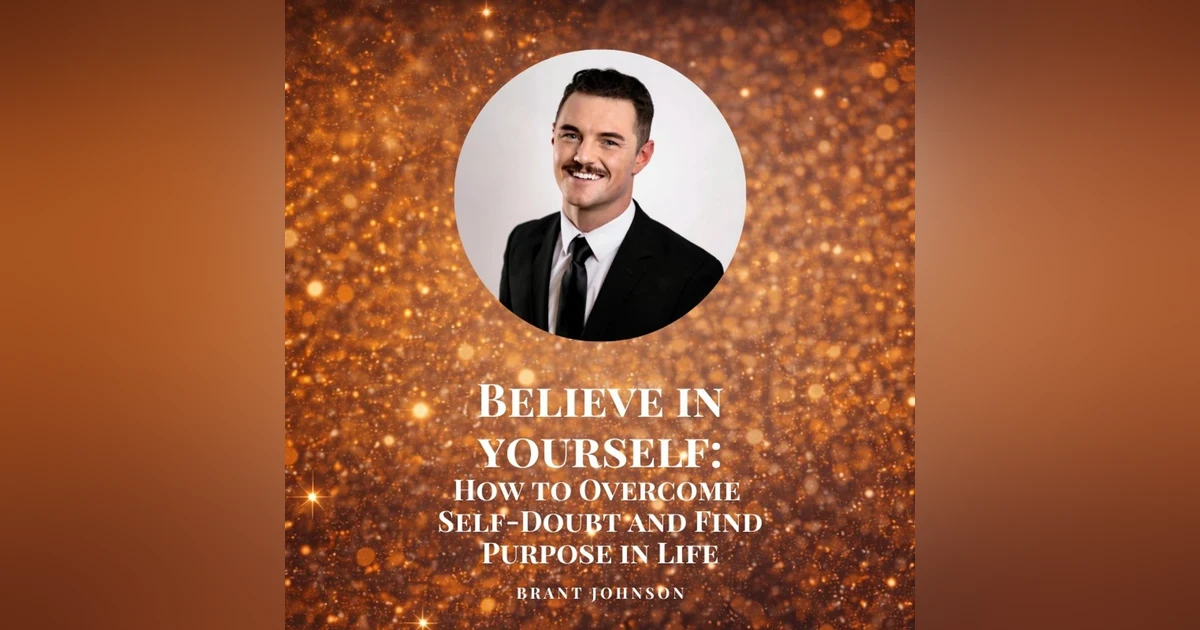

What happens when a near-fatal crash forces you to confront how little time is truly guaranteed? In this deeply emotional episode of Quick Before You Forget, Ty sits down with marketing strategist and community builder Brant Johnson for a...
What happens when a near-fatal crash forces you to confront how little time is truly guaranteed?
In this deeply emotional episode of Quick Before You Forget, Ty sits down with marketing strategist and community builder Brant Johnson for a conversation about resilience, grief, self-belief, loneliness, purpose, and the courage to chase your dreams before it’s too late.
Brant shares the life-changing lessons he learned after surviving a devastating car accident on black ice, losing his father at a young age, navigating identity and mental health struggles, and building a $100,000 “Resilience Arch” at just 17 years old.
Together, Ty and Brant explore the power of connection, overcoming doubt, and why statistically, luck finds the people who keep trying. If you’ve ever felt behind, uncertain, burned out, isolated, or afraid to begin, this conversation is your reminder that your story still matters and your dreams are still worth pursuing.
Meaningful Moments
00:00 — “If you keep trying, luck will find you”
01:00 — Losing his father at age 10
04:30 — The Easter egg story that shaped his life
07:15 — Why connection changes everything
08:15 — Mental health, loneliness, and learning to face himself
10:00 — Realizing he was gay inside a conservative religious environment
12:00 — The friend who helped save his life
13:00 — The treehouse story
15:00 — Surviving a near-fatal crash on black ice
18:00 — “Life is not a guaranteed gift”
19:00 — The Broadway musical that transformed his perspective
23:00 — “The dog you really gotta dread is the one that’s in your head”
25:00 — How to keep moving forward even when doubt wins
27:00 — Loneliness, technology, and the connection crisis
29:00 — The story behind the “Resilience Arch”
37:00 — A conversation with a struggling student that changed him forever
41:00 — What resilience actually means
42:00 — “You just have to keep going until you meet luck”
44:00 — It’s never too late to start over
46:00 — Quick Before You Forget: What matters most right now?
47:00 — Final reminder: Believe in yourself
0:00 Statistically, if you keep trying, luck will find you. So if you stop trying, luck cannot find you to make that thing happen. But if you keep trying one day, statistically it will happen. And so you just have to keep going until you meet luck.
0:43 Hello, and welcome to Quick before you forget Brent, Hello, how are you? Hello? Ty? I am that a bulis. How are you well? I am honored to be joined by you today, everybody. For those that don't know, this is Brent Johnson, a marketing strategist, community builder, and someone who knows firsthand how fragile and powerful life can be. At twenty six, he survived a near fatal car crash on Black Ice that changed how he views time, purpose, and urgency. And long before that, at just seventeen, he designed and helped raise one hundred thousand dollars to build what now stands as the Resilience Arch at his high school, proof that impossible things sometimes just need someone willing to start brand. I'm so happy you're here, Thanks Stott, It's.
1:34 So good to be here. That was such a kind introduction. The thank you well. I think that the most important tool that we have is our story and your story is fascinating to me because you've been through a lot and at the age that you're at. So I want to walk through past, present, and future with you and look through especially the moments of strength and struggle and how they lead to finding purpose. Let's start things off with a childhood memory that shaped who you are today. Oh well, well, that one's We're getting right into the thick of it already, aren't. We don't all of our childhood memories to shape us so holistically. So I think one of the biggest ones, and it is a sad one, if that's okay, that I can share, but it has shaped my life more than probably any other experience. So, my dad had cancer when I was young and passed away when I was ten, and so that I'm the youngest boy, I have two older sisters, a mom, and now I don't have a dad. And it was one of the most difficult, obviously experiences you can have. But having someone pass away when you're young versus when you're old that close, she was a very different experience, you know.
2:50 So I didn't quite understand what was happening entirely, but I obviously I knew I wouldn't see my dad like again, like like things were going to change. One of the biggest moments I think that really shaped who I was. I was a pretty brady kid, like a very brady kid, very entitled, you know, the youngest chyld syndrome kind of deal, and my poor sisters had to put up with so much. And so when my dad passed away, I wanted to speak at his funeral, actually, and so I wrote a talk and went up to the podium when it was at my like local church house, and it could fit a ton of people, like maybe nine hundred or something people with it extended and it was just completely filled to even the stage. My dad was a teacher and a coach, like someone very involved in my small community of vernal, Utah, And I remember looking out at all those people and as a ten year old kid, being like, wowy, this is insane, Like my dad was popular. That's not what I directly thought, but like a lot of people looked my dad. I guess the adage you hear of like you one person can change a lot of lives, like it was true, and it really changed my perspective on I have the ability to impact where I live or where I am. And so that started quite quite young in my life and hopefully changed a little bit
4:21 out of the brady face into more of the like how can I participate in my community like my dad did and make a difference. I'm so sorry for your loss at such a young age. That was very difficult, And I'm wondering what did you say? Like, how how did the speech go? Uh? Speech? I think, well, I have it on my mom's computer somewhere I probably can find. But I remember I talked about my dad. When I was we would go down to Farn that's where his family's from every Easter, and we would roll eggs. Is that something people still did today? They boil eggs and they die eggs? But yeah, of course yeah, and.
5:01 We'd roll them down a mountain. Is that the rolling down the mountain part is new to me? But tell me more about it. Well, that's what we would do as a family. We'd roll them down a mountain. No idea where that comes from. I thought that was a common thing. So I guess it's all, well, Stimaily, something we're going to try this Easter. Yeah, it's just what are you going to do with those people? Turn them into devil? Leggs, and so that's like a much more useful experience for those eggs. That's but far less fun. Yeah, unless you enjoy eating, then that's great. Actually. But we would take our eggs and we would throw them down a hill. We'd roll them down a hill. And so in Farren when we were there with like his cousins and stuff, we were somewhere deep in the mountains and it started to rain and I we like hit under like a little bit of like an overhanging like a ledge, but there was like a deep drop off, like there was like practically like a sinkhole, Like in my mind it's a sink, but it's this huge drop off that slants down and then all of a sudden, just off the cliff. So I'm on one side of the overhang with people I really don't know. I'm like six five, and then my dad is over on this side with my family. So I'm like, well, I'm not gonna go be by random people. I'm gonna go be by my my parents. So I start walking across in front and I slip and I start to fall into
6:32 this overhang, I mean into this drop off, which crazy, like very movie oriented, and I remember just like trying to like grab onto anything I possibly can, and my dad comes down and somehow like is able to get to me before I kind of fall off and he grabs me and pulls me back up. Like very scary experience but real verified by my mother, like actually happened. And so I talked about this in my talk at my dad's funeral and just talked about how like my dad was always there for me and has always been there for other people in his life, and it doesn't matter the risks that he was going to have to face to be there for others. My dad was an incredible person and still is still. I still get messages from people here and there about how much my dad had impacted somebody when they were in school, and uh, it's it's a it's a very odd experience, I guess to like it's kind of like a ghost coming to talk to you, but it's really wonderful and like just to know that my dad really was such a great person, you know.
7:43 Well, impact comes through in the most powerful ways of connection. Like you you it sounds like your dad had the gift of connection to a lot of people who kind of he lives on through those through those people, What is a relationship or a connection that you've had that who you've become. So many Obviously, I would say probably my relationship with myself is probably the biggest one. And then I would say a relationship with my sister also has been like huge. And I have one friend who like pretty much saved my life as well in a very different way. So I can quickly talk about, like how all three of those kind of coincide. So when my mom was getting remarried, it was really difficult for me. I was I had undiagnosed oppression and I'm diagnosed ADHD and anxiety. Probably all the anxiety came from the ADHD, and it was just really hard to be on my own. So I'm the youngest, and then it's six years gap, and then it's nine years, so it's like I was practically at home all by myself largely through my teenage years. When my mom was getting remarried when I was thirteen, that was a really hard experience for me. And my sister Jade was right in her last year of living at home, and we spend a lot of time together and we got really close and she kind of taught me how like meaningful, like truly family can be because I don't have a lot of extended family, like hardly any at all that
9:15 are not my age. I'm the eldest grandson on one side, I'm the youngest on another. So like there's I've just been like in this weird gap my whole life just and then there's just space, and then there's other people. So I was like, wow, like this is so nice to have someone who really cares and who really gets it. So my sister Jade, she's always been there for me ever since that point. We used to hate each other as children, hate each other as kids, and she's still like my biggest supporter, similar to my mom. And then my relationship with myself, I would say is probably my most important relationship because no matter what, at the end of the day, you're going to be the only thing that holds you back, or you're going to be the only thing that gets you to actually do what you want to do. People can encourage and be huge parts of that, but they will never be able to do the things that you need to do for yourself. The people just cannot. It's not designed that way. And so I like when I when I was in college, I realized I was gay, and that was a huge turning point for me. Honestly, I did not realize that until I was twenty three. People told me I was my whole life, and I was like, I'm not. I'm probably somewhere in the middle, and so I was enough to deflect.
10:30 But that was a huge, huge realization and very scary. I grew up in a very conservative religion. I grew up Latter day Saint Mormon, and I was serving. I was had roles in church that were very high up in that consideration. At that time, I was at a church school. I like my whole life revolved around my church, and also like if I was good and obedient, I would be able to see my dad who passed away again, right, So like a lot was leaning on me being a good boy. And so when I realized this, which is contrary to what my religion teaches me, I had a really hard time being like, well, what am I going to do? And it brought me to some like really seriously bad spots because I just didn't think there was a spot for me. Facing like the realization that I had in the environment that I was with that that I was. In coming to terms with that on your own is probably is a lot harder, I think than coming to terms with it for somebody else, because we don't live our life with a lot of other Like we don't constantly live twenty four to seven with somebody else, and so it's like we'll see our friends, but like sure, like go and have this fun sport or go and do this fun thing, like you can go live however you want, Like you're not me, it's it's and so it doesn't really like affect as many other people as you would think it does. But for me, like it was a huge deal, and being honest with myself was like a huge, a huge feat onto itself. And so
12:05 I just didn't think there was like a solid place. I didn't think I was going to be able to manage this. How am I going to be able to do this? So my friend Ashley Rink, and she's a nurse, she like was like Brant, if I was your nurse, I would take you to the hospital because like you're not in a good spot. And I was like, no, I'm not going to the hospital, like I'm not weak, Like I'm fine. I primarily remember so grumpy, so grumpy, not in a good spot, and so it took us like a couple of hours, but we finally got there. And like, if it wasn't for her, like I don't know where I would be, I would at least have struggled for a lot longer. And uh, like friends and people are crucial in your life. We're biologically built for that.
12:49 We're built to be around people, and so I'm grateful for everybody who's impact in my life. There are so many small instances, so many big instances that happened when I was young around Kimue and individuals. If I can share another one, sorry. Of course, no, don't apologize. This is just such a cool one that's not centered around me. So my my dream was to have a tree house growing up, Like I just wanted a treehouse. I don't know where it came from, probably all the Disney Channel TV shows I watched as a kid, but like I really wanted one. And so when we were my parents were building their new home. They my dad was like, we'll build a treehouse, which was pretty much a clubhouse on Steltz. It was a clubhouse in Steltz, and so we put up the pillars, and my dad got really sick again. So he had had cancer once before, beat it and got it again, and this time it was terminal and he wasn't going to make it. And so people in my community, people in my church knew how much I my dad wanted to build this treehouse for me, but was not going to be able to do it, and so all like thirty or something people got together and throughout like the next two months or something built like the most incredible dream treehouse I could have ever helped for my life. And it was just a really great example of how people can come together and help make like dreams come true and help people out.
14:18 And I like, every time I go home, I see that treehouse and it reminds me, oh my gosh, Like if it wasn't for incredible people who cared, they don't. They didn't owe me anything. They also didn't own my dad anything. He wasn't going to be around for more than four months. Like they didn't have to do any of this, but they did. And it really has changed my perspective on just how important people are in your. Life, including yourself. You know, you did shine the spotlight on some other people too, but I like that you said that your relationship with yourself has been important and valuable, because I think people underestimate that, and it makes me curious to know how, you know, walk us through your accident and tell us through walk us through what happened, first of all, but then how did your relationship with yourself evolve and change after that accident.
15:15 So I was driving back from Christmas like two years a year ago now in twenty twenty five hour right before twenty twenty five, and can I live in Vernal, like my family's in Vernal. I live in like Utah County, and so it's like a three hour drive, right. I've driven this like more than I've done anything probably in my life, and which is sad and saying something. But like I was going home and it was late at night. It was like eleven o'clock, like I had driven late before, and the roads weren't incredibly bad in my opinion, there was snow, and so I was coming upon this turn in the middle of nowhere and there was just a it's like a whole slew of black guys. Now we've all fish tailed, and You're like, stay calm, I got this.
16:14 This is normal winter experience. Right, no one's like coming my way. I should be okay. So I'm like trying to get my bearings underneath me, but for some reason I just cannot, and then the front starts going, and once that happens, it's it's really difficult. And so I am I'm only going like thirty five around this corner, like I'm not going very fast. I think this limit it's like fifty five, but I jettison slide off the side completely on into like a mountain and then straightforward into a bridge, which is if anybody knows, I kind of pop. I'm always like, yeah, I crashed my car into a bridge. It's so I kind of pop with me.
16:59 So I luckily was okay, like the obviously the airbag supplied and everything and got some like air bag rash, but it was just like technology is awesome, Like I was completely fine, but I could have not been, Like if that pillar wasn't there, I would have crashed my car off off a cliff and it could have been really really bad. It still was, obviously, but I remember pretty much in that moment being like I'm twenty six. I life is not a guaranteed gift, like it truly isn't and I should know that, Like I should know that, and I do. With my dad passing away, like it's not a guaranteed gift, But I thought I had time, Like I thought my dad like he died in his forties.
17:58 So I'm like, I at least I have tell myies, right, like everybody has to tell their forties. Like that's where my brain kind of was. I was like, no, like I I could have gone any point. And so it took a long time for the toe to get there. It took a long time for the police to get there and the ambulance to get there, about an hour for the ambulance, like an hour and a half for the police, two hours for my parents to come pick me up, and then like three hours for the tow. So like I had a lot of time to contemplate, and some people stopped and talked, but like there was nothing, like I could they could do. And I think in that moment, I really was like I've wanted to do some things in my life and I have delayed it because it's like it's not the right time. I need to be more prepared. But I'm like, dude, like I could have gone and I would have never been able to say I did the things that I wanted to do in my life. And so it was a really good wake up call for me. I guess I gotta start chasing my dreams now. And I wouldn't say I never did, but I would say that I as the dreams get bigger, you start getting a little bit more insecure, or at least I do like, oh gosh, like this is kind of crazy, Like am I capable of this?
19:20 Like this isn't just like joining an inter mirror sports team, like this is like big deal stuff. And so yeah, it was a really great wait here call for me. But there's a there's a show on Broadway called Hadestown, which is probably the best show ever. But I was listening to it about a week after my crash, and it's a story. Are you familiar with it. Ty, tell me a little bit more about it. Let me change your life. It is just the best show for anybody who is a dreamer, anybody who's a dreamer. So it's this like a poem based on Greek mythology, and it's about Hades and his wife Persephony, and the main characters Orpheus, who's an artist. He's he writes music and his love interest, you're Ridicy, who's this poor girl who is cold and doesn't have food and is just struggling.
20:25 And so the symbolism of the show is what when I learned about this, it really hit me. I was like, oh wow, like I get it now, I get it. So Orpheus represents like the artists, the visionary, the activists, the young politician, the person who wants to make change. Your Ridicy represents the people who want a good life that, like the Orpheuses, are fighting for that. Like they it's cold, there's no food, like I'm struggling. I'm starving, not not for any lack of trying, just they call it the winds of It's like the economy is just bad right now, like there's nothing they can do. It just sucks, and they're hoping someone can change that. And those are the the Orpheuses. What happens is he can bring back Spring, which Persephone. When she's above grounds, not with Hades, it's springtime and everybody has an abundance and it's lovely and wonderful.
21:22 But when she's brought back down to Hadestown, to hell, she Spring goes away and everything dries up and it's difficult, but she stays longer and longer and longer in Hades town. Hades doesn't let her go as much. So, like, the times get harder and they get tougher, and I think we can fill that in our economy. We're like, it's just so, why doesn't a dollar go as far? You know? We're like, or why can't I find a better job? Or why am I so tired all the time? Like this is not how it always felt? And so it kind of like summers are shorter and the good times are shorter, and so Orpheus has the special gift and he's like, I can bring I think I can bring back spring. I'm writing this song, but it's not ready yet.
22:05 I don't it's not ready yet. And his love interest is like, you need to do this, like this is crucial, like don't give up. So he's like, okay, I will do this, and so he focuses on writing this song, and in that time frame, you're ready to see his love interest can't get his attention. He's just too zoned in, and she's like, I'm so hungry. I have to sell my soul to Hades to get food, and more so, she sells her soul. When Orpheus is done with writing the song, he realizes that she's now in Hades town and goes down to try and save her, and in a way like does this, he convinces Hades that he will let him and her go, but only if they walk back, and he never looks back to see if she's following him or not. And in that experience he is super super doubtful. He's like, why would she follow me?
23:12 Why would anybody follow me? Like I don't know what I'm doing, Like I've never done this before. Why would the most powerful person in the universe allow me to do this? Like it doesn't make any sense? And so he doubts quite a lot. And there's a line from the song that goes, the meanest dog you'll ever meet, it ain't the hound dog in the street who tears some who snares his teeth and tears some skin. Brother, that's the worst of him. The dog you've really got a dread is the one that's in your head. It's him who's haling drivesman man and a mind too their undoing. So it's like we our own doubt is the worst possible thing we can face. And so well Orpheus right when he reaches the door, he's like, he looks back and she's there this whole time, and she's down. It has to be taken down. It's a tragedy. It's a sad story. And Hermes is the narrative through the whole thing, and he's like, the reason we tell this story is in hopes that one day it'll be different, that someday an orpheus like you Tai will not doubt themselves and continue on to the entire end for the greater good of people. And so I had had this wreck, and I had had this I was just listening to this musical and I was like, I really need to make sure that I keep my doub in check. It's very hard, but like, doubt will keep me back from living the
24:43 life that I want. That isn't a gift and a privilege to have that I am not entitled to. And so it's been a year of overcoming a lot of doubt and and but it's been that wreck was a very transformal, trans transformational and pivotabal moment for me to kind of start that journey. It's not easy to work through doubt, like it's it's very very difficult, particularly on the tales of something that you know physically and mentally and everything kind of could have taken you out really. So you know, I was thinking as you were talking a little bit about Jay Shetty. He had a line about how the biggest mistake we make as humans is thinking we have more time. And you know, this is what I hear and heard through your story there and I'm I'm it leads me to wonder, what is your advice for for people that do have that doubt and how do they how do they move forward? Like, how do they work? How do you how did you work through the last year of doubt?
25:50 I think doubts doubt as normal. Like I think we feel a lot of shame when we doubt because we don't see a lot of other people doubting, you know, and so we're like, oh, well, this obviously shows that I'm not capable of doing this. No, doubt is incredibly normal, and so just because it is there doesn't mean you should need to listen to it. I I still struggle with doubt, but no, no do you like and I do. A lot every single day, absolutely every day, Yeah. Every day, And so it's like how do I work through that? Well, it really depends, Like some days doubt kind of does win and and that sucks and it and it has one multiple times for me. But it's the do I keep going like through that that's really I think what matters the most. So like I have my own things that make that work for me. I got listened to Hadestown that actually does help me be Like I can't like too many people have doubted themselves who could have change the world, and I can't do that.
27:03 I can't do that to myself. I can't do that too. If there's anybody who would use what I'm building or be helped by, like I'm letting them down. And in a very literal sense, like I'm working on connection technology because isolation is just on the rise. It's going to get worse with AI, and our generation has suffered the most through all of that. We were given these devices that weren't inherently evil when that we were given them, and then under our noses they were made addictive. And now we're having to face this reality of living our whole lives on this device that has our not not the right interest in mind. For us, we're very isolated.
27:45 COVID didn't help us when we were in our most transformed of networking connection type years, and so my generation really suffers, and I'm like, how can I better help that? Right? And so I think of it sometimes very literally that I'm like, if I give up, like it's like some eurritices, they will they will die. Like loneliness takes people's lives, and with all the technology we have today, we should not have people who are lonely. We can Depression is real, like, and that's a very real thing, but there's so much loneliness that is created through how our society is built today, and that can be fixed. I genuinely believe isolation is not a permanent thing. It can be fixed with all the things that we have today, right, some like from a very literal sense, and like people's lives, Matt, like, people's lives are on the line for what I do.
28:41 Sometimes it's not that serious and that's good and that's healthier probably, But I think it just comes down to like processing, taking that time, why are you doubting what's going on? Like finding a friend who really believes in what you do. I know that's not as easy as it sounds, but like, if you have that in your life or someone who can hand be that for you, like that can make a huge, huge difference. So when you doubt, you can turn to somebody else like your own you're Riticee, who's like you have to finish the song, like this is so important to you to for us, you have to keep working. So there's a lot of mechanisms I think need to be deployed, and they probably all need to be deployed because that is incredibly powerful.
29:22 I just think it's really cool that you mentioned how you lean into music as a source of getting through and you you talked about resilience. You talked about how you need to decide every single day to get up and keep going and keep trying. And you know your your resilience ties back into your project in high school, the art you made like the. Tie in Girl. Thank you well tell me about it because everybody does not know, but you did something really cool when you were seventeen that ties exactly right back to resilience. Yeah, it's true, and honestly this does help me make make me be like I can't give up because I built this whole thing all tied around resilience, and I'm like, it's a good check. It keeps me good, it keeps me, keeps me humble. I guess. So when I was in high school, I was the zum Muddy president and like YadA YadA YadA, and so I was like, we had this old archway from the fifties that said Home of the Utes. Our mascot was the Utes with permission from the tribe, luckily, and so there was this entrance way from where we drove under it said Home the Utes.
30:35 It was taken down because they widened the road, but it was like iconic had been there forever and it was like, it's homecoming. We should put that back up. So me and the principal, luckily were like, she knew my dad, she knew my mom, Like we had been friends for eight years and so we had a good relationship. I say, principal wild, what do you think about putting this back up? She's like, sure, let's go look at it. So I did, took some pictures, took over to the wealthy class and I was like, so what about we put this beca And he's like, no, you're gonna have to extend it a little bit, like it's gonna look a little weird. How about just make a new one, and he means like, literally, just make a new one that looks exactly like that. I hated how it looked. Actually, I thought it was horrific. It was so gaudy. It was just like looked looked like something made on paint in two thousand and one. It was so bad. But I was like, no, you can't remake like the iconic tradition, like this is this is the arch. But I was in debate class and I was sitting there and I was just thinking about it. I was like, it really doesn't match. I honestly don't like it. The design, Like it doesn't fit. It's like, what if we designed a brand new one? So I like sketched up its design, went home, put it on graph paper, colored it in literally so so unimpressive, brought it into the principle. The next morning, was like, principle wild, what if we built this instead? He's like, uh, if you can find the funding for it, go for it, which I think was her being like, yeah, it's never gonna happen, but was enough for my seventeen year old brain to be like, oh, okay, it's a go. We got this. So I started hold on.
32:03 I said, I wouldn't interrupt you, but she said it was basically impossible, right, Like She's like, no, that's impossible, but here we believe that impossible is just a big word thrown around by small people. So she what she said and what you interpreted were two different things, and you took that impossible thing and made it happen. So continue your story, but I just wanted to point out that you charged forward when she kind of was like, yeah, good, good luck. Right, And there's something beautiful about being like young and dumb, and so that was me, young and dumb and thought I could do anything, which honestly, you can if you believe it, you know. So I started sharing about it on Facebook and it got a lot of traction, and I was like, I need tons of donations for this.
32:55 So I would call different businesses and I was like, hey, would you donate to this? And one of the biggest businesses in the town was like, no, stuff like this comes to us all the time and it never happens, so we're not going to donate to it. And I was like, I have to make this happen, Like, I just have to make this happen because it's embarrassing. Everybody already knows I'm trying to build this, and then they're like, this won't happen. I'm like, Okay, I have to make it happen or I'm just gonna be embarrassed. Uh So I keep working on it and working on it, working on it, and get donations and get people to be like willing to donate the electrical like it's gonna have lights on it. It's it's three dimensional. It's so big you can you can widen the road again and it's not gonna be a problem. It's so big that like any type of construction equipment could go under it. It's so designed so well that you can dismantle it and then put it up wherever you are. Again. The last one you had to like weld it like off and break it. This is like pieces. You can change the school's name, you can do whatever you want, and this art will last forever and ever and ever. It's not climbable, hopefully, it's got outlets in it. Like it's so it has so many dualities, right, because it's gonna last forever, right, that's the hope. So I'm working on this and it gets halted because they're gonna put in a roundabout that.
34:24 And I go on a mission, and I hope that someone else would just like continue it on. I've got a lot of the donations. I need someone just to head it up. No one did, even with me begging so many people. So I come home for my two year like church service and come back and I started up again because I'm like, people have donated this, they're expecting this to be done. And I remember the day we excavated for the pillars was like such I was, I was there, I watched it happen. I was like, this isn't a dream anymore, Like this is really occurring. It took three years to get to this point, but like it's actually happening. And it took another year to put it up because there's a lot of welding and painting that goes into it. I had put in a different transformer and like so much stuff. But we finally lifted it up and it was took the whole community, took so many people to donate, took so many people's skills and talents, and what was really cool is I didn't have any of those talents. I didn't have any of that money like that that wasn't that was none of nothing from me. But I had a hope and a vision and I could help orchestrate it, and I did, and I orchestrated at all and I designed it, and so it really showed that, you know, I might not have every single skill needed to build this, but it's okay.
35:52 Like the big things that we have in our life, the challenges that we have, like aren't going to be solved by just you, Like, it's going to take a team. It's going to take a whole community to put on incredible things. And it's you know, I drive by it when I go home to Vernal and I'm like, it's just so cool that a young seventeen year old kid like dreamt that this thing was possible. It's sixty three feet wide, twenty seven feet tall. I think, like, it's just it cost over one hundred thousand dollars and a seventeen year old kid believed that this could happen and it did. So I named it the Resilience Arch because my community has is in a boom and a bust economy they're in the oil and gas industry, and so I'm like this it signifies like this was put up by my town, like the people in my town who donated to it, who sacrifice for it, and they always do that, they always come together. They're the most incredibly and resilient people ever. And actually there was may share another story about this sorry hacking so much, I was thinking like what do I call this? You know, it wasn't just like call the resilience arts. That didn't just come to me in a dream. One day, I was like, what do I call this? Because I feel kind of guilty.
37:11 This thing costs one hundred thousand dollars for just a little piece of metal, Like that seems excessive. Right when I was the student body person, I had this opportunity. I was never I never went to class. I was so bad because I was always talking to students, Like literally, I would talk to kids in the hallway who were late or were sloughing or whatever for like two hours just to be like what's going on. Luckily, my mom was the secretary there, so she could excuse me from all the things I missed. But there was this one time I had dropped off my backpack to my mom's office, and I was going to my second hour and I saw this kid just sitting on a bench and I was like, I'm gonna go talk to him. So I went and sat and I was like, what's up? And he's like, did not want to talk to me. He's like, yeah, weird guy who does all the assemblies. I was like, ah, that's that's me. Absolutely, that is who I am. And so his teacher came out and saw he was with me and just honestly just let him and I talk.
38:11 And I learned from the two hours I was with him that he's working three jobs. He's pretty much raising his own sister. He lives in this house where like drugs are way too common. Uh, he just broke up with this girlfriend like two weeks ago, Like he was just not in good space. I had not Ian for a couple of days, and I just like heard this this poor kid story and like went in knew the lunch that he's got them some lunch. Got into the counselor's that eventually and turned around. As I was leaving the counselor's office, I was like, how are you to this kid? And he's like I'm actually not doing very good. And I was like, there's just so much struggle here that I just don't know. I'm very lucky to be in plays and to to be in student council and to go home and have food, But I was like, people don't have that all the time. And I realized this, you know, when I was high school and when I was putting this archway together later in my twenties, I was like, I felt guilty as I said that I'm using all this money where there're students who are actually struggling in this school. So I thought of him, and I was like, how resilient he is, and how we don't recognize that type of resilience in society. We're like, if you have bad grades and if you're not in any extracurricular activities, then you're dumb. And I'm like, this kid, he probably he didn't have the best grades, he was not in any extracurricular activities, but he was working three jobs trying to racism. No, Like, he is just as
39:45 capable then as I was, probably more, absolutely more capable. He understood the world way better than I did at that age. And so I was like, I want to do stuff for like people like Zach, I really want to. I was like, I want to help those people like advance somewhat in life. So it's like I want to name it after them, the kids who go to school who through the toughest times, and also the community. So I was able to have a couple extra, like some extra funds left over from the archway that I turned it into a scholarship and I called it the Resilience Arch after them and the Resilient Scholarship. So every year I give a thousand dollars scholarship to a student who's shown great resilience. It's just resilience, not GPA, not extracurriculars, just are have you been resilient? And so that's like a really great way for me to be like, Okay, I can't not be not resilient because I have to constantly talk about this and award on it, and so I'm like I have to keep going. So it's actually kind of nice to have something like that that ties with not giving up in my life because I'm like, when tough gets hard, I'm like I can't be a hypocrite, so I have to keep going.
41:02 Do you think resilience is something we build before we need it. Uh yeah, I think for sure if if you're smart, like you'll build resilience because or allow that to be. Built, how do you how do you practice it. Getting back up? Like not not letting people, not letting a bad grade or a no for a job, or or a hundred nos for a job, like but let them win. You have to be the one who's like, I'm going to keep giving trying no matter what. I think you can build it up. I also think it can be applied pretty instantly. I think it's easier if you're used to being resilient to apply it instantly. But like, I don't think it's a it's not I don't think it's a muscle like. It can happen if you want to be resilient, like it's a it's a mental shift. Largely, it can be pretty instant. I think one of the things that helps me be resilient or get back up is like, statistically, if you keep trying, luck will find you.
42:08 So if you stop trying, luck cannot find you to make that thing happen. But if you keep trying one day, statistically it will happen. And so you just have to keep going and tell you meet luck, blessings, whatever that is. You just have to keep going and it will find you. Like it did when you survived that crash. Yeah, if seventeen year old you who drew that arch meant twenty six year old you who survived the crash, what would they say to each other? Well, then have a lot of questions for one another.
42:49 Seventeen year old me. Well, yeah, seventeen year old me would be fairly proud. He had a lot of goals that old me like accomplished, and so yeah I would. I'd probably seventeen year old me would be curious about the future, be like, what changed, What are you going to do now? Twenty seven year old me now? Or twenty six year old me a carback person. Honestly, I feel like we were pretty aligned, Like we knew that our life was short, and then I had forgotten that in my early twenties. When I was seventeen, I swore I saw I was gonna die. When I was eighteen, I thought I was going to get like one of those corrects right in from the school and be like on the news. So I was like, gotta get everything done.
43:35 So I feel like we would actually be pretty aligned, which is funny. But is it funny? I think it's perfect. Honestly, it makes sense to me. I think twenty seven year old me has a lot to learn from twenty six year old and seventeen year old version of me, where it's like very raw and it's like sometimes I get into the mundane, and twenty seven year old me is like, oh, but like it was very clear for twenty six year old and seventeen year old me that like this is really important and to not give up. So I feel like twenty seven year old me has a lot more to learn from twenty six to twenty and seventeen year old me. Well, fortunately for everybody here, regardless of their age, there's a lot to learn from you, regardless of your age.
44:17 So if someone today is listening feels like they're too young, they're too not ready, or even like maybe they're too late, what do you want them to remember? Oh, yeah, you are not too late. Actually, like you are not too late for sure, Like even people who are in their like sixties or seventies, like do you you have the amount of stuff that you can accomplish in a year, or like it's insane, and so I'm like, I actually find it way inspiring when people who are retired are like, I'm going to start a business or I'm going to go do something like different, and I'm like, that is the coolest thing I've ever heard. It's easier for me because I'm young, Like I don't have a family, I don't have children, and so it's like very easy for me to be able to do that. And so it's even more respectable when people who have kids, or who have spouses or have mortgages are like, you know what, I'm going to believe in myself because I'm going to I trust myself. I know what I'm capable of. And so yeah, I think the only I think the only way we can change the world is for more people to believe in themselves. And there's this interesting, fun little book called UH the Federal Bureau of Imagination by Brad Montague.
45:34 It's a children's book. Ten out of ten everybody should read it, and it's about how we need to believe in our own ideas and our talents and our skills. And so I think it's always worth it to go after the talents and the skills that you have and make sure that you can contribute to the world no matter your age. Look before you forget what matters most to brand right now? Hey, what matters most brand right now? It's definitely people, and it's definitely on growth, Like how can I push myself to grow? Because this is a pivotal moment for me and so yeah, people, those are the things that will like that you measure your life by and that I need to grow. I push myself to make sure that the person I am and how I show up for my friends is the best version I can be in the future.
46:34 Well, people is huge to me too, As you know, connection and relationships is huge for me. And I am so grateful for your time, for your energy, for your stories, and I want to ask one more thing. If there's anything that I didn't ask you that you wanted to share, this is your time. Well thanks for letting me share all these things. You're so welcome. Yeah, I'm like off same, building a tech product to make stronger communities to help connect more people. So keep an eye out for that. Also, I'm building a podcast as well called Standing on Business, which is for gen Z or how to help gen Z. If you're not in that generation, so yeah, just follow along. I'm really excited to be able to be a part of these types of things, you know, people oriented things, and but I think that's I think that's it. Just believe in yourself, Like it's so hard to do. It's so hard to do.
47:38 It's so easy to say. But we need more people to believe in themselves. We absolutely do, and you can as well. So as easy does hard and hard things make us stronger. So that's it for us this time. Friends. Can't wait to see you again next time on Quick Before You Forget. Ah By, thank you for being here with me today on Quick Before You Forget. Please like, share and subscribe as that helps the show so much and I really appreciate it. And I'll see you next time on Quick Before You Forget.