What is Adjacent Stress and Are You Experiencing It? [Ep.771]
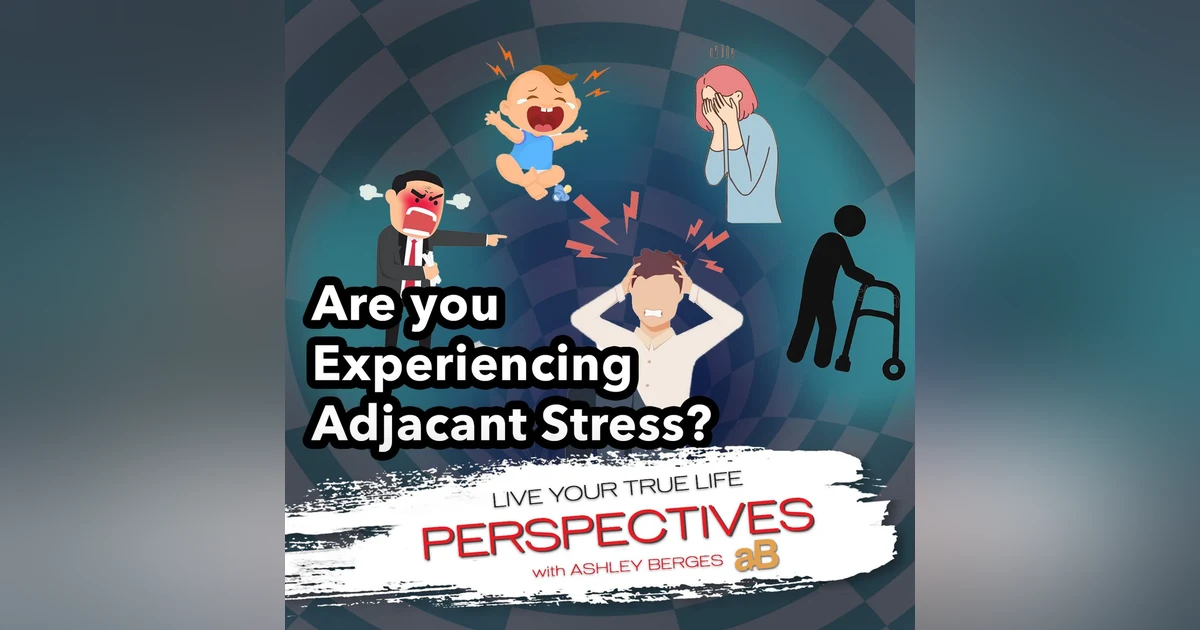

On today’s show, I am talking about adjacent stress. Adjacent stress is the stress that others have and its impact on your life. It is other people’s stress and because of our relationship with them, it affects our lives. This stress can come from our...


 RSS Feed
On today’s show, I am talking about adjacent stress. Adjacent stress is the stress that others have and its impact on your life. It is other people’s stress and because of our relationship with them, it affects our lives. This stress can come from our spouse, our children, parents, best friend, family, and other friendships. Some people do not feel this stress, while others are highly impacted by it. If you are dealing with someone’s adjacent stress, this is the podcast for you. We need to understand adjacent stress and how to deal with it. It is great to care, but it can be difficult when we are dealing with our stress and taking on adjacent stress as well.
Become a supporter of this podcast: https://www.spreaker.com/podcast/the-ashley-berges-show--1272964/support.
0:06 You're in a good place now. You are listening to Perspectives with Ashley Burge's Welcome Back Life to liter your True Life Perspectives, and I'm your host, Ashley Purchase. On today's show, I'm talking about adjacent stress. Adjacent you know, the stress that's adjacent from you. It's owned by someone else, and you kind of take it on based on the relationship you have with that other person. Some people could call it parallel stress or perpendicular stress. Either way, it's adjacent stress. It's not actually just your stress. It's someone else's stress and you're taking it on. It's the stress of others. It's other people's stress, and because of your relationship with them and who you are to them and who they are to you, this stress has an impact on your life, A direct impact on your life that you can't change. Is direct fact. That is what it is. Whether it's your daughter going through a painful, toxic relationship and watching that and having to deal with that on a constant basis, whether your son is about to get married to someone that he does not need to be getting married to, and you know it and everybody else knows it, but it doesn't seem like anything you do or say is working. So you're having to stand back and watch that, and everybody else is praying that eventually he'll come to his senses and wake up and see the light. Maybe a good friend of yours is in a very toxic marriage and they've confided in you, and you know about the fights and the arguments and the pain and the suffering, and you know what's going on behind closed
1:38 doors, and you're doing your best to help that person, to be there for that person anything that you can possibly do, and it matters to you. But it hurts to watch them in pain. It hurts to watch them hurt. It hurts to continue to watch this and to be preppy to this situation that is only causing heartbreak and pain in their life. And it's hard. You know, maybe you have your best friend and her mother is is you know, you're watching her mother, you know, deal with Alzheimer's, and you're watching your friend deal with the fact that her mother doesn't remember her or her father or whoever you know. And so these things are a problem. And I'm not trying to bring the room down. Let's bring it up, bring up the room. But no, it's about adjacent stress and how it impacts our life and so. On today's podcast here with Me on Live Your True Life Perspectives, we're going to talk about how we deal with this, How do we deal with this adjacent stress? You know, some people they don't deal with it at all. They don't really think about it.
2:36 They have friends and family and coworkers and everything else. But you know what, their stress really doesn't matter to them. They don't really care, doesn't really affect them. Some people, it affects them in a very small, small amount. Some people are only affected when it directly relates to their pocketbook, their finances, the things they have interesting, right, Some people would call that narcissistic behavior. Some people don't feel at all, They don't have feelings. There's very few, but there are people out there that don't care. Your pain and suffering doesn't matter to them. Your happiness doesn't matter to them. But most of us are somewhere kind of in the middle, and some of us are more empathic than others, are more caring. Some of us are more codependent than others, and more codependent. Some of us are more codependent and empathic. Some of us are you know, we're just we're very highly sensitive people. Some of us feel, we feel, we feel for others, we feel deeply, we feel deeply for others. And you have some people that aren't impacted by other people's stress, the adjacent stress.
3:38 And you have some people that can't sleep at night because of the adjacent stress. It keeps them up at night. They're sad for them, They're overwhelmed that this person is dealing with this and it is overwhelming to them to watch this pain and suffering. And So, if you found yourself here in this camp of dealing with somebody's stress, dealing with adjacent stress, this is a podcast for you. I hope you are driving in the car with the wind in your hair, or you're at the gym getting a good workout, or you're just sitting in your room, or you're sitting in your house or sitting on your patty or whatever, and you're just listening and you're like, Okay, here we go. Let's talk about some adjacent stress. Ashley. Let's go down this road. Because I've been dealing with it a lot lately, and I understand and I've been dealing with it too. I mean the last few years of my life, I feel like I've dealt with so much adjacent stress. I mean, it directly affects me to some degree. And at the same time, it's like I feel really bad, you know, through all this process because it's really challenging and it's hard to listen to some of this stuff. It's hard to process it. And you want to be there for that person so bad, and you want to give the right advice and you want to be helpful and you want to do everything right, and that's so super important, and you really really feel for them. And that's the important thing is that you do feel for them. You do care about them.
4:56 You do care about their feelings and their once and their desi and what they need in life to feel better and what they need in life to be happy, and what they need in life you know, just in general as a human being, what is it that they need and that and that is important too, because when you actually care, you know, when you actually care, you care about somebody else, You care about what they're doing, You're caring about them as a person, You're caring about them as you know, you know just who they are. You know. It's just like it's it's a good thing and you can be happy about being that person that cares, and you can feel good about being that person that cares, but also we have to keep it together. We got to keep it together because we can also take on a lot of stress, and it's hard when we're taking on all this adjacent stress, right to also deal with our stress. And that's where the rubber meets the road. That's where the pain is suffering begins.
5:56 That's when it gets overwhelming when you're over there taking care of their stress. Yes, And one of the things that I found that is really challenging, and I know that many of you will resonate with this, is that when you're dealing with adjacent stress, there's there's you know, there's ebbs and flows, right, So with any stress, right, we kind of we kind of have, you know, with any stress, you know, we have our ebbs and flows, and you know, you got the ebbs and flows. And when you're dealing with with adjacent stress, there's times where things are really really bad and you're there and you're there, and then there's times where the person has you know, they have some ups and that's great and you feel happy about it, but you know that that's awesome, and that's great, but there's some times when it's really bad for that person. But it's also bad for you because you're not only dealing with this, but you're dealing with your You're dealing with your stuff too, and that can be hard because sometimes you can feel as though it's one sided. Sometimes you can feel as though that you know, you're just helping that other person and they're not helping you. Sometimes, you know, we can kind of start losing side of things, right, I get it, we can start losing side of things. It's like, wait a second, I've been there for this person.
7:02 I've done all this stuff for this person. You know, where where is it? Where? You know? Where are we? Where am I? That sort of thing, and those are things to really think about. Those are things to really analyze, and those are things that we got to think about, you know. But you know, we have to think about how much we want to own. And in thinking about that, so like let's let's take for example, you know, how much of that do we own? And so I think that it's different levels, right, So if it's a spouse or a lover, how much of the stress do you own that they're dealing with you know, I think a child probably more right, more than the spouse and the lover. But but you know, there's still high up there. You know, what about a parent depends on probably age and what have you, but again still high up there. You know, a best friend, someone you consider your best friend pretty high up there, right, And then you have different layers, you know below that, So you have different layers of friendship and family and maybe you know and maybe you know, like you know ex's and stuff like that. So you kind of have that list right that goes on the back end over there. But really it's like, you know, there's levels of this, right, So if your level is you know, somebody that you're in love with, or someone you're married to, perhaps your child, you know that those are very important
8:37 things. Is really tough because you know, it really affects you and how much do we allow it to affect us? But better yet, it's going to affect us? But then how much of a role do we play? And these are the questions that we have to ask ourselves. These are the major questions that I think many of us have, and I think it's a question we have, but we don't think about it. It's not like we go into and be like we how much do I want to own of this? And how much do I want to deal with this? And how much of this is mine and how much of it is theirs? And how much can I process and YadA YadA yadda, And I don't know. I think that you have to sit there and kind of analyze that and think about it and see, you know, how much you're taking on versus how much are they needed to take on? How much is their role versus how much is your role? And you know, and also kind of stepping back and analyzing some other things too, because some of us we'll probably try to take over everything. We'll try to take her over, the stress, we'll try to own it, we'll try to be there, we'll try to do all that.
9:30 And that's just that's not good because that's not right for anybody. You know, that's the that's their life. They have to take care of it. It's not your life to live. And that can be hard to understand sometimes, you know, it can be hard to understand, Oh, well, it's not my life to live. Yes, it can be hard to understand sometimes because you do want to help them. You want to help them, you want to be there for them. And then the process of being there for them, there's gonna be some time that are going to be challenging. It's going to be you know, maybe stressful. But we got to do our part. But what is our part? You know, I'm saying, like, what does our part look like? You know, who owns what? Stress? And so one of the first things is we have to let people do what they're gonna do. We can. We can give them the knowledge, we can help them, we can give them direction, we can give them a direction, we can care about them, we can be there for them, we can do all that stuff. But there's a level that we can't do it. There's a level that we have to kind of stand by correct because I think that there's also a level where it's like, you know, hey, we've gone too far. You know, we've gone too far, We've overstepped. I think one of the biggest challenges when you know somebody confides in you about what somebody's done to them. You know, whether it's a spouse, a significant other, whoever, somebody's done something to them, and it's very painful, especially when you're very close to that person
11:01 to hear that. I mean, it's good that they're being transparent and that's a very respectable thing. But you get you know, you kind of take it on, you kind of get angry, You kind of get angry personally angry about it, because if you really care about that person, you're gonna get angry as somebody's kind of like, you know, beating them up or you know, being a jack ass to them or being mean to them, or it's upsetting. And so how far do you go with that too, because again, this is not your cross to bear. Might feel like it, but some of us do need to get off that cross for other people sometimes because sometimes what we're doing is we're not allowing that person to live their life. We're not allowing that person to do what they need to do. We've got to make sure that we are not interfering. We can give the information, we can give the knowledge, we can be there when they need help, when they need a listener, when they need somebody there, when they need advice. We as long as we're giving the right advice and doing we need to do great great, great grade. But we don't want to overstep because honestly, everybody's got to learn certain stuff in their life. It's just the way it is. Yes, and it sucks sometimes to watch because but you know what, we all have to do it. All of us are learning things in our life, and all of us are at different stages of learning to that. And all of us probably see other people and go, God, if I could just tell them this or do that, or do this or do that, they would be okay, to be fine.
12:18 Yes, for sure, we all see that, and we all think that, and yes, and we all have that thought process. Sure we do, Sure we do. But we got to step back a bit, you know, pump the brakes, eat, beat, back it up, back it up. We got to do that in order for that person to live their life. Because if everybody came in and I try to live our life for us, how would that be. We wouldn't have a lot of you know, our own thoughts or our own emotions. We would be kind of going through the process allowing other people to tell us what to do, you know, allowing other people to tell us how they feel, that sort of thing. And we that's not what we want to do. And we also don't want to take over someone's life. We do not want to enable anybody in negative way or positive way. We just don't want to enable it.
12:58 All. Enablement is not a good thing. Enabling somebody is not a good thing. It does not help anybody. All it does is it doesn't help them to do what they need to do. Instead of them doing what they need to do, they defer to you. You end up doing this stuff for them. They don't learn, they don't grow, they don't do this, they don't do that. Next thing. You know, guess what, you have a problem on your hands because now you've created this person that doesn't have to do anything, and then you get all angry. Well, I don't know why they can't just deal with their own stuff. Why can't they just handle their own stuff. Why can't they just you know, fight their own battles? Well, because you've been fighting their battles for them. So we've got to learn a limitation on battle fighting for other people. So stay tuned. Were we talking about that? What to know how to deal with it? How to deal with the sedacent stress from other people, this parallel, this perpendicular stress, How to deal with it, how to process, and how to do the right thing. So stay tuned, live your true life Perspectives with me, your host, Ashley Burgers, will be back in you know, I'll be back this time. I'll be back this time in two shakes. Turn it up and jump in the deep end on Perspectives.
14:11 Now here's Ashley. Welcome back live to look at your life perspectives and I'm your host Ashley Burgess. On today's show, I'm talking about and addressing adjacent stress, the stress that other people have in their life and how it directly relates to us depending on who they are in our life. You know, whether you want to call it adjacent, parallel, or perpendicular stress, it's the stress that affects the other people in your life that matter, and how it just to kind of depends on where they are on the totem pole of your life. Right. So, if it's a if it's a spouse or significant other lover, big time, it's going to affect you. If it's your child, big time is going to affect you. If it's your parent or your best friend, these are going to affect you to a very great deal. And it's hard because some of us are highly sensitive people. Some of us are impact, some of us are codependent, some of us are just loving individuals that want to help everybody. But the thing is is that we have to figure out what it is that we're doing, and we have to make sure that we're doing the right thing for everybody concerned, because we can't live their life for them, We can't save them, we can't do that, we can't fight their battles for them. We have to actually be there for them as much as we can in the capacity do what we can do and move forward, and in being the voice of reason sometimes or giving that good advice that's being asked for. Right. They're asking for advice, not because you're just cramming it down their throat. They're actually asking advice from you, right, giving them the right advice, Being helpful, being there
15:41 for them, you know, being a confident confidante to them, being you know that person of them will be so so super powerful. It can really bring a relationship closer together. It really can. If it's properly done, it can bring a relationship together. It can make people really connect. It can be very powerful. It can also be very challenging. It can create more sensitivity, it can create problems, It can create all kinds of stuff that we end up having to deal with and so you know, it's really important to really focus on this, and we need to really look at how much we're helping and what we're doing because one of the fine one of the things that I find is that sometimes we can get over our heads with this stuff. And every single type of stress has its ebbs and flows. Every issue in our life has ebbs and flows, ups and downs. Good in bads, Right, So let's get a good example of Let's say, let's talk about maybe you have a best friend that's in the middle of a really toxic relationship, right, Okay, example and I'm sure many of you can relate to this example. So your friend is in a toxic relationship and there's good in bad. It's like, you know, in the beginning of the relationship, it was good and then eventually over time it got worse. And then maybe this started happening or that happening, or there was fights or arguments, are yelling and screaming, or maybe the police came out or this or that, or maybe there was like you know, some pushing around or whatever going on, some verbal comments or verbal assaults. I don't know how bad it gets, but let's just put it that way, and your friend starts confiding in you right and all the things that are going on, and it's hard to step back and you know, and not judge it, and it's
17:14 hard to deal with that. But the interesting part I think that gets to most people is you start kind of owning it. Which it's okay to own some of this, but not really. But then like when the ups come around and your friend is actually okay in this relationship in the moment it might be a day or two or even maybe three days, maybe seventy two hours, you know, you're just like, wait, what's going on here? I thought we were I thought we were fighting this. I thought we were we were trying to figure out solution, you know. And I think sometimes we lose sight that this is someone else's battle. This is someone else's thing that they got to do. It's someone else's battle that they have to take on. And that's something that we really need to analyze and get right with because otherwise we might get upset. Otherwise we may feel like we are taking on other people's battles, which we are. We may feel like that is taking our time and space, is taking up our space in our head, our space, and our hearts, and we have our own stresses. And that's something I really want you to think about, you know, because we do have our own stress, and you do have your own stress, and you may be taking on a lot of adjacent stress right now, a lot of people in your life with all this stress. But we got to start, you know, prioritizing and thinking and seeing where can I be helpful and beneficial here or where am I spinning my wheels over here? Okay? And that's something to really think about. And you can be there for somebody.
18:30 You can help them, you can give them right advice, you can do that. But in the end, you need to make sure that you're taking care of your responsibilities and you also need to make sure that you are not, you know, getting in the way of them actually taking care of their own stuff, because in the end, it's their own life and your own life. So stay tuned, live your true life Perspectives with your host media Ashley Burgas will be back in I'll be back this time, you know it. I'll be back this time in two shakes. This is Jake Busey, and you're listening to Perspectives with Ashley Burg's welcome back Live to Live Your True Life Perspectives, and I'm your host, Ashley Burgess. On today's show, I'm addressing adjacent stress, that stress that we have with our friends and family.
19:23 They're having this situation they're dealing with. The situation is very painful, very stressful, and we listen and we give advice, and we're there and we do whatever we can to help. But there's a limit that we can do. There's a limit no matter what level that we are in with them, whether it's a spouse, a lover, a girlfriend, a boyfriend, a child, a parent, a family member, a best friend, there is going to be a level of what we can do and what we can't do. It's just the way it works. And we have to be very careful not to step over that. And if we do step over that, we need to be careful to basically reach treat back, okay, because that's where it gets really kind of murky. That's when things start getting a little hazy as to whose stress is this and what are we doing? Okay, who you know? Whose stress is this? You know? What are we doing? You know? Which is a big thing, and and that's a big question and because what happens here sometimes too, is that we all don't like dealing with our stress. Most of us don't like dealing with problems in life. Give me a break, how many people love dealing with problems in your life? I'm sure, raise your hand, don't, don't take your don't take your hand off the wheelwatch you can't if you have a tussel.
20:41 But it's still it's still the bitches at you for doing that. I can't stand that. The BBBBB. It's like, oh, come on, but okay, I mean it's good to have safety precautions. But okay, so you raised your hand, so you know how much are we taking on? Because sometimes the thing is is that we take on because that other person's so stressed out, just like we get with some of our stuff and we just start rolling it out. Okay, well, I'm gonna get this, this, this, and that. I'll do this, I'll take care of that, I'll do this, I'll do that. That's great. But wait, wait, wait, wait, the other person's the one that's supposed to be doing this, not us. And what happens if you start doing things that they don't want you to do? What happens when you start doing things before they're willing to do things. I mean, you know, you know emotionally, like you need to get out of this relationship, or you need to move on with this, or you need to do that. I mean, what happens when you're ahead of the game and they're not ready to do that?
21:30 What are you doing? You're already setting them up for failure, you know what I'm saying. I mean, it would be the same thing as like they're talking about remodeling their house and one day they go to the gym and they go out for a long day of doing things, and when they come back, you've gutted half their house and you're like, let's go, it's time. Let's go on and start the construction project now. And they're like, oh my god, what the hell have you done? I mean, some people are just not ready for this. And then some people talk a lot, they talk about all their pain and suffering, but they're not willing to do anything. They don't want to do anything. They're not ready to do anything. They're gonna suffer. They want to stew in it more. They want to they want to stew in their own marinade. They want to get up with that pain. They want to get in that bathtub of pain, and they want to get in it. They want to get some you know, they want to get some music onto it. They want to chill in it for a while. They want to roll around in their pain for a long period of time. And you know what I'm talking about.
22:26 We've all done it before where we just roll around in it, or at least we've seen other people roll around in it. When you're like, are you ever going to get to the point where you were done with this pain? This is crazy? What are you doing? Okay? But it's like, you can't just do it. You can't just sign the papers for them. You can't just move them out of the you know, of the apartment complex. It's not working for them. And they can complain about their neighbor all they want, but until they're willing to do something, you can't do anything. You can help them when they're willing to start moving, to call a moving company for him. You can help them box some stuff up, but you can't set it all up. You can't do it. They have to do it themselves. There's a degree and a level of stress that we can do with and stuff we can take on and stuff we can't. So ask yourself, if you're in the middle of adjacent stress, are you taking on some of the roles of the main character? I know, right, the main character when it comes to this stress. And I'm not talking about player or anything like that, you know, character player, I'm sorry, the main character, that the person, the sole person here, the person with soul? Are you taking over their role in their life? And sometimes we don't see it because you know, it's hard. It's like, you know, when you're in stress and you're overwhelmed about stress and you're dealing with stress and you don't want to deal with it, and you go, oh my god, the last thing I want to do is deal with this crap in my life. I don't want to deal with this crap. Yeah, I mean, how many people want to deal with crap in their life?
23:59 Nobody nobody's and signs up and goes, this is great. I love crap. I love crap. This is awesome. I can't wait. It's gonna be so much fun. I love conflict, I love confrontation. This is gonna be great. I love it, and my god, it's so fun. I know, right, how many people say that, not many, not many. I can't. I can't come up with a lot. And the people that do like that confrontation and love that stuff. There's a whole other level of stuff going on there. There's a lot of anger issues, a lot of pain, a lot of anger, a lot of mad. They just want to get mad, just to get mad. They just want to kick something around, you know, they want to you know, put a hole in the wall or kick the wall, or you know, or break someone's phone or break their own phone. You know what I'm saying.
24:41 I mean, it's just that anger. It's not gonna get you anywhere. It's that horrible self imploding anger that you know. It's like, ah, calm down, calm down. So what part is yours on this adjacent You gotta think about that. So even if it's your child, what part is it? So let's say your child is you know, in this toxic relationship and you see it a mile away and it's really bad to watch, like, oh god. I mean there's not like physical abuse and we're not talking about that, but I mean there's some real toxicity. How far do you get involved? I mean, and this is your child, but you got to think about it. This is your child, yes, but how far do you get involved? You know, it's interesting. You know I know some some some very close friends that that are older, significantly older than me, but you know their parents. And because the reason why I brought that up is, you know, back in the day, I think parents and maybe not back in the day, maybe it was just certain people were just just said too much. But you know, back in the day, it seemed like it was okay to be more vocal about you know, you shouldn't marry that person, or over my dead body, you're gonna marry them.
25:48 And I know so many people that married that over their dead body person. You know, their parents would be like, over my dead body and that it didn't work man, But they married them anyway. They marry them out of spite, you know, they married it out spite. It's like, but how far do you go? I mean, because the last thing you want to do is be given advice or putting out ultimatums. You know, when an effort to change things, I mean, an ultimatum is never going to be your best friend. Nobody likes an ultimatum. I mean, yeah, I mean, you can give an ultimatum, but you got to stand by it. And how many people really stand by an ultimatum? I mean not many parents would be like, I'm never gonna talk to you again if you marry that person. Ever. Ever, ever, how many people are gonna do that? You're not, but you're gonna make like life a living hell in the meto. But they have to figure it out, you know, maybe they have to go through that. Maybe they have to marry the Oily bohunk remember that from sixteen Candles. Maybe they have to marry Oily bohonk and be a part of that family dynamic. You know, maybe they have to do that. Maybe they have to marry that dude or that chick that just such a mess and we all have to sit back and watch it, you know what I mean, Like, you know, like she might be stocking him and it's like two months before the marriage and you're like, oh my god, what's going on here? This is crazy. But we have to stand by it. I mean, we can bring it up and be like, hey, this is not really healthy, not really, this isn't really healthy. You know. I just want to point out the fact that this isn't healthy behavior that's all I want to point out, I'm not saying that you can't marry this person. I'm not saying that your life will be a living hell, just saying that this is just not healthy. And that's the hardest thing, too, is to step back sometimes and not be like, oh my god, you know, shake them until they finally get it.
27:23 You know, it's almost we have to like, you know, you get it at home. You got to go work out. Maybe you got to go to the gym, run a couple hours. That's my deal is you go to the gym and run for an hour or two. Yeah, you won't want to shake anybody anymore. You've had enough. You're good, You're stress free as much as possible. Some of you might go to the bar, not agree not to screen just the way it is, you know, some of you whatever. But we got to do something. We got to and the best thing we can do is refocus on our own life, which is hard. Which is hard because we got our issues too. We got issues we don't want to deal with either. We got issues we don't want to do it. We've got issues that we're not really jumping, you know, chomping to the bit to oh I can't wait to deal with this issue. Oh this is gonna be good. I'm getting to some childhood trauma on this issue. Yeah, yeah, exactly, and we don't do that.
28:11 Okay, So how much do you help? And I mean, how much do you really help? How much is helping is helping? And how much is how much of help is just meddling? You know, that's a big question to you. How much of help is helping? You know? How much are we helping? And then how much are we meddling? Oh that's a good not that's a good word. And that's an interesting concept too, because I think the whole concept is we have to realize one people are gonna go at their own rate. Two people are gonna stop at some point and not have action because they're scared. Three there's gonna be ebbs and flows. And in those ebbs and flows, you're gonna be like, oh, and I thought we were totally against John or I thought Mary was a jackass, Like what's going on here? I thought we'd agree to this, you know, And oh no, Mary's the best in the world. She's the best. She is just it. She is an angel from God. You're gonna be like, oh, my God, but it happens, and it happens, and we have to be able to step back and say, Okay, no matter what happens here, I'm still here for you. You know, I might have some points of wisdom I'd like to talk about, but I'm still here for you. And that's that's interesting. And how much should you be there? How much is too much? And is there too much or is there too I think you can always like I think there can always be too much and there can always be too little. I think you got to kind of know the middle ground. I think you kind of got to know the middle ground and figure out what that middle ground looks like and what's good for you, what's good for you, what's helpful for you, what
29:41 is the right thing for you? And that, to me, is very important, and that's something that we got to think about too, because we have to analyze not only what is the right thing for me, but what about all my other stuff that I got going on? What about all my other responsibilities, my kids. Like in my situation, I got buddy, Buddy, my puppy, I mean, I got him, I got family, I'm married, I got all kinds of stuff going on. I got best friends. I got best friends in the world that are really really important to me, and they got stuff going on. I got all this stuff going on. I got construction going on. I got a job, I got a career, I got a show. I got all this stuff going on, just like you do. And I got to like try to figure out, Okay, I got all this stuff. And sometimes I catch myself putting my responsibilities on the back burner and putting their responsibilities on the front burner.
30:30 I'm like, well, okay, that's okay sometimes but not always. And then sometimes it's a lot easier to see other people's problems in your own. I mean, it's just the way it is, you know. It's like to see other people's problems. It's a lot easier to see other people's problems. It's a lot easier to understand that. It's a lot other easier to try to solve other people's problems in ourselves, right, because guess what, it's easier because we can see better because it's not right with us. It's not stuck in our camp. We're not back to back with this issue. And that's good. I mean, it's good to be able to analyze that, but we have to realize one adjacent stress boom, what is it? Two? How much adjacent stress are we taking on? Three? How many different pieces of adjacent stress from different people are we dealing with on a daily basis? Four? And also let's think about this too, for all you coaches and therapists out there, how much are you taking on of your client stress? They're adjacent stress? Think about that? How much are you taking on? Because this could be very interesting because you know, I might need to do a podcast just about coaching and therapy and stress. And I know we have our ways of dealing with it and our exercises and are this and that. I get it. But sometimes you can have all those of your tool belt and you still don't use it, or it still takes over, or that adjacent stress still becomes a part of your life and it's okay because you care. The reason is because a lot of times you care.
31:52 You care about your clients, you care about their well being, you care about what happens to them, right, you care about their life? Is because you care. It's just because you care, that's all that matters. And maybe you don't have a lot of boundaries. I don't know, but a lot of it's care, and so we got to think about that. How much should I be there? How often should I be there? Like? How often do I need to be around to help out you know, what's what's the deal there? And then at what level do I need to help out it? And what does that mean? You know, at what level do I need to help out it? And what and what what? What kind of what should I be facilitating? Should it be advice? Should it be space? Should I just be holding space? Should I have an ear to listen? Should I be listener? Should I be note taker?
32:43 Should I be comic relief? I mean, but this is up to you and we have to really think about what makes sense. But also, you know, we also have to remember that we are humans too, and many of us are very empathic. We're highly sensitive people. Many of us might have code of penditendencies too, and not all codependency is bad, but a lot of that's a learned response too. And some of it is that we really super care about people, and that's true, and some of it is, you know, we try to help people or do things for people when we feel like they you know, that they need that, and that's fine, but we need to be doing that honestly because of something we want to do, because of what we want to do, not because we think we have to, not because we think we need to, but because we want to. And so helping others is a good thing. Helping others is a good thing. Being there for others, offering advice when they will, giving advice when they ask for it. I really watch out because of you know, because of my profession. I don't just give advice, okay, I I I wait till I'm asked for it, and then I will give advice if I feel like it's at the right time and I feel like it's ready.
33:52 Because there's some advice that some people just don't want to hear, and if they're not ready to hear it, they're not ready to hear it. If they're not ready to act on it, they're not ready to act on it. You can always be like, hey, by the way, just FYI, this is what I'm seeing. You could go that way and you know that maybe they're not ready to make that change or that jump, and that's okay. But be okay with that, and be okay with having a listening ear and there's sometimes where you've heard it for fifteen years in a row, where you've heard it for two years or three years in a row, and it gets a little overwhelming, and that gets challenging too. And sometimes at that point you got to step back and let that person finally make their decision because there's something that's making them stay that they're not telling you, or something that they're wrestling with that they need to deal with. Maybe on their own, you can be there, but you might need to take a little step back. Stay tuned more coming up, we'll be talking more about this adjacent stress. Live Your True Life Perspectives with me, your host, Ashley Burgess, will be back in I'll be back this time. You know it.
34:54 I'll be back this time in two shakes. Get in here. You're listening to Perspectives with Ashley Burgess. Welcome back Live to Live at Your Life Perspectives and I'm your host, Ashley Burgess. On today's show, I've been addressing the concept of adjacent stress, the stress that other people have in their life and they directly affect your life. You know, your best friend, your lover, your spouse, your parents, your child, all these people have stress. We all have stress, but the adjacent stress is an interesting thing because it affects us to the difference is is that somebody else has to take action. You can be the consultant, you can be the listening person, you can be the sounding board, you can be whatever. But you are not the person to make the decision. You are not that person.
36:04 You cannot make that decision because you cannot make that decision and you can't do the actions for them. This is adjacent stress, and we all have to kind of recognize and realize that because some of us are inundated and overwhelmed with adjacent stress. And it's okay to care about people. It's good to help other people. It's good to be there for them. It's good to offer a listening ear. It's good when somebody asks you for advice to give them good quality, solid advice. It's good to listen to them. It's good to be there for them. That is not a bad thing at all. However, the negative side aspect, the negative aspect is when this stuff starts affecting your health. When this is actually physically affecting you and your health not good because there's only so much you can do. There's only so much they can do. And on top of that, if your health is affected, you can't take care of your other responsibilities and your other stress, and you're also not going to be clearheaded enough to help them with their stuff. The other aspect too, that I feel that many of you kind of fall into the trap of is you feel like you are actually doing more to solve their problem than they are. And that's a painful place to be because when we're there, it feels very real because it's like this person doesn't even give a
37:34 crap about their life. I mean, what is going on here? What are you doing? Where are you at? But we all realize there's all that one thing about how honestly we all have stress, and we all have stress, and we all have things in our life they're stressful, and just like everybody else, you don't want to jump in on that be like, oh it's so great, I love it so much. You don't want to do some of this stuff to some of the stuff we have to tackle, we don't want to do. And so realizing that you might feel like you're doing more for sure, but again it falls on them to do. And it's like when I deal with clients and people say what should I do? Should I get divorced, or should I do this, or should I jump in this relationship? I'm like, uhh, that's not the kind of advice I give. Now, we'll look at it from all angles, and we'll look at it, honestly, from all different sides and angles, and that is great and we're gonna learn a lot. However, I'm not going to tell you what to do because it could be right, it could be wrong.
38:38 It could be what you want, it could be not what you want. But in the end, you have to make that decision because you have the right to make that decision. And so that's the biggest thing is that when a decision needs to be made or action needs to be taken, that's when we have to kind of step back from this adjacent stress and say, Okay, when the time is right, that person's going to make their decision and going to act appropriately with that. And once they act appropriately with with that, then we can move on to the next thing. But right now, it's up to that person to make their choices, and that's all we can do, and that's all anyone can do. And it's hard to allow that it's hard to get right with that. It's hard to accept that reality really really is because we want everybody to be happy and we want people to you know, have joy and happiness in their life, and it's hard when you see someone not doing that, When you hear someone really upset and angry and sad and stress out and not happy, it's really sad. It's really overwhelming. It's very stressful, and so that's the last thing we want to deal with. It's the last thing we want to take on. But we're there, we're there, we want we're here, We're we're there. But ultimately that adjacent stress is adjacent, it's not your direct stress. So we need to put it in perspective. I hope that this has really helped to you. I hope this podcast has brought some thoughts, says to you, some enlightenment to you, maybe some little maybe it's a little light bulb that went off that's amazing. And in the meantime, check out the YouTube channel.
40:07 Go to YouTube and put in my name Ashley Burgess b E r G ees all ease no us b E r G E s you put in life Coach Ashley Burgess as well We're also on TikTok Relationship Rescue. We're on everywhere on social media, so check it out. Follow along, you know, go on Facebook, go to Ashley Burgess and you can also watch a lot of videos on Facebook as well and comment there as well as on YouTube. I want to hear from you. Many shows coming up. We've got a new show coming up next week as well, and live your true life perspectives with me, your host, Ashley Burgess will be back in I'll be back this time, you know it. I'll be back this time in three shakes,