Stress, Stress, and More Stress! Where is it all Coming From? [Ep.770]
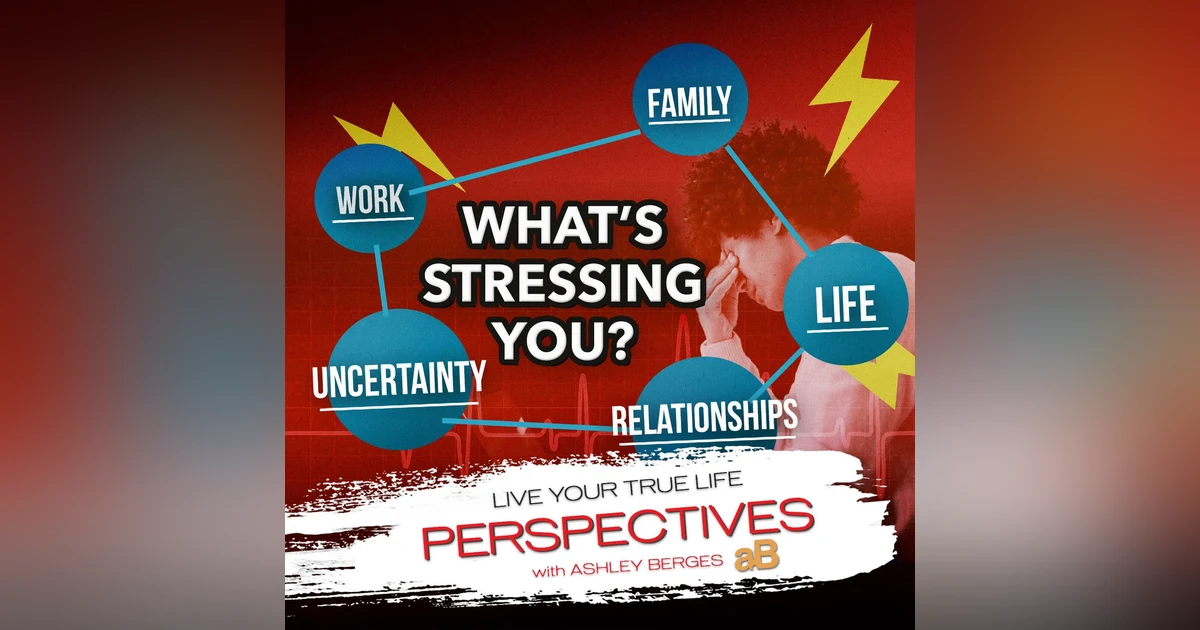

Stress, stress, and more stress! Many of us are under an immense amount of stress every day. This stress can come from our career, our home life, lifestyle, situations, family, relationships, regrets, and the state of the world. When we think of...


 RSS Feed
Stress, stress, and more stress! Many of us are under an immense amount of stress every day. This stress can come from our career, our home life, lifestyle, situations, family, relationships, regrets, and the state of the world. When we think of stress, how do we define it and how do we deal with it? We need to take a look at the choices that we have made and choices that we have not made in our lives that have created havoc and stress for us. Join me today as I take a deep dive into stress, where it is coming from, and what we can do right now to make changes In our lives to offset some of our stress.
Become a supporter of this podcast: https://www.spreaker.com/podcast/the-ashley-berges-show--1272964/support.
0:06 You're in a good place now. You are listening to Perspectives with Ashley Burgess. Welcome back Live to Live Your True Life Perspectives and I'm your host, Ashley Burgess. On today's show, we're going to be talking about stress, stress, stress and more stress. And I know that many of you are under an immense amount of stress lately, whether it's home, career, what's going on in our world, lifestyle situations, relationships, whatever it is. We know we have an idea of what stress is. And I think it's interesting how a lot of us just say, Hey, I'm stressed or I'm overwhelmed, I can't handle this, or too much, what have you?
0:53 It doesn't matter. Is this the way we use those words and we say it, Oh, I'm deal with stress. So I have so much stress on me, I have so much on my plate. And today, as we kind of open the door into this discussion on stress, I want to ask you how do you define stress when you think of stress? What does stress mean to you? And you know, if you look obviously google it, you know stress can be defined as a state of worry or mental tension caused by a difficult situation. It's a natural human response that prompts us to address challenges and threats that are in our life. And everybody expresses stress and experiences that has the feelings of having stressed to some degree. And you know, stress is our body's reaction to challenge or demand. Stress can be positive sometimes to avoid danger or to meet a deadline. But when stress lasts for a really long time, it can really harm our health and can come in different versions as far as you know, pain and situations like that. So whether it's back pain or headaches or whatever that looks like it can come in the form of a physical ailment, right, I know that some people, as we agree, it can come in the form of disease as well, Like if you're under long term amounts of stress over a long, long period of time, it could process into a disease basically, right, you know, it can serve various other diseases. You know. Also, you know,
2:23 stress can keep your mind not working as well as it did. It's not as sharp. It's hard to remember the way things happen or the facts as far as a timeline. When there's a lot of stress and there's a lot of stress, it's hard to remember. Okay, this happened, and this happened, or that happened, or that was a year and three months ago, or that happened on February seventeenth or December twenty first, or whatever. You know, it's hard to remember those types of things because everything's kind of falling together or falling apart together to some degree. Also, if you're in a lot of st if there's a relationship or a situation that's causing you a large, immense amount of stress, it can make you kind of forget some things as well. It can be hard to remember those types of things.
3:12 And so a lot of times when people are under a lot of stress, they can be forgetful or miss things, or forget things or don't you know in those types of things, and they might even say, man, I didn't really have a bad memory before. What's happening? That can really cause problems, you know, besides the physical situations, besides the emotional situations that come from stress. When we're really stressed, we can become emotional. We can we can you know, be overwhelmed with emotion, crying, upset. We can be detached, we can begin to detach ourselves in situations we can I mean it's almost like we're on the sidelines. We're not having any emotions. We become numb, so we might even be having some numbing issues. The more that we have stress because we're trying to numb our feelings or number our emotions or the stresses too much, it's too much to deal with, it's too much to process. And so, you know, we go through that. So but I want to ask you, how do you define it? Because to me, there's certain things that might bring me stress, but it might not be bad stress. And I know that that sounds funny, but I think that there's good stress and bad stress. I think there's some stress that's like, hey, I'm feeling a little I'm feeling a little pushed, you know, I feel a little jacked up over something I gotta take care of. But I'm gonna take care of it them get it done.
4:21 You know, I'm gonna feel good about it. It's good. It's in the end, it's gonna bring me happiness or relief or what have you, or even joy, you know. Heck. But then there's some stress that I don't think is really good stress. It's that stress that is over and over and over again, that stress that keeps happening, that stress that keeps happening over and over again no matter what you do, and that kind of stresses. The stress that just is really really bad. It's it's the really unhealthy stress, that stuff that doesn't seem to go away, it doesn't seem to ever get better. It's like, no matter what you're doing, it's not getting better. And that's something we want to look at today. We want to look at how we do find stress the things that are happening in our life. Is this stressful? Is it not stressful? Is it a good stress? Is it a bad stress? Is it a healthy stress?
5:06 Is it an unhealthy stress? Is it something I can process now and get through it? Is it something that's going to take time to get through it? Is it something that I have to deal with, work on whatever? And So I want us to think about the words we're using, because one of the things that we talk about is Okay, stress, right, I got stress, We all got stress. Right. Everybody's dealing with stress. And if you're not dealing with stress, okay, maybe you're not maybe not dealing with any stress, and that's great, good for you. But for most of those people here on the planet, you know, having to work and you know, have a job and hold down a family. You know, have a career, have these responsibilities, live our life, deal with health issues and all that kinds of most of us have stress. Okay, so you know what does that stress look like? And I know that sometimes we use the word challenging, at least that's my word, right.
5:51 Everybody kind of jokes around about how Ashley's word is challenging. It's challenging. Yes, that is a word that I've coined, you know, really, honestly, it's challenging, having a challenging day, challenging stuff, challenging, uppill battle, challenge, challenge, challenge. Some of you talk about putting out fires. Now, I'm not really putting out fires. I mean I could, I could be a fire person, fire person, right, fire person, But I don't really use that terminology that much. I have a couple of times, but I usually don't do that. You know, some of us say worry, I'm worried, I'm super worried. I'm super worried, I'm super stressed out, super worried. And a lot of times when we're worried, we are worried. There's a lot of worry. There, there's some worry, there's some fear. I think fear causes stress too.
6:31 What will happen if this happens, what happens if that happens? What do we do? How do we get through this? How do we move forward? And that fear factor, which is based on that worry, those things are so so interesting and that's the most painful. Stress is based on fear and worry. You know, I know that some of y'all are going through it right now. Maybe you're going through divorce and having a lot of fear, a lot of worry. Maybe some of y'all going through some child custody issues, a lot of fear, a lot of worry. You know, maybe you're getting a lot of backass. You're dealing with, you know, a family member that's having some challenges that you feel like you're pulled into it. Maybe you're being pulled in lots of people's different drama and you're trying to help and you're trying to do your best. But there's a lot of stress, there's a lot of fear, there's a lot of worry. You know, maybe you're fearful and stressed out about what the future holds. Maybe you're stressed out about how your life is looking, Maybe you're stressed out about what's happening in your life. Maybe you're stressed out about what's not happening in your life. You know, maybe the financial stress and that pressure is really, you know, really pressuring to you and putting a lot of pressure on you, and you feel like you're kind of holding everything up, and that could be really challenging. It can be really overwhelming, really stressful, and you know, it's real, and so we have to really analyze that. And so, you know, one of the biggest things that I think is good is to analyze where is my stress coming from? You know, like what kind of stress am I having? Are there people in my life that are creating havoc for me? They're creating stress, fear, anger, worry, depression, sadness, I mean, you know whatever I mean. Do you
8:03 have that situation going on in your life with somebody that's close enough to you that it impacts you on a daily basis, And some of you do, whether it's a significant other, a wife, a husband, a girlfriend, boyfriend, that it's a constant, constant battle day after day after day and that's hard. You know. Maybe it's a mother or father, or sister or brother that you have to deal with constantly, and that can be challenging. Maybe it's a battle between you and them. Maybe you're trying to safeguard them. Maybe they're in a battle with drugs or alcohol. Maybe you're in a battle with drugs and alcohol, whatever that is, and it's like you're trying to help yourself, you're trying to help them, or you're trying to be the moderator, you know, whatever that looks like. Or it's just constant anger and there's constant argument, and you're constantly finding yourself in an argument.
8:52 You're constantly finding yourself defending yourself. You're trying to defend yourself in a situation, and it seems like you keep coming up short. You know, it could be that you're trying to deal with the drama of the family. You have a family dynamic, and maybe your brother doesn't get along with your sister. Maybe this part of the family doesn't talk to that part of the family. You know, all these things happen a lot. A lot of times we see families falling apart because something happened five years ago and there's a big feud and you can't talk to them and they can't talk to you and all that stuff, and you get wrapped up all in this drama. You know, it hasn't been a successful holiday, you know, for fourteen years because of the situation. You know, some of us are stressed out because of our work. Our work stresses up. Maybe we don't make enough money, Maybe we've worked too hard for the little that we have. Maybe we aren't really happy with what we're doing. Maybe our job itself is really super stressful. And that's hard because work can be very stressful. Work is sometimes some of you process it quite well, some of you don't process it at all. Some of you don't even know you're really a stressed but it comes out every other thing in your life. You know, when we get stressed in relationships and we have these challenges, it usually comes out in every area of our life. We usually deal with it on a constant basis. We're constantly dealing with it. You know, Is it your children that are causing stress? The family dynamic is that the children. There's just so much going on with the children. There's so many problems, there's so many issues,
10:22 there's so much stuff going on. You know, you're having to deal with that child having a problem, or this child having a problem or that, or that child having to go into therapy, or this child having to deal with this, or or maybe somebody sick or somebody's not well or what have you, and you're having to deal with that. Maybe you're trying to get custody of your kids and you're going through that process and you're dealing with that and it's becoming overwhelming and stressful. Maybe your children are having like you know, mental or emotional situations that you're dealing with. You know, maybe you have multiple children with multiple situations that multiple things going on all one time. This can be a problem as well. And these are interesting things. I mean, maybe it's people in your life. Maybe it's your boss, you know, maybe it's relatives, maybe it's neighbors. I mean, we can also have issues with these folks too, you know what I'm saying. We can have issues with these folks too, and that can be a problem as well. I mean, so that's an interesting thing, you know, But I also want us to look at the other plid. So when we come back, we'll be talking a lot more about some other sides and some other factors, some other factors that can lead or bring us stress. And I want you to start analyzing what's bringing stress in your life? What are you dealing with in your life? What is causing this in your life? And you know, what's the length of time the length of time that the stress has been there? What is the length of time that the stress has been there? What is the length of time that you've been dealing with this for
11:56 so long? What's that length of time? What does that mean? Where do we go from there? What do we do? How do we process this? And this is going to be an interesting dynamic to look at because we can really understand where our stress is coming from, where our stress is, where is our stress being you know, where are we getting the most stress in our life? Where are we dealing with the most stress? Is it coming from a particular person, Is it coming from a particular situation? What is the role I'm playing in that situation? And is there something I can do to augment that? Is there something I can do to change that? Is there something I can do to literally make this better? And this is what we're going to be talking about in today's podcast to really understand where we're at, because stress really creates havoc in our life. Stress is challenging, Stress can be painful, and if we're not processing it correctly, we're not dealing with it correctly. It can bring a lot of havoc into our life. It can bring us a lot of challenges, a lot of stress, a lot of anxiety, a lot of fear, and we can just feel very worried and overwhelmed at the direction where our life is going. And so I'm not going to give you any more stress in this show. I'm going to try to leave some stress in your life, and we're going to process that today and really think about how we can do that successfully so that you can feel better about your life, so you can feel better about some of the stress in your life, and so that we can put an end to some of this stress that we really don't need, and also be able
13:26 to identify the stuff that's really not that stressful, but also be able to identify the stuff that really is stressful and the stuff that's really causing us stress in our life. So stay tuned. I got a lot for you on this show, a lot for you in this podcast. It's going to be helpful and it's worth it. So stay here and if you're working out or you're driving, let's do it. Libertry life Perspectives with your host me, Ashley Burgers. Will be back in. I'll be back this time. You know it. I'll be back this time in two shakes. Turn it up and jump in the deep end on Perspectives. Now here's Ashley. Welcome back live to look at true life perspectives and I'm your host, Ashley Burgess.
14:18 On today's show, we're talking about stress, stress and more stress and where is your stress coming from? Where is it coming from? Where is the most of your stress coming from? And I think that that's something that we can all ask that question. It's something that is very important to try and figure out because we'd like to manage it, we'd like to take control of it. We'd like to understand it and see it and process it. And right before the breakout was talking about the people in our lives, the relationships that we have, our work, our career and where we are with that and the stress that that's providing in our life. And think about that, is there certain people in your life that are creating more stress than others. Do you feel like there's some people that seem to be stressing you out more than anybody else. Do you feel like there are certain situations in your life that are stressing you out more than others. What are those situations and who were involved? What about your work? Is your job stressing you out?
15:11 Do you feel like your job is overwhelming? Do you feel like there's so much going on that there's just so much to process, so much to deal with, and so much to go over. And that can be really challenging too, because when that's going on too, we can be really challenged with that and that can take us. You know, if we're having stress in one area of our life, it's hard to compartmentalize it. It's hard to look at all the other areas in our life. It's very important to see it, work with it, and try to understand it. But there's also some flip flops on that stress, and we're going to talk about that. But before your kids, your family, the dynamic, the responsibilities, all these things can provide stress. And start writing this down, start journaling on some of this to start analyzing where is my stress coming from? Where's the majority of my stress coming from is the stress that I'm dealing with on a constant basis. Is this just stress to make me get something done? Or is it different stress. Is it a stress of you know, like the fire under your butt, or is it more of a stress of something nagging, something pressing, something that you need to deal with that you haven't or something you are dealing with but there hasn't been a solution. One of the biggest stressors we have is things that there hasn't been a solution, or the solution is not the easy road, or it's a painful road, or the solution really isn't in view. The solution isn't in view. It's it's kind of there, but it's not there. It's it's it's elusive. And that can be challenging too. And when we in a bit, we're gonna be
16:45 talking about the flip flops. So a lot of times, you know, we think about the people involve you know, the relationships, that type of stuff. We think about the family, the responsibility as of kids, but there's other things the flip flops that I was talking about, you know, the the actions and choices we take in life that can cause stress, the non action, the non choices we make, the lifestyles that we choose, the regrets that we have, and those are some interesting aspects that we'll have to look at on today's show, because these are some things that really affect us, all right, These are the things that really affect us all So it's not maybe just a direct subject person like boom boom, that person brings me stress or boom boom, this situation brings me stress or whatever. It can be. The things that we're doing, the things we're not doing, the things that we don't know how to handle or deal with their process, all of those things. And so we're gonna be really dealing with this.
17:37 We're gonna really dive deep in this here in just a bit and really think about this so we can really analyze it. Because there's some things that we could probably be doing, there are some things that we probably can't be doing. There's some things that we'd like to be doing. There's some things that we can't do, there's some things we can't do, and there's some small baby steps we could probably take two to get closer to our goals, to get closer to where we want to go to be happier in the situation. So really thinking about that and so start analyzing some of the stresses that you have. Is it a project that's looming over your head that needs to get done? What can you do? What are the steps you can take? You know, like relationships are a little different. It's not just like a oh bam, I got this or I pick this up, or I'm gonna be able to put this wall with this door up. It's a lot more.
18:19 So we're gonna be talking more about these intricate things that we need to try to find some ability to try to process and change and make things better for ourselves, eliminating the stress level by a little bit, but also getting it where we can deal with it, we can manage it, we can understand it, but we also realize that we actually are doing something to change that situation for the better. So stay tuned. We got a lot more coming up. We got a lot to talk about. Liver your true life perspectives with me, your host, Ashley Burgers, will be back in you know, I'll be back this time in two shakes. This is Jake Busey and you're listening to Perspectives with Ashley Burgess. Welcome back live to live your true life perspectives. And I'm your host, Ashley Burgess. On today's show, I'm talking about stress. How do we deal with stress, how we define stress? Where's our stress coming from? And you know, right before the break, we've been talking about various stressors people, family, family, children, responsibilities, career relationships, personal professional, love, relationships, husband, wife, all this stuff that can create stress in our life, the children, even our regrets. But let's deep dive into this because our regrets kind of segue in to the other side of the coin, right, the
19:53 other side of the coin, you know, And when you think about that, that's very interesting because there are things that are not just direct correlations charge us and not like, oh, this person causes me stress, or this situation causes me stress, or this project that's looming over my head is causing me stress or whatever it is. It's like, yeah, I get it. But there's other things that are a lot more deeper, a lot more well, things that take a lot more thought, a lot more depth. You know, what are the actions and choices that maybe you've chosen or acted on that hasn't been in the best for you, that has created havoc in your life? What are some of those What are the things that you what are those things? What are some actions and choices that maybe you haven't taken.
20:40 Maybe there's some non action in your life, some things that you haven't acted on. Now I understand there's some things that we need to act on and some things we don't. There's some things that's not the right time too. There's some things that you have to really process and weigh and measure and decide, and you need to have all the evidence and information going into that to make sure that you make the right choice. All these things are super super important. All of these things go a long way. So what are some of the things that we don't we haven't chosen? What are some of the things we haven't acted on? And those are the things I want you to think about, because that can be even tougher because you feel like you're in a state of non action, you feel like you're not doing something, You feel like you haven't you know, stepped up to the plate to take care of this, to make this work, to find this, to find the new approach, to do what you need to do. And then sometimes we could have taken an action or a choice that maybe we're not happy with.
21:29 So on the flip flop, some of you that are sitting in there and saying, well, I wish I would have acted or done this. You know that some of you have acted and done things and you wish you had not. And so then what do you do? Then? If you've already taken an action or choice, you've already gone a certain way, what do you do to make changes to that action or choice? How do you change that? How do you remap that, how do you work through that? How do you get back to some sort of stabilized situation that works for you? And those are some really major questions to ask. Those are some things to really think about. What about lifestyle. You know, our lifestyle choice is the way we choose to live our life. And there's no judgment here on this show. It's just about lifestyle. And lifestyle is a very interesting thing. And sometimes there's certain lifestyles that are easier than other lifestyles, and so we have to understand, like some of the choices we're making, it might be really super tough, it might be hard, it might be challenging, and those are interesting things. So I mean thinking about that, So, you know, some of us feel like, oh my god, am I bringing this upon us? Or has this been put on me?
22:34 You know, you know challenging lives. You know, like if you're having to you know, work in a different state or do different things, or having to work in a different country or doing all these different things. It's like there's all you know, there's a choice here, and it might be a really challenging choice or it was a choice that you had to take, but then there's all these like, you know, stressors that come from that choice. You know, definitely there has to be some sort of benefits that come from it at some point. But you know, some of you may be saying, hey, I'm in a real stressful situation where I really don't see a lot of the benefits. I haven't seen a lot of the benefits in a long time. And that's probably one of those red flags that you might want to think about, is that, you know, if we're not seeing any benefits from the things that we're doing, if you're not seeing any benefits from the things you're doing, that's a red flag. At least some sort of benefits something is very important. And I'm not saying that we have to have benefits all the time. God bless. I'm not saying that.
23:34 I'm not trying to say that. I'm not trying to even say that all. But I'm saying there's sometimes where you look at things and it's just a downward spiral, constantly in a situation in your life. And I know that that's hard to see sometimes, you know, whether it's a choice that we made about a person, maybe it's a choice that we made about a career or a direction in our career. Maybe it's a choice we made about even something as crazy as or small as a piece of property that has caused you nothing but heartache and headache and pain. You know. I mean a lot of us are dealing with the relationships that you're in and you're thinking, my god, you know, the relationship started differently, it's become super toxic.
24:15 Now what do I do? How do I deal with this? It wasn't like this in the beginning, And now I'm like trying to pull myself together and find my identity and figure out who I am and not lose myself in the process. That's a very painful, stressful place to be because you're dealing with it day in and day out and living with it, right, you're living with it, and so that's an interesting thing. So you're living with that, you're dealing with that. It could be something as small as property. It could be something as small as property, but that could be big too, Like you could have gotten a piece of property and you're living there and it floods all the time, it's on a flood plain. You didn't know or the neighbors, or the neighbors are challenging, and there's always frustration or anger or something going on with the neighbors. You know, maybe they're completely out of control. Maybe they're shooting guns off in the air all night.
25:07 You know, maybe there maybe you moved into an apartment where the neighbors constantly fighting with their spouse and yelling and screaming and it's causing you stress and you're not able and they start screaming at at one o'clock in the morning and you're not able to sleep. You know. There's like things that you know, we don't really think about it sometimes when it's not happening to us, right, But some of the biggest things that can be challenging for people, or these things that maybe you haven't even dealt with. You know, maybe the stress is coming from the fact that your parent is getting older and maybe their their memory is not getting is not good and their memory is is kind of leaving, and it's really stressful for you, and you're trying to help, and they don't want the help. They don't want your help, and they keep telling you they don't need your help, they don't want your help, they don't want your input, they don't want your stuff, they don't want to hear about it. That can be challenging if you're a caregiver and you're giving help to an older parent, to a spouse that's ill, or a child. I mean that can be challenging too, because it can it could be very stressful and challenging, right, I mean, it makes sense, right, And these are the things that we have to kind of process and think about. These are the things that we have to understand and recognize and see it for what it is and not that we can just throw it out and say, oh, I'm not ever gonna do that, or I'm not gonna take care of my mom, I'm not gonna take care of my dad, I'm not gonna take care of my spouse. I'm not gonna take care of my child with down syndrome. I'm not gonna whatever it is.
26:30 It's like that's a lot, right, So we have to figure out what stressors we kind of like have to deal with, you know. So you know, like so that's a big question, and that's something to really think about. You know, what are the you know what stress? Right? You know what stress? You know do you have to deal with? I mean, because the stress you have to deal with just has to kind of be there. There's nothing you can do about it. It's not like you can just take that away, you know what I'm saying. It's not like you can just forfeit that and be like, eh, I'm done, don't need it, don't want it, not gonna have it, not gonna deal with it. No, it's part of your life. It's kind of you might not assigned up for it directly, but it's part of your life.
27:18 Then there's you know, and that would be you know a lot of that you know, and you can definitely get help. It's not like you have to be the one and done. Like it's if you are having a caretake for somebody, you know, if you can get help, hire help, have some help, get a family or friend, whatever, I get it understand. So it's not like you have to take it on, you know, solo. This doesn't have to be your solo role. You know, in this lifetime you're allowed to do other things. But then we have stress that we can actually augment by action that we can take to better our lives. What are some of those actions that we can take to better our lives?
28:00 What are some of the actions that we can take to better our lives right now? And that's something I want you to think about too, is like, those are some actions that we can take, Those are some things we can do. What are those actions? Let's look at those actions. What are some things that is happening. What are some things that we can that we can look at. What are some actions that we can take that we can actually do right now? What are some things that we can do right now to make changes in our life to av set that you know, what can we do? What can we say? Well? Can we what are the actions we can take? What are what are the precautions we can take? What are the things that we can understand? What are the things that we can process? What are those things that we can take action on because action is so important. Without action, what do we have. We don't have anything. Without action, We have no way of moving forward, no way of preparing, preparing ourselves nowhere, or moving forward and moving out of that stress. And that is so important is to figure out how to ultimately move out of that stress and move in a different direction in our life.
29:04 And when we understand where the stress is coming from and we understand the actions that we need to take, this can be really eye opening. It can be extremely eye opening. And you know, sometimes though, the stress is more in the action right, because we actually have to do something, and that in and of itself can be challenging. It can be worriesome. You can start questioning yourself, Am I doing the right thing? Is this the right direction? Is this what I want to do? Is this helpful to me? Is this what I want to do? Is this what I want in my life? And then you have to start asking the big questions like what is this going to do if I do this? Or what will it do if I do that? Or how will my life change? Or will my life change or will my life change in a good way or a bad way or a different way, and we have to look at that.
29:57 We also have to understand what else is involved in our choices and actions, and we also have to ask ourselves what is ours like, what is our responsibility to deal with? What is our responsibility to deal with? And that's another thing that I find very interesting because a lot of us are taking on stress. We have a lot of stress in our life, right, I get it. A lot of us are taking on other people's stress, But I mean, like, where does the rubber meet the road where you're taking on other people's stress? And I get that. And some of that stress directly can directly correlates with your life, and some of it doesn't. So what do we do there? How does that work? And that's a very interesting concept because there is some stress that will directly connect with you. There's some stress that you will deal with, some things you have to deal with, some stuff you have to deal with. But there's some stuff and that's understandable. And let's say like we have a significant other, my mother, father, you know, a brother, sister, a pet, an animal, a dog, cat bird, you know, a good friend. You know their stress is going to impact you at some point. But what role do you play, and then how do you kind of look at that and not not not run away from it, not avoid it, but how do you process that and put that in the right spot, Put that in the right place, deal with that in the proper way. Because we're all going
31:29 to have like ancillary adjacent stress. You know that adjacent stress is tough, and I should probably, you know, have an entire podcast on this adjacent stress because it's adjacent to you. It's right there, it's parallel, it's perpendicular to you. This is right there, it's your stress too. But how much do you take on and how involved do you get? I mean many of us have dealt with stuff like that, you know, where you have a friend that it's you know, going through a big change in their life, or you have a friend that's going through a health issue, or you have a friend that that's going through a divorce, or you have a friend that's getting married and to somebody you really might not totally agree with because you can tell what's gonna happen. You know, you already saw the trade wreck and you're like, oh no, but there's not much you can do.
32:20 And so how much do you take on? How much do you deal with and how much do you kind of just say, Okay, I got to leave it up as everybody says, let Jesus take the wheel. I got to leave this up to God. How much can you do with that? And how much can you say, I got to leave this up to them to take care of it. You got to leave to them. It's hard, It's hard. And that's like, that's a codependent issue right there. That it's it's that codependency and that EmPATH and that empathy and all that stuff we've been trained to do, all that stuff we've gone through. And I find it interesting too because the codependency, you know, a lot is the learned response. It's the way that we had to deal with, you know, the family dynamic in order to make sure everybody was okay and fine, because that's what we learned. That's how we learned it, that's what we dealt with. That's what we dealt with in life. And you know, it's to think about that, is to analyze that. How do we analyze how we do with that? That's something we got to think about and these are the things that we have to process in our life. But it's interesting, So how do you process the adjacent stress? How do you deal with it? What is our responsibility? What is someone else's responsibility? These are big questions, These are huge questions in our life. What is their responsibility? What is our responsibility? Big, big, big questions. And then how much of that do you need to work on? And how much of that do they need to work on? And all this stuff to make life work? And that, you know, that's kind of where the road meets the road. And then how do you deal with the adjacent stress and then your personal stress? Right, and all the responsibilities that go along with
33:51 it. But I do think we need to think about it. We need to go back to the beginning of the conversation today. Let's go a full circle on what is stress? And so when we come back, we're gonna talk about what really is stress? What are the components of things that really aren't that stressful are actually kind of more positive than negative? Right? What's more positive than negative? And then what, you know, what really adds to our life? You know, I mean, these are things that not maybe we maybe we stop calling it stress, you know, maybe we stop calling it stress and we call it something else, and that might help us too. To deal with the stress that we do have, because we don't need to call everything stress if it's not really stressed, and maybe we'll start feeling better about things. You know, people used to say, oh, we want you to buy that car, what's not or we want you to buy this product. Now it's an opportunity, right, it's really funny.
34:40 Right, that's hilarious. Let me get you into this opportunity. So stay tuned. We got more more opportunities for you here in just a bit, so stay tuned. We'll talk about that. We'll go full circle here Libertrue Life with me your host Asthley Birders, will back in, will be back this time, back, this time in two shapes. Get in here. You're listening to Perspectives with Ashley Burgess. Welcome back live to deliver true life perspectives and I'm your host, Ashley Burgess. On today's show, we've been talking about stress and basically deconstructing stress. What is stress? What does it look like? And I want to go full circle because at the beginning I was talking about stress. How do we define it? You know, how do we define it? And I think that sometimes we throw a lot of things in the mix. And we say it's stress. Like we throw all these responsibilities and all these things and all these changes and all this stuff and all these things that make us have to do stuff or make us have to take action, and we say it's stressed. Now, some things are just totally inherently stressful. But some things it's not really totally inherently stressful. Some things are actually well helpful, you know, something are actually positive. Some things can actually change our life something in a positive way. Some things can add to our life. They can add to our life in a way that's pretty amazing, right, And so is that necessarily a stressful component or is
36:15 that more of a life changing component? Is that more of a oh I got to make some action and do some action versus Oh my gosh, I'm so stressed out, and my guys, I'm so worried, I'm so fearful, and I guess I'm like, god it, you know, I'd actually hurt a little bit to do that. So you know, it's like, what do we do and how do we kind of change things? So like, for example, you know, I know that you know it's hard, you know, having kids and them growing up can be really hard, and it can be very stressful, but you know, you know, there's certain things about that that we can look at it from a different perspective, you know, whether also it's like going back to school or getting the different job, or applying for a different job or career. I mean, yes, stressful, but is it is it really stressful or is it life changing?
37:05 You know, building something, you know, getting involved with a huge you know, production or project, something that you're doing. Yes, it can seem very overwhelming and stressful in the moment, but is it stressful or is it more of just life changing and positive things happening in your life? And I think it's something to really think about. These are the things that we really want to think about. These are the things that we want to be aware of. You know, I think that it's helpful to be aware of those things. And you know, I think that when we're able to say, Okay, yeah, hey, this is really kind of good in life changing. There's some pieces of it that maybe don't really always make me happy, but overall, it's not a horrible experience. Now, there's some experiences.
37:51 You're gonna say, there is not one silver lining in this Ashuley, There's not one piece, and hey, I am not going to argue with you on that. It might be some stuff like some of you might be caregiving and that's hard. You gotta find somebody, you get help, get some help and stuff. But there's some times where there is those epiphanies. There are some times where you go, man, I'm really glad, I'm really glad I had that opportunity to be with that person, to be able to experience that, to go through that, to deal with that, and that is awesome. And then there's gonna be some really rough times in that too, some really really rough rough times. But looking at things and really defining it, am I defining this as stress? Is this stress? Or is this change? You know? I mean you know it. Is it you know, healthy or is it unhealthy? Is it gonna open my mind more or is it gonna not. So there's all these questions that we can ask to really get down to the nitty gritty of is this really stressed or is it not? And so I hope that the concept of this has helped.
38:55 I hope that thinking about this maybe and some other ideas and some other ways and some other uh you know, lighting it up in different areas and really kind of thinking about this and mulling it over may help you to some degree. And I think it can be healthy to see things differently and try to make some of these augmentations and changes in our life. And then the stuff that really is stressful, let's really analyze that, let's really think about that, let's really get in there, let's really talk about that. And an upcoming show we'll talk about the adjacent stress, maybe in the codependency, you know, in the adjacent stress, and the in the you know, you know, in the empathy, because that that's real, right, that's real, Because if you're really a true friend or you really care about somebody, you're gonna have stress, and you're gonna feel it when they're going through a lot, and you're gonna want to do whatever you can, but there's gonna be a limit to what you can do. And then that because of that limit, you're gonna feel like your hands are tied and this and that.
39:47 So we need to be able to process that correctly and deal with it in the right frame of mind. And that's what is so so important, very important things that are really really important. They can really shape our lives in a really, really great way, so stay tuned. More shows coming up. Check out the podcast. You can check it out on everywhere that podcasts can be found, you know, Apple Podcasts, a Spreaker, to Stitcher, to Spotify. In the meantime, if you get a chance, go to my YouTube channel. Go to YouTube and search up Ashley Burgess, b E. R. G Ees or Ashley Burgess Life Coach or life Coach Ashley Burgess and you'll find my channel. We have content almost new every day, so check it out. We got short bites, small bites, and long bites and big bites of content, so stay tuned. I hope you can check out the YouTube channel and in the meantime live your true life perspectives with your host me, Ashley Burgess. Will be back in I'll be back this time, Well, I'll be back this time in three shakes.