Shifting to a Powerful Mindset with Children’s Author Julie D’Ann [Ep.750]
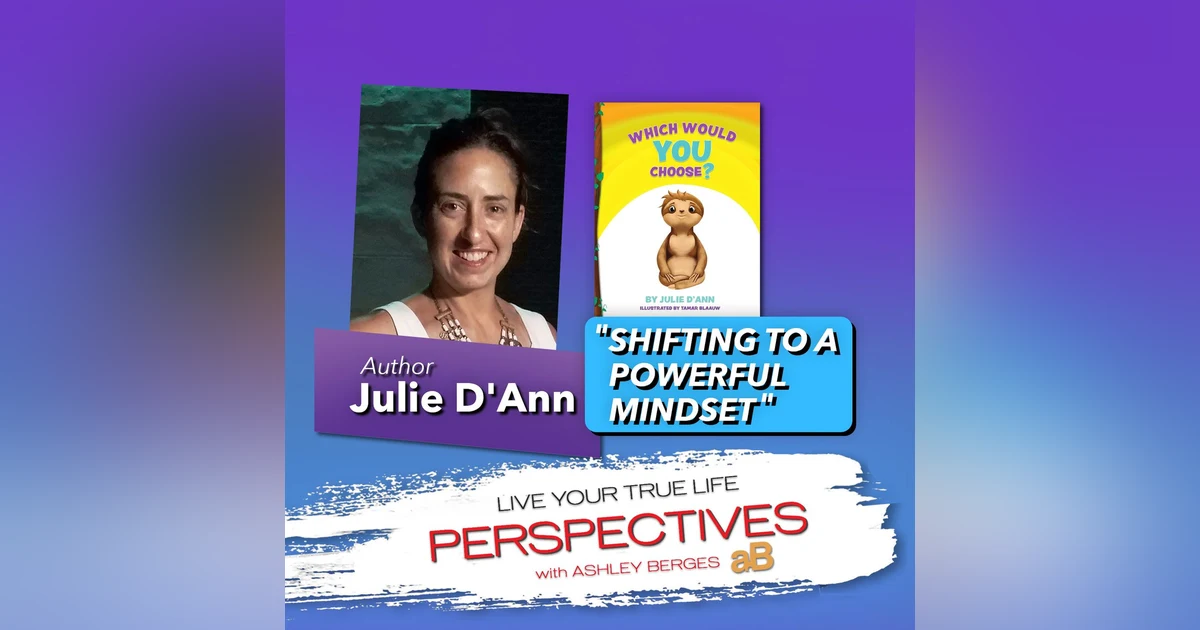

Today on Live Your True Life Perspectives, Ashley talks with Life Transformation Coach, Illumination Guide, and children’s author Julie D’Ann. Julie has recently released her new children’s book titled, “Which Would You Choose?” This book presents...


 RSS Feed
Today on Live Your True Life Perspectives, Ashley talks with Life Transformation Coach, Illumination Guide, and children’s author Julie D’Ann. Julie has recently released her new children’s book titled, “Which Would You Choose?” This book presents experiences that children or any person may come across in life. The book also demonstrates how to choose thoughts to change feelings and emotions to make more positive choices in life. Join Ashley and Julie as they discuss higher being consciousness, your heart center, dealing with emotions, feelings, processing thoughts, and Julie’s new book. You can find Julie D’Ann by following the links below:
Book: https://www.amazon.com/dp/B0C11L5WXB
Author/Coaching Website: https://juliedannauthor.com/
TEDx Talk: https://www.youtube.com/watch?v=VFYTAKtbzh4
FB profile: Julie D’Ann facebook.com/groups/illuminateyourlife
Instagram: julie_dann_
Become a supporter of this podcast: https://www.spreaker.com/podcast/the-ashley-berges-show--1272964/support.
0:00 Welcome back Live to Literature Life Perspectives and I'm your host, Ashley Burgess. On today's show, we'll be talking about higher being, consciousness, your heart center, dealing with emotions and feelings and processing thoughts and emotion and joining me live in studio today is emerging children's book author, Live Transformation coach The Illumination Guide and ted X speaker Julie Deanne. Julie, great to have you here on the show. How are you doing. I'm doing phenomenal, Ashley, thank you so much. It's great to be here. It's wonderful to have you on the show. And you know, reading your book and taking in all this information very powerful stuff. And you know, tell me book brought you into the situation to write the book in the first place. Oh wow, this book is years into making. I would have to take us back to pre COVID times. So I have a daughter and when she was back in elementary school, there were many times where there would be incidents that happened in school where children would be acting out or just having a hard time and kind of creating turmoil in the classroom, and it just seemed like, you know, other kids were being her sometimes harmed, you know, because the kids would sometimes throw things, and I always wondered, you know, how how are they How can we deal with this? There's got to be a good way. And then there was a particular incident where my daughter's classroom was actually evacuated and it was all because one child just was overwhelmed with emotion and
1:36 wasn't able to quite process that that that the teacher was fearing for the safety of you know, herself and all the kids. And I just thought at the time, there's got to be a better way. So then during COVID, I started meditating all the time and realized the benefits of meditation and just you know, calming down the body and being able to observe your thoughts. And it was during these meditations that I actually got the inspiration to write this children's book. The whole format, the way it's laid out to kind of teach kids how their thoughts produce feelings in their bodies, and how we use our thoughts to label these feelings as emotions and then emotion the emotions are really energy. Emotion. They're what prompt us to take action in our lives.
2:23 And of course the actions that we take create our realities our experiences. So in order to change anything in your experience, you have to start by changing your thoughts. And when I realized when I was studying all of this, I was doing a lot of research and study during these past several years. I thought, if I had grown up learning this process, or learning how these thoughts and feelings work together to form a feedback loop, what a phenomenal difference it would have made to me, just as a kid growing up, being able to maybe learn how to read these thoughts and emotions and change them and make better decisions and trust myself. And I want that for kids, and I want that for my daughter. So I started working with my daughter and had her give me feedback on the scenarios. You know, we picked scenarios that kids kind of situations that kids typically find themselves in, like being afraid to speak up in class, or you know, maybe a kid says something about their clothing that isn't very nice or makes fun of them, or maybe they're not picked on the team or they've picked glass. You know, how are you going to deal with that? What kind of thoughts are you going to think? And how are you going to turn that situation around and those are the kinds of things that this book illustrates. And that's the reason, the reason behind us to get kids to realize that you can choose your thoughts, and by choosing different thoughts, you can actually change your emotions, and that's going to change your life. That's very true. And it's interesting
3:55 when I talk to clients, you know, adult clients, one of the things that I've heard from so many of them is that I just wish we would have been given the tools and direction to be able to process emotion and to understand mindfulness, and to be able to deal with anxiety. And when they were kids, and it's true, it wasn't something that's mainstream at all, especially then, and even now, it's something that's more on the cutting edge, which I don't think it should be. I think it should be, you know, for every child, for every person for that matter. But you're right, it's like if we can choose, if we if we can get enough past you know, being in the feeling or getting sucked into it, but being able to see it and process it, that can be really powerful. And especially you know, after the COVID situation. Throughout the COVID situation. I think that we as humans realize that there's not only a lot of stress being put on us, but there's a lot there's a lot of drama, there's a lot of fear, and I think that you know, obviously children feel the same fear as us as adults do as well.
4:57 Absolutely absolutely, and so I find it very interesting. So explain to me a little bit when you talk about let's talk about the heart center, because I think that's very important and I've learned a lot about that. Tell me more about the heart center and the part that that plays for the individual well to me connecting to see, we have our centers of energy. You know, everything is energy. Start with that. Everything is energy. The whole body is energy. This has been proven by science. So you know, we tend to think that our brains are what drive the body, but that's not exactly true. We actually have more powerful energy in the heart. The heart is the center of the body for good reason, and it's our lifeblood force, right, but it also has tremendous energy and it's the center of love. And if you look at it, you know, if you deal with any sort of energy work or energy healing, the heart is where your love center is, and love is really the most power full force in the universe, and so connecting to your heart center centers you, it grounds you, It brings you into that space of feeling pure love and light. And that's why to me, meditation is so extremely powerful, because you realize that you aren't your thoughts and you're not your body. You are the consciousness that is behind it, all that is above and around and infuses everything. Right, because we are all connected, we are all of one consciousness, but
6:31 we are like individual nodes. I once heard Mary Morrissey, she's a phenomenal life transformation coach and thinker, author, etc. He said that it's not like it's like each one of us is an interface, but we're all part of the same computer brain, if that makes sense. I don't think I use the words correctly, but what I'm trying to get at is, you know, it's not like some sort of a sci fi thing where you know, we're all like little machines and if you turn off the head then everything does not like that. But it's more like we are all connected to the central consciousness, the center of the universe, per se the same energy, but we're offshoots or maybe even smaller seeds that have grown and sprouted. So we all have that center, that origin. But yet we are allowed to make our own choices and decisions and have our own experiences based on our own thoughts and feelings and actions. I agree with that, and I believe we're all connected. You're right, and we can all We're all connected, we can all feel I think that to some degree. I mean, I'm empathic.
7:46 I'm sure that you are an EmPATH, and I believe that many people that are listening to la your true life perspectives over the years are empathic as well. And I think that we can all kind of tune into not only our own feelings, but the feelings of others as well, And so there's that interconnectivity. And then I believe that when we are in our right space, or in our clarity or our mindfulness space, I feel like we're able to see the truth. We're able to connect with others. We're able to get rid of the walls or the barriers that society can put up or we can put up in our own mind between us and other people. Yes, absolutely, I mean our thoughts, you know, just being able to slow down our thoughts and you know, connect to that heart center and just feel into the body. And you do that right by focusing on your breathing.
8:35 That brings your awareness into your body. That's how we kind of connect into that. Some people call it a higher consciousness or the acastic records, or you know, whatever you want to say that and that's how we're able to pick up on others thoughts. I definitely agree with that for sure. Yeah, and then you know send our own sort of energetic thought out into the universe, right because thoughts are electric, they send it out a signal, and then the feeling in the body. Doctor Joe to Spenser talks about this, The feelings in your body are magnetics, so they're drawing back to you what it is that you're wanting and you're focusing on. So that's what That's what I think kids have to understand is that you know your brain like kids grow up. This has been there's a lot of science backing this. Right, for the first seven years of your life, kids are like sponges.
9:31 They're just absorbing whatever is in their environment. You know, it just goes right in. There's no filter. So not only are we born with a sort of a you know, preprogram, if you will. You've got your heredity, your genetics, and all your genes. But then in the first seven years, everything around you you're just taking in and that's becoming your sort of what do you call that, your your database, your hardware system. But then as you get older and you start to make decisions and you start to discern things and have your own opinions and experiences, now you're having to start to sift through and decide do I want to think that way? Do I not want to think that way? Is that true? Do I believe that's true? And maybe it's true for someone else, but it may not be my truth. And I think it's so critical kids need to realize that they can choose this, that they actually that's why we're here, right, We are here to have these experiences and decide what kind of a life do we want to lead, what kind of experiences do we want to have, and what kind of perspective or lessons do we want to put to those experiences?
10:45 Because I truly believe that we come here with a purpose. Each one of us has a unique purpose, and life is happening for us and through us and so everything that happens there is a reason, there's a lesson, there's something even the worst thing, there is a purpose to it, and and it's it's for us to grow and to discover that purpose and then bring it out into the world and share it with others so that they can grow and Expand I agree with you. And we're definitely all here for our own purposes. And I believe that there's all this you know, this altruism as far as you know why we're here and understanding you know, the lessons that we learned, and some of the toughest situations can be some of the most valuable lessons. I agree with you, and I think it's interesting though when I hear you know, from the from the older adult point of view.
11:33 Um, you know about the fact of they were taught certain things growing up. And I know I was too, and I'm sure you were too, and I'm sure all the listeners there were things that you were taught. There's you know, maybe your parents believed in a certain religion or believed in certain things, and so that became your doctrine and you and you believed in that. But one of the biggest, you know, things that I talk about with clients and on the radio show is we need to figure out who you are. What's your blue print? Separate from what you were raised as you know, what do you believe on your own right? You know, separate from how you were raised because we could be raised a certain way. And I think this is really great that you're giving, you know, kids the ability to be mindful because you're right, in society today, how you know, we start believing things or things are taught and to actually have those questions, is this my truth? Do I believe in that? Is this something that I accept or is this something that I want to question? Or is this something that I want to reject? Right? And I mean, it's important for kids to understand that most of what we were taught, or at least we hope, right, that our our parents in society is designed to keep us safe. And that's that's what our brains are designed to do, is to keep us safe, keep us in the familiar or whatever is has served us in the past, whatever has kept us safe and allowed us to you know, move through life with either less pain or no pain, or you know, basically kept us kept in survival. Right, That's great, but there's more to life than that, and there's more to being a human
13:05 than that. Right, we're not just here to survive. We're here to thrive. And in order to do that, you have to do exactly what you said. You have to start questioning these things that you've learned and these things that yes, they served you in the past, they served you growing up, but now you're ready for like the next transition. It's almost like a butterfly, right, You're ready to break out of that chrysalists into your next transformation of the butterfly. But then there could be several of these throughouts your life. That's what I think is fascinating. You know, you're going to go through different growing stages. That's so true, Julie. When we were turning to be talking more about mindfulness and the higher being in the consciousness. So stay with us Live your True Life Perspectives with your host me Askey Burgess will be back in We'll be back this time and two shakes. Welcome back Live to Literature Life Perspectives and I'm your host Ashley Burgess. On today's show, we're talking about mindfulness, about choice, about being able to choose about our higher consciousness, and Julie Deane has been joining me. She's the emerging children's author of this amazing book that we're going to dive into. Which would you choose. We're gonna be diving into that in our next segment because we want to deep dive into this really amazing book because it goes through daily situations, circumstances, events and experiences that you know, children experience as well as us as adults. Anybody will have experience or will experience it in their
14:37 life. You know, Julie, right before the break, we were talking about you know how the brain does, you know, keep us safe. It safeguards us. But sometimes in the safeguarding process, you know, there can be fear or there can be things that hold us back. Could you talk more about that? Yeah, absolutely so. Right, the brain is designed to keep us safe and away from pain and basically just to keep us alive. Right, that's its number one function, but it's secondary function once we are feeling safe and cared for, right, the next function is actually creation. You know. It's why when you get rested, when you're fed, when you're in a safe place and you're feeling good, that's when all of those creative thoughts start coming up because whatever you're focusing on, your brain in the background, the subconscious, it's always working on whatever it is that you're focusing on. So this brings us back to the whole purpose for the book, which would you choose. Whatever you focus on is growing. Right where focus goes, energy flows and it grows. And so whether you're focusing on a negative or positive, the brain doesn't distinguish. It just says, you know, if you said don't be late, the brain is going to focus on late, right, instead of saying I am always on time, I am going to be on time, and then the brain is focusing on being on time. It doesn't distinguish the negatives. So that's what kids can
16:11 start to play with. They could look at a situation flip it around. A technique I taught my daughter was the flip around, right, whatever negative thing that you have in your head, you just say stop, I choose not that you flip it around, say the opposite, or say what it is that you do want and focus on that activity. And she actually did this in the pool one day. I was shocked that she had actually remembered what I told her, because it happened like a month after I told her the technique, And that is one of the scenarios in the book called the flip around, the one at the pool. That's amazing and this can help with anybody that's listening to this show right now. It doesn't matter what age you are, You're so right, you know, Julie. It's the concept of the brain doesn't realize the negative or positive. So if you are seeing something in a negative way or to some degree, it's going to create that like the idea of your laid that is very interesting. But people, we have to be in the mindset to realize that though, to be able to make those changes, and to be able to be aware of how we speak to ourselves. Oh, absolutely yeah, the negative self talk. And that's that's another of the scenarios in the book. Negative self talk is huge and it's a big problem. And once again, you know, people, kids need to realize this early. Right, instead of telling yourself, don't do that, don't do the flip it around, say the positive. I am I always make friends easily. I always get along with people, you know, instead of saying I don't know how to make friends, right, you got to flip that thing around and you'll start to see the difference and you'll
17:42 feel better first and foremost. That is so true, Julie, this is amazing. Don't change the channel. Don't change it. We have we have so much to talk about. In today's show. We're going to go through the entire book, which would you choose and some of the best pieces that are really going to pull up. Well, everything's great, but we don't have hours an hour, so we have to limit some of our time. So we want to talk about the flip around, the negative self talk, scary, about exciting opportunities, and the list goes on, and also where we can find Julie, where you can find the book, because this is great for anybody. This is information that we all need to be living our life if we want to have that life that we want to live. We want to live that true life and be able to be productive and be happy and be successful because it's only going to propel us for so stay tuned. We'll be talking more about that and also later on in the hour some golden nuggets of wisdom that Julie is going to share with the Live Your True Life audience, So stay tuned. We have a lot more coming up. Live your True Life Perspectives with me, your host, Ashley Burgess, will be back in I'll be back this time, you know it. I'll be back this time in two shakes. Welcome back Live to Literature Life Perspectives and I'm your host, Ashley Burgess. If you're just tuning in right now. We've been talking about higher being, consciousness, not being a slave to our emotions,
19:15 and I've been a victim to our feelings, not being a prisoner of our thoughts. And Julie Deanne has been joining me. She's the emerging children's author, and her greatest book right now that I just have fallen in love with is which would you choose? And I just love this book and I love the use of the sloths because I think it's great because you know, us as children and us as adults identify with other children, identify with other adults. And I think that the sloth is a great, great character for this book, Julie, because you know, it's just it's it's I don't know, it's it's just cool. It's fun, and it's it's something that kids love and they don't judge themselves by like that kid doesn't look like me, or I don't look like that child. Is that kind of why you picked up Yes, Actually, you've said it beautifully. That's precisely the reason that we pick the sloth. Not only is it a popular kind of the hot animal right now that kids just love, but it's also serene. It's androgynous, right, you can't tell if it's a male or female. And to me, that was also really important, and it's one of the reasons why all of the names in the book are also unisex and I don't use personal pronouns, is her, none of that, Because the goal here is to appeal to the widest audience, to cross all genders, all races, all ethnicities, religions, etc. To just be able to reach the kids and to allow their imaginations to flourish so that they can connect with that character in that scenario and decide for themselves which would they choose, and perhaps what
20:49 other options are there, because they're an infinite number of possibilities in any situation. So the book is designed to spark discussion between the parent and the child, the teacher and the child, amongst the kids themselves. And that's what I think is really really makes this book stand apart and makes it unique. I love it. One of my favorite parts I want to talk about right now is the concept the scary but exciting opportunity. Let's dig dive into that. Thank you, Yes, this one. This one I struggle with a little bit in the beginning because I wanted to use a scenario that would be relatable, um that kids might be able to um, you know, whether they've experienced it or not. Maybe they've they've thought about it. But I didn't want it to be too outlandish. And I talked with my daughter and so we've decided together we would settle on rock climbing, but it would be like a guided trip, you know, with the ropes and with the instructor, so you know, nothing too scary. But the important thing here is that you see the body experience is both fear and excitement the exact same way.
22:04 The only difference. You know, your heart races, your palms get sweaty, you get all you start breathing shallowly, you get you get all tense, and you feel a lot of emotion in your body. The only difference is your thoughts. Do you choose to label it fear or excitement. And I think that's a key distinction there, because in the scenario, the kid is feeling fear, or the sloth, I should say, is feeling fear about whether to go or not to go. And then you follow down the scenario the negative thoughts, you know, feeling scared, feeling too shy, you know, all of these negative emotions of the just spiral downward and they kind of lead to a lack of confidence in oneself. And you know, eventually, right the sloth kind of loses touch with the friends, isn't getting invited to stuff, versus choosing to look at the scenario in a more positive light, thinking questions like, well, yeah, it's a little scary, but what if what if it was fun? Or what if I actually enjoy this and find out that I'm really good at it? Or what if because I go on this trip, later on, all my friends and I are able to go, like to the Grand Canyon and do some rock climbing, or you know, it extends out, It expands out, and then new opportunities arise and better deeper friendships arise as well. It's just it's it's
23:37 a spiral effect, you know, whichever path you choose, but in the end we have to remember we're still the same person. You know. It's just do you want to take the fun easy, not easy, but the fun exciting road, or do you want to take the more difficult hard road. I like how you say that, the more difficult, more challenging, more difficult road. It's very interesting. I also I love I love this to the flip around. If we I mean, I want to I want to have more time to discuss the summer camp or not the summer can not the summer camp. But let's jump out. We talked a little bit about it in our first in the first segment um the Flip Around, tell me a little bit. Let's let's deep dive into that, because I really liked that concept and it's something that works for everybody. UM and it's so you know, the way that you explain it, it's so attainable, and so let's let's deep dive into what that actually means and how to put that into practice. Ah, thank you for bringing that up, because this one is one of the key techniques that I, UM, I really wanted to illustrate with this book. So I had read mel Robbins The five second halbit, which kind of sparked the creativity here. You know, she says do five four three two one and and so I started a acting that and saying, well reset, and then you know what, if you're thinking a negative thought, you just say stop. Put the brakes on that stop. I choose
25:08 not that, and then you got to choose the opposite, right, so you just clip it around. And when I explained this to my daughter, because I wanted, I was so excited about this new technique and I was like, yeah, this is fun. Kids would like this, she kind of shrugged her shoulders. I was like, okay, yeah, yeah, that makes sense. You know. When she went on her way, and I thought, well, you know, kids, they don't get as excited about things. It's new for me, right. But the funny thing is about four weeks later, I was picking her up from the pool and she came up to me all excited. I was like, oh, remmy, I did it. I said, what's that? She said, I did.
25:48 I taught myself the underwater flip. And I said, what, tell me all about it. So she starts telling me that she was in the pool and she had all these negative thoughts in her head because she was trying to do this underwater backflip and she wasn't getting it. She's getting the water up her news and she was getting frustrated, and her friends weren't there yet. She just ah, it was just so frustrating. She was like, I'm just gonna give up. But why am I even doing this? This is this is ridiculous. You know, I'm never going to get this. And then she stopped because she remembered the technique and she said, I said, no, I'm going to do this. I am going to I'm going to get this. This is this is me. I'm gonna do this, and no kidding. She just charted a few more times. She got it, her friend showed up, she taught one of her friends out to do it. They had a great day. And that's the power of the split second. It just takes one split second to stop yourself in the middle of that thought and make the decision choose to think a different thought that serves you, and it changes everything powerful. It's interesting like when I'm in session with clients, you know, sometimes you hear them coming from a powerful position, and sometimes you hear them coming from a very unpowerful, non powerful position.
27:03 Almost like life is happening at us or to us. Yeah, that victim mentality, that is, you know, society kind of m I feel like society kind of reinforces or promulgates the theory, the idea that we are victims. That you know, we don't have the choice, that things just happen. But the fact is, no, we can choose how we look at any situation, how we deal with any situation. You know, it could be yeah, things are going to happen to you, but you've got to turn it around and make it into um, you know, positive or as much of a learning or growth experience as possible. I agree with that, And it's interesting because when we come from that position, it's almost like we take our power back. But when we don't, it's like we're creating our own reality, no matter what side of that reality it is, and then we keep reinforcing whatever side we take in right, which is very interesting, And then the brain creates that reality for us. That's right, Thoughts become things, That's what ed Milette says. There's a lot of a lot of research on this is It's interesting too that the science today is starting to um catch up with these with these little sayings and these ideas, because you know,
28:37 we know that there there's energy out there, that everything is energy. We just can't see it. But now the science is starting to catch ups being able to detect it and detect when our when we think something, and then what happens in our perspectives or perceptions of reality and what actually happens in reality. I agree with that Let's jump into all the World's a Stage because I have a lot more we have to cover where we need to talk about the ted X talk. We're gonna need to talk about a lot of things, but let's jump into all the World's a Stage because I really like this piece too. Yeah, all the World is a Stage is Oh that's um. Yeah, the one about being afraid to be up on stage and to actually try out for a play. You know, all of us get scared of being in front of people or being seen, right, because the thought is again going back to safety, right, it was for centuries people lived in tribes. I mean, if you were throwing out of the tribe, then you know you could die because it was just scary out there being on your own. And I think that that whole mentality is still kind of in our minds and as kids, as we're growing up. A lot of times, you know, if you speak up or you speak too loud, you're told to be quiet. You know, kids are to be seen and not heard. That sort of thing. That's totally wrong. We need to turn those things around. We need to recognize no kids have a voice, and their voices deserve to be her I mean, yes, you know, there's discipline and there's times when you have to be quiet, but they also need to be congratulated and supported and encouraged to speak up and to be their own
30:15 person. Because each one of us is a divine being. We are beings of light, and we are all connected to that divinity, and each one of us has a purpose here and that's what we're here for. We're here to shine our light. And that's why I do think that you mentioned the teex talk. I did the text talk because I want that message to get out there. I think every child needs to know that they are unique and they do have a purpose. And life is about experiencing things so that you can discover your purpose and then shine that light in the world. And the best way to do that is your meditation. You know, you calm the mind down, you quiet the body, you focus on you're breathing, and then you're able to observe your thoughts and get inspirations and just live your life from your heart center, you know, responding to the world instead of reacting out of fear. That's very deep, responding, not reacting, and once you're able to respond. And also, I think another thing that's great about meditation is that when you're using that meditation, the mindfulness, when someone else is talking, you're not thinking about what you're going to say back right, You're focusing in the present moment on what they are saying. And then you know, giving that full attention there, right, and when they finish, then you come up with your response because it's going to be probably almost an
31:48 intuitive hit. You're not going to have to think of how you're going to respond because you've been paying so much attention. Your brain's working in the backgrounds, it's coming up with things for you to say. Right, you're getting those connections, you're making those um parallels and comparisons and things that help you to understand what they're saying and chime in with your own perspective on things. Let me ask you. You know, Julie, you know, I know. I watched your tedex talk. It was it was amazing, and I like how it directly reflects into the book and all the world's of stage and you know, and putting yourself out there and maybe taking yourself out of your comfort zone. Um. You know, with that in mind, Um, are you planning on doing another another ted talk? What are you what are you working on right now? Actually I would like to do a TEDx talk in the future, but right now, my number one focus is to get meditation taught in schools, and so I have the actual program that I discuss in my tedex talk, which is combining intentional movement with breathwork, with visualization and positive affirmations into what I call a time within, which teaches children how to use their body movement and controlling their breathing to calm the body, to quiet the mind so they can connect to their heart center and actually focus on those thoughts that they want to think, so that once again they can choose how to respond in the world around them instead of reacting out of fear.
33:19 And this little process can be done in as quickly as five minutes, so any teacher any parrot can just incorporate it into their daily morning routine. You just insert five minutes bam, every day they do this. Within two weeks, you're going to start seeing differences. Maybe even sooner than that. But even doctor Joejspenza says even just five minutes a day of meditation is enough to begin to create blasting change and calmness in the body and mind. Awesome, that's awesome. And I know we don't have a lot of time left in this segment, but could you give us some information on how to find you on social media? Absolutely, you can find me on Facebook. It's Julie Deanne. My Instagram is Julie Underscore Deane without the apostrophe Underscore. I also have my new book, which would you choose? On Amazon, my techs Talk which is called the number one tool Kids Need to Learn or the number one tool schools need to teach and kids need to Learn. And my author website, Julie Deane author dot com, which has links to all of the above. Amazing Julie. When we were turning me talking more, I want to talk to Julie and get the idea on her golden nuggets of wisdom.
34:34 You know with everybody that's on the show, I asked them at least two nuggets of wisdom to share with our LITERR True Life listeners, because everybody comes from a different perspective and has a different purpose on this planet to share with us. So stay tuned, you don't want to miss these nuggets of wisdom. Will be right back. Leave your true life perspectives with your host me, Ashley Burgess will be back in. I'll be back this time in two shakes. M welcome back live to look at your Life Perspectives, and I'm your host. Asky Burgess. Julie and I've been talking about her latest book about Mindfulness about life transformation, and right before the break, we were really talking about what she was working on right now and there's some incredible knowledge, incredible information, a lot of great things coming our way. Julie, this
36:08 is the time, so I have to ask you a couple of nuggets of golden wisdom for the Literatrue Life listeners, because we all have our specific purpose in life and our direction and we can help others and we've learned by others. So I'm looking forward to hearing those nuggets. Yes, indeed, thank you Ashley. I was thinking about this and I guess to synthesize everything down, I would say that the number one thing is breathe. It seems so simple, but it is the very first thing that we come into this world with is our breath, and the very last thing to go and the body goes, is the breath. And we just have to remember, even though it's an automatic thing, when you focus on your breathing and you actually consider breathing in deeply from the belly all the way up and then exhaling, and I like to say breathing in through the nose and then holding it for a couple of seconds and then exhaling through the mouth. You will see Just do that three times and you can even count count in eight counts and exhale for eight counts, you will feel calmer. Your body will instantly start to calm down, and when you do that, you feel better. Number one.
37:30 Secondly, you're able to connect in to your heart center. But you're able to clear your mind and let those crazy racing thoughts slow down, drift down, and think of it like sediment and a juice that you shake it up, and then when you stop shaking the bottle all the sediment, all the dirt, all the junk, settles to the bottom and now it's clear and you can see through that liquid. It's the same thing when we stop for a minute, we focus on our breathing and we just connect into our heart center and we decide, I am safe, I am enough, I am absolutely beautiful just as I am, and absolutely lovable just as I am.
38:14 Those are the statements that those are some key statements that everybody needs to be saying every single day. You know, you start the morning like that, end the day like that, You're going to start feeling better. You're going to start leading a happier life. And that leads me to the second golden nugget, which is have fun. We are here in this life to have fun. That's why we're here to create, to find our purpose, and to have fun doing it. So I'm hoping that everybody will take these golden nuggets and those lessons from the book and just learn how to start shaping their lives and the having more fun lives that they truly love. I love that that concept, Julie, just have fun. It's like I think a lot of times we make things challenging, we make things difficult, and sometimes life is challenging, but yet it is about having fun and trying to take things a little lighter. And you know, as you say, being more powerful with our words and coming from that perspective of power and empowerment instead of victim reality. Yes, that is exactly right, because we are each one of us powerful beings. And by making the decision that we are powerful, we can choose our thoughts and change our reality. That's the first step right there, and it just you just keep doing that every day and it's going to build. And it's just like a muscle, right The more that you make those choices, those positive choices, and the more you exercise the brain in that way to think of possibility and positive potential, the more your awareness of
39:46 potentials like that expands and grows. That's very true. The more you do it, the more you can practice it, the more it becomes part of your life. Julie, it's been a having you here on Lave your true life perspectives, and it's you have a great, amazing wealth of knowledge and I think you're going to be really helping a lot of kids and helping our world. Thank you so much, Ashley, It's been such a pleasure of speaking with you here today and being on your show. Thank you again. I think that Julie is right on on this. It's just this is where we need to be at. This is the cutting edge place to be at the mindfulness. And I know that there are cultures and people that have been doing this forever and this has been part of their mainstay, but it needs to be part of the mainstay for children and adults all over. And I think that Julie's onto something and this book is amazing, And I think this book, which would You Choose? Is very powerful. I mean, we do have the right to choose, we have the ability to choose, and it's how we use that. It's how we use our power to change our lives. And I think that this is powerful stuff. And so the fact is is that we can all do this. We can all really control our emotions, be able to control our feelings, connect with our thoughts, being able to see other opportunities, and realizing there's always another way. In the meantime, if you haven't checked out the YouTube channel, go check it out.
41:02 In the meantime, new video content up every single day. Just go to YouTube and put in Ashley Burgess or put in Life Coach Ashley Burgess and you'll find that information and information that might help your life in some way, shape or form. We have a great show coming up for you next week. Don't miss it and live your true life perspectives with me, your host, Ashley Burgess, will be back in m I'll be back this time. Yeah, I'll be back this time. In three shakes,