Navigating the Hot and Cold Relationship: Riding the Emotional Roller Coaster [Ep.766]
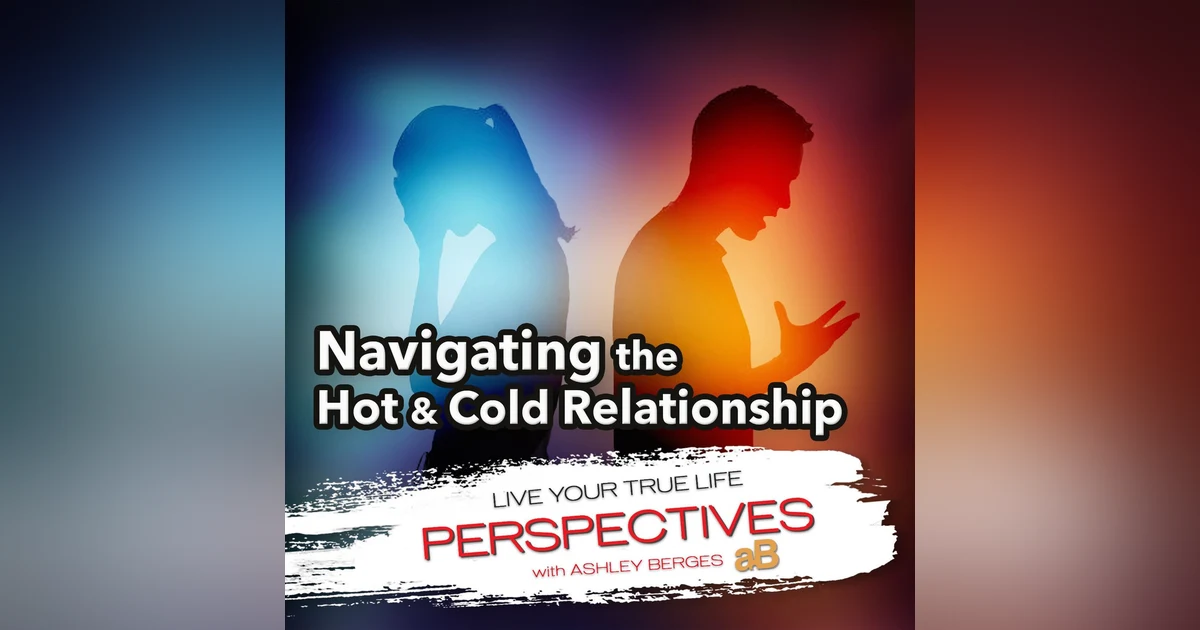

On today’s show, I dive into the complicated relationship where one minute they love you and the next they don’t. This leaves us never knowing what is going to happen next. The uncertainty that goes along with this type of relationship has an impact...


 RSS Feed
On today’s show, I dive into the complicated relationship where one minute they love you and the next they don’t. This leaves us never knowing what is going to happen next. The uncertainty that goes along with this type of relationship has an impact on our daily lives leaving us stressed, overwhelmed, and unable to focus. Often, we find ourselves losing our sense of self, fearing being left, having our partner get angry at us, or blaming us for everything wrong. There is a lack of responsibility on their part, expecting everyone else to be responsible but them. A big part of our journey is to recognize and realize what we are dealing with. We need to ask ourselves if this relationship is worth saving. Are we both doing the work necessary to have this relationship move forward? Also, do we deserve this type of person in our lives? We cannot let their behavior rub off on us, we need to set boundaries and make sure those boundaries are respected. Are we willing to walk on eggshells our whole life with them or are we ready to take a stand for our well-being?
Become a supporter of this podcast: https://www.spreaker.com/podcast/the-ashley-berges-show--1272964/support.
0:06 You're in a good place now. You are listening to Perspectives with Ashley Burgess. Welcome back live to look at your life perspectives and I'm your host Ashley Burgess. On today's show, I want to talk about the hot and cold relationship. When you're in a hot and cold relationship and up and down, a yo yo type relationship, how it impacts you in your day to day life. And it really affects you when you find yourself as being more of a constant. So if you're more of a constant in your day to day life, you're more of a constant in your relationship, your life, your career, and even in this relationship, you find yourself more as a constant and you're not wavering back and forth. This experience can be very jarring, the concept of having this hot and cold relationship, this person that's on or off, or off or on, and they can change and augment almost every single day, some every single hour, every single week. It just depends on what level that they are up and down. And when you're going through a relationship like that can be really overwhelming because you don't understand what's gonna happen next, You don't understand what they're gonna do next, and you don't understand what the next situation is, and so you're constantly wondering what is next.
1:17 And in that process of wondering what is next, you're questioning the next outcome, what will happen, what will we do? What will they do? How will they act? How will they act tomorrow? How will they act today? And so we're constantly in that place of unknowing, and it's not a really good place. It's a very unhappy, scary, fearful place that you find yourself and then you don't know what's going to happen next. And so we as humans like to have some sort of consistency, and we have to realize that consistency is key to a lot of things in our life. We can't always have a constant and we definitely don't have control of everything, and control is an illusion, but when we're dealing with someone that you never know what they're going to do next, this can be very overwhelming and stress full to anybody's lifestyle, in anybody's life, and so this definitely has an impact on everybody and the impact that it has is very real, and so we have to accept that we have to look at that reality, we have to look at the impact that it has on our day to day basis, and we want to try to figure those types of things out because that's going to give us knowledge, it's going to give us power, and we're also going to recognize how much energy we're giving to all this stuff, how much energy we're giving to this relationship, how much energy we're giving to the situation, and how much this energy is taking away from other things that we need to do. Because whatever energy we're giving them, we're not giving to other things. Whatever energy and direction that we're giving this relationship, we're not giving to anybody else. And that time and energy is valuable and is important.
2:46 So we want to take that into consideration. And so, first off, the first thing that I want to bring up is really thinking about the inability to focus. When we don't have the ability to focus on our day to day, it can be very challenging. When we don't have the ability to focus on our day to day, it can be really super challenging. And so if you have a lot of things going on at work, you have a very stressful job, a stressful career, and other things going on, that can make us feel a little out of it, especially when we have someone that is happy one moment, sad the next, happy with us one moment, angry with us, upset with us, and then we become their best friend again. All these things can be very trying and stressful, especially to your psyche emotionally, mentally, and spiritually. You know, the one thing that I find interesting is that you really can't focus to get other things done. You can't focus to get things done, you can't focus to get your responsibilities done. You find yourself kind of behind the eight ball because you're constantly bobbing and weaving to get things done that should come second nature, but because your brain is somewhere else, because you're focusing on this, you're trying to hyper focus, You're trying to really look into the situation, question the situation, try to get as much information as possibly can, a lot of times being the PI in this situation. This is where we have to really focus and really realize how much energy is dissipating in this situation. How much energy is dissipating in this situation that we could be using for other things,
4:19 other things that we could be doing. You know, life goals, things that we want to accomplish. All these things are very important to us. So we need to start opening our mind to the fact that if we're in this type of relationship is taking a lot of mind share, and we're having to focus so much of our energy on how this person's going to act, how this person's going to respond, what they're going to do next, How are you going to respond, how are you going to limit the amount of possibilities of an argument, how are you going to overcome the possibilities of an argument? And what are you going to do next? And I find that it's almost like a chess g But the problem is is that the chess game never stops. The problem is is that the chess game continues. So you're constantly playing a game of chess. You're constantly trying to see what's next.
5:11 You're constantly trying to be one step ahead. But a lot of these relationships you're not. You are literally several steps behind because you're not able to profile them at such a level that you know what they're gonna do next. You might have an idea, but one time you're right, one time you're wrong. The moment that you think that they're gonna be in a bad mood, they're super happy with you. The moment you walk in the house and you think everything's gonna be great and they're gonna be super happy with you is when they're super mad at you. And the list goes on. And I know that many of you might have had this growing up in childhood. You might have dealt with this with your mom or your dad, or a family member where you didn't know what was gonna happen. And that's challenging. And if you grew up with that as a family member, having a family member like that, especially mom or dad, you got used to it. Now that can turn you off for people like this in the future, or it can make you more prevalent to be able to be in a relationship like this because you're used to it. You're used to it. We're also worried a lot of times about what the other person's going to do. We also because a lot of times the same person has these emotions, right, they have emotions, They have issues. As far as you know they tell us about.
6:26 You know, their issues are personal problems. We know about it, and we feel sorry for them. We feel sorry for them for a way, we feel like we can help them, we can take care of them, all of this stuff we think we can do, which is possible but not always probable. And that's always an issue as well, because we think we can do all this stuff, but we can't. And that's where the rubber meets the road. That's where there's a problematic situation, is that we trick ourselves into not only putting ourselves on the back burner, you know, we put ourselves on the black burner because that person seems to have more issues than we do, that person has a lot more going on than we do.
7:09 We start feeling sorry for that person. We might feel like we're actually responsible. We might feel responsible for that person. And that's also a situation as well, because if we feel responsible for that person, we start taking on their issues. We start finding or giving them reasons for having their issues. We start, you know, giving them a pass, you know, for their anger and violence and mood swings. And when we start giving passes all the time, that's when we have a problem. We start giving passes out, that's when it seems like it starts magnifying, it starts happening more.
7:50 It becomes a common day place, it becomes a common situation. And because something that we get used to and they get used to us allowing them to it. And that's where that's where the slippery slope is. That's where we have the problem. That's where the problems really super begin. And that's what we want to zero in on because we want to make sure that we're not giving passes. But many of us start doing this, we don't even realize we're doing it. You know, there's many examples. You know, I've got clients that say, oh, you know, they they tell me that they're just upset because they don't want to stay at home. They want to work, but they haven't. But the interesting thing is a lot of folks come up with reasons for why they're upset, but they don't do anything to change it. For example, I want to work, but they refuse to apply for jobs, They refuse to even get a resume together, they refuse to even go out and look for a job. I mean, if you want to work, that's great, but you got to do something to get there. You got to do something to make that happen. You can't just say blanketly, I want to go to work, but you don't want to do anything. You put in no time, no effort, no dedication to any sort of anything, and you're claiming that as the reason why you're upset.
9:00 You know, these people say, oh, I want to go back to school, but they're not applying to any school, they're not putting their application in any school, they're not planning on doing that, and they're at home all the time, hanging out doing what they're doing. But then when it comes to why are you angry, well, I just want to be in school. I just want to go back to school. This is what's ruining my entire life. Well, okay, but again, not taking responsibility for your actions, not taking responsibility for your mood changes, and also in that process blaming something else for the process, blaming other people, but also not following through with any action. And that's one very interesting aspect of the hot and cold relationship is that I find that one thing is that there's not a lot of responsibility taken. So if you're dealing with someone that has like this yo yo, this response where it's up one minute, down one minute, hating on you, loving on you, hating on you, loving on you, hating on you, loving on you one that can be very very problematic. It can cause a lot of emotional whiplash. But also these people have these internal issues, the non taking responsibility for their actions, not following through, finding other people to blame for their situations, you know, blaming other people for their situations, blaming other people for their problems. And this is very interesting because I see it happen all the time, you know.
10:16 And so what happens is they start blaming you for their problems even though they're not doing anything to change the problems. And then you begin to super focus on them and their problems, and then you start seeing yourself is part of the problem. Like if it wasn't for me, maybe they could have done this. If it wasn't for that, maybe they could have done this. But we don't really look at what they are not doing. You know, what are they not doing? And that's easier to see than what they're doing, because what they're doing usually is being told to you what they're doing. It's not being shown, not shown, so it's not shown to you. It's not being shown. It's just being told to you. I'm doing this, I'm doing that. But what are they not doing? And looking at that and realizing that the responsibility factor to take responsibility for their life they are not doing. And a lot of times, if you look at these types of behaviors, you realize that they are actually putting their life. They're they're handing you, You're they're actually baking makes you, basically making you. They're you know you you're actually bearing them as a cross. You know they're they're you're cross to bear, and they're making it very clear to you that that's the case through their actions, through their attitudes. But the thing is is that if you have fear, or you're wanting to hold the relationship together, or you feel like this relationship we can work through it, or maybe you've had several, you know, failed relationships where you worry and you don't want
11:48 this to be another failed relationships. A lot of times we can we go through that. If you're if you feel like you're in love with this person and you have deep feelings for this person, if there's a sexual chemical attraction that you have to this person that seems overwhelming, that's very addictive. That could also be a reason why you stay in this situation as well. And so as we walk through today's talk, we're going to be figuring out the impact that it has on us, and then how we can really understand the situation, and then asking yourself the questions too, because sometimes when we're in these relationships, we can be the constant, but other times we can also be going up and down. We might not be consistent, and that's something that we have to look at too, is that if we're also aiding and a betting in this hot and cold environment, we have to be willing to see that and honestly understand that before we can move on. Because if we walk into another relationship waffling and acting like this, that relationship will not survive.
12:52 And so we want to definitely create and be in relationships that are solid, that are insistent, and also where you are dealing honestly with your feelings and taking responsibility for those and taking responsibility for those is key. And so stay tuned. I'll be talking more about the impact it has the things that we find that kind of fall by the wayside, because a lot of times we're not recognizing everything that's falling by the waystside. We're in the middle of it. It's hard to see because we're so close to everything and being so close to everything, we lose perspective of how much time it's taking, how much effort we're putting into it, and how much we're focusing on this particular person instead of our life, our career, our successes, our children, whatever. So stay tuned live your true life Perspectives with me. Your host Ashley Burgess will be back in. I'll be back this time into shakes, turn it up and jump in the deep end on perspectives. Now here's Ashley.
14:13 Welcome back live to Libatry Life Perspectives and I'm your host Ashley Burgess. On today's show, I'm talking about the up and down relationship. You're in a relationship with someone that in one moment thinks you're great and another moment thinks you're horrible. What do you do in that situation? And do you understand the impact that that amount of energy and thought and worry have on your day to day life. I think a lot of times we don't really realize the impact of that. We just don't know about it because we're not really paying attention to how it's impacting our career, our family and every other thing that we need to be focusing on. Instead we're so much into it, we're so close to it that we can't step back and see it for what it is. And I know that some of you might say, hey, I see it for what it is, Ashley. You know, honestly, I've tried to get out of it multiple times. I see how it affects me.
15:00 I'm overwhelmed. I do have actual feelings for this person, you know. You know, whether the section or the chemistry is also something that's important, and it's hard to let that go. And I know that I understand that, and you might have genuine feelings. You actually may really love this person, but the problem is is that that love is being used against you on a constant basis. And so you know, whether it's them going back and forth and finding fault and hating on you, also being worried about what they're going to do next. Many of you that I've worked with or like, I just don't even know what's going to happen. And I'm very good at understanding what's going to happen next. But I don't want to have to walk somebody through on a daily basis and their fear of what's going to happen.
15:41 I'll do it for sure, But again it's like, you know, you're having to have somebody there that's there that knows it twenty four to seven to get through and to walk through it. And that's good to have, but eventually something has to change. Eventually that person has to get a hold of their emotions, get a hold of their feelings, start, you know, being able to work on themselves and seeing the ups and down, seeing the yo yo, seeing those feelings and going through that process. You know, a lot of you say, Hey, actually, I just don't know what's next. I'm worried. I want to try to hold the relationship together, but I'm worried on what's going to happen. You know, you know, I caught them texting somebody, or I caught them sexing somebody, or they've been very angry or they've been violent, and I don't know what's going to happen. And this is very scary because you really just don't know what's happening. And in that situation, you do feel concerned. In that situation, you do have a lot of questions. In that situation, you wonder and it makes you question what's going to happen next. And then you're worried about what happens when I come home, what happens when this happens, what's going to be the impact of this? And these are points of concern I think a lot of times too, if you're the one that's constant, or you know, if they're constant zero percent of the time, you're constant fifty to eighty percent of the time, even one hundred percent of the time.
16:56 You can't really be constant hundred percent of the time, but you can be constant a lot because the more constant you are inconsistent, the more they look really inconsistent, the more they're all over the map. And that's something we need to be aware of, is that if you're in a relationship like that, the more consistent you are, the more odd this relationship is going to feel, and the more jarring this is going to be. And I do need you to recognize too, though, if you have had a family member or a friend that has these types of personality traits, you know, and then you find yourself in a relationship or romantic relationship with these personality traits, these are the things that you really need to start being aware of and get some clarity on because it becomes commonplace and we don't really realize that. We also we begin to lose ourselves in the process. So the problem is we lose ourselves in the process, we lose our identities. So when we're trying to hold this relationship together, a lot of times we don't know we have no boundaries because we're worried that they're going to leave us if we have boundaries.
17:57 We're worried that they're not going to be there for us if we have boundaries. And that's a problem, okay, and then we don't want to, you know, do anything. Is we don't want to rock the boat. We don't want them to leave out of fear, we don't want to lose them. So in the fear of losing them, you know, in the fear of losing them, we actually lose ourselves. And that's where I feel like a lot of y'all are at right now, is that, oh, hey, I'm here, and now I feel like I've lost myself. I've lost my identity. I don't know what's next. And that's what's so important, is that, Okay, how much longer are we going to go down this path? How much longer are we going to experience this. How much longer are we going to lose ourselves in this relationship? How much longer are we going to put all our time and effort into this relationship and really let go of the rest of our life. So stay tuned. I have a lot more coming up. Don't miss this, don't change the channel, check out the website when you get a chance, Ashleyburgess dot com and live your true life perspectives with me. Your host, Atsley Burgess will be back in you know it. I'll be back this time in two shakes. This is Jake Busey and you're listening to Perspectives with Ashley Burgess. Welcome back live to look at your life Perspectives, and I'm your host, Ashley Burgess on today's show. I'm talking about that relationship where one minute they love you and the next minute they hate you, and you don't know what's going to happen next, and it's been going on for a long period of time, and
19:27 it's been taking up a lot of your mind share. You're worried about it, you're stressed out about it, and you don't know what to do next. And this is very challenging. Many of you are in these types of relationships, you've been in these types of relationships before. It's a psychle pattern. Some of you have just been in this relationship for a very long time, and some of you are just recently and becoming a relationship like this. Some of you might have just now exited a relationship like this. Well, wherever you are, you understand what I'm talking about. When you don't know how that person is going to see you one moment to the next. And like I was talking about right before, with a break, what happens here is that we begin to lose ourselves in these relationships out of fear that they're going to leave us, you know, out of fear of them getting mad.
20:14 You know, that's a big one of them getting mad and then taking it out on you. A fear of them blaming you because they don't take responsibility for their actions, they don't take responsibility for their choices. They want everybody else to be responsible for what they're doing and not themselves. This all goes a long way, you know, this all goes a long way. So it's all focusing on this and recognizing this and realizing this in the process, and so we all have to go through this. We all recognize this because this is a big part and a big journey of our situation to recognize and realize what we're actually dealing with, and this is super important for us to move forward. We become very stressed out, and I really as we become very triggered in this situation. We can become very triggered because it happens and then we get very emotional. Some of you might get angry, some of you might withdraw, some of you might get very emotional, and all these things begin to happen based on these situations, and this is important for us to understand. This is important for us to grasp and to figure out because once we realize we're in this situation, you begin to realize that you're taking this on. It's costing you a lot, a lot of mental and emotional anguish. You also realize that it's taking you off target from other things because you cannot at all focus on something of this magnitude and turn around and be able to focus on other things too. It just doesn't happen. There's
21:45 only so much mind share we have, there's only so much emotional and mental stability we have, and there's only so much time we have in a day. And I know that many of you say, well, I want to try to keep this relationship together because I've failed relationships in the past and I don't want another failed relationship. And I understand that, but it all costs, and I think we have to really step back and analyze is this a relationship that is worth saving? Is this person getting the help that they need? Okay, so one of the biggest things is, you know, you know, is this relationship you know, worth saving? Because that's a big question, that's a big one. Is it worth saving? You know?
22:27 I mean, because and that's some questions you got to really ask. You got to ask yourself that because that's some deep, deep, deep thinking. I mean, you have to get past the fact that you might find this person attractive, or that you have good sex or whatever, or the love bombing was great in the beginning or whatever. You got to get past that. Or maybe y'all have a great communication but the rest of it falls apart as far as y'all can make each other laugh and stuff. But you have to really think is this relationship worth saving? You know? Is this person, this other person doing the work, doing and the personal work they need to do to basically understand themselves and to work on their issues. So are they seeing somebody, are they working with somebody? Are they dealing with the real issues? Are they really discussing the big things? Are they really trying to get down to the bottom of what they need to get to the bottom of. Are they working to be better than they were yesterday? Are they really focusing on the things that they need to do? And these are all big questions that we have to look at. These are all things that you have to analyze to decide if they are or not. Because if they're not and they're not working on themselves, how long are you going to stay in this How long are you gonna continue to go down this path and not find what you're looking for? Okay, Because if we're accepting this type of reality and we're accepting somebody that's not working on themselves, not changing, not getting better, what do we have? And that's a big question. What do
24:02 we have? That's something that we have to ask ourselves. If somebody's not willing to make the change, they're not willing to do the work, what do we have? And that's something that we have to ask ourselves. I mean, we have to ask ourselves that question too, because we have to do the personal work for ourselves. We have to do the work on ourselves. We can't expect other people to do it. We can't expect other people to jump in, We can't expect any of that. We have to do the work and they have to do the work. And that's what's important, and that's what's imperative. And so we want to make sure if we're in this relationship, we want to make sure you know, we are we feeling good about saving this relationship? Is this relationship worth saving? You know?
24:44 Besides that person that they do in the personal work? Am I doing the personal work? Are we all doing the personal work and we all moving forward in this relationship or we're all doing what we can to move forward honestly in this relationship and make it something that is worth preserving. I also think too, is like being stressed out. Many of you out there are telling me, you know, I'm stressed out beyond believe. I can't focus, I can't focus, I can't get this done, i can't get this done. I'm completely overwhelmed. I'm completely stressed out. And these are the things that we have to be aware of because this relation is goodship is going to hurt us because eventually this is going to wear and tear, wear and tear on us very much so, because it is that's just the nature of it is to wear and tear on us. The nature of it is to you know, break us down over time, emotionally, bake us down. And so we have to be aware of this. We also need to ask ourselves why do we want to keep it together no matter what? So if there are a lot of problems in this relationship, what is the reason why I want to keep it together? Why am I doing this at all costs to myself?
25:49 And why do I feel like this relationship is that is what I deserve? I mean, because that is one of the big questions too. Why do you feel like you deserve this type of personality in your life? And I really want you to ask yourself that question. You know, why do I deserve the ups and downs? You know? Why do I deserve someone that's upset with me and angry at me all the time? Why do I deserve that? And you really have to ask yourself this question because I think it's part of you know, we enter into relationships based on what we think we deserve, what do we deserve, And that in and of itself is very super important is to understand do I deserve this type of behavior? If not, why am I in it? If I don't deserve this, then I don't need this, and I'm being a constant in this relationship. Then why am I allowing myself to be in this relationship? Why am I allowing myself to go in and out of this relationship? And why am I allowing this type of behavior around me? Why am I allowing this behavior toward me?
27:02 So that's another one too, Why am I allowing this this behavior to be directed toward me? And that's something that I want you to ask the question. That's something I want you to think about. And now I want to jump into something real quick because one thing that I found is that when we get into these relationships where someone's up and down, hot and cold, you know, changing consistent, changing, not consistently, but always changing, a lot of times, that can begin to rub off, That can begin to rub off, and you don't even realize it because you start doing the same thing they're doing because you're around it so much. And that is something that we have to really be aware of and discover to be able to be honest in our life, because if that's starting to rub off, we're starting to become like them. If we start to become like them, we are not being a constant. If we're not being a constant, we're not being consistent with ourselves or not being consistent with them. The more inconsistent we're being, the more yo yoing they become, the more emotional, and you know that we become maybe the more angry they become because they're not able to process emotion, or the more angry or the more fearful we become, the more passive aggressive they get. So you have to be aware of what you're bringing into the situation and what you're creating as well. And this is a very important aspect of everything. This is something that we have to really look at.
28:26 This is something that we want to understand, and this is something that we need to really be aware of and to put a magnifying glass on to understand because it starts to rub off. I've seen people that have gotten out of these types of relationships and they have become kind of like that, or they're in the relationship and they start, you know, on again, off again, on again, off again, because they've been so trained to be like this. It would be like training anything. It would be like if if a friend of yours, you know, constantly thought that you were lying to them and you had to constantly explain yourself and you were over explaining content, and then you know, one day they were talking about someone else. You don't even catch it, but you automatically think that they're wanting you to over explain yourself again. You're going to fall into that category of being trained, trained into this because of exposure, the exposure of it, the commonplace of it, all these things. But the amount of exposure directly affects how often this rubs off and how quickly this rubs off on other people. So, you know, catching yourself being hot and cold, catching yourself making these types of choices or emotional changes, these are very important aspects that we need to look at. Okay, so I want you to really analyze that.
29:42 Are you starting to be hot and cold? Because it's normal. I mean, this isn't a judgment, this is just the normal. I mean when we were a round situation, I didn't stay healthy when we were around situations like this, it becomes our norm. When things become our we accept them as our norm, and that is something that we don't want to do. Unfortunately, that is something that gets us into trouble and we begin to accept it instead of seeing the problems and seeing it for what it is. And that is the truth there. You know, when we start having this rub off, we don't realize the impact it has on us. We don't realize how it's going to change our personality. We also don't realize how this is also going to create more of a problematic relationship, more of a struggle between you and that person. And also eventually it's going to struggle and create more problems than your other relationships in day to day life. And so looking at that, making sure that you're also being constant, you know, stepping back and making sure that you're not getting overly emotional or overly stressed out. Also analyzing about boundaries. Where are your boundaries? I need you to start looking at them. Start standing up for yourself, standing up for yourself. What
31:18 are you gonna do for yourself? Stand up what needs to be done? How can you stand up for yourself? What can you do. These are very important aspects of life because, for example, let's say that they stand you up. You know, you don't want to be at their beck and call. You don't want to be at their beck and call immediately. You also need to call them out for it. If they get angry and they start putting you down, you don't want to accept that. You need to call it out in a positive or neutral way where it's not combative, but in a way where it's like, hey, this is an acceptable behavior.
32:02 I'm not going to accept this type of behavior toward me. All these things need to be taken into consideration. And this is important because once you start accepting this reality, when you start accepting this reality, that is the problem. Because when we accept it and we keep accepting it, and we keep accepting it, and we keep accepting it, we allow these types of things in our life. We allow this to happen, you know, and that is definitely a problem. That is definitely a problem. And then that person will treat us as so, will continue to bring that type of attitude and situation to us. We'll continue to act that way to us, We'll continue to push us that direction, and all these things will start happening, and over time it becomes our commonplace, it becomes our norm. We accept that reality, and then we lose ourselves right because we have no boundaries, don't stand up or worried about standing up, or worried about how they're going to respond. You know, are they going to walk out? Are they going to start a problem? Are they going to you know, pack up all their stuff and leave? Are they going to start a screaming match? You know, what is it that they're going to do? What is the argument?
33:15 How are they going to start it? And how do they move forward with it? Because we know it's going to happen, we just don't know the level and the intensity. But again you have to ask yourself, am I willing to continue to walk on eggshells my whole life with this person? Or do I need to put my foot down? And then you have to ask yourself, you know, is whatever this is that I find attractive or lovable or whatever about them? Is this worth continuing down this pathway? Is this worth continuing down this pathway to where I'm going? Because many of you might say no, it's not worth it. Many of you might say no, it is definitely not worth it, and that is something that we want to look at because we want to be honest with ourselves. We want to be straightforward with ourselves, and if it's not something that we want to deal with for a long period of time, we need to start wondering how we're going to cut ties. But in the process of cutting ties, we need to know why we're cutting ties, And the process of cutting ties, we need to understand why we want to leave this relationship and what is not working in the relationship. Not necessarily all the problems about them, because I'm sure some of those are probably very large, But what does it bring out in you? What are the things in you that this relationship brings out that you are not happy with? What are the things in you that this relationship bring Is it anger? Is it fear? Is it depression? Is it a combination of all those? And being able to really look at that and taking some notes and working with a coach like myself, a therapist, you know, like with us, you know, with their Libery True Life Institute,
34:45 finding someone that you can work with that can help you to get through this. In the power Up, stay tuned more coming up lib your True Life Perspectives with me your host Ashley Burgers, will be back in I'll be back this time in two shakes. Get in here. You're listening to Perspectives with Ashley Burgess. Welcome back live to Liberty Life Perspectives and I'm your host Ashley Burgess. On today's show, I've been talking about that Hot and Colt relationship and being able to understand when somebody goes from one extreme to the other, loving you or hating you, loving you and hating you, finding the greatest things about you and then turning around and finding all your faults. And many of us are in these types of relationships and we're trying to save the relationship and we're trying to augment it, and we're trying to make things work.
35:38 But we have to ask ourselves, is this relationship worth holding onto? Is this relationship going to live the test of time? Is the other person working on their issues? Am I working on my issues? Are we working on what we need to work on? Are we're able to am I able to actually create boundaries and work alongside? Because if I can't create boundaries and stand behind my boundaries, then that's a problem because eventually, over time, that's not going to work. If I'm in too much fear of that person walking away, leaving, starting the screaming match increasing intensity, then I'm probably losing myself in this relationship by not creating the boundaries that I need, not creating the limitations that I need to create, and ultimately allowing this type of situation to continue to fester and to happen. And that is an absolute problem.
36:28 And when we have these types of relationships, unfortunately, this is where we find ourselves, and we find ourselves walking on eggshells to try to get this person to be okay, to get this person to be okay and to like us and to be fun and not to be upset and not to be angry. We find ourselves walking on eggshells in the process. And in the process of doing this, we lose our identity. We lose us as an individual, We lose us as a person because we're no longer us anymore. We're trying to be somebody else. We're trying to be what this person wants us to be in the moment, so that the argument doesn't happen, the challenge doesn't happen, the fight doesn't happen, and so we kind of give, give, give till it hurts, until eventually we don't know who we are.
37:08 Until eventually we don't understand who we are and what we stand for. And that is a very scary place to be. And I know that many of you say, Hey, I'm there right now, And that is exactly how I help clients. I help clients get through this process. Identify who they are, Identify their blueprint of them as an individual, figure out who they are, understand the blueprint, create the blueprint from the ground up, and us work to empower them to make sure that one we find our truth. We find our values. Through the values, we create our boundaries. Through our boundaries, we focus on safeguarding ourselves and being true to ourselves. We also realize of any sort of cycle patterns that we have in relationships.
37:52 Many of us have these cycle patterns based on family dynamic and the past and how that impacts us. Those are things that we have to be super aware of. Another thing too, being able to understand those triggers. Many of us have been triggered throughout our life because of certain situations, you know, not being true to ourselves. The triggers that happen to us. These are things that we need to be aware of and things that can really help us to change our life dynamic and our trajectory. And these are things that are very important. So if you find yourself in a relationship like this, I need you to really analyze am I being constant? Am I being consistent? Or have I started? Has this started robbing off on me? And if it has, that's when you definitely need to take a step back and get some help. Because if it's starting to rub off on you, the environment starting to change you, and you're starting to get to that point because you're not able to be consistent because you're not able to have boundaries. You're not able to be consistent because you're actually in fear of losing this person. Because if you weren't in fear of losing this person, you wouldn't continue to go down this path. You would actually stop. What's not working lives the situation, you know, go see counseling, coaching, therapy, you know, working with myself or or other folks that work with me under the Live Your True Life Institute umbrella and help you to figure out exactly what you need.
39:12 Because the last thing I want you to do is to lose your identity. The best possible situation is for you to find happiness, peace of mind, and joy in your life. And if this relationship is part of it, great, But the only way we can get there is through boundaries and leadership. It's not any other way. So I hope that this show has helped you. Please share it with anybody that's going through a hot and cold relationship like this, the ups and downs, the pain, the love and hate. If you are you know you can reach out. Just go to Ashleyburgess dot com, ashleyb ERGEs dot com, click on coaching sessions and you can set up a session right then and there thirty sixty or ninety minutes. I look forward to meeting and working with new clients. I'm finally now being able to accept some new clients at this point, and so I'd love to work with you on this to help you to power up yourself, but also to identify the situation, identify the triggers, you know, creating that personal blas finding our values and moving past this past psychle pattern, understanding it and not repeating it again. I hope the show has helped. Please share it.
40:08 Also, we have new video content out every week on YouTube. Just go to Ashley Burgess. My website again is Ashley Burgess Astley B E r G b E rges dot com Ashley b E r ges dot com. And in the meantime, it's about living your true life, finding your happiness, finding your peace, finding your joy, being true to yourself, creating those values and understanding those values that matter and living by those values that matter for you, and finding other people that appreciate and respect that, and vice versa. I hope the show is connected with you again. Please share it with others. Live your true life perspectives with me, your host Asthley Burgers, will be back in I'll be back this time in three shakes.