Maleku’s Gift. Empowering Children Through Breathwork and Personal Understanding. [Ep.753]
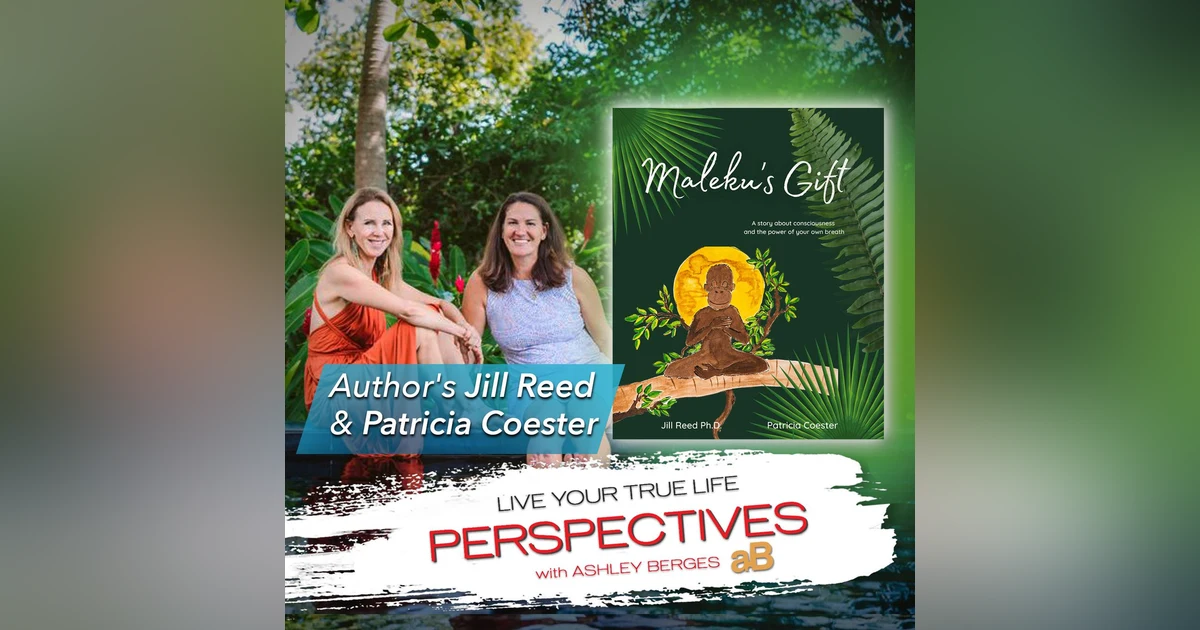

Today Ashley speaks with two women who are making a significant difference in the lives of children. Children today need to have ways to work through stress, be more at peace, and be comfortable with who they are. Maleku’s Gift, A story about...


 RSS Feed
Today Ashley speaks with two women who are making a significant difference in the lives of children. Children today need to have ways to work through stress, be more at peace, and be comfortable with who they are. Maleku’s Gift, A story about consciousness and the power of your own breath, helps parents and children learn how to come together and do the necessary work to help children. Join Ashley and Children’s Author, former child educator, and Doctor of Educational Psychology, Jill Reed, and Patricia Coester, Children’s Book Illustrator, breathwork teacher, coach, and psychotherapist, as we discuss the book and how it is going to help parents empower our children.
Become a supporter of this podcast: https://www.spreaker.com/podcast/the-ashley-berges-show--1272964/support.
0:06 You're in a good place now. You are listening to Perspectives with Ashley Burgess. Welcome back life to litera True Life Perspectives, and I'm your host, Ashley Burgess. On today's show, we have an amazing interview. We have two women who are doing some amazing work that are working to change the lives of many children. And it's interesting because I think today more so than not, and I think we've always had stressors, and we've always had anxiety, and we've always had fear, and we've all had these things our whole life. But I think nowadays even more children need to have ways of being able to work through this. They need to have that ability to understand how to create peace, to feel better, you know, just to feel more at peace and more comfortable in their own skin. And so I ran across this amazing new children's book and it's called Mala Who's Gift, A story about consciousness and the power of your own breath. And it's an amazing book and the illustrations are quite remarkable, and it's not just the illustrations, it's what the book is about. It it's really helping us to tell a story. It's to really help children, but it's also to help you know, parents, and it's also to encourage, you know, just being able to come together and have this conversation, but also to be able to do this work that's going to help kids across the world, across the country. And so joining me first off, Jill Read. Jill is a children's book author and former educator, a doctor in educational psychology, and Patricia Custer is a children's book
1:41 illustrator. She's also a breath work teacher, a coach, and a psychotherapist. And both Jill and Patricia have come together to create this amazing book that I think is going to help a lot of children. It's going to also help a lot of parents out there feel better about how their children are and what their children are going through. And it's going to also inspire I think, you know, a change in our society where we're going to give power and empower our children. Jill, Patricia, so happy to have you on Live your True Life Perspectives. Thank you, thank you. It's wonderful to be here. It's amazing to have you both on. And let's start off first off, because I know that you know you've created this, You've created this amazing book. You've come together on this project together, and so let's start off. You know, first off, Patricia, you know what is some of the reasons why you created a Malacu's gift. Let's talk about it from your perspective, and then Jill after that about your perspective. Sure, thank you. Well, it's a long story. Actually it started like this that in front of my window, like I saw monkeys because we both live in Constrica, so I saw them and they kind of inspired me because they are sitting here in nature and they having a good time here. They are so curious, and I just wanted to go back to to paintings and I needed and I wanted to have a project, and those monkey inspired me.
3:14 So I had an idea to create a children's book and the story about a little monkey here in Costa Rica, and I knew I wanted to do that, and I'm not a writer. I am storyteller, but I'm not a writer. So I found Chill, which was my really good luck, and I'm asked her if she would like to do with me a children's book, and by surprise, she said yes. I always wanted to do that, so I couldn't believe that in the beginning, because I felt, really, are you are you kidding me? And then we really did not together and we started Actually it's all it's more than a year ago. It must March twenty two with our project, and yeah, I mean it goes on and on. It's a beautiful project. And we learned so much in that project.
4:15 And for me personally, my passion about this book is the longer I am with our book, the more I learn. And really it is for me to really give the people, the educated, the children, all the persons who want to read that book more consciousness about how they can use their own breadth and how they can take responsibility for their own health. That's powerful. Jill. I want your take on it too, because this is so amazing. It's like you both come together for this project and both of you have these streaks, various different streaks. So tell me more, Jill, about your perspective. Sure. So, I have been a teacher or an educator for or a coach those things for a very long time, and I've taught from very young children all the way up to adults, and I am passionate about education and being in the classroom and reaching students, And I think for me, I love the fact that as a classroom teacher you have the opportunity every day to work with children, work with people, make a difference, be impactful. And when approached about an idea for a children's book, and I've always wanted to write a book, so that was a no brainer, but more importantly, a children's book which has the potential to not just
5:45 reach twenty two or twenty five or thirty students in a classroom, but actually beyond the classroom out into the world like globally. And so for me that was really an important part of joining this project was the fact that we could take a very powerful message and deliver it in such a way that it would reach a very large audience. And so for me, that's the piece that brought me to the table to do this project. And the message is so timely and so important coming out of this, you know, the last few years where we've experienced a lot of anxiety and a lot of uncertainty, and certainly our children, our young people, feed off of that, and so this is just a way to reach kids and give them a tool that they can use for a lifetime. I totally agree with that, and I agree with you, after everything that we've gone through these last few years, it's very timely at this point. I think it's always been important actually, but I think now we're actually seeing how very important it really is. And so, you know, I find it interesting that the parts of the book first of all, you know, as far as an educator, as far as from a parent's perspective. But let's jump in first. Um, you know, thinking about first off, you know, with U with Malichu's gift and the power of the breath understanding that, Patricia, you are a breathwork teacher.
7:18 Um, you know when when you started teaching this, do you work with a lot of children for a period of time? I mean, and then you saw how this can really impact children? Or was it more from a perspective of working with adults and seeing how they could have used breath work, you know, at a certain age and really had developed their life. Because I think sometimes when you work with adults you see what wish they could have had when they were kids. Where where did that kind of perspective come in and saying Okay, this needs to be adapted for children immediately at the age of four or the age of five or the age of six. Yes, I am coming from the perspective of working with adults. I was for many many years I had a company for coaching, and I was only working with adults. So breeding, I teach to adults. And then when I met my daughter got a child, I have a grandchild, that prospective came very close to me because I saw all these children. You know, it just was like again being with young children. And that has inspired me too, because I felt not only the breeding, but also to use, how to use technology and all this thing, but getting back to breathing, how important it is to give them a tool, as still already said, for their life. And I felt it's so easy. Everything a child learns when the child is small, it is like natural then to use It's like a language. If you learn it from the beginning, it will be so natural.
8:52 If you learn it as an adult, it's always you always have to kind of okay, I had that tool, but it's amazing when you learn it from small it's just something you have strayed with you and it's available. So that was really my point. I wanted to give that to young children. And now working with the book of course, I get in contact much more with young children, and it's so beautiful how they how they how they use the breath because a young child, like a baby, they always breeze perfectly. Almost any child breezes like that. And as soon they get older they come into school, the breeding is changing because the mindset is changing.
9:41 And that's the interesting thing. We can help those Children's very powerful, you know, Joe, coming from your perspective, you know, being in the educational system, you know, working in education for a long time. I bet this is something that I'm assuming because I haven't it often taught within schools. This is something that's been missing for a while. Yes, I think that's exactly right. It is something that has been missing, and we've been so fortunate, I think, in the last few years to see classroom teachers start to add some of these practices into mindfulness practices into their morning meetings if they're so fortunate to do morning meetings in their classroom. So we are starting to see some of that come into the classroom, and I think it is so beneficial to help children learn that it is okay to pause and be still.
10:41 We just don't see that very often, and so bringing this breathwork to them, gives them an opportunity to just relax and take a moment and pause and listen to themselves, listen to their own inner voice. And I think that that is such a powerful tool to have in the classroom. You know, often it gets very chaotic and noisy and rambunctious, and we think a lot about classroom management and those sorts of things. But when we take the time to add these small mindfulness pieces into our regular routines, it can be so impactful, and it can really make a difference in how these children perform and how they behave, and how they learn to take responsibility for themselves in the classroom. I think it's just it's magical. Really, it is so very powerful, it is, and I think there's something that definitely is necessary for all humans for that matter. You know, Patricia, let me ask you, because I think some people out there, you know, they're listening to the show here on Literature life perspectives, maybe they don't understand exactly what mindful breathing is. Can you kind of give us an explanation? Of course, for me, it always starts like there are so many breathwork teachers out there and For me, it always starts with mindfulness and awareness because there are a few exercises and if you don't know why you are doing them, it
12:11 doesn't really make sense. So mindful breeding for me means to pay attention to my breath. We are breathing about twenty five thousand times a day unconsciously, which makes totally sense that we don't have to think about our breathing. But to pay attention to our breath brings us very close to ourselves and then in that pose, in that stillness, we can make We can make a decision, We can make a better decision. So mindful breeding first step is really to become aware of your breath. How do I breathe? How do I breathe? For example? Do I breathe into my chest, into my belly?
12:54 Do I breathe fast? Slow? It's only observing my breath, And then the second part would be okay, how do I breathe for example when I am in front of the screen or when I am in a conflict situation. So my breathing is changing, just to be aware of that, and step by step, when you know yourself better, you become more aware of everything around you, about anything about communication, about just everything. So it is a wonderful tool to really start and it never ends. You know, It's not something you start and then in a year you are done with that.
13:37 You start, and that door will never close again because it's just like a path. True. That's so true. And when we return to be talking more about this, more about the power of breath. So stay tuned, don't change the channel. Literal True Life Perspectives, your host me asking Verdus will be back in I'll be back this time and two shakes, jurn it up and jump in the deep end on Perspectives. Now here's Ashley. Welcome back live to Literature Life Perspectives and I'm your host, Ashley Burgess.
14:18 On today's show, two amazing children's authors joined me illustrators breath Work Masters. You know, it's really interesting Jill Patricia, when we were talking earlier in the show, talking about what breath work is and understanding that also talking about you know, your time in the classroom and understand what's necessary. I think this is obviously a passion for both of you, you know, Jill from your perspective, you know, writing this book, putting together this book, working with Patricia you know what ignites that, what passion is ignited through this process? Oh, for me, that's that's an awesome question. I think for me, it just really is has been such a journey to see how well received this message is and just how open people are to trying this not only in the classroom, but in the home and outside of the home and just working to really take charge of um being active and involved in their kids' lives and putting down their phone and really spending more impactful time with their kids.
15:28 So for me, it's been awesome to see that blossom. That's really cool, Patricia, your passion behind this, what is ignited? You know when y'all were putting together this book and co creating this, you know what was really ignited through that work that y'all did together. Well, it's a lot about especially really really to give the people and and everybody who wants to see that or read the book to gif like a tool, you know, because it's it is a children's book, but first of all, the adults can use it too, And we always speak about that the parents have to be a role model. And so when you start with breathing exercise with very very young children, you kind of have to do with them together, so you spend time with them while you're doing something very funny and beautiful. So it helps you as a parent, and it helps the child. It brings you also closer together, and it brings you also into nature because breathing is nothing else than using your pure nature. So for me, there are like a lot of aspects. It's beautiful for me to do it together with Ill.
16:44 Also, it's very important that we are a very good king and bring that together into the world. Travel a lot for the book and have the opportunity to share it with so many people. That's beautiful. It's it's really a dream coming true for me. I think that's powerful as being able to share that, being able to connect with that, you know, Jill, coming from you know, I know as an educator, you're an educator. We can talk more about that here in this next segment. But coming as from a mother's perspective, you know, as a mother, what do you want to see mother's gain from, you know, from having this book and sharing this book with their children? Oh gosh, um So, I you know, I'm passionate about it because I feel so strongly that children need the opportunity to be out in nature and just play and grow and and be challenged and be bored sometimes and be curious. And that's part of the whole reason I moved my kids to Costa Rica, and so I'm very passionate about that.
17:41 And I love that this tool breath work is so simple, so easy, so quick, and you can learn it so fast, and it gives you the opportunity to spend more time with your child and to engage in that way. It's just it's it's wonderful, Ashley. That's powerful. When we were term, we have a lot to talk about. So I don't want anybody changing the channel. Don't change that. You want to stick with us here because I'll live your true life perspective. We're interviewing some of the most pertinent relevant authors and artists and people that are actually doing the things that we really need to connect with. And I think that you know, being able to listen to Patricia and Jill's passion and understanding where they're coming from and how they're trying to work to not only help children, but help our society today.
18:22 And I think that many of us and many of you that are listening to the show. Have had a lot of stress, have dealt with anxiety, have dealt with your children, having anxiety and fear because of the things that have changed in this world, and being able to connect with that and also being able to do something together. And that's what this is all about. Being able to share experiences and share this type of situation together and that's what's powerful. So stay tuned. We have a lot more coming up. Don't change the channel. Live your true life Perspectives with me. Your host, Ashley Burgess, will be back in I'll be back this time. I'll be back this time in two shakes. This is Jake Busey and you're listening to Perspectives with Ashley Burges. Welcome back live to look at true life perspectives and I'm your host, Ashley Burgess. On today's show, I have the ability to talk with Jill Read and Patricia Customer, which are amazing children's book authors, but also breathwork. We have education in psychology. We also you know, psychotherapy coaching, so we have not only people that are very educated, but they're using their abilities to really put it into something that's really not only palatable, but also something that's functional and that helps children and also helps adults and helps parents and help school districts and helps everybody to try to get, you know, just a better finger on the pulse, just to be able to calm. And I think one of the things that we need is,
19:55 you know, is that breathwork and that ability to be mindful and that consciousness and that conscious effort in the this goes for kids very much as well as parents. And so when we look at the book, first off, I love this book, and it's amazing, and there's in the book there's actually a party that's really cool, and you can see the matter horn obviously, and you can see you Malku's climbed the steep matter horn and after she's hungry, she hopes her new friends would show her how to eat this new food, but she saw they were busy, and then all of a sudden, a little scared, she looks around and she sees a bee. And so, okay, from both y'all's perspective, Jill, if you want to start, tell me a little bit about this, and then I want to jump in with Patricia, tell me a little bit more about this part and kind of the background behind this, because I think this is this is pretty profound and this is something that even adults could be scared about, but also kids as well. Oh my gosh, absolutely. I mean if I can't even tell you the number of times my kids have refused to eat something, right. So this was this was an idea that we had. We wanted Malaiku to be traveling around the world and one of the places we have her stop as Switzerland, and of course there is a food there that we all know, fondue, but Malayku of course has no clue. So she is very nervous about trying this new food. And I think that resonates with everyone.
21:14 I don't care how old you are, how young you are, everyone's been nervous about trying something new, food or otherwise. So this was a great opportunity for us to incorporate a breathwork exercise that is very simple and can be done anywhere, anytime. And so that's sort of where we are here in this picture. And it was also important to us to point out that when Malayku looks to her friends for assistance, they're too busy and part of that and every time I read this story to children, I say, what are their friends doing? And the kids are very quick to say they're on their phone, and so obviously we have hit the nail on the head here.
22:00 And it's just it's really a great little exercise. And I'm going to pass it over to Patricia because she does this exercise so well with these kids when we visit in classrooms. Sure, sure, thank you. Yeah. I mean, there are a lot of breeding exercises, but this one is funny because it's the humming sound. It's all exercise. It comes from yoga. I have not invented. That's that breeding exercise, but of course that the young children love if there is another animal flying around. And actually what you are doing is you are inhaling, very important, always through the nose, not through the mouse. And while you are exhaling, you put your hands over your ears and then you make the humming sounds, so you imitate the bee and that creates like a sound inside of you because you can hear yourself doing the humming sound, and it really really calms your nervous system.
23:08 You can feel it straight away. It calms your very nervous system. And after that exercise, repeating it two or three times, you feel very calm but also focused. Not just sleepy, very focused and it's easy. I agree, you cannot do it everywhere, but it's because it's a little bit loud, you know. But you can do it softly, you know, but just very very soft voice and you hear yourself breathing, and it's kind of difficult to do it right now here. It would kind of sound a little bit weird. But just imagine a bee and imitate that bee. And you can also play with your voice. You can make a higher or a lower voice, and it's really funny and it's so useful. That's cool, mean, like being able to create that and then having not only having like that sound, but also kind of that that pulsation or that you know, that kind of that feeling as well, that vibe as well when you're when you're doing that exercise. Yeah, that's really cool. That's really need.
24:15 That's that's I guess you can't do it everywhere, that's true. That's pretty funny. Yeah, you're like you're you're you're on the airplane. You're like, okay, here we go. We're gonna like stress on being on a plane or something like that. So there's like lots of different types of exercises you could do almost like if you were doing like active or passive um. You know, meditation, Patricia, is that kind of like you have all kinds of different avenues to be able to take the breath work. You can make it very interesting, very fun, that type of thing um that can actually get you know, a child more interested in actually pursuing this. Yes, and also I mean usually the child if we talk about children, I would say you actually the child wants to have an exercise or needs to have an exercise, especially in classroom when they calm down and they can focus better.
25:10 But we as an adult, we sometimes need to have more energy, you know when we get up in the morning and we don't need to be calmed down. We need to have energy. So we are breathing totally different. That's the nine thing with breath work. You know, you choose what you need. So if you need to have energy, you are not going to do long and soft exhale. You are going to put energy in your breath. You might breathe a little bit faster and fuller to bring more more really like energy into your body. And that's the amazing thing. Or we have also an exercise in the book, which we call when when sometimes our children are angry. You know, it's normal we are angry sometimes too.
25:52 So we have another breathing exercise where you really exhale very strongly all these emotions, you know, and it's really helpful. It is helpful, and we can use it as an adult and as a child. There are boths for bows. That's very cool, and you're right, you need different type of breathing for different situations. If you want to have more energy or you want to calm down. Definitely totally opposite directions. Um so, let's let's jump a minute to the concept of balancing the screen time. I see that a lot of us at any age needs to balance screen time. You know.
26:33 I'll go into a restaurant and it's funny how you see everybody's on their phone. And I actually have a thing in my family where we go to a restaurant. It's like, okay, we all everybody you know puts our phone to the right or the left together turned over and it's funny because the first person that grabs our phone, it causes a domino effect. But anyway, so you know, start off, you know, Jill, if you want to start off you know, you know, I like this because you know, you see that there's a need for this, and this is a big thing because screen time is huge with adults and children. I mean, I see it constantly, and so tell me more about the need to balance that or you know, and how to really do that. Yeah, it really, you know, it's become such a powerful thing for us, especially in the last few years when we've transitioned to doing everything online zoom meetings and classroom online, and you know, our kids have just gotten more and more used to having the screen in their life. And I think that the purpose of our book is not to say that the screen is necessarily a bad thing.
27:37 In fact, what we're saying is that technology is a great tool. It's a great tool for exploring our world and informing our minds. But you know, it's also extremely beneficial when we step away from it and we're able to listen not only to ourselves, but also to others around us, be observant and reconnect. And so you know, we have we've come up with a few a few ideas to help your child manage that screen time and you manage that screen time. And so one of those things is to offer alternatives, you know, find out, talk to your child, ask your child questions, what's your child passionate about, and offer alternatives that speak to that passion for your child. And number two would be to set up a screen free zone in your home. And one easy way to do that is to say, okay, the dining room or the kitchen table is a screen free zone.
28:37 And then the third would be to set limits and set expectations. So not just say to your child, you know, don't sneak in the back way and set on your Apple settings. Okay, my kid's phone turns off after an hour, but actually talk to your child about that, set the expectation, explain why we're doing this. And then step four, of course, would be the model you are modeling all day long, every day for your child, whenever you're with your child. So it's it's up to us as parents and caregivers and educators to put our screens down in a very conscious way and use that time to engage with our kids, read together, go outside, play games. My kids just got this new game, Exploding Kittens, and they are all about it right now, so we play that every evening. Make time for that. It's really quite simple. I agree with you, and it's interesting how we You know you are a role model for your child. Actually, you know, we're all role models for everybody.
29:41 I was in a meeting the other day and literally people were like they were picking up their phone, putting their phone down, picking up their phone, putting their phone down. I was like, oh my gosh. I mean I saw somebody pick up their phone like sixty times, and it almost made me start doing it too. I was like, well, I want to as well. Just hold on the mine because I'm gonna need it. You know, Patricia, what are your thoughts on screen time? Because I think I think this is very relevant nowadays for everybody listening. Yeah, I mean you said that very well, Chill, and I would say, you know, we don't know. We have so many options today. We I mean, our world has become so complex and actually we don't know how it's going to be in five years. Everybody speaks now about artificial intelligence, and so we need to take care of ourselves because if we don't, I don't know where we are going to end. Because we can't stop that. And as Chill said, it's not about that it's bad, but we have to be conscious about that. And we must kind of teach ourself and our children, because if I say it from a perspective of breeding, when we spend a lot of time starring at screens, we really tend to breathe shallow and unconsciously.
30:53 So this can really lead to stress, anxiety, and a lot of tension in our body, and even eye problems and neck pain. So again, when you focus on your breath, you can bring yourself into the present moment and cultivate a sense of calm. So again here, if you really voluntarily change the rights or the depth and pattern of your breathing, you can change the messages being sent from your body's respiratory system to your brain. You can actually hack into your nervous system. And it's all here. We just have to use it. And I think that's what it is. You know, we are getting As you said, Ashley, you know it's the same for everybody you are somewhere and the people including me. Sometimes we are addicted to that phone. We cannot be anymore without it. So we have to teach our children the world is not inside the phone. The world is around us, and the phone is a tool and not more. And I think that's the message also from our book. It's a tool. So that's kind of my sharing about that. You're right, it's a tool, and a lot of times people have it where it's taking over their life. And I think that's I mean, because there really is, you know, cell phone addiction. I mean, this is really really prevalent, and nowadays, you know, I see people like crossing the street and not even looking in their face, their eyes are stuck in the screen. You know, It's it's
32:25 unbelievable. And I think our ability to be able to remember or to retain information is kind of going by the wayside too, because of all the screen time and all the stuff that's happening. So first of all, I want to ask, because we need to make sure we can get this out there. Where do we find you? And how do we find the book and and all that information. Sure, so we have a website, Malaiku's Gift dot com, where we have plenty of free breathing exercises that you can find there, and also you can reach out to us if you're interested and learning more. Our book is available in paperback on Amazon dot com and hardback on Barnes and Noble dot com and we are very exciting. We're also on Instagram sorry at Malaku's Gift on Instagram and we're also very excited. We are planning right now our Costa Rica edition of our books, so we have a lot of cool things coming up that we will be putting on our website. So do check there for updates about news and events around malak Wu's gift. That is awesome. That is awesome, So cool that y'all are in Costa Rica's so neat. And for everybody just listening to the show, I mean, this is what you know, This is what it's about. It doesn't it doesn't just apply to children, It applies to adults as well. It applies to the whole family dynamic. And I think that when we start seeing that, and I think that many of you listening you understand, you know, we have that screen time addiction and it's and sometimes you know, you know, we learn something from our phone, sometimes we need to take the call,
33:57 and sometimes we're just on it because it's it's habit for me and it's addictive, and so this can really help. And then being that example to your children and working with the breathwork and being able to do that too. It's going to help you too. It's everybody's going to have benefits. So when we return, Jill and Patricia are actually going to give us their nuggets of wisdom, a concept that they haven't shared with us yet, but something that they want to share with our community. They want to share with my listeners, with all of us so that we can really connect and get to understand them as well as learning something that's interesting because we all have those nuggets of wisdom that we can share with others that make their life even better. So stay tuned, don't change the channel. We have that coming up. We want to talk about that. And you know, this is something that we can all share together and understand. This is a human right of passage.
34:39 This is who we are. We're breathing human beings that have this capability. We might as well use it to calm ourselves down, to lessen our anxiety, and to be even happier. So stay tuned. Literatrue Life Perspectives with me, your host, Ashley Burgess will be back in I'll be back this time. I'll be back this time Into Shapes. Get in here. You're listening to Perspectives with Ashley Burgess. Welcome back live to Ligatrue Life Perspectives and I'm your host, Ashley Burgess. I've been talking to Patricia and Jill in our show and they're amazing how they came together and created this amazing book.
35:24 And it's not just a book. I think it's a movement. And you know, at this point it's time to do the deeper dive because you know, when somebody creates this type of concept, creates this type of amazing you know, something that you can touch, something that you can use, something that you can integrate in your life. We want to know a little bit more about them. So Patricia, give me one nugget of wisdom that you would like to share with the Ligatue Life community. Yeah, sure, thank you. Well. For me especially, it is really to take responsibility for myself for my health because I see sometimes that many many people think, okay, anybody who else can solve this problem for my for you or I just have a problem, I go to the doctor, or I have a conflict, so it's it's it's the other person who makes a conflict. So for me, it is really really to take responsibility and that is actually what Maleku is doing. She kind of takes responsibility and she's really caring about herself.
36:22 She's using her breath, and that's really my point. You know. It sometimes feel like if in any situation, you have something, let's say you have a conflict with your partner, and you think, oh, he doesn't understand me. It's always him, but it's not true. It's you. You have to adapt to the other person that the other person can understand you, and that is kind of taking responsibility for anything in your life. And that's what I that's really really what I try to live. I'm not always able, but it's really my way of and that's what I really would like to share with all of you. I love that taking responsibility, taking responsibility for your life, and that's a big thing. That's a huge thing actually in Patricia, I love that you share that because that is really something that we all need to be doing. And I think many of us here, especially everybody that's listening to this show, is really trying to do that in their own life and it really builds self awareness and character. I really appreciate that, Jill. I want to hear You're not gonna wisdom absolutely so for me, it's really about listening to your heart and making space for self discovery and peace, and also allowing yourself to walk through your fear. I had never written a children's book. I have never written a book. I've written a dissertation, but not a book. And it's always been a dream of mine to do that, but for whatever reason, I've been afraid to
37:52 do that. And meeting Patricia and making our partnership made that opportunity possible. And it really has opened up so many doors and so many conversations and just a world of really wonderful opportunities. And I think that's what Malaiku is doing. You know, she's curious, she's also listening to her heart. She's also embracing the world around her and walking through her fears. And I think that's a lesson all of us can take away from the book and all of us can employ in our own lives. Yeah, that's definitely powerful and and and it's interesting when you know these nuggets of wisdom or so I ask these because it's interesting to get kind of just a deeper dive and you know, lasting thoughts. I mean, you know, you'll you'll put this book together.
38:44 Do you all have other um, do you have other books in mind that you're gonna be working on, Jill Patricia, we do. We've been talking about how we can incorporate more ideas around UH Costa Rica and sustainability and how we listen to ourselves and how we're able to again take responsibility. So those are some of the topics we've been discussing. I like that, I really like that. That's that's a really good direction. I think that's going to be well received. I have appreciated having y'all on the show, I mean amazing, and I'm just I love the book. I love what you're doing to open the doors, you know, mentally, emotionally, spiritually for children and their parents, and I just think that this is going to be super well received. Thank you very much for having us. Thank Ashley.
39:34 I'm so glad to have y'all on. I look forward to having you on in the future and your future projects and definitely keep me on breast of what's going on there. Amazing, you know, Jill Patricia are amazing folks and just amazing women doing some really good work. And so for everybody, let's listened to this show today. You know, it's about it's about connecting with your family, connecting with your children. You know, remember we have to be responsible for ourselves and also remember that we are role models to our children, to the people around us, and people do look up to us. And sometimes even when we don't know that people are looking, or even if we don't think our children are looking, they are, and so being able to be aware of that and knowing that we can use that in a powerful, safe, healthy way to inspire and so this is so neat. So definitely check out the book, go on Amazon and you're gonna be able to find the links, and if you're listening to later on in the podcast after the radio show, the links will be in the podcast description so that you can go and find that directly and immediately. So for everybody listening, thank you for tuning in, thank you for keeping the channel on there and listening to the full interviews. We have another show for you up next week.
40:34 But in the meantime, remember it's about you. It's up to you and guess what. We have the ability to do what we want to do, and we have the ability to empower ourselves and empower those around us. Live your true life perspectives with your host me Astley Burgess will be back in I'll be back this time in three shakes,