Helping Children to Better Process Anger and to Realize their True Personal Worth. [Ep. 790]

Processing and understanding our emotions and seeing our inherent value are two things we strive to achieve in our lifetime. Some of us are still struggling to master one or both of these goals. As adults many of us aren’t taught this by our family or...


 RSS Feed
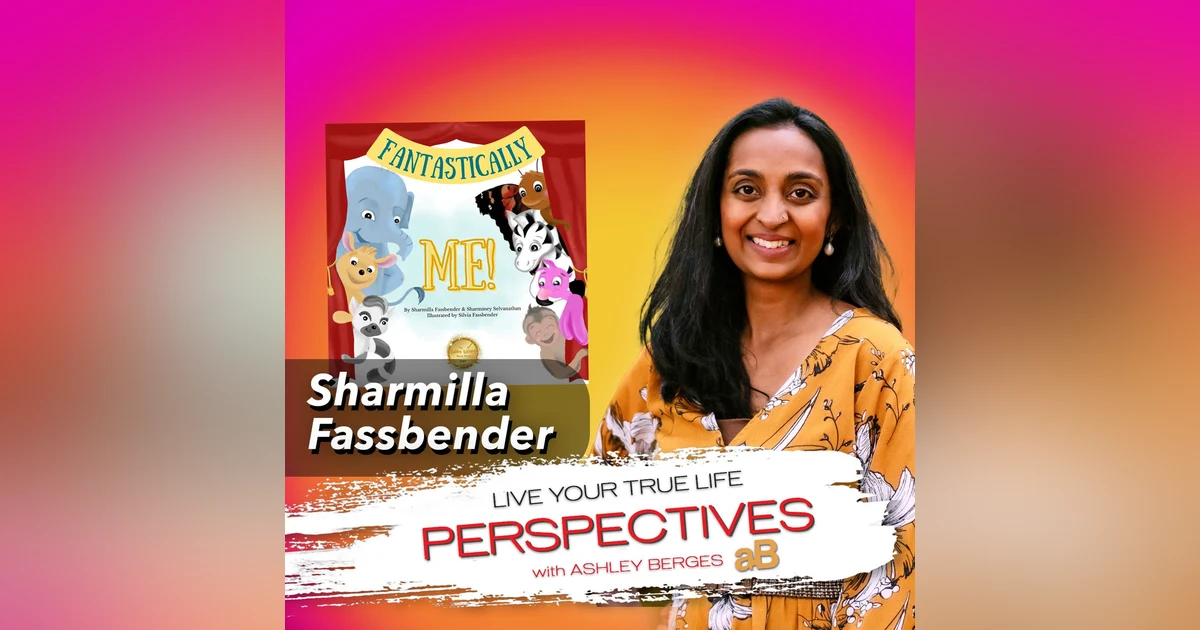
Processing and understanding our emotions and seeing our inherent value are two things we strive to achieve in our lifetime. Some of us are still struggling to master one or both of these goals. As adults many of us aren’t taught this by our family or parental unit because they were not taught it by their parents. The younger we are able to grasp these concepts and implement them the happier we will be with ourselves and in life. Joining me on today’s show is Sharmilla Fassbender, counselor, mother of four, and children’s author. Sharmilla has written three inspiring children's books, each carrying a meaningful lesson to help kids navigate life’s challenges. Through her storytelling, she empowers children to embrace growth and resilience. Her latest book, Fantastically Me!, encourages kids to embrace their uniqueness, while her upcoming release, Angry? That’s Ok!, teaches kids that anger is an emotion, but also explores healthy ways to express and manage it. Sharmilla’s books offer valuable insights not just for children but for adults as well. Tune in as we discuss her work and the powerful lessons it imparts.
You can find Sharmila's books and information below
Website: www.bfgminds.com
Amazon:https://a.co/d/1QMKGXi
Instagram: https://www.instagram.com/bfgminds?igsh=MXI4bzNqbmM3bmdw
Facebook: https://www.facebook.com/share/18yiupna1c/
Empowering Kids Through Stories: Sharmilla Fassbender’s Inspiring Books
Life Lessons for Kids: Sharmilla Fassbender on Emotions, Growth, and Strength
Become a supporter of this podcast: https://www.spreaker.com/podcast/the-ashley-berges-show--1272964/support.
0:06 You're in a good place now. You are listening to Perspectives with Ashley Burgess. Welcome back Live to liver her true life perspectives, and I'm your host, Ashley Burgess. On today's show, we're going to be talking to a children's author. She's written three books, and all of these books have distinct direction to really help our children process the world we live in, understand themselves better, and really connect with themselves at a certain emotional level. Charmeila Fastbender joins me. She's a counselor and a three time children's author, and Scharmela, I'm so glad to have you on the show today on Live your True Life Perspectives. Thank you so much for having me, Ashley. It's very exciting to be here.
0:50 It's amazing to have you on because I love your books, by the way, and I want to jump in on fantastically. Me tell me a little bit about the backstory for writing this book and creating it. Thank you fantastically. Me was with my sister and I write these books together, and the characters are all based on, you know, little things about our own children and our own lives and the reason we wanted to write something like This was because we feel like we live in a world now that children are constantly comparing themselves to others, and it's made really easy with the use of the Internet and how easily all that information is available, and we wanted to remind children that they're great just the way they are, and they don't need to be like somebody else, but still champion other people and their abilities, but be really happy with what they can do themselves.
1:39 I love that, and I love the book. I read fantastically me and I love it because you're right. It's we start looking at other people and the talents, you know, the other children have. I think even adults do this a lot too, and we try to mimic what other people are doing, and we don't really see the value in what we have within us exactly. And keeping in mind that the reader is actually the grown up and the adult, we want to also reach these kind of messages to the grown up as well as the children, and that's an important part of our aspect in writing. I love that and when I when I opened the book, first off, you know, great illustrations, very colorful, and I love how you have like Lexi, the Lemur Marcus, the Monkey, Ethan the Elephant, Zazzi Zebra, James Joey, I love that, and Frederic Flamingo.
2:25 Those are super cute. I mean, where did that come from? So all the names of the characters are actually names of our children, and they sort of embody some of their personality. Lexi Lemur, for example, is my daughter whose name is Alexandria, but my sister calls a Lexi, and so she's Lexie Lemur. And Friedrich Flamingo is my son, and honestly, my sister in law illustrated the book for us and we think she did a wonderful job. And with Friedrich Flamingo, he sort of actually looks like my son, which is really cute, really great, so sweet. I love it, And they all have there are distinct personalities. And the really interesting part is that, you know, all the characters in the book have a specific talent that's specific to them.
3:08 Right, and we wanted to make it relatable to other children who would maybe like dancing and maybe like climbing around and like James Joey, for example, his talent is about building and demolishing, which is absolutely what one of my sons loves to do. So and a lot of kids like to do that too. They build the tower with the blocks and the demolishing is part of that, and it brings so much joy and so much fun, and we just wanted to embody that in all of our writing. I love that. And then you have Cain who shows up in the book and I think this is interesting, So let's talk about this particular character. Sure, so, so this person, like this character is embodying all this stuff, you know, like it has it seems to have like all the glitz and guam, right.
3:54 And so he comes in with this you know, beautiful butterfly and twirling and swirling and doing all this magic tricks on stage and it looks amazing, right, And that's really what life is about. Sometimes it's all about, you know, finesse and phizas. And then people get kind of trapped in that and then want to be like that forgetting that they have that same talent and finesse in themselves. That's very true. And it's like we get caught up and watching someone else, and especially in this particular case, like all the other characters are like, wow, you know, this one has like all this going on, has all this like routine and all this ability and then and then the interesting part is now the characters start wanting to change up what they're good at, and in the process they kind of, like I guess, not only kind of lose momentum, but they start realizing, oh my gosh, what am I doing?
4:49 Kind of thing. Yes, And I think it's an important part of growing is that sometimes we have to experience and do these things because failure is actually a really good thing. It helps you grow. That growth mindset aspect is such an important thing to have in children, I think in adults too, because we forget that failure leads to learning, and learning is really the best way to grow, and it's the quickest way to grow when sometimes you fail. So I, you know, my husband usually tells us, hey, fail quicker and you learn faster. And I kind of like that a little bit. In this case, you know, the characters wanted to be more like King kamiha Maha, this beautiful butterfly, and then when they went from stage and tried that, they realized, Hey, you know, I'm actually great at what I'm doing. I don't need to be like somebody else.
5:36 I love that. And it's like Lexi realizes you know, her talents are good, you know, and she can be herself and not someone else. And I like how you know, each character kind of goes down their own path of you know, trying this out and then you know, somewhat kind of failing or falling down, and then and then reevaluating at some point. Right, And that's the aspect of the growth mindset that we're trying to introduce more and more children too, that you can try something and if it doesn't work out, you reevaluate and figure out how it works out best for you. Because everybody's bodies are different, everybody's talents are different, and we are going to have to find ways to work with that because we are not going to be like everybody else exactly.
6:18 And I love the fact too that this is obviously a book, you know, that a parent would read to their child. And I think it also, you know, so much connects with the parent because I think nowadays it's like you see people that seem to have like all this talent, like uh, you know that they're this and they're that, and they have all these degrees and they can speak like this, and it's like, I think we as a culture are kind of suffering through this as well. Absolutely, you know, just from an Asian perspective with that, we grew up in a culture where if you're not grinding and hustling all the time, you are not doing well. So there's this serious, I think reevaluation that needs to be done with how a child or even an adult is perceived that we don't need to be great at everything and you know, be part and have our head into everything, because I think it's putting unnecessary stress on our bodies and that we can champion what we love and enjoy and I think that would have a better outcome on our mental health in general.
7:21 I totally agree. I totally agree, and I do think that we struggle this in society today. And I think it's been a struggle for a long time. Because you're right, if you're not out there doing this or doing that, or creating this or creating this type of capital or doing whatever, you know, what are you doing? Or you know, how are you measuring success? And I think that we've really I think we're really far from really analyzing that honestly in our society. Absolutely, and that's so key. How are you measuring success? Because I think that looks different for so many people, and I think the problem is that we are trying to measure success based on what we're seeing in other people instead of going inward and figuring out how looks for ourselves.
8:02 Yes, and it's interesting because it is such an individual thing, and I think that we get taken I guess, off course, I would say when it comes to social media as well. As you look at somebody on a social media you know, like a Facebook or an Instagram or what have you, and you see somebody doing X y z, and it's. Like, why am I not doing x y z? Why am I not competing or doing that right? And that's the crucial part about the social media a component now in raising children. They're getting so much access to this that they feel like they need to be a certain way or otherwise they're not enough. So it's actually parenting in this day and age, I find that we are as parents, we are having to navigate a lot more than what we maybe our parents needed to when we were children. I think this day and age in technology is making things a little more difficult in terms of finding that proper balance because we do live in a society now where we have constantly something going on, both parents working or you know, extracurricular activities. There's no real downtime anymore. And without that downtime, there's no real time for families to connect anymore. And this is part of that reading together aspect that I think is so crucial that families need to find time to read together, because I think it is a great way for families to bond together, even the busy families, because ten minutes out of your day could make a world of difference.
9:35 That is so true, and it really connects. And I think sometimes too, it's like also looking at both sides of that equation. I think that sometimes you know, parents go, oh, this is my obligation. But I think also part of it is not really obligation. It's about, you know, connecting and having that connection and how powerful that is for everybody. Absolutely, Like you know, I have four children and there are nine and ten year old and two and three year olds, so I have two different sets of kids with two different needs. I read what I read to my nine and ten year old, my two and three year old are not going to enjoy. You know, we find that balance and that time where sometimes I have to read for my older two later at night or earlier in the day when my younger two are busy doing other stuff. So it's a working progress and what I do may not work for somebody else. But I think finding that little bit of time to connect and read together would really be quite essential today.
10:34 I agree, And it's like finding that time. And I think also changing our direction on what is success like changing our definition on that, because I do feel like our definitions are old and outdated and they keep us from really actually doing the things that actually make you feel good. Yes, that's so true, because you know, what could be successful for our family may not actually be successful for yours. We are not living your life and what it entails. So figuring that out as an individual and then figuring it out as a family, I think is so crucial. And you're absolutely right about that defining thing. And once you are all on the same page as a family, I think that would make a world of a difference with connecting with each other.
11:20 Very powerful, very powerful, and I love the characters are so great, and I mean and then when they all come together and they realize that they can do this and belief in oneself is what matters. The most, and I think that is so important and no matter what age is being able to believe in yourself and see the value that you. Yes absolutely like. It's one of those stories that I think you can revisit, especially if you notice that a child may need it. It's easy to revisit even if it's you know, going through it real quick or talking about what this character is going through and how they overcame that by realizing that they are an just exactly as they are.
12:02 And that's what I think is so amazing. And so when we're turning to be talking more about Fantastically Me, Charmeila is gonna also be discussing her third book, which is so awesome. So stay tuned, don't change the channel. Live your True Life Perspectives with your host me, Ashley Burgess, will be back in I'll be back this time. You know it. I'll be back this time into. Shakes, Turn it up and jump in the deep end on Perspectives. Now here's Ashley.
12:43 Welcome back live to Live your True Life Perspectives and I'm your host, Ashley Burgess. Joining me on today's show is Scharmeila Faspender. She's a three time author and a counselor. And it's very awesome because we've been talking about her second book fantastically, me and Charmela. It was interesting when I look back at that concept, which I love, is about, you know, believing in oneself is what matters the most, and it really does connect you know, not only with children, but with adults, you know, worldwide, right. I think it's a message that we need to tell ourselves pretty often, and we don't. I think we constantly. I mean, if you think about the things that you talk to yourself, how often is that a positive thing or are you talking mostly negative things to yourself? This is one of those affirmations I find that is great to both the child and the adult to have in their systems.
13:35 That's so true and being able to evaluate that, and that goes across the board for everybody listening, you know. I think it's such a huge thing to really analyze that, because if we're telling ourselves a bunch of negative stuff, or we're judging ourselves adversely on all this stuff, it's going to be hard for us to really not only find our talent and a skill set, but it's going to be hard for us to actually appreciate ourselves right. That self appreciation piece is so vital in today's day and age, just because it's so easy to compare ourselves to others, and you know, with imposter syndrome and all this other stuff going on, when are we going to take a step back and re evaluate how we view ourselves before we step out into the world. Because if you want to be respected as a person, it comes from within. And this kind of messaging starts when you're little, if you And that's why I wrote this book with my sister. It's because we want our children to feel like they are fantastic exactly as they are, and we want children to believe that as well, and as they grew up, to continue to believe that will only make I feel the world a better place.
14:42 That is so true. That is so true, and to understand that. And it's and it's something that I think, it's you know, we get it, and we understand it, we process it. It, we get it, we process it, we hear it from another angle. It's something that we basically work on, I think, our whole life. Yes, and we are going to go through times where we constantly questioning if we made the right choices or am I doing this right? And I think that's natural part of being a human. But what the difference is, what do we tell ourselves more often? Are we telling the negative self negative stuff more often? Or are we bringing ourselves back to a place where we can appreciate what we have learned, even if it's a mistake that we've made, appreciate that it was a lesson and we can grow and move on. I think that's key into having that strong piece of mental health in today's day and age.
15:31 And I also think too that the concept of failure, and I think that a lot of people use that word way too broadly and way too much, because I don't really feel like if we do something and you try it, I don't really think it's failure. Right, and failure to me means that you have decided to give up. The effort portion of it is what's most important. And this is something that I do with my kids. We don't necessarily praise the end product of something. We praise the effort that they put into doing the work. For example, if my child brought me the math problem and they tried it and it didn't quite work out, and I'm not going to say, hey, you got the problem wrong. I'm gonna say, I'm going to lead with I love your effort. Let's try and see where we can fix it to get the correct answer. Something like math is very black and white, whereas something like art.
16:28 If you know, my three year old brings me a drawing of something that looks like a looks like, I don't know, a tree, but really the dinosaur, I'm gonna go. I'm gonna say, oh my gosh, I love your dinosaur. That looks so awesome. I can see the effort you put into making the tail and making you know, just just to appreciate the effort over the end product I think would help with the need to keep trying. Mm hmm. Yeah, it's about effort. And you're right. I agree with you about your concept of I don't think anything's failure if you actually work at it or try. And I think it is about the effort, and I think sometimes we lose sight of that. We get so concentrated in Okay, success is based on this, this and that, and it's like, but if we actually move forward and do something and not just sit there, I think that's a positive move in a positive motivating direction and whether or not something works or not. I think sometimes unfortunately we've been taught this whole no is horrible, No is bad, right, Sometimes no is not bad.
17:30 No it's not bad because I mean from a personal perspective, I find the need to say yes so much because I do not want to upset somebody else that I have found times where I'm just drowned in this where i feel like it's too much, whereas a simple no would have really helped me and my mental health. So it's something that I'm working on myself. But I think being aware self awareness is a great one for that to just hey, okay, I'm doing this again and step away and regroup. Self awareness is so important and understanding, you know, especially you know with children. It's like it's something important to teach them as a parent, you know about I think, you know, looking at something, you know, giving your effort, you know, putting energy into that, and then being able to see that no matter what. And I think that's so important. I don't think a lot of people, a lot of adults got that.
18:28 Responasment. Yeah, in the very beginning. Correct and writing these books, we are speaking to the adult as well as the child, because I think a lot of us have maybe some of our childhood that needs healing ourselves, and listening to these sort of messages could help with that, maybe even on a subconscious level. But I do believe when we heal ourselves, we are helping our children as well. We can only help them as much as we've helped ourselves, absolutely, and we only know the answers that we've worn. And it's right. It's like if you look back at generational issues and you think about, Okay, hey, what happened with your parents, and then what happened with your grandparents, and you look back at your great grandparents, and you see a lot of cycle patterns, and it's like, at what point in time are we going to break this cycle pattern and begin to see things on a different level so that we can share that, because otherwise it's just regurgitating everything that we've learned previously that they already knew or assumed or just kind of decided on base on their situation.
19:25 Absolutely, and there's actually no real growth because if we're not seeking that out ourselves, who's going to do the work for us? Nobody right, Unfortunately, nobody's coming to save us on that one. Right. No, And this is the same thing I tell my kids. If you are not putting in the work, there's nobody that's going to come do the stuff for you. That's true. That's very good because I think sometimes everybody has to know that. It's like, well, we can pray, we can believe we can do things, but in the end of all things, we have to be the one to do it to move forward. Yes, because that effort that you put in gives you that growth and it pumps down again to believing that you can do this, especially if it's something that you want to change in yourself for for the betterment of yourself.
20:15 The only person stopping you is yourself. M because we a lot of us have grown to believe the limitations are real. Right, or we often think we're the victim and somebody else needs to change before we can change. We feel very wronged in a lot of things. But sometimes it's about mind shift, mindset shift and working that within ourselves and figuring out, Okay, how can I change my mindset or myself to make this work for me and my mental health. That's so true, and it's about yes, it's about really thinking about Okay, I do have to take.
20:57 The initiative and seeing that, and I think you're right. It's like, if we can actually eliminate some of these things and some of these limitations and believe systems, things get a lot easier. But it's basically being able to also understand where that's coming from and excess the fact that hey, this actually does exist. Right, And you know, we can't play the blame game to our parents or our grandparents. Things were different and those were different times. We are in charge of ourselves right now, and we do not have to do things that our parents did or our grandparents did that worked for them. We have to do what needs to be done for our children that work for our situation and our family. That's very powerful, and I think also you're right, it's about being independent, and I think that's one of the hardest things too in society today, is to stop, you know, you know, judging ourselves against others or you know, kind of that type of thing, and just saying, hey, what is right for me, not what is right for their family or what is right for their kids, what is right for my kids, what is right for me and my life.
21:57 Absolutely a good example for that is, you know, my ten year old wants a phone, and in our family, we do not think that the kids need phones at this age. But that's our family and our rules. And she goes, well, my friends have phones. I'm like, that's their family and dr rules, and that's what works for their family, but it is not what works for our family. So when you want to have a chat with your friend, feel free to use my phone. But that is our set of rules. And to just be comfortable being in that, even though you're going to be different from somebody else, is part of what we are trying to teach my children. That's very powerful.
22:38 Wow. Soamela, that's awesome because I agree with you about whether it's a phone or what have you, or TV or video games or whatever that looks like. It's about being able to look at that in realistic terms and decide what is right for your family. Right and also just not you know, in the process say oh, I don't like what they're doing, because that's not what this is about. This is just what what is good for our family and our values, and that's all it is. It's no judgment on somebody else and their values because I am not living their life. I do not know what is going on in their household that parents make those decisions, and it doesn't reflect on anybody else. This is just how we do it and trying to teach that, you know, to my ten year old who is very opinionated, which is great. But I love that she can come with me with these questions.
23:29 But we can come to an understanding, and it's of course a conversation that happens often and I'm glad that she can bring it up with me. But you know, we have that connection and have the conversation constantly. But I think it's important that the children are able to come to you if they feel wrong in some way and be able to have that conversation, whether they completely understand it or not. Very powerful. When we returning to be talking about Sharmila's third book, which is Angry, that's okay, and I think this is going to be a deep dive and very great for children and adults alike, because I know that a lot of us are dealing with anger in our lives. So stay tuned, live your true life perspectives with your host me Ashley Burgess will be back in I'll be back this time in two shakes.
24:30 This is Jake Busey and you're listening to Perspectives with Ashley Burgess. Welcome back live to Live Your True Life Perspectives, and I'm your host, Ashley Burgess. On today's show, I've been talking with Sarmeila Fassbender. She's a three time author and counselor. And right before the break we were really talking about Fantastically Me, which was her second and is her second book, and now I want a deep dive and really look into her third book. And her third book is titled Angry That's okay, and I love the title of that, and Sharmila, you know, it's interesting because I think many of us are dealing with anger. I mean all of us deal with anger at some point. I think anger is a lot of times our go to emotion. And so give me a little bit about the backstory of the creation of angry.
25:15 That's okay. We think this is a really important topic to address because you're absolutely right. Everybody gets angry all the time, and sometimes we have situations where it's only natural to be angry, and then there are other times where you are shunned for being angry because oh you shouldn't be angry you are, you know, for whatever reason, anger is not an emotion that anybody should have. And this book is talking about how angry is a very normal emotion to have, but what are the steps we can take to self realize and work on getting our bodies come and feeling better.
26:00 It's so true because anger is the go to emotion and it's like processing that. Accepting the fact that it is okay is the first step, but then being able to process it. And I know that, you know, you know, when we're growing up, we feel angry. You know, as adults we can feel angry. If we haven't really processed or anger growing up, we're probably going to feel angry as adults exactly. And sometimes there's a lot of ways that we deal with anger now that probably stems from the way that we our anger was dealt with as children. So it's about recognizing the physiological aspects of what's going on with our bodies and managing that to just serve yourself better for your own physical needs as well as your mental health needs.
26:48 And I think, you know, I think the time is of the essence, and you know, definitely it's so important for children to be able to process this emotion so that it can be used properly instead of creating you know, resentment or fear exactly. And I think that sometimes as I was writing this book again, you know, we used some of our different things that have happened in our life to bring this book together. And thanks to the Genesee Valley Council on the Arts, I was able to you know, gred grant from them and help put this book together, which we are very thankful for. But that key aspect of figuring out what is happening to our bodies at this moment so that we can stop and recognize and then learning different ways to manage that. And when we wrote this book, we had adults in mind, we had children in our minds, we had our own selves in our minds as we're writing because we're feeling this. I'm feeling that this is a good one for a lot of people these days because there's not a lot of ways we have learned to manage it when we were younger.
27:59 I think that's so true. And coming up with exercises and go tos on how to process. I love you know, in the book, you know, he counts to ten till his mind is calm. The repetition helps him like a charm. He lets out a side. Who now I'm less tense. I love that because that really works pretty well. I mean, just breathing exercises and getting your mind off of it and refocusing can. Go right a long way. Because breathing helps with the with you know, utilizing your vegas system, and that really helps with just calming your body because a lot of it is happening on a physiological level that we don't even realize it's happening. So when we can calm our physiology, we can then come our minds.
28:40 That is so true. And also I think another thing too is like thinking about it. You know, is this going to impact me? You know, in and out? Is this going to impact me in a day? Is this going to impact me in a week? Mm hmm exactly. And sometimes we have this outburst and you know it's something it could be something over something so trivial, but you know, we don't know what happened prior to that and what led up to it, and so there's a lot of things that start building and building before we realize we have just blown up over something very simple. So that's so true. And then like that, the impact of blowing up, but also accepting that and then how do you diffuse the blow up? That's right, and that's why, you know, to give yourself that grace of okay, you're angry, that's okay. I think giving ourselves grace is that first part, and then recognizing what's going on with our bodies and finding ways that actually work for us. So in the book, we have seven different strategies and we can work through them to see, hey, maybe this works for me better over others and different things like that. So it's about finding something that works for you, and it could be different depending on the situation you're in. So it really is about again, you know, evaluating yourself and doing the work.
29:53 Let's talk about some of those strategies. What strategy would you like to talk about, because I think that's really great to kind of give people, you know, the impact here and also that can be something that they can take away as well. Okay, one of my favorite ones is actually the body scanning technique. It's one that actually gets a child to step away from his problem and refocus on something that's going on in his body. So you would have them stand still and then say, hey, we start with our feet, because that's the most grounding. What do you feel is going on in your feet right now? And then they can talk to you about it. Or maybe my feet feel like it's digging into the carpet, or my toes are curling, and you talk with your child about what's going on with their body, and then maybe you can move on to the hand. Oh, what's going on with your hand right now? Oh, they feel really stiff, by which time they're starting to speak and their mind is now refocused on what's going on in their physiology. That it gives time for their brain to connect and be like, Okay, this is not a fight situation, and this is not a free situation. I can relax and now I can figure out how we can work on a solution together.
31:08 That's very powerful. Being able to focus on that that is neat and I like how you're incorporating this into the book to give these abilities to process anger. I think that's very powerful. Thank you. We have a section at the back of the book that explains the seven different techniques that we've chosen for the book, and it gives the reader the chance to understand where we're going with it and to you know, hopefully apply that in their day to day life, even on themselves, as well as to help their children recognize that too, because. I think oftentimes we overlook the fact that children can get upset or angry or you know, just not able to process that. I think we overlook that and don't give them the skill set. But I also think that many adults don't really have the skill set or weren't educated on how to deal with it as well.
31:56 Right, And so when we ourselves don't have the skill set to do that, how are we going to have a child figure that stuff out on their own? And how we react to their anger is I think, you know, a reflection of how maybe we were raised. Not necessarily all the time, but in that moment sometimes you're like, oh my gosh, what are you doing. I found myself doing that. Sometimes I'm like, why are you yelling? Because yelling wasn't a big thing that we did in our family, So yelling was if you yelled, it was a big no no. But I don't think that's necessarily a bad thing. That's just their way of communicating that they're angry. So now I find myself, you know, having these conversations like Okay, you're angry, let's step away from this area and see if that helps with coping our bodies and finding ways that work. Sometimes it works in a situation where one strategy is better than the other, and it's trial and error.
32:54 It's trial and error for the what it works for you and what doesn't. And I think also, well, one of the techniques that I really like is removing yourself from a stressful situation. And I find that many of adults don't do that as well. It's it's like, when something is stressful, you don't have to run out and slam the door, but you can take a moment to go into another room or take a walk or do something right where you're not because I think a lot of people don't realize that. And I you know, I work with clients constantly, and I'm like, why didn't at what point in time, why didn't you just leave? You don't have to slam the door or say I'm laying or screaming, but take a break and get out of there and kind of reset. Yes, that when you physically remove yourself, you are taking yourself out of that situation. That's giving you the anxiety, it's giving you the anger, it's giving you the stress.
33:41 It is only going to help your body. There's you know. It's it's one of those situations to where when you start recognizing that stuff and when you have the skills to start doing it from an early age, it will only get better as you get older. That is so true, and I think it's so powerful and I do find it's it's interesting because when adults don't do that, it's interesting how it impacts their life. And I do feel like this is such a great book to read to your children. One of the other aspects that I really love too is the problem focus aspect, because that's something that I do on a daily basis and it's and I found that a lot of people don't really do that. It's like, let's get out of the frustration part and let's start trying to figure out how do we solve it.
34:24 Yes, and that is another part that we wanted to address because again, I think we talked about it earlier about how we are constantly looking outwardly sometimes for oh maybe you need to change or or these different things like that, but maybe we need to just focus on how to look at this problem differently. And when you shift, it's that mindset thing again. When you shift your mindset and see how you can approach something from a different angle, it is going to make your life easier and it's going to you know, elevate what the solution can be. That's so true. It's like finally also taking that energy. And when we were trying to be talking more about angry, that's okay because it's about taking that energy, transmuting that energy, trying to use it for good and using that energy that we need to really direct and focus on solving the situation.
35:16 So stay tuned. We got a lot more to talk about. Don't change the channel. Live your True Life Perspectives with me, your host, Ashley Burgers will be back. I'll be back this time in two shakes. Get in here. You're listening to Perspectives with Ashley Burgess. Welcome back Live to Live your True Life Perspectives and I'm your host Ashley Burgess. Today we've been talking about fantastically me and discussing and angry. That's okay. Shearmela Fassbender has been joining me here on the show and this is her third book that we've been talking about.
36:00 I know that many of you have dealt with anger. I know that many of you are dealing with anger with your children and helping them process that, and that's so big. And right before the break, we were talking about some of the modalities that you can use to offset that, and we were talking about problem focus, like shifting you know, the focus from the frustration to actually solving the problem. I think that's so powerful. It is, and it's one of those places where I think we could all use some work on and we could all use this strategy because it will help with getting to where we want to be quicker. Quicker and using that energy too, because I think that energy actually, if we can harness it is very powerful.
36:40 But when it just kind of when it just kind of like you know, flames out over the anger, it seems like there's just you know, there's a lot of I guess, just feeling tired after if we don't really kind of transmute. That absolutely, and you know, and then it just leads to depression and you're just angry all the time because that energy is just negative around you and we are we are all energy. So when you can change that energy to a more positive energy when it focuses on the problem and not just get sucked up in the gloom of it all. You will change your energy as well. What do you think the time is because I know that we've you know, when you have anger or something happens, and you know, how long do you think you have to really refocus that energy.
37:27 I think it's situational dependent. Now, if you are a person that needs to step away and to me, take as much time as you need, and it could just be a reflection of what the situation was. If it was something simple like oh my gosh, I can't get this thread into the needle, then hey, maybe put the needle down and come back in five minutes. But if it's a situation where you know it's bigger than that, maybe you need to take some time away from the problem and then come back and refocus to see, Okay, how can I make this solution different. So I think it's very situational dependent, and it's very personality dependent too. That makes sense. Yeah, so some people it might take a little longer than others.
38:09 Sure, And I don't think it's one of those things where you want to rush it, because with rushing it and putting a specific timeline on it, it may not give you the result that you want. Again, situational dependent because sometimes you may need to make a decision quicker than others. Hey, my house is on fire. Do I go or do I stay? You know what I mean? Like it's it's one of those situations to where do I have time to calm myself or do I need to actually step away, take my time and then come back. I think a lot of it is situational dependent, and. It depends on action if necessarily needed at that time. Absolutely very powerful. So this is the time of the show that I ask folks to, you know, offer it.
38:54 Just help us with some the nuggets of golden wisdom. It doesn't have to be anything in the in the books, but some you know two things that you'd like to share with our listeners that really you know, that really are important to you. To get the word out. Sure, I think one of the most important things that we as parents can do for our children is to give them eye contact. I know this sounds so simple, but with the ease of devices we have in our hands these days, I find that it is very easy for you to have a conversation with somebody without actually looking at them. And it's very important to have eye contact when you're talking to your children because it actually you're actually giving little energies. You are giving them little different body language when you are giving them eye contact, and children actually learn from that. So I think keeping eye contact when you're having a conversation with your child is really really important. Helps you connect and really you can put device down for thirty seconds just to hear them out.
39:52 I think that's super powerful, and I think that's with anybody too. I think when we really look people in the eyes and have that connection, no matter what, it just it really shows that you're there and you're present in the moment, but also the fact that you're actually paying attention to what they're saying. Absolutely, because we are human and we need to connect. That's the only way to feel connection is if we're given connection. Very powerful. Okay, so I'm putting you on the I'm putting you on the hot seat. One more golden nugget that you'd like to share with us. Sure. I think encouraging open conversation, even if it's something that's bothering you. Maybe have a word that says hey, mom. So with my daughter, I would say something like, uh, hey, I need to speak with you, and you may not like what I have to say, but we can have an open, honest conversation about it and just be real.
40:42 I think in those conversations and let them tell you what it is that's bothering them. And it may make you feel bad, it may actually, you know, hurt your ego, but I think it's important to give them the safe space to have these conversations because if they don't tell you the small stuff now, they will not tell you the big stuff later. That's so true. It is so true because you can, really, you can really make things work if you're open minded. And I know that sometimes you know, kids will share things and you're like, oh my god, you know, I can't believe this. But at the same time, it's like being able to keep that cool and listening will change things as far as keeping those doors of communication open, right. And sometimes you're having to listen to something that really is boring to you, like I don't know what is it.
41:29 Oh mom, watched this? Mom watch this, and you watch it maybe sometimes for ten times, and then you can be like, oh, okay, I think I've watched this ten times. Why don't you go perfect it better and come back to me. And I'll love to see a new version of that. So that's also getting time for yourself, but not like saying, oh my gosh, I'm done, I can't watch this anymore. It's so true, and there's a place you know, everybody out there and see this is a place for you interacting with your children as well as interacting with other adults. I mean, there are times when we have to have discussions that we might not necessarily want, but you know, being able to keep that door open and trying not to jump to conclusions or jump to anger, and trying to just keep you know, the communication open can go a long way to having those deep relationships.
42:11 Yes, and cultivating but correct and I think the use of language is very important, and just trying not to be so defensive about you know, things sometimes you don't understand the perspective, and just to be able to have an open and honest conversation and keeping eye contact. I think that would be a great one. That's so true and I think that that applies to everybody. It's like being able to hear people out, being able to be you know, kind of a sounding board for people and being a sounding board for your kids. It's it's sometimes harder to be a sounding board for your kids because you know, like, wait, I know what's right for my kids. But at the same point, it's like you got. To do that because you're right down the road in high school and all that stuff. You know, are they going to keep the door open and talk to you about things that you know super matter or are they going to close that down because they don't think that mom or Dad are going to hear them or want to hear them.
43:00 Correct. And that's why, you know, we listen to the little things now and we can hope that it gives give them enough safe space to come tell us the big. Things very true, very powerful. I know that you have a lot of stuff probably on the horizon too. Do we have other books that are that are you know, coming together as well? So once the third book comes out, we may look into doing board books again for the little ones. And all of our books will focus on social emotional learning and growth mindset and addressing these different things that children will face as they grow. I think sharing would be a good one that we will look into doing next.
43:40 That's very powerful, you know, that's that's awesome. We have a nonprofit called, you know, the Live Your True Life Foundation. It's all about empowering children. And that's what you know, is so important to us here because you know, we we see clients, you know, who are dealing with this in their adult level, you know, dealing with these problems and issues and in these angers and all this stuff and these emotion since and it's like being able to help a child and be able to process that and work on that in the formative years really does change the outcome of the individual as they become an adult. Absolutely, and when they start the If they can start understanding these concepts when they're younger, it only will shape them to be more self regulated and better understanding their own bodies as an adult.
44:24 Very powerful, very powerful. I have enjoyed having you on this show so much. I can't wait to have you back on. I mean a wealth of knowledge and definitely you know, helping you know, the children of today as well as the family dynamic really focus on what matters. Thank you so much for having me Ashley. It's been fun, Ramel, It's been so much fun, and I look forward to having you back on. Thank you so much for helping us. And also your nuggets are wisdom are very valuable. Thank you for having me. It's amazing. We've learned a lot today. And I know that many of you, you know, have been listening to the show for a long time, for years and years now, and I do think that this is very impactful. It's a whole family, it takes a village, and I think that this is very powerful and understanding our value as individuals, understanding our value, be able to process that, being able to process anger in various emotions, and these are all very important, you know, and I find that you know, you know, Sharmila is right on target.
45:15 By the way, is there a website or a or a link that we should be going to to be able to buy the books and to find information. Yes, so fantastically. Me is available on Amazon and Buns and Nobles and anyway books are sold online and Angry that's okay. We'll also be available on these platforms or on my website if you want to sign copy its BFG minds dot com. It's Senseful Books for Growing Minds dot com. Very powerful. So if y'all like to get a copy of those books. It's powerful, it will help, and it'll bring the family together. And I think we are all it's all important for us to foster these relationships, you know, as well as fostering relationships with other people. Other dynamics and you know, people in our work and our office and all that stuff, and so you know, dealing with anger, being able to process that. Having those model to work with your kids only reinforces those modalities within us and to do use in our day to day life as well.
46:06 And so check out the books. Get a copy of the book, check it out. We'll also put it if you're listening not on the radio, but on the podcast. The links will be in the description, so don't worry about that and we will rock and roll from there. And also check out the website Ashleyburgers dot com. Don't forget the YouTube channel. We have YouTube videos up every week, new videos and you just go to Life Coach Ashley Burgess and you can find those videos there. It's been a great show. Again, thank you so much for coming on, Surmila. We appreciate it. Live your true life perspectives with your host me Asley. Burgers will be back in I'll be back this time. I'll be back this time. In three shakes,