Have You Ever Been Blindsided by an Argument? What do You do? [Ep.763]
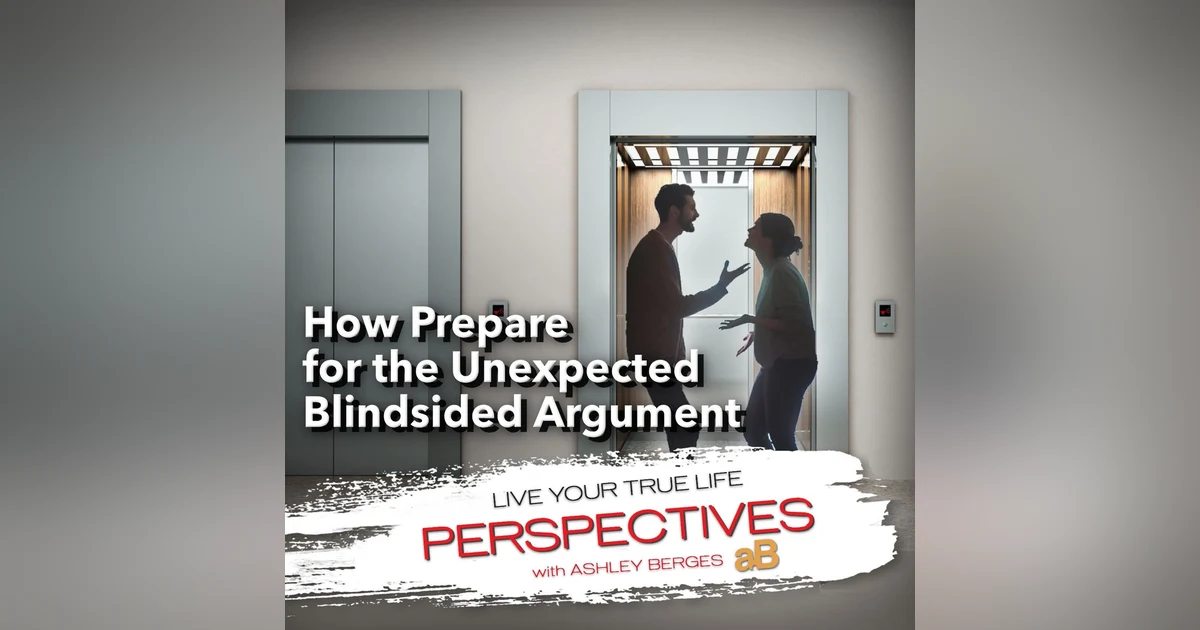

How do you handle an argument that you never planned on having? Have you ever had someone start an argument with you when you did nothing to provoke them? On Today’s show, we are going to take an in-depth look into arguments. Specifically, what...


 RSS Feed
How do you handle an argument that you never planned on having? Have you ever had someone start an argument with you when you did nothing to provoke them? On Today’s show, we are going to take an in-depth look into arguments. Specifically, what happens when the argument comes out of the blue? We need to understand what needs to be done in these situations. To avoid being caught off guard when it occurs in the future and to enable us to react appropriately, we must learn how to retain the concept in memory.
Become a supporter of this podcast: https://www.spreaker.com/podcast/the-ashley-berges-show--1272964/support.
0:06 You're in a good place now. You are listening to Perspectives with Ashley Burgess. Welcome back live to Literature Life Perspectives, and I'm your host, Ashley Burgess. On today's show, I'm asking the question, how do you handle the argument that you never planned on having? How do you deal with it? I know that many of us think about arguments and how we would handle the situation. And you know, given the situation, what we would do when you think about it in a vacuum, like when we would do this, and then we would do that. It's like a play by play. But what happens when it comes out of left field? What happens when something like that happens and you're never expecting it. On today's show, I want a deep dive into that to understand what actually needs to be done in that situation, how to at least compute it to memory so that when it does happen, you're able to address it and respond properly. But let's begin with a situation that actually took place in my life, and I think that it's actually poetic in nature. Some of you will actually laugh pretty hard, some of you may even be grossed out, but I think it's time to talk about something like this, and I've given enough time for the time to pass.
1:12 I won't be naming many names, but this is definitely a true story. So picture this. It's seven am in the morning, and I'm trying to get out of the house. I have an early doctor's appointment and then I have to head to the office. And so I'm getting going down the hallway. I've just closed the door and locked the door. I'm going down the hallway and I hear the ding down the hall of the elevator, and I'm like, just like that, and I'm thinking, Okay, goodness, gracious, i gotta get there. I got a hurry. I'm already running late. I gotta get through traffic. And you know, I have literally my computer bag in one hand, right, I got my purse over my shoulder on that same side, and then, you know, and then I'm holding a brown paperback and no, it's not my lunch. I mean, I probably would be great if I could carry my lunch to work, but I don't, and I didn't have my lunch. It's a brown paper bag and I have something in that bag. So I'm already a little off and let me explain what that was. I'm going through a position where I was having some health issues where I was trying to figure out exactly what it was.
2:14 I was trying to figure out what it is, what it was, and I realized that it could be actually my gallbladder. And so I had all these tests being run. And one of the tests that I had to run, and okay, this is my gross some of you out is I had to do a poop test. So I had to actually bring poop in a plastic container, like an airtight container, and I stuck it in a brown paper bag, right, I mean, just obviously for obvious reasons, so I'm not just carrying it around. And so I'm like, hold the elevator. Hold the elevator. And I got my bag and all my stuff and all my arms, all my arms are carrying all this stuff. And I get in. I see my neighbor. And as I'm getting in the elevator, I can sense like this anger. I can all of a sudden kind of washes all over me. And I was like, oh okay, And for one moment I wanted to get out of the vader, but I didn't have a chance. And the doors closed and the doors closed, and literally I look at my neighbor. My neighbor gets right in my face and start screaming at the top of their lungs. Okay, never expected this, Never expected to be screamed at at seven ten in the morning, you know, with all this stuff in my hand, holding a bag with my own poop in it to be examined by a physician, I had no idea what I was about to get into. And so it's interesting. So he's screaming at me about a situation. I had tried to help another person that lived in the building. I was trying to help them with a situation that had take place, and so I had actually reached out to my neighbor asking them if they could have a condo board meeting and they could talk to this person and have a conversation, because the person said that they had tried to communicate with the boar, but the boar wouldn't respond. And so you know,
3:46 us, we take it in our own hands to try to save and help. And in the process I reached out and they actually accepted and gave this guy a meeting. But then the last minute, the night before the meeting, you know, the neighbor calls me and says, hey, I have to cancel. I don't want to go to this meeting. I'm over it. And I'm like, you really, I mean I kind of put I kind of put myself out there, but that's okay. You need to do what you need to do and I'll let them know. So I emailed all the board members there's only three, and I said, hey, I just want to apologize, but he's not gonna make it. What have you? Thanks again for offering that for tomorrow. And so I thought everything was fine, and so I get in the elevator with one of these people that's on the board and they were obviously very angry with the cancelation of that meeting.
4:29 And there's nothing I could do. I can't change that. I can't tell the other person what to do. I can't make them go to the meeting. I can't make them keep the meeting. And so there I am, you know, stuck dealing with the situation, and as my neighbor is literally braiding me, I mean, spittle is on my face because they were so angry and they're spitting while they talk, and I'm sitting there trying I'm standing there trying to be calm because at first you just took me off guard. One, what's going on too? I never expected that. Three that was way out of context. Four I'm carrying poop. Five It's just like, this is crazy, this is insanity. And so as we're getting further and further down that, you know, each floor, I start getting angry because there's only so long that you could deal with somebody yelling and screaming at you before you get angry, especially when it comes as a surprise attack. Right, A surprise attack is not what you're expecting. If you're expecting a full on attack and you know what's gonna happen, you can prepare, you can hunker down, you can get ready for that. But when you are not prepared for that, you can't prepare for that. Right you can, and that's what we're going to talk about in today's show, because you actually can be prepared, but you've got to be so prepared that it comes in as second nature. And so as we're getting closer to the first floor, he's starting to really piss me off, okay, like seriously, And as the doors open and he continues to brate me, I get out and I literally jump into his face and say what I think about him in a few words.
5:58 Right, And it wasn't my finest hour, okay, And I might have used some things that aren't that polite, and you know, I said a couple of comments and it was bad because, as I'm staying in the second comment, I wish I could have taken it back. And there were multiple reasons for that. And let me explain. First off, I had nothing to do with this argument whatsoever. I had no reason to be being yelled at. I had done absolutely zero wrong, Okay. So I just want to make sure everybody knows that. And I known that many of you have been in arguments where you have done zero wrong, You've done nothing wrong, and you're getting somebody yelling and screaming and berating you, and so I understand that. So this is for any of you out there that are literally like side swiped, you know, lambasted, and not ever knew what was going to happen, and then it happens. Okay. The other thing, too, is that because I had done nothing wrong, if I had just stayed quiet, I would have been completely the right. However I didn't, and so what happened. Here is this person brates me for nineteen floors all the way down, yelling and screaming, spittling in my face, all that stuff. Okay, not good. And I make two comments once we get off that elevator, and unfortunately those two comments put me into the same batch as him. So I'm basically okay, to some degree, sign off on his bad behavior by me making a comment back. Now, I know you
7:31 go, well, what's that about. Well, when people try to get us to fight, which this was what this was about. This was he was wanting attention and he doesn't care if it was positive or negative attention, and this situation really negative attention. I ended up taking the bait. I took the bait. And unfortunately, when we take the bait, what do people that do this, what is their whole reason for that? It's to get themselves off scott free. It's to make themselves feel better about us. It's it's to make us feel like the jack person. We're the bad person. We're you know, we're the donkey, right. Unfortunately I love donkeys, but I'm using the other word, right, So they make us feel that way, right, they make us feel that way, and it's it's really sad because they make us feel that way, and they're doing it on purpose to turn it around. So this is an entire gaslighting, manipulative project.
8:22 And then when you jump in and you say something or stand up for yourself in a way that might be argumentative or loud, then they can throw it back at you and say, see you're see what you did. You're a horrible person. You're a horrible person. And so think about it in order to actually if you want to win the argument, and I don't even know if there's ever winning the argument, but if you want to win the argument, the last thing you want to do is put yourself in the position that they want you to put yourself in. They want you to lower yourself down, engage in the stupid situation, get all angry about it, it all over you, and then see what happens. And the thing is is that now, given the situation, the circumstances, it's early, Okay, it's early. I'm one of those people. I get up decent early, but you know, I work really late. And because I work late, I'm not like a seven am early birder. Normally, this is not who I am. Quite Honestly, it's not necesss not who I am, and my clients don't want to start at seven am either, so you know, I'm usually the nine am or at the office, so I'm already a few hours off. I'm already having me to get to a doctor's appointment where I'm worried about my health. I'm thinking that I'm gonna have to let go of my gallbladder, which later on I did, and I'm worried about what the results are. And I'm carrying a bag with a plastic thing that's holding my poop. Okay, so I don't know how fish out of water you can get, but this literally put me in a predicament. And I know that
9:52 many of you have had these issues yourself. You've gone to work and you're having a great day and things are going well and you're smiling and you're like, wow, I haven't felt this good in a long time. Wow. I mean, I've been having a bad couple of months, but man, today's really changed. I feel really good. And you get in there and next thing you know, somebody's brating you on the team and you're like, where did this come from? Or you go to your neighborhood bar and you're so happy seeing somebody's got to argue and have to start a fight with you. You know, these things happen are you talk to your best friend and they got a problem with you. And so what I'm saying here is and I'm gonna try to help mitigate these circumstances for you. I'm gonna try to help you overcome these things, because when we get and fall trap into these situations, we fall trap and then guess what, they're able to clab us mentally, emotionally. And then some of us who were like me and you know, you know, you actually care about people and their feelings, and so maybe you feel bad, man, I shouldn't have said that. You know, he was a you know pos. You know, maybe that wasn't the right thing to say. Maybe I should have held back from that comment.
10:54 And you know, it's interesting because you think about the pos comment and you go, huh, yeah, maybe that wasn't the best poet thing I did. Maybe that's not the best thing I did. But it was hard to hold back for all that time. I mean, that was a long time of being braided. Okay, So I know that many of you have gone through this. So we're gonna talk about what to do, what not to do, how to talk about like how to look at response versus reaction, you know, because you know, because I waited, I waited, I was quiet, I waited, I didn't say anything, and then I reacted. What I should have done, what I should have done real quick, for the record, is I should have been common enough once the doors open, gotten myself a little space away from him where he's not spitting on me anymore. And I mean literally I could like smell his breath. He was that close. Can't stand that. And I should have just stepped back a bit and said, hey, okay, this isn't my fault and it's not my problem. You know, you were completely out of line, you know, and what you just did here was completely out of line, completely unacceptable behavior. And I'd like you to apologize to me now, or you can think about it and apologize later. I'll talk to you later, good day. That's what my response should have been, but it wasn't. And so you know, the thing is is that we all know in a vacuum what we would do, but what happens when something comes at you like a curveball like this. What happens when you don't expect it? What happens then?
12:13 And these are big questions because we got to prepare for these things so that we don't faults trapp into these things. We got to prepare so somebody can't trap us. We got to prepare because the last thing we want to do is have in your regret. The last thing we want to do is have somebody holding something over us. The last thing we want to do is somebody being able to turn the tables and do something really stupid and not nice and just really wrong and toxic and then being able to get away with it because they say, see what Ashley said back, She's just as bad. She's a bad person, you see, I'm saying. So you're able to They're all able to deflect that because they just did something bad. You they want to feel better about it. You made a comment. Oh see she got you know, And they're thinking, and it's not consciously but subconsciously they're thinking, she got in the freaking dirt mud with me anyway, So she's just on the same level. I don't have to apologize to her for anything.
13:07 And so that's what we're gonna dig deep in the day because that's what we need to talk about. We want to talk about how do we deal with it, how do we respond, how do we prepare, and how do we put this concept into memory so that if this happens in the future, you're not taken off guard. No matter what's in your hands, no matter how early today is, and no matter how least expected the situation is, you are in control. And that's what matters. That's what we're gonna talk about. We're gonna dive deep today on that, and that's what we're gonna talk about because some of the most interesting things happen in the elevators and I learn from This is a very learning experience for me, and I want to share this with you. To stay tuned live your true life Perspectives with me, your host, Ashley Burgess, will be back in I'll be back this time. You know it. I'll be back this time into shape, turn it up and jump in the deep end on Perspectives. Now here's Ashley.
14:13 Welcome back live to Literature Life Perspectives and I'm your host, Ashley Burgess. On today's show, I'm discussing how to handle an argument you never planned on having. So somebody basically blindsides you, side swipes you, and you're having a good day or you're not expecting it. Next thing you know, they're in your face. They're arguing, they're yelling at either, spittling on you, just like I was saying, that happened to me, right, and they're not expecting it. And you know, sometimes when you're not expecting things, sometimes we go into autopilots. Sometimes we don't always make the best decisions. Sometimes we just go into instinct, right, we go into oh really, yeah, okay, and we'll fight back. And I'm not saying that there's times that we shouldn't fight back. Don't say that. I'm not trying to be f on pacifist, that is not me. But there are times that we don't want to be pulled into an argument that's not really ours to own. And what I'm saying here is that if somebody's going to argue with you and they're wanting to fight with you, they're wanting you to fight with them. That's what they want. They want you to be like, what's up, what's going on? Get out of my face? You know your pos da da da da da da da da da da. They want all that, and they want you to get fired up, and they want you to get angry. They want blood vessels popping out. They want you know that that neck, you know that, you know that, the whole side of your neck and that vein just popping out of your neck and your back starting to hurt. They want that. That's what they want because they want to bring you to their level. They want to bring you to that level. They want to upset you. They want to make him mad.
15:48 But you know what, we're not gonna get mad. We're not gonna get mad something. You're like, yeah, we're gonna get even. I hear you, I hear you. But you know what, we're actually gonna get even. And that's true. We're gonna get even, but we're gonna get even the right way. We're gonna get even the right way because if we try to fight the fight when we're not expecting to fight, we're not getting even. We're getting clawbered. Because what happens here is that they're trying to pull us into their little dirty sandbox so they can get away with whatever they're arguing and fighting us about. If you really think about it, a lot of the arguments don't apply to you. They just don't apply. And that in and of itself is very interesting because a lot of times we fight back, but what are we fighting back for? Okay, it's almost like we're just fighting back because guess what, somebody's come to us. They're arguing with us, they're angry with us, they're fighting with us, and what do we do. Okay, I'm gonna fight right back. It's your instinct, but in order to offset any pain and suffering later and also them playing the victim reality, see, because they changed the narrative. You know, in my situation, I know that my neighbor's not like going home going you know what, I was kind of a I was a jerk. I shouldn't have done that. I can't believe I got in her face and was spittling on
17:21 her and screaming all these profanities and all that was a bad idea. I should have done that. That was wrong. I need to go apologize. No, huh, I'm sure that it never crossed her mind. And I believe that a lot of it too is because guess what, because I jumped in. Had I not have jumped in, and had I not have reacted. I would have been fine if I would have just simply responded with, Hey, I don't know what's wrong. I don't know. I don't know what's going on with you today. I'm not sure. I'm not going to try to guess or anything like that, but I think you probably need to seek a therapist or a life coach. You probably need to deal with your anger issues. You know what I'm saying. And by the way, I deserve an apology. Let me know if you want to give it to me now or later. Okay, Hey, I'll talk to you later. Good luck with all that have a great day. If I could have done that, been genius move, and that's what I normally would have done. But guess what it was seven am. I had a bag of poop in my hand, go into the gastro internologist to have a laboratory a lab taking of it to see if I had to lose my gall bladder. So you know what, I wasn't prepared for that. I know some of y'all like, you know poopy jokes, so it's kind of funny that I bring it up and I know something you don't. You think it's absolutely disgusting, but either way, apologize. I'm not gonna lie about what was in that bag, and I'm not gonna lie what I was carrying. So it's like, that's the key. So let's jump in when I return, and let's talk about how we can do this right and how we can make sure that these things fall into our favor. Stay tuned Live your True Life Perspectives with your host
18:51 me Asking Burgess will be back in and I'll be back this time in two shakes. This is Jake Busey and you're listening to Perspectives with Ashley Burgess. Welcome back Live to Literature Life Perspectives, and I am your host, Ashley Burgess. We're talking about arguments, how to handle the argument you never plan to have. A lot of us can prepare for arguments, We can prepare for issues. But what happens when it kind of blindsides us? What happens when it comes out of the middle of nowhere. You're not expecting it, so you're not prepared. Because any of us can prepare for those types of things. We can get prepared, we can say what we will and will not do. We can have like a structure, you know, so if we're already planning in this argument, we're already structure. We might be sitting there. Some of you might be like, well, yeah, I'd like to get really quiet. I like to I like to lower my voice a lot, so it should show that they their voice is so loud. Okay, that's good, But you know that's interesting because that also makes people get louder. It's always interesting, you know, when somebody's really enraged, when you start talking really low like this, it really does upset people. And I don't like to do that because I don't want to create any more enragement.
20:15 Okay, because that's the thing is that there's a level of sophistication when you're responding that you got to make sure that you connect with Because we don't want to play games. We don't want to manipulate. No, we don't want to do that. We don't want to have altercation. But what we do want to do is we want to get control of ourselves. And by the way, let me give one caveat here, because I want to make sure that everybody knows us if somebody's getting physically violent with you, exit stage right. Okay, don't just sit around and do this. This is not if somebody's getting physically violent. Okay, you get out of there immediately. You don't have to listen to any of this. You get out of there immediately, You get to a safe place, and you go from there.
20:56 Whether you need to call it the police, call fam remember, whatever you need to do, call security. But you know you don't. You don't want to stay in an environment where you could be physically hurt. So let's jump into the normal conversation, in the normal argument where people aren't going to physically hurt each other. First off, we want to respond. Reaction is getting to their level. Reaction is you know, arguing and fighting. Reaction is screaming back and forth. Reaction is doing that sort of thing. So we want to we want to respond in a way that's calm. Now, we don't have to be overly calm. We're not trying to be you know, fakely calm. We're just trying to be ourselves. Two. One of the things that I did, and one of the thing that I did well though in that situation, even though the rest of it fell apart, was I actually did listen to what they were saying because I wanted to listen to make sure it wasn't something that I had done. Okay, So that is one thing that I do take in conservation. If somebody does come to me and argue and fight whatever, I will listen. But once I realize that it's not something I've done and that there's a point where I'm kind of done on the listening point of listening to the things that I've done wrong when I really haven't done anything wrong. And the thing too about these arguments is that the ambush argument is not the easiest thing to deal with. The ambush argument is classically really challenging. So as long as you understand that, and as long as you kind of get that, we can go from there. So remember it, you're not alway. It's not always going to be the perfect playbook when you're ambush. It's not always the perfect playbook when you're not expecting
22:26 it. That's not something that is going to be perfect. But the better we do, the less stress we have, the less resentment or regret we have, because we don't also want to regret. Many of us are empathic, many of us care about other people, and the last thing we want to do is to have regret. I wish I wouldn't have said that to Steve. I wish I wouldn't have said that to Tom. I wish I wouldn't have said that to Jennifer. I wish I wouldn't have said that to whoever. Okay, it's a very interesting dynamic, and so you got to think about those things. So whoever you're Tom, Jennifer, Steve, Joanna Is, you don't want to have that. But at the same time, we don't want to allow people like that to walk all over us. Okay, So there is a fine line between reacting and responding. Okay, So what happens when we do erupt? So the thing is is that these folks that are starting these fights are wanting to get you to erupt. That is what they want. That is their pleasure, That's what they want to see.
23:34 They want to see you, you know, basically freak out. They want to see freak out, lose your cool and get to the same level as they are, because then they've won. They've got you to where they want you to be. They've got you where they want you to be. They know it, they got you. They're feeling confident about that, they're feeling good ab about that, and then they can take you to the next level. The other thing too, is that when you do erupt, you're no better than them. So now that they've gotten you to erupt, you're in the game now with them. You're rolling around in the mud with them. And now see there there, and now they've basically allowed their stuff.
24:17 So they're like, okay, well, now ASK's coast. Basically they see this as oh, asks cosigning on this. Okay. So when we allow ourselves to erupt, what we're doing is we're actually co signing on what they're doing. And I know that many of us do not want to co sign on that argument because that argument is not what we want to co sign on. It's not how we agree, it's not what we believe, it's not the truth. It's their narrative. It's them trying to pull you into a corner to argue. Now, like I was saying, how do they get off scott free? Will they get off scott free? Because they pull you in and then they turn it on you. So I know that a lot of people nowadays talk about manipulation and gaslighting. Manipulation gaslight is very interesting because what happens is why when you're doing it, you're gaslighting, you're kind of trying to make somebody kind of question themselves, you know, wonder go a little insane if you might. But it's all used as a way of getting somebody to get very angry or upset or hostile, just like manipulation. And see what happens is is that it's great when somebody it's great in their minds, right, not for us, but it's great in their minds when they're able to manipulate us to a level that we don't even expect from ourselves.
25:48 And so the last thing you want to do is give them what they want. So that's one of the biggest things that I want to really, really, really really emphasize is don't give them the pleasure. Okay, don't. Whatever you do, don't because they want you to fight them. They want you to argue with them, they want you to scream back, they want you to go off, they want you to start a fight. That's what they want. And so I want you to really think about that because if you realize that that's really what they're wanting, and you realize that's what they're trying to get from you, and you realize that they're trying to manipulate that.
26:38 To give them that, then you know that you don't really want to give it to them. It's like, you know, it's like, why would you want to give them what they want when they're trying to go so sneaky about it? Why would you want to give somebody what they want when they're not helping you. Why would you want to give somebody what they want when they're actually super negat and trying to be super controlling. So think about it. I find that it's very interesting too. The whole situation is that we want to be able to present our side if we need to, but maybe there's no need to present our side. I think that sometimes in arguments when people ambush you, there might be a need to present your side.
27:26 But I think when somebody ambushes you, it's kind of like it's almost like bad business. I understand. The last thing that people do and i'd fight is the last thing they're gonna do is say hey, I'm going to hit you, because they want to hit that person first and have that person not realize that they're going to get hit, and then that person gets cold cocked and they didn't think that it was going to happen, okay. But the thing is is that that's just not the right way of going by things. It's just not the right way. It's not the right way of dealing with situations, is not the right way because what's happening, So they know that they're taking you off target, they know that they have the upper hand, and they know that how they're doing was just was actually thought out and strategically thought out and timed to some degree. Now not always. Sometimes people just get just the best of them, get gets them and they just can't handle that. They can't deal with it. They can't process their anger, they can't process their emotions, and they have to let it out somewhere, somehow, some way. So, knowing that this is a possibility, and I don't want us to sit there and ponder and pontificate on this day after day, week after week, year after year, but we need to create some sort of roadmap for the potential possibility of the unplanned argument. What do we need to think about? Because also this could be good for any argument, because even if you have even if you know that somebody's about to argue with
28:59 you, and you kind of have a premonition or you kind of get tipped off or what have you. You got to keep your wits about you. And sometimes it's hard because sometimes we're all emotionally invested in this. Right, If you're emotionally invested, how do you deal with it? You know, if this really upsets you, how do you deal with it? These are things that we got to ask ourselves, these questions, you know, how do we calm down? Because I think it's easier to calm down in an argument when it's not somebody that you have some sort of emotional investment in. But I've also realized that the more it wrenches up, the worse it gets.
29:40 The more it renches up, the worse it gets. And when we allow it to wrench up, we also allow this person to push over the edge and in the process trying to push us over the edge to match their issues. And that's just not what I want to give in. I don't want to give that. I don't want to give somebody that type of power over me. And that is what is happening, is that you know, and there's times where you just gotta walk away. I know that some of you want to stick in that battle, but there's times that you just walk away. There's times that you turn your back and walk away and make sure that there's no violence there, but you just walk away. I'll talk to you later. You have nothing to say because I've also found too, is that you know, when we lower ourselves to that point, even if we had a valid point, even if we had a value, you know, a valuable, valid situation, that valid, valuable situation is no longer respected because now they're using this as a weapon. How you respond, how you reacted as a weapon. And so remember, if we're going to get any sort of I guess in the moment, any sort of redemption, we have to realize that if we're gonna get any sort of redemption, we have to realize that we have to It kind of go along with the fact that we have to expect the fact that if we don't come into this and our highest level, our highest good to some degree, that's gonna be problematic. And
31:12 I know that some people go to the other side. We've talked about that where they quiet their voice and then they get really low and why are you talking like that and you're yelling it was right and that and that to me is okay. But to me, that also is not the way the right way of responding, because that's also a bit of fakery and that's also trying to change the game plan. To me, it's you talk at your level, you respond back with your truth, and then if they're not going to listen, you either take a time out, you take a break, or you say I've had enough because it's not on their timeline. If they're not willing to listen to you speak, then that's not it's not even there's no there's not even a conversation. We can't even have a conversation. And so that's something to really think about. And one of the things too, is like how much are the negative interaction are you having to deal with? How much of the negative energy is in your life? Do you have several people arguing with you and fighting with you on a daily basis. That's something to ask yourself if you do, who are these people in your life? You know? And what's the arguments about? And do the arguments ever get solved or are they constantly finding faults? I mean, when somebody is constantly finding fault with you and you're constantly battling and basically trying to survive, the latest argument. It doesn't seem to be getting any better. It actually seems to be getting worse. Because I've also found too that we have to be careful
32:44 because we don't want to play kate. So there's a difference between not lowering ourselves and there's also a difference in not play kating. I'm not going to accept that I did something wrong that I didn't do. I am not going to apologize for something I did not do wrong. Okay, I'm just not. And if somebody wants an apology for something I did not do, they're not going to get it for me. And if they don't want to speak to me, because that's what happens, then so be it. I guess they're not going to speak to me, you know. And that's the thing is that I realize that if you apologize for something you didn't do, you're accepting blame and fault, and you're also lying to yourself for whatever reason that is. And I know some people out there you're in relationships that you're too scared to lose, you know, whether it's a romantic relationship, a friendship, or even a work relationship. But you gotta think about you gotta think about your own you know, your own self respect. You gotta think about what's best for you, and you got to think about all those types of things and see what it is that you need to be doing for you.
33:46 And those are the questions that we have to have. Those are the questions that we have to analyze. Those are the things that we have to think about. And I think that that's very powerful for us to think about. I think it's very very important for us to think about. And I think in that process, we don't want to play Kate. We don't want to accept fault we didn't have. We don't want to lower ourselves to their level. We don't want to lose our cool. If we want to, we can always say, hey, I gotta take a break, I'll talk to you later, or hey, we'll talk about this when you're calmed down. Also, the other fact too, is that we can't point out what they're doing wrong if we're yelling. We can't point out what they've done when we're yelling. And also a lot of times with these folks, you know, the idea of anything really going through, you know, into their mind and then accepting any sort of reality is very difficult. Because they're already on death gun five. They're already angry, they're already a little out of sorts, and they're already disregulated. So we got to look at that as well.
34:45 So when I return, I'm gonna give you some more tips and tips and I'm dealing with this and how to offset this. Stay tuned Live Your True Life Perspectives with me, your host, Acid Burtis will be back in I'll be back this time in two shakes. Get in here. You're listening to Perspectives with Ashley Burgess. Welcome back Live to Literature Life Perspectives and I'm your host, Ashley Burgess. We've been talking about how to handle the argument. You never plan for what to do, what not to do, you know, because the big thing is not to lower ourselves. The second thing is not to fall in the trap of reaction. That's what they want. They want to get you at that level. They want you to be angry, they want you to react, they want you to get you know, all out of source, just you know, they want you to they want to just regulate you. They want to do all these things to you to get you on their level. And then at that point you have also crossed over.
35:45 Now you're at their same level. They're now allowed to do what they do. You've basically affirmed their their attitude and what they're saying instead of you know, saying, hey, what's going on? Are you okay? Now you've affirmed that you've gone to their level and they're not going to apologize. The other thing too, that many of you are dealing with is, you know, play kating or accepting responsibility for things that you've done in order to just quiet the argument. And that's just not good. I mean, if you're in a relationship like that right now and you just have to play kate to be able to get that person to be quiet or you know, to stop arguing with you, you know, you're in a very controlling relationship. You're in a very very controlling relationship with somebody that is controlling you. They are arguing and fighting with you as much as possible, and they know that they can, and they also know that you're going to back down for whatever reason that is, whether it's the fear of losing the relationship, the fear of losing the friendship, you know, whatever it is, maybe your fear of you know, you don't you don't want to deal with conflict. You don't want to do a confrontation, and that's and that's painful because when we don't want to deal with conflict and confrontation, we usually somehow are not have it because eventually something's going to happen. And if you can being able to step back and saying, hey, you know, if you don't want to talk about that, or if it has nothing to do with you, or you or you're being honest, or this isn't me, it's being able to call it out. Hey, this isn't my fault. I didn't do this, This is not my fault, and I'm not going to take blame for this, and I'm certainly not going to apologize for something I haven't done.
37:10 And if you've been doing this and apologizing for things that you've not done just to have some sort of quiet, peaceful moments in your life, you need to reevaluate the relationships that you're doing that with. And I'm sorry to say that, but you need to reevaluate and think about how you're going to continue down this road and making some changes so that you can have some boundaries and that you can have some peace and quiet and so if this has been a long term relationship, marriage, friendship, really analyzing and really looking at that relationship, and eventually you're gonna have to call it out in a way and express your feelings to see if things can change, and if not, you have to decide how you want to continue to handle this, because I've found that when people are in these types of environments where people that are trying to do this on a constant basis, when this happens a lot of times, it's just bringing pain and freeing and unrest into anybody's life. And when you're having to deal with this pain, suffering, unrest, it's very taxing on the body. It's very taxing on the heart, it's very taxing on the mind. It's just very taxing. It's very stressful, and it's very overwhelming.
38:15 And it's the last thing that we really need to deal with if we're wanting to have a healthy life, a healthy mental, emotional, and spiritual life. And so I hope that this show has helped you. I hope the concept of dealing with these arguments have helped you and put some thoughts in, you know, just not reacting, only responding, being quiet until you know exactly what's going on, and then you can respond if you want. You know, also you can take a break any time, you can leave it anytime. And also not apologizing for things that you haven't done, just not doing it. It's bad business, it's not good, it's not right. And what happens is that person expects you to start doing that across the board and they'll start fight with fights with you to do that, and that's just not the right thing. It's definitely not healthy and it's definitely not right for you. And if you're having those types of relationships with people and you're dealing with this on a constant basis, you know, literally looking at these relationships and starting to kind of question some of this might be extremely important for you and your sanity. If you haven't already, check out the YouTube channel.
39:09 We put up new video content all throughout the week. Short form content under a minute, longer form content over five minutes. We have a lot of content. We have a thousand videos on YouTube right now. Also, you can follow me and joining in the conversation on Facebook. Just go to Facebook put in Ashley Burgess be ERGEs Instagram Ashley Burgess Berges. You can look at us on TikTok as well, relationship relationship coach, I think no, I actually just look up Ashley Burgess. You can find me there on TikTok as well, and so definitely check that out. But in the meantime, think about it. We owe it to ourselves to do what's right for us. And yes, it's good to think about others, and I think about others all the time, and I care about others, but sometimes we have to really think about us and think about what's right for us. And how do I keep my peace in sanity? How do I do it? What can I do? What can I do on a daily basis to keep that even if somebody's coming from left field wants to start an hour a coming blindsiding me. How do I keep my peace of mind? Because that's what's really important here living your true life. How to live your true life is being true to yourself, being kind to yourself, giving yourself grace, and standing up for yourself when you need to, but also eliminating things out of your life that no longer serve any sort of healthy purpose. Stay tuned. We have a great show for you next week and check out. You can always go to Spreeker or Apple podcasts and you can see you can listen to all the old or previous episodes of with your True Life Perspectives. Stay tuned Literature
40:40 life Perspectives with your host me Absolute Burgess. Will be back in I'll be back this time. You know it. I'll be back this time in three shapes