Finding and Identifying your Support System at Any Age. A Desk To Lean On [Ep.761]
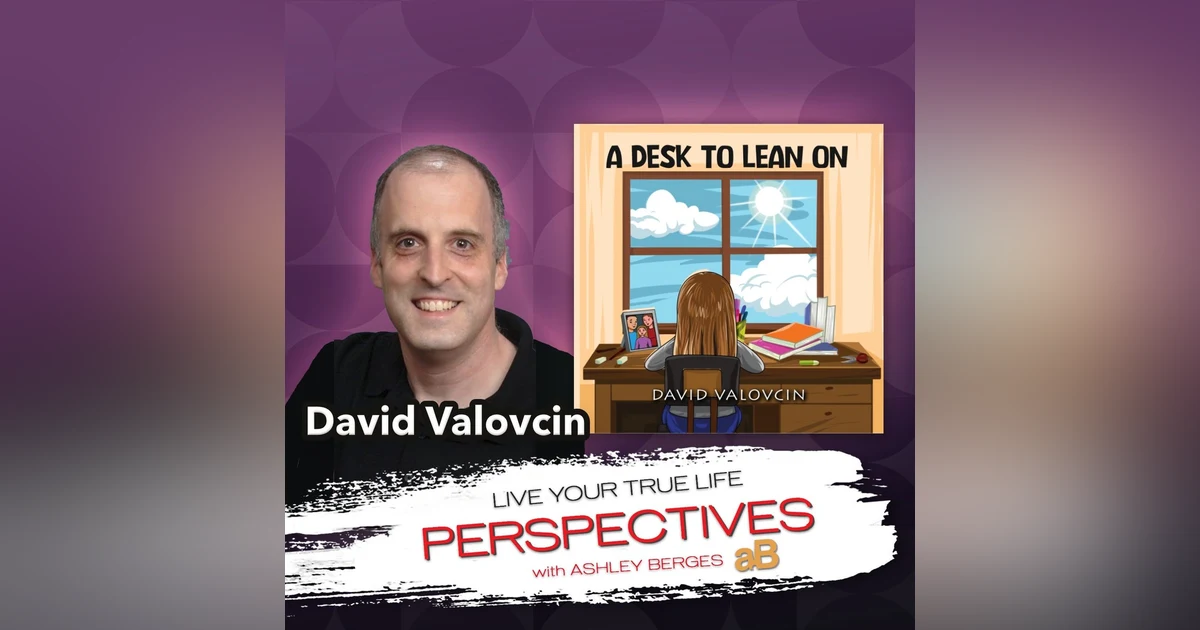

I am speaking with emerging and upcoming author David Valovcin on Today's show. David is a Financial Services Technologist and has written his first book, “A Desk To Lean On.” David’s inspiration to write the book comes from his daughter Grace. Going...


 RSS Feed
I am speaking with emerging and upcoming author David Valovcin on Today's show. David is a Financial Services Technologist and has written his first book, “A Desk To Lean On.” David’s inspiration to write the book comes from his daughter Grace. Going back to school affects both parents and children. “A Desk To Lean On” helps take the guesswork out of some of the unknown when it comes to attending a new school. Join David and Ashley as they discuss what it is like to go to school, start a new school, and the importance of a support system in an often overwhelming situation for children.
Visit David’s website: https://www.davidvalovcin.com
Become a supporter of this podcast: https://www.spreaker.com/podcast/the-ashley-berges-show--1272964/support.
0:06 You're in a good place now. You are listening to Perspectives with Ashley Burgess. Welcome back live to Literature Life Perspectives and I'm your host, Ashley Burgess. On today's show, I have an amazing guest and emerging, an upcoming author who's really telling a tale that I think is very important. Going to school. Going back to school is huge, and starting a new school is even bigger when it comes to our kids. And being able to have not only a support system but also a book to help explain the situation, but also being able to really talk about this and put some words to the situation because it can be overwhelming and so taking the guess work out of it.
0:50 So joining me live in studio on Literature Life Perspectives is David Veloson. David is an up and coming emerging new author, author of A Desk to Lean On as well as a financial services technologist. David, great to have you in the studio. How are you doing good, Ashley? I'm doing well. How are you today? I'm doing great. I'm just glad to have you here. It's gonna be awesome because I love your book. I read it a couple of times and it's just it's it's so great for right now, and it's so important, especially when kids are going back to school. Well, absolutely, you know this is there when kids are studying new schools, going back to school. It's a very exciting but also a very hectic time. For sure, it definitely is. And I think that with you know, with kids, it's hard, you know, because you're trying to, you know, deal with the stress. But I also think you know, from a parental perspective, it can be stressful too, and trying to figure out how to align but also how to you know, create that positive energy is really important too. Absolutely, you know kids are nervous. The parents are also nervous too, but they have to be there for their children.
1:56 It's definitely just as stressful in many ways and in different ways for parents. I totally agree with you. So let's talk about this. So this is your first book. I love it, A desk to lean on. So tell me a bit more about you know, your origin and where this concept came from. Right, So, when I wrote this book, you know, I am married with an only daughter. Her name is Grace. She is the inspiration of this book. And while I was writing it, you know, Grace was preparing to go to a new school, and you know, of course she was a bit nervous about it, and so I thought that would be a very interesting story. I know it's a common theme with regards to parents in general and kids just you know, getting ready for the new school year and all the preparations that have to go with it, and I thought I would just you know, I wanted to create a book that actually tells, you know, my daughter's story, how she I like that. I like that, and and I like the concept, you know, in the beginning, you know, where you know, she's she's super cute by the way, with you know, the the stuffed animals on the bed and what have you, and she, you know, gets up and sees you in the kitchen, and then it's it's you know, she's still in her pajamas, which is which is also super cute. And then how you call her boo boo bear? So is that her? Is that her real nickname? Oh? Absolutely, I I've always been calling her boob bear,
3:27 even when she was an infant. So I still call her that today and she loves it. She loves it. But yes, I definitely called her booble Bear. And that's also how I came up with the name of the publishing for the book, Boo bo Bear Publishing, so that you know, that's a that's an am I've been giving her for quite some time. Now I love that. And then so she's getting ready and now it's it's interesting too because now she's having to go to a new school and she has the stress and this anxiety from it the sphere. And I think this is really important for a lot of kids right now because a lot of people are moving, you know, parents are having to move because of career changes. You know, maybe they're moving from different areas of the country, or maybe not making a huge move, but a move that's necessary. Where the children are having to change school. So let's talk a little bit about that topic, because that can be really overwhelming and stressful in and of itself, absolutely, because there's many unknowns. I mean, especially with the going to a new school. Uh, you don't know anybody, you don't know the teachers, you may not have any friends yet at this new school, so that they're the unknowns could be worrisome enough for a child, you know, and as a parent, you help your child through that, and so what are some of the things that you think are really important for parents to do in this situation, you know, how to encourage their children and then how to open that line of communication. What are some of your thoughts on that.
4:57 Well, I would suggest the listen to them no matter what their age is, even if they're really young and they're maybe going into pre k or kindergarten. Let them express their feelings in however they wish, and just for the parents to just be there for them, you know, don't try to force out how they're feeling, let them voluntarily express it. I'm sure as a parent, and I know that happened with me, you can actually tell when the child is getting nervous and they're not saying anything. I did not pressure Grace to tell me what's wrong, what's happening. You know, as a parent, I could figure it out that we're getting close to that school year. She's nervous, it's a new school. And I think it's just important for parents to just be there for their children and allow their children to express their feelings in whatever manner is comfortable for their child. And I think that's super important too, because I think the idea is sometimes we can't always solve it, sometimes we can't always calm you know, certain emotion. But I think just the idea of being open to and listening is very important. And in this book that's what I find is so great, David, is because you know, you're basically giving you know, your daughter grace, the room to search for answers, the room to analyze her situation and then you know, to find avenues to solve her issues. A great yes, And you know, and as long as you know, giving some empowerment to your child
6:29 is also you know, very important instead of trying to direct them and force them in a certain manner or have them be forced into a specific feeling. Oh you should feel like this, or you should feel excited, you should be brave about it. They may eventually get to it, they shouldn't eventually to that, but let it happen in their own time. They don't force the feeling on them, let it, let it come out naturally. And if you let it come out naturally, your child will be you know, more comfortable coming to talk to you about it. And you know, just again it's it's very important not to you know, force the feelings or force the information out of your child. You know, they're already nervous enough.
7:10 Let them express their feelings and however makes them feel comfortable. I totally agree with you, David, because I think that right now, more than ever, I think all of us need to be able to be in an environment where we can express our feelings and not feel, you know, not feel unheard, and I think feeling heard alone. And I like how you said too, it's you you. You sometimes find yourself wanting to say, hey, it's gonna be okay, you're gonna love it. You know, you're eventually gonna love it. You're gonna find all these friends. But it's kind of good to take a step back and let them express their fear without trying to, you know, maybe sugarcoat it or change it in that moment. Agree, And you know, I think it's also important, you know, for parents to use their own experiences, you know, what was it like for them starting a new school or going into new greg. That way, the child can relate, you know, and it's not something that's unique to them, you know, as long as you know, especially if they're hearing stories from their own parents about you know, how they got over there.
8:09 You know, the courage to start the new school or start the new grade. I think if there's a good sense of relationship and discussion that can be had, you know, if the parent can bring up their own experiences. I agree. And so that's interesting too, because I didn't think about that. So did you ever experience this growing up too? Is changing schools or being in a new school. I mean, do you remember some of those feelings you had? Oh? Absolutely absolutely. You know, I went to a new school, uh for elementary school, and then I went to another new school for high school, and you know, and you know, of course, even getting older, the feelings are still somewhat the same. You're nervous, you don't know anybody, you don't know the teachers, and it just there's a there's a process, you know. And for me personally, it was more of you know, getting involved in different activities, you know, for elementary school, going to play out in the playground. For high school, getting involved with different clubs, you know, and that helped get me to know people, get to know the teachers, and then make friends from there. And so you've been through it yourself, so you know exactly how it was growing up. Absolutely absolutely and the fear is there of course, and then nervousness, you know. And my parents were there for me.
9:22 They helped me through it. You know, they shared their own experiences, so that death for sure, that definitely helped me as a child. Well. And I'd also like it too, you know in the book where you know, Grace is sitting in her desk and she's she's leaning on her desk and she starts thinking about things. And I like the concept of the private investigator. I like how she becomes like the PI in this and so is this is this part of Grace's you know, Moti of Operendi. Does she like to wear the PI hat and start figuring things out as well? Absolutely? I mean whether it's she know, she's looking for a toy she's got, she uses a big, big extra art magnifying glass, uh, you know, and she uses that to scan the house and she's, you know, looking for her toys, or she's joking around by looking for our dog. You know. It's like, you know, Grace is on the case if you will, you know, and you know she really she likes to solve those kind of mysteries. That's great, And I like how you know, Grace is on the case. You know, in this book where Grace is trying to figure out, you know, how to pretty much how to get out of going to this new school, which is a great way I like. I like how there's kind of the juncture position on that.
10:31 So she's trying to figure out her ways out by connecting with her friends and seeing if they have any information for her or any avenues to go down, right, and you know, and what you find in the book is that her friends help her by bringing up stories of how Grace helped them, you know, and it kind of brings out the courage and grace and the reminder that she helped other people. Her friends are helping her, you know, she's not alone in it, so she's not alone in the situation, and how she came to their aid in multiple situations when they themselves were not feeling very confident or they themselves felt like a fish out of water. Correct, absolutely, absolutely, they have their own nervousness, and you know, Grace was personable and excited to meet them and made them feel comfortable. And I also like how, you know, the parent dynamic in the story. You know, let's Grace, you know, go on her investigative you know, journalistic type experience, by not trying to hamper her and stop her from seeing her friends or having that conversation. Right. And you know in the book, you know, the father, you know myself, you know, initially started to try to reassure her grace got upset, and then you know, I, you know in the book, I took a step back and I let her drive you know, the resolution, you know, try to find it out answer on her own, which obviously she eventually did. And I
12:03 like that because that's the only way that children really learn, I think any of us really learn is doing it on our own and figuring that out and experiencing that on our own. And so I like how and I see that part two where you basically step back and say, okay, you know, you were about to say, hey, everything's gonna be fine, and then she doesn't want to really want to hear it, and you could have continued down that pathway, but you're like, okay, wait, I'm gonna give up some space and then let her figure it out. Absolutely correct, definitely. So I find it interesting, you know, how the story keeps on moving forward and how we have the interactions with Grace and her friends. The interaction not only the physical interaction as far as being in the home of her good friend that lives on the street, but then her other good friend who is not nearby. How they get on face time or whatever and start chatting from two different places right right, And you know, because that it's you know, the message I'm trying to get there, that there's other ways to communicate. Of course, you know, there's the neighbor next door friend, and then there's the friend across town, you know, and that the support structure is there doesn't have to always be a physical presence of somebody in the house or you know, a friend next door. There could also be a friend to talk on the phone, video chat, whatever you like. I love that. I love that. So David, David and I have lots more to talk about. When we were returning, we're talking more about the symbolism as well as the dusk in the book, more about you know, the back to school and what back to school means not only to the children
13:33 but to parents and being able to navigate these situations as well as the importance of literacy. So we have a lot more coming up as well as David's nuggets of wisdom here at the at the top of the hour as well. So stay tuned, we have lots more coming up. Don't change the channel. Live your True Life Perspectives with your host me Ashley Burdis, will be back in I'll be back this time. You know it. I'll be back this time in two shakes. Journ it up and jump in the deep end On Perspectives. Now here's Ashley. Welcome back live to Literature Life Perspectives and I'm your host Ashley Burgess. Joining me today is upcoming an emergency author David Veloson. David and I are talking about his first book, A Desk to Lean On, and right before the break, we were talking about how Grace, the main character in the book, is talking to her friends about trying to figure out, you know, basically, how to get out of going through this new school and ways of getting around it. And so we were talking about how Grace had the next or neighbor friend who she was able to communicate with directly, but also how she had her other friend who she was able to communicate on FaceTime. And it's so great how we live in this technological world where we have these options. So David, I thought it was great how you had that aspect in the book too, So it wasn't necessarily you had to be in the same place, but you could still communicate with that person exactly right. And you know, I wanted to make the point
15:05 that, you know, the support structure can come in multiple avenues. You have the physical presence next door, and then of course with all the technology today and the phone and the FaceTime, you know, there's other methods of communication, there's other methods of support. Being able to acknowledge the fact that we have a support system. Sometimes the support system is not local, and I think that's important because I think a lot of people are moving and doing different things, but you still want to stay connected with people. And I don't think that just because you can't see them doesn't mean that you can't still be connected with them. Agree. I agree, And you know, I think it's important that people do take advantage of that and take advantage of the technology side of it that allows for that level of communication to occur. So with both of these friends in the book, you know, as Grace is really trying to get out of going into this new school, which I like, I like that concept. You know, both of these kids, her peers, her friends revealed her you know that she has done things for them that have made her feel comfortable in their situations, right, you know.
16:10 And I think, you know, when Grace is trying to solve, you know, her own difficulties, by talking to her friends, she's able to be reminded of how she helped them in their situations. You know, the neighbor was new, Grace wanted to play with her and made her feel comfortable. The other friend was nervous to go into the pool, and you know, she you know, helped him get the courage to come into the swimming pool, you know. And so getting that level of feedback from her friends helped build out her courage and reminder that she helped others. I like that. I like that, and I feel like that's so important nowadays. Two is to recognize and I think that this book also helps. I think kind of a self esteem factor too, because I think sometimes you know, as we're growing up and even as adults, sometimes don't realize the impact we have one other people. We don't realize, you know, the positive impact we might have one other people and how it's changed their lives. Yeah, correct, I mean it's just people need a lot of support. There's a lot of challenges in this world in general, you know, and any level of support that anybody can get is definitely appreciated on multiple levels. M I totally agree with you, and I think that this is really important. We have so much to talk about, and I don't want to get into the symbolism of the dust yet till our next segment. But you know, I think also one of the other things that I like about it is that you're right, it's about looking at support from different angles and seeing, you know,
17:41 kind of what support is like. For example, you in the book, obviously the father, you know, your wife obviously the mother in that connection, but also seeing these other people in her life that are supportive as well. Correct, you know, and in that level of support is critical, you know, to help get over that nervousness and make the preparations for for example, going to a new school. That's amazing, David. When we return, we have a lot to talk about, So don't change the channel, everybody that's listening to live your true life perspectives, because we have a lot to discuss. We still need to talk about not only the symbolism here, because there's a lot of symbolism in this book, and there's a lot of concepts about leaning on others and support and having people lean on you as well, and so this is a this is something that connects not only us with our kids, but also it's something that we can all think about as a human. Also, later on, we want to talk about, you know, what back to school means for many of us, you know, whether it's our kids or ourselves as adults. And then the importance of literacy but also the importance of support and what that looks like in a day to day basis. So don't change the channel. We have a lot more to talk about as well as where you can find the book and how you can connect with David. So stay tuned Live your True Life Perspectives with your host me Ashley Burgess, will be back in I'll be back this time in two shapes. This is Jake Busey and you're listening to Perspectives with Ashley Burgess.
19:15 Welcome back Live to Literature Life Perspectives, and I'm your host, Ashley Burgess. We've been talking to author David Velosen and David's an up and coming emergen emerging author of A Desk to Lean On as well as financial services technologist, which I think is very interesting. So David has a lot of things going on. But I'm very interested in this book because I think that this book is amazing. But I think he also has a lot of ideas that he's coming up with as well. And so let's head back into the book real quick, David, because I really liked the concept of we had talked about how Grace had connected with her friends and you know, had been trying to basically get out of going to this new school, and she ends up coming back and sitting at her desk and kind of leaning in her desk and looking out that bedroom window. And you and I had talked about before this interview kind of the sky in the window and tell me more about, you know, the concept behind that, and then kind of what your direction was with that, because I find that very interesting. Sure, so the cover of the book and the same photo is actually in the book as well as Grace looking out the window leaning on her desk. I purposely made the sun shine more than the clouds, so as you know, as Grace is trying to you know, ponder how she's supposed to solve this issue of not wanting to go to the new school. She's looking out her window. The sun is shining, and I purposely use that symbol to override the clouds in the sky.
20:37 And of course the desk itself is a symbol for this book. And as as Grace finds out, you know, the desk is you know, not needed and she has friends and family to Lena. I love that because we see her throughout the you know, throughout the book kind of leaning on this desk and and you know, it does how a lot of symbolism, because you're right, it's like she's leaning on the desk. But then she starts to realize that she can lean on other people. Correct, correct, And you know, she learns that on her own. She's not pressured to force be forced them to that, and she just with her own, you know, like Grace on the case. You know, she's trying to find it out, and she does find out, and you know, and of course that that desk, you know, is not needed from that perspective.
21:26 And I like the concept where she learns not only it's to me, it's like twofold. She learns that she can lean on other people, but she also like learns that, you know, other people are leaning on her, and I think that that kind of balances it as well, Like, you know, she's coming from a powerful position as well. Absolutely, and even though she's you know, a young girl with her friends who are similar to her age, you know, again, she's reminded of how she was, how she helped them, and she comes to find out that through those stories that her friends share with her and how Grace helped them, you know, she had you know, she was personable, she reached out to them, she supported them, Her friends are supporting her, and that helped to build up her courage to start this new school. And I like that and I like the concept of her finding that on her own, and I think that that's so powerful too, because I think when we learn our own I don't know if it's a lesson or our own life skills or what have you, it seems to be something that stays with us for the rest of our lives.
22:26 And I think that that's what's so kind of empowering with your book, because I think that it's, you know, it's Grace solving her own issues and then seeing the truth right and you know, it's it's all. It's very important, you know, with Grace being you know, as young as she is and being able to solve this on her own in her own time. You know, this is something that she could always reflect on, you know, as a memory as she gets older, you know, she's starting a high school, she's going off to college, or she's starting you know, her first job. You know, these are memories that will help her to keep that courage going. Remember that she's gotten through various challenges throughout the year, uh the years, you know, and as she gets older, it should certainly help and reminder of the strong person that she has she is and the courage that she has inside of her very powerful. And I love this. So let's let's dig more into you know, the concept of leaning in and support. You know, I think that you know, we've obviously obviously we've we've all been through a lot in the last few years, and and I feel like that support system is very important. And so what would be some advice that you would give, you know, parents about you know, helping their kid to find their support system or being able to identify that support system. So from my from my lessons learned. You know, I don't. I did not want to push Grace number one to either feel a certain way or you know, just tell her, oh, you'll be fine,
23:59 don't worry about it, you know. I didn't want to go down that path because you know, she's not fine, She's right now. She was nervous, you know, and so but I also wanted to like give her that leeway to find the answer on her own. And I think it's important as parents that you know, giving their child time to to help solve the issue, let them know that they're there to help if they need the help, you know, and being able to you know, also you know, give them, you know, some guidance on real life experiences that their own parents went through and so that they can they can relate to it, they can you know, take that in and process it however they wish, uh, you know, and you know, the child may still be nervous, but at least the parents have been able to give that level of support, give those memories that the parents went through, uh, to help get them through their own challenges. That's really neat. Yeah, I like that, And I like the const up too of kind of looking back into our own childhoods and some of the things that we went through, because I think sometimes as adults we have a tendency of we don't remember some of the things we went through, or we don't go back and actually think about our own experiences. And and also maybe some of us have judged our experiences a little bit in a negative way where we don't really want to talk about it as well, but we don't realize the value of how, you know, explaining and presenting those experiences could have on our children exactly. And you know,
25:33 if you're able to get to your you know, I'll call at your child's level, no matter what age they are, especially if they're younger kids, you know, giving them, you know, examples that they can process, that they can relate to, you know, you know, try you know, if a parent can step out of the adult mindset and bring in you know, their own events in life that their child can relate to. I think it's very important. It shows that you know, the child is not alone in this and that their parents can certainly help in God I like that. And you were able to also, you know, be able to channel your inner child as well and go back to some of those things that happen as a kid for you, And I think that was helpful too and understanding you know the importance of that too, because you know, I don't I think that sometimes when we are I guess, you know, older. I don't know how to really say that because I don't really think age is really that relevant. But you know, it's almost like we kind of disconnect from you know, those types of things. But it would be like starting you know, a totally new job, you know, in a new place and not knowing anybody. You know. It might not be that extreme, but at the same time, we all have to go through those experiences and not know what to expect, right, I mean, a lot of things are just unknown, you know. You don't you know to you know what, what's the next day going to be like? There's certain things that are unknown, you know, there's a lot of things that need to be you know,
27:03 solved and you know, to allow the day to continue. It's just you just need to be able to you know, properly prepare, you know, and have that courage in knowing that you are a person no matter your age, that you can get that done. You can overcome that challenge and allowing them to solve it too, I think is so important because I think sometimes, you know, I think it's a normal, natural response from a parent to want to solve the problem for a child to want to make things easier, which we all want to make things easier, but I think sometimes there's just this need for them to really solve their own feelings, or at least be able to explore those feelings in their own in their own way, in their own time exactly, you know. And I purposely held myself back.
27:52 I so badly wanted to just help Grace solve the problem, not be nervous. But then again, as an adult, telling my child, oh, don't be nervous, you'll be fine, you know, that's not the best. To me, at least, that was not the best approach to take, you know. I wanted to give her that level of freedom to you know, talk to other people, figure it out on her own, and if she was still struggling, of course I would be there to support her and provide her, you know, hopefully good guidance on you know, making that preparation for the new school. I like that. Okay, So let's talk about to the concept of the back to school means, what does it mean for the parents, you think, David, I think for back to school for the parents, you know, it's it could be hectic, you know. And then you know, just getting the kids ready for their new school year. I mean, whether it's a new school or just moving up to the next grade, there is some level of prep on the parents' side, making sure that they have everything their child needs for day one, you know. I think it's just important that as the parents are going through that preparation that they keep their stress level down because if they're if the parents are getting stressed, then the child is getting stressed, you know, you know, and if the child could be stressed enough with getting nervous for the new school year anyway. So if the parents are able to keep a solid ground, you know, and just you know, be very proactive of getting things ready, calmly, doing it, not last minute, you know,
29:22 they're they giving themselves advanced time to make that level of preparation. As long as the parents can try to keep their own stress level down with the new school year, that should hopefully help out their child as well. I like that, and you know it's important because you're right, they're gonna see and they're gonna pick up on that. They're gonna feel that stress. And it can be challenging because I know that many of us, you know, you get you get you get scared, you get stressed. Oh my kid, I was going to school. Oh my gosh, I'm not going to see them all day, you know, Oh this is a new school for them, you know, and it can be at any age. You know, parents, you know, parents are parents. So you're right, it's like being able to watch your own stress and be aware of how that impacts them exactly exactly, you know, and if if, if there, if your stress is a parent, then for sure the child is going to get stressed as well. That makes total sense because they're going to pick up on that big time obviously. And you know, like when kids are going to school, do you have any like, you know, I guess some thoughts on how to calm you know, parental stress. So like you know, if a parent is stress, you know, maybe you know mom or dad you know, spends more time with the kids, is you know, maybe working from home, and it's you know, it's hard because they've had the whole summer and they get to see the kids. Is there any advice that you give parents to be able to calm those nerves, I would say, and what I did was a lot of family time, you know, playing in
30:53 the backyard, going to the bookstore, getting an ice cream, you know, stuff that takes away from oh, my goodness, the school years starting. We gotta get ready. No, definitely don't do that. You know, get take advantage of the summer, the nicer weather, and being able to spend some family quality time, you know, the fun stuff that you know a child will, you know, definitely react to in a positive manner, because you know, if you're constantly worried about stress about the new school year and you know your job, et cetera, your child's gonna get stressed. So let's have the fun things the family time, you know, and that should definitely help for sure. I like that you're being able to have the fun the family time. It's not about quantity, it's about quality and making those things work. I like that a lot. Okay, cool, Yeah, So okay, I want to ask you real quick before we segue into something else. Ideas on do you have some other books I guess up your sleeve that you're like wanting to write or some other thoughts that you're wanting to put out, you know, as far as in book form. Yeah.
32:04 So I'm in the process of starting my second book. I of course, my daughter is the primary character on this, and I think it's a shift from the first book. You know, it brings together you know, a lot more family interaction, family events. It's it's it's a very fun book that I think people would absolutely be able to relate to. No issue there. Awesome. Well, I'm looking forward to it for sure. And I love the fact that Grace's you know, the muse and all these as well, and I like that and I like just the the concept of that as well. And it's so neat that you're able to tell those stories. And you know, let's talk let's let's segway real quick to you, because I know that a lot of people are gonna be very interested in finding those books where, you know, how do we find you? How do we find the book? Yeah? So I have my website www. Dot David beloson dot com. You know, on the site, it tells a little bit about myself, you know, as you know, a picture of me, et cetera. But it also has links to you know, where you can find the book right now, my book is on Amazon and there's a link from my website to where you can find it on Amazon. And also you know, for if you're listening live, you know it's live, but if you're listening in the podcast, in the podcast description, will also have that website where you can actually click on there and be able to go direct to that website. Real quick, before we get a break, David,
33:37 you know when you started writing this, where did it come easy or you know, was it did it flow or did it take some time to write the book? It definitely took some time. Being my first book and self publishing it, it definitely took some time, you know, and you know, putting my thoughts to paper was the first step in it all. That's awesome. Yeah, the first book is always interesting, so definitely I can definitely relate. So don't change the channel. We got lots more coming up because David is going to offer his nuggets of wisdom. And with every author that I have on LIVERORATUE life perspectives, we always want to know what really matters to each one of these people that we interview because it's so important because you know, David has a story to tell, he also has these nuggets of wisdom that can really affect us in a very positive way, and that is really important to me. So it definitely stay tune because we have that.
34:28 And I think if you're a parent or a child that's listening to this, but definitely for all your parents out there, you know, it's it's tough, I mean, and there's emotions, and you know, going back to school is not always easy and and so there's a lot of different things that go along with this, and so A Desk to Lean On is definitely a book that could be a really good choice to be able to read with you and your kids together for that quality time. So stay tuned Ligor True Life Perspectives with me, your host Ashley Burgess, will be back in I'll be back this time. You know it, back this time in two shakes. Get in here. You're listening to Perspectives with Ashley Burgess. Welcome back live to Ligor True Life Perspectives and I'm your host, Ashley Burgess. I've been talking with David and we've been talking about his new book, A deskto Leine On, And you know, now is the time where we're going to talk about the golden nuggets, because I know that David's got some of these.
35:29 So, David, a couple of golden nuggets wisdom that you would like to share with the Livior True Life family. Sure. So the first would be, you know, give your child the support structure that they need in however manner works for your child. You know, it may not work best for the parent per se to help guide their child, but you know, whatever works best for their child to get over a specific challenge or a hurdle, that's the best approach to take that that that would be one area to focus in on. Another one would be, you know, bringing up a parent's own experiences. I know I've already said it, but I just want to reiterate it again. It's very important that a child can relate to their parents. And if a parent can bring up memories that occurred during their childhood, new school, new job, whatever it happens to be, as long as the child can relate to it, it can help. It can definitely help. For sure. I love that, and I also love the fact of David, of how you within this book. To me, it's also about that support system. It's about locating that support system, allowing your kids to have that support system, and then allowing for that family of support.
36:43 I think that's really important. Yes, absolutely, you know it's friends, family, people are around you know, they love you, they want to support you no matter what the challenge is. It's just I can't emphasize enough how important is as a parent to support your child in the best manner that works for them. I also think another aspect too, is that I think in any situation, when we're going through a new experience, however old we are, how young we are, I think that in the moment, it can be very fearful, it can be very scary, and it's hard to kind of take a step back. But I think that I also like the fact of how you know, in the book you know, you as the father kind of take a step back in that moment. And I think that this is also something that it's hard to do because we want to take charge, we want to safeguard, we want to you know, we want to do all this stuff. But I think that's also something too that I find good that resonates with me, is that I think being able to step back in a situation saying, Okay, eventually this is going to get solved.
37:47 You know, eventually my kiddo is going to go to school, or eventually my kiddo's going to find solace and it's going to be fine. But in the moment, let me be able to step back just so they can go through this on their own. It might take an hour, it might take a day. I take a few days, but I know that eventually this is going to be solved. Yeah, it will. It should eventually work itself out. You know, as a parent, you obviously know your child the best. You know what works for them. You know, you know the type of personalities they have. And I think the parent just needs to be able to proactively react, if you will, you know, to their child situation and adjust that the adult. The parents should adjust their own thinking and their own processing in the manner that best helps their child. Definitely.
38:34 And and so I have a question for you, David. Once you write your second book, are you willing to come back on the show. Absolutely, I had a wonderful time. You're actually absolutely counting in for sure. Awesome, David. I appreciate you being on here because I think that your book really resonates and it's going to really help a lot of a lot of kids, a lot of adults and bringing together from you know, some quality time as well reading the book together, but also you know, being able to support each other and understanding that no matter how young, we all have feelings and it's important to respect those feelings absolutely. Absolutely, just just be there for your children. That that's the most important message here. David, thank you so much. And you know, for everybody that's listening to the show, you know, definitely we're gonna you know, it's on the radio, it's live on the radio. But then later on we're you know, we're we have a podcast, so definitely checking out the podcast, you know, Literature Life Perspectives. We're on you know, all aspects of podcasts, everything from Speaker to Stitcher, to Spotify to iHeart to you know everything to Apple Apple podcasts as well, so don't miss that. There'll be even more information. There also a link to where you can find David and also be able to buy a copy of the book. And in the meantime, just remember it's all about you know, it's all about being able to communicate, it's all about support, it's all about being able to lean on one another and having that support system. And I think that's what's gotten us through so much stuff. And if we're able to really find that support system and locate that, that's so advantageous. And for a child to be able to have that support system not only gives them the feeling of being heard and the feeling
40:06 of being there, but also they can see, like in this story about how Grace realizes that that she's been a support system for other people and it also empowers them as well. So being able to even look at your own life, everybody that's listening, you know, you're empowering other people while people are helping you. You're there for them, they're there for you, and you're leaning on them and they're leaning on you. And this is really helping. So cultivating that support system, connecting with that support system, reaching out even if you're far away from them, you can always go on FaceTime, you can always get on the phone. So stay tuned. We got a great show for you coming up next. Check out the website Ashley Burgis dot com and in the meantime, tune back into the show Live your True Life Perspectives with your host me Ashley Burgess will be back in I'll be back this time in three shakes,