Apple Video Podcasts, RSS vs API, Rise of Synthetic Creators | Justin Jackson #657
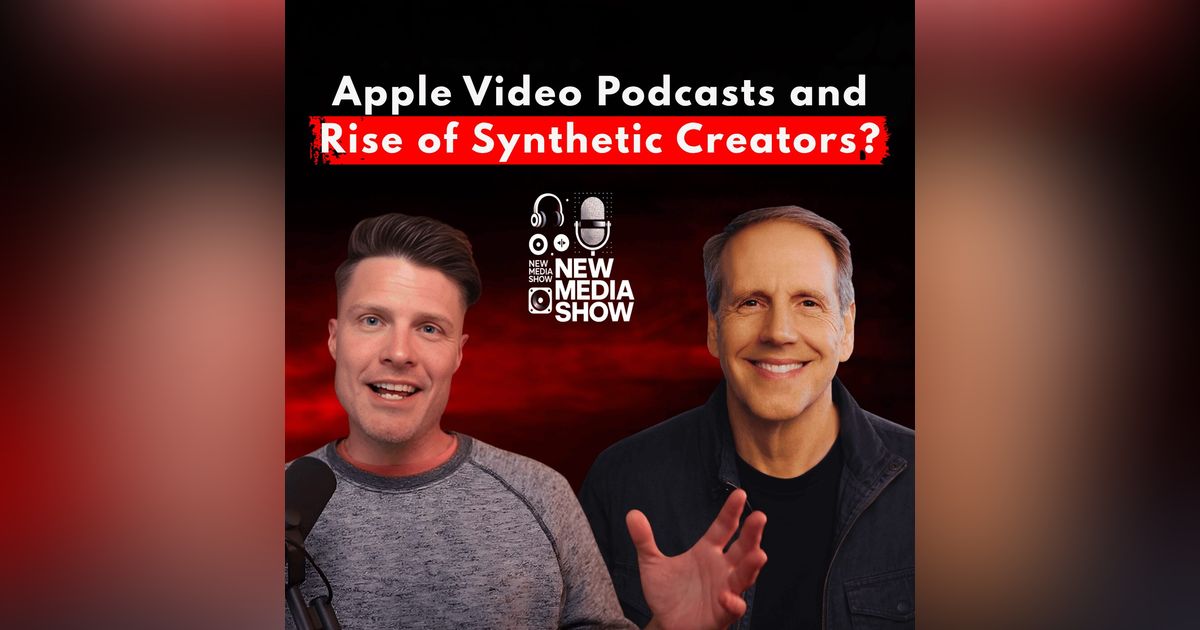

 If you are trying to understand where podcasting is going in 2026 and beyond, this is one of those conversations that clarifies the whole board.
On Episode 657 of The New Media Show, Host Rob Greenlee shares a microphone and a video camera with Justin Jackson, CEO and Co-Founder of Transistor.fm, to unpack two forces reshaping the medium at the same time: Apple’s push back into video podcasts using HLS streaming, and the accelerating rise of synthetic creators and human clones powered by AI.
The real takeaway in this episode is that this is no longer just a podcasting story. It’s a media transformation story, and creators who treat it that way will have the advantage.
Justin brings a rare combination to this topic because he is not just watching the ecosystem from the outside. He is building one of the most respected independent podcast hosting platforms and is deeply involved in coordinating the industry’s progress through the Podcast Standards Project.
One of the most useful parts of this episode is hearing how standards actually get adopted. Podcasting has a coordination problem, and the only way the open ecosystem keeps evolving is when hosting providers, apps, and major platforms agree on what becomes “standard.” Justin explains why this work is slower than people want and why it matters, using real examples such as transcript support and creator-recommendation tooling via Podroll.
From there, we go straight into the big shift: Apple leaning harder into video again, this time through HLS. The practical impact for creators is obvious. Video becomes easier to distribute, monetize, and measure across platforms.
The strategic impact is bigger. Apple’s move creates a cascade effect. As more hosts build HLS workflows, those streams can increasingly appear not only within Apple’s experience but also through open standards like alternate enclosures, especially if apps continue to adopt them. Justin is bullish on RSS-based open podcasting surviving, not because it is nostalgic, but because consumer demand and creator distribution needs keep pulling it forward.
A core theme in this episode is that creators and consumers decide what “a podcast” is, not the industry. Justin puts it plainly: if everyday listeners think podcasts are something they watch on YouTube, that belief drives behavior, and behavior drives platforms. This is why the listen-and-watch switching paradigm matters. Consumers want to start in audio and seamlessly jump into video. That pressure changes production habits over time, because the “audio from the video” becomes the default in many workflows. For some audio-first producers, that feels like a loss. For video-first creators, it is an opportunity to build a more fluid media experience that meets people where they are, whether they are watching closely or listening in the background.
Rob and Justin also dig into a topic most platforms are not talking about enough: demographics and attention. Apple Podcasts remains a valuable audience, often older, higher-income, harder-to-reach, and premium-friendly. But YouTube and short-form feeds have already shaped younger consumer habits.
Justin raises an interesting possibility that a backlash is forming among Gen Z against addictive, brain-rotting feeds. If that continues, there is a real opening for more mindful media experiences, which could benefit audio- and podcast-style consumption and even give Apple an unexpected positioning angle if they choose to lean into it.
Then move into the other major shift: synthetic creators, AI cloning, and AI-generated media at scale. We talk about what is real, what is hype, and what’s already happening in the market. Justin’s perspective is grounded: audiences still choose what they care about, and a lot of AI-generated “slop” is being produced with no real demand. At the same time, I warn that this is the worst the tech will ever be, and that quality is moving fast.
The deeper layer is that AI is already part of the content distribution pipeline, because algorithms decide what gets surfaced and recommended.
As cloning and synthetic production improve, trust and identification become the bigger story. If people cannot tell what is real, standards for disclosure, verification, and labeling become essential to preserve credibility.
This episode ultimately lands on a simple reality: creators do not need to panic, but they do need to adapt. Video is becoming a default entry point. RSS is still resilient, but platform native APIs are expanding. AI will increase volume, forcing platforms to filter more aggressively. The winning creators will be the ones who build trust, produce content people actually want, and package it so it travels across environments without losing the core promise that made the audience show up in the first place.
Quick answers
What does Apple HLS video mean for podcast creators in 2026?
It signals a stronger platform push toward seamless listen-and-watch experiences, better measurement, and future monetization opportunities, and it pressures hosts and apps to support HLS workflows more broadly.
Is RSS dying because platforms want APIs and direct uploads?
RSS remains highly resilient because creators want distribution portability and consumers want access to the shows they already follow. Platforms may add more native workflows, but RSS continues to power the open layer.
Will AI-generated creators replace humans?
AI will dramatically increase content volume, but audience trust and relevance will still determine what survives. The big shift is that trust, verification, and disclosure become more important as synthetic media becomes harder to detect.
Links
Guest Justin Jackson Links
Transistor.fm: https://transistor.fm/
Justin Jackson: https://justinjackson.ca/
Host Rob Greenlee and Show Links
New Media Show: https://newmediashow.com/
Rob Greenlee: https://robgreenlee.com/
Trust Factor Lab: https://trustfactorlab.com/
Adore Creator Network: https://adorenetwork.com/
Podcast Hall of Fame: https://podcasthall.com/
Rob Greenlee YouTube: https://youtube.com/@robgreenlee
Rob Greenlee LinkedIn: https://linkedin.com/in/robgreenlee
Rob Greenlee Instagram: https://instagram.com/robwgreenlee
The post Apple Video Podcasts, RSS vs API, Rise of Synthetic Creators | Justin Jackson #657 first appeared on New Media Show.